
A Complete B2B Guide for Brands, Retailers & Merchandise Buyers | CustomPatches4U.com
Custom patches for merchandise are one of the most commercially proven branded products available to businesses of any size. They are durable, visually distinctive, cost-effective at volume, and carry a perceived value that far exceeds their production cost. A well-designed embroidered patch on a jacket, bag, or cap is kept, worn, and seen by others for years after it was first distributed.
However, getting custom patches right, from the initial design through to finished production, requires understanding several practical factors that are not immediately obvious to first-time buyers. Design limitations in embroidery, patch type selection, backing options, minimum order quantities, and supplier quality all affect the final result in ways that can mean the difference between merchandise that performs commercially and merchandise that sits in a warehouse.
This guide covers the full process of how to create custom patches for merchandise, with practical tips and tricks drawn from real production experience. Whether you are building a branded merchandise range for the first time or optimizing an existing patch program, this covers what you need to know.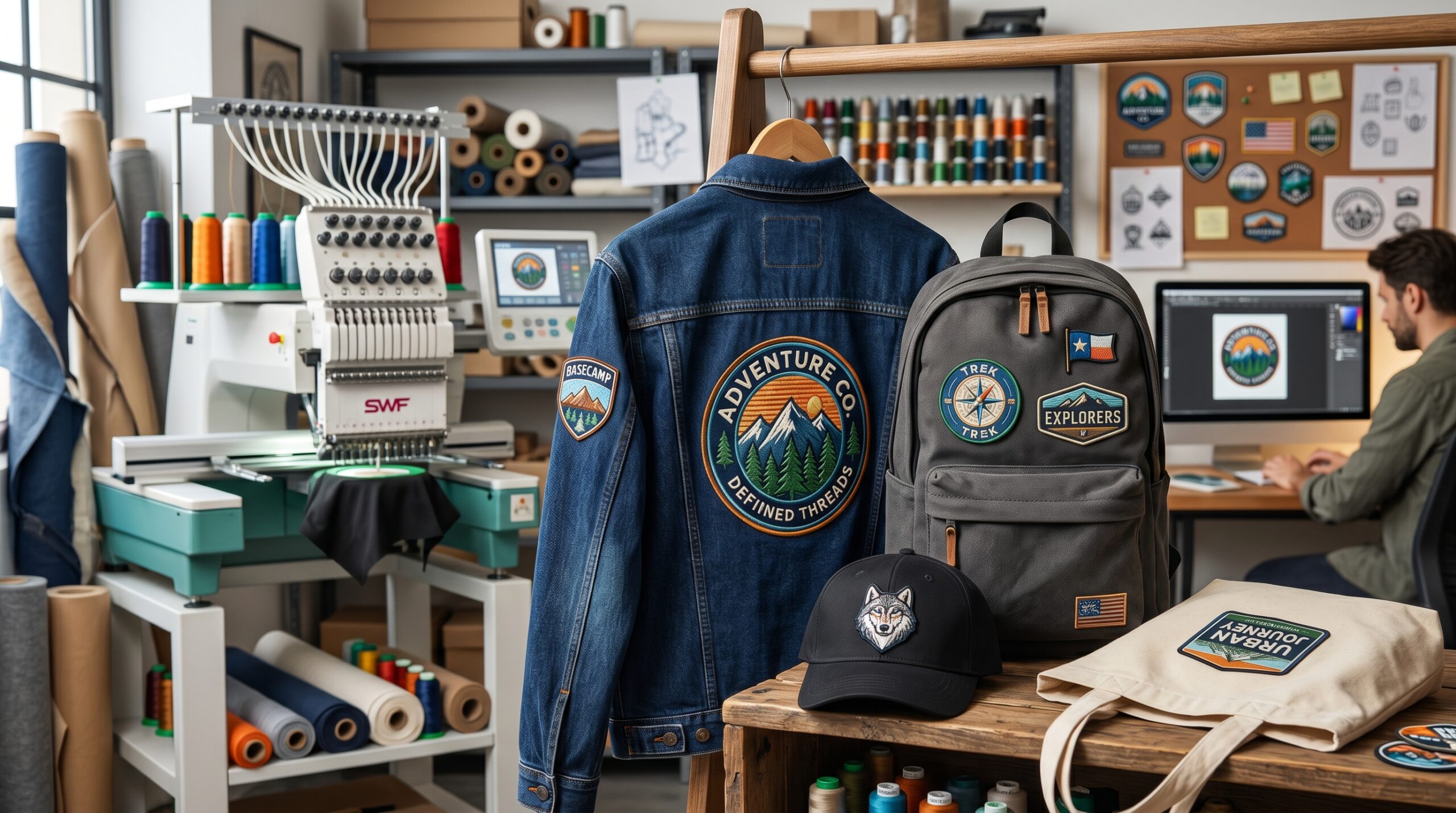
What Are Custom Patches for Merchandise and Why Do They Work?
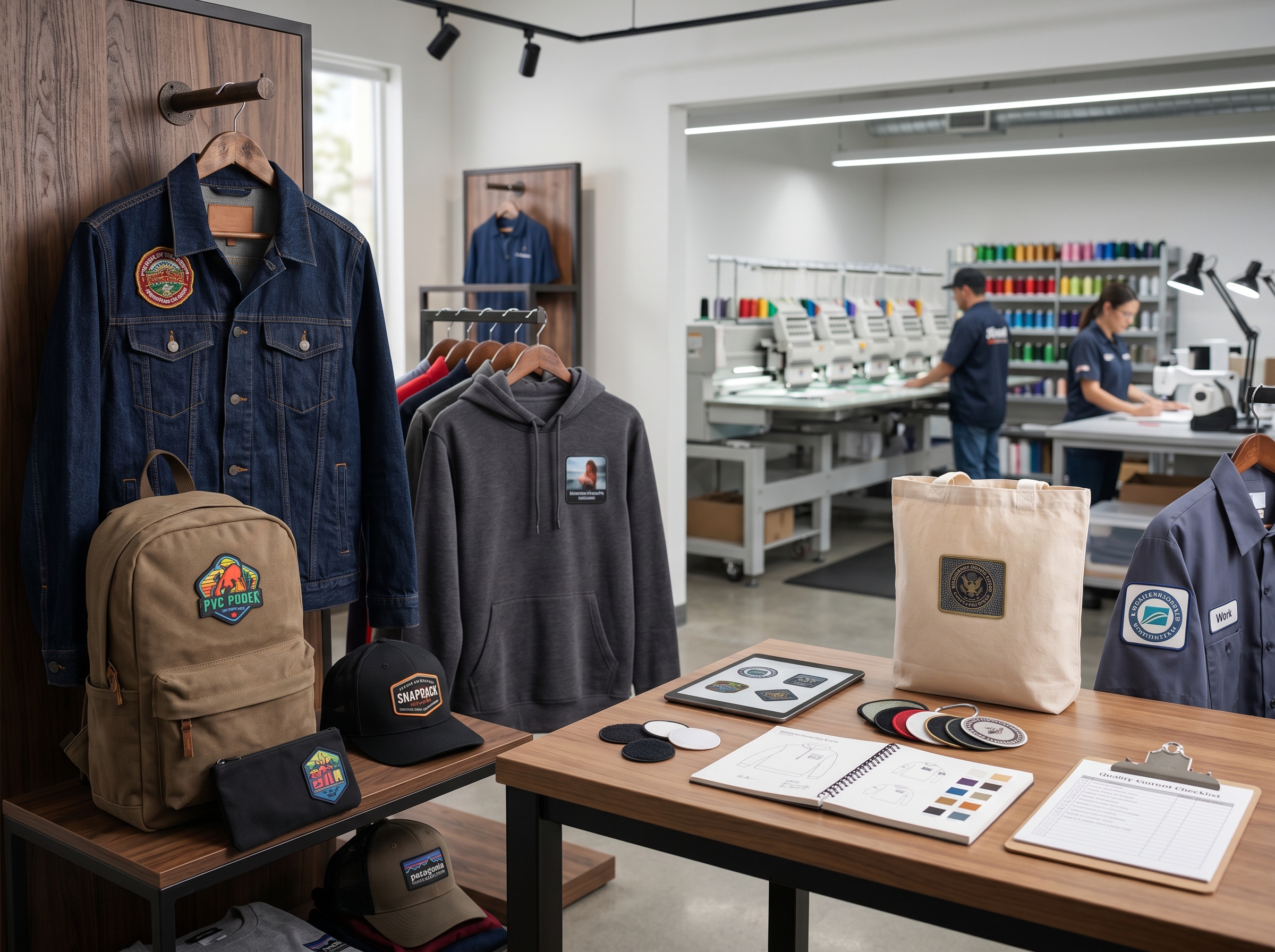
Brands and businesses use custom merchandise patches to display logos, decorative designs, or identification markings on clothing, bags, hats, and accessories for product ranges, promotional campaigns, and uniform programs.
They work commercially for three interconnected reasons.
Retention rate: Recipients keep and use branded patches on jackets, caps, and bags far longer than most other promotional merchandise formats. A patch on a jacket that someone wears regularly generates brand impressions for years at no recurring cost.
Perceived value: Embroidered patches read as premium decoration. The raised thread surface and clean edge finish give embroidered merchandise patches a quality appearance that printed alternatives do not match at the same price point. Recipients perceive embroidered merchandise as more valuable than screen-printed equivalents, which improves brand association.
Production scalability: Manufacturers produce custom patches as standalone units and apply them to garments separately. This means you can order patches at volume, store them, and apply them to different product types over time without retooling or reordering. One patch design can appear on a jacket, a cap, a tote bag, and a lanyard within the same merchandise range without any additional production complexity.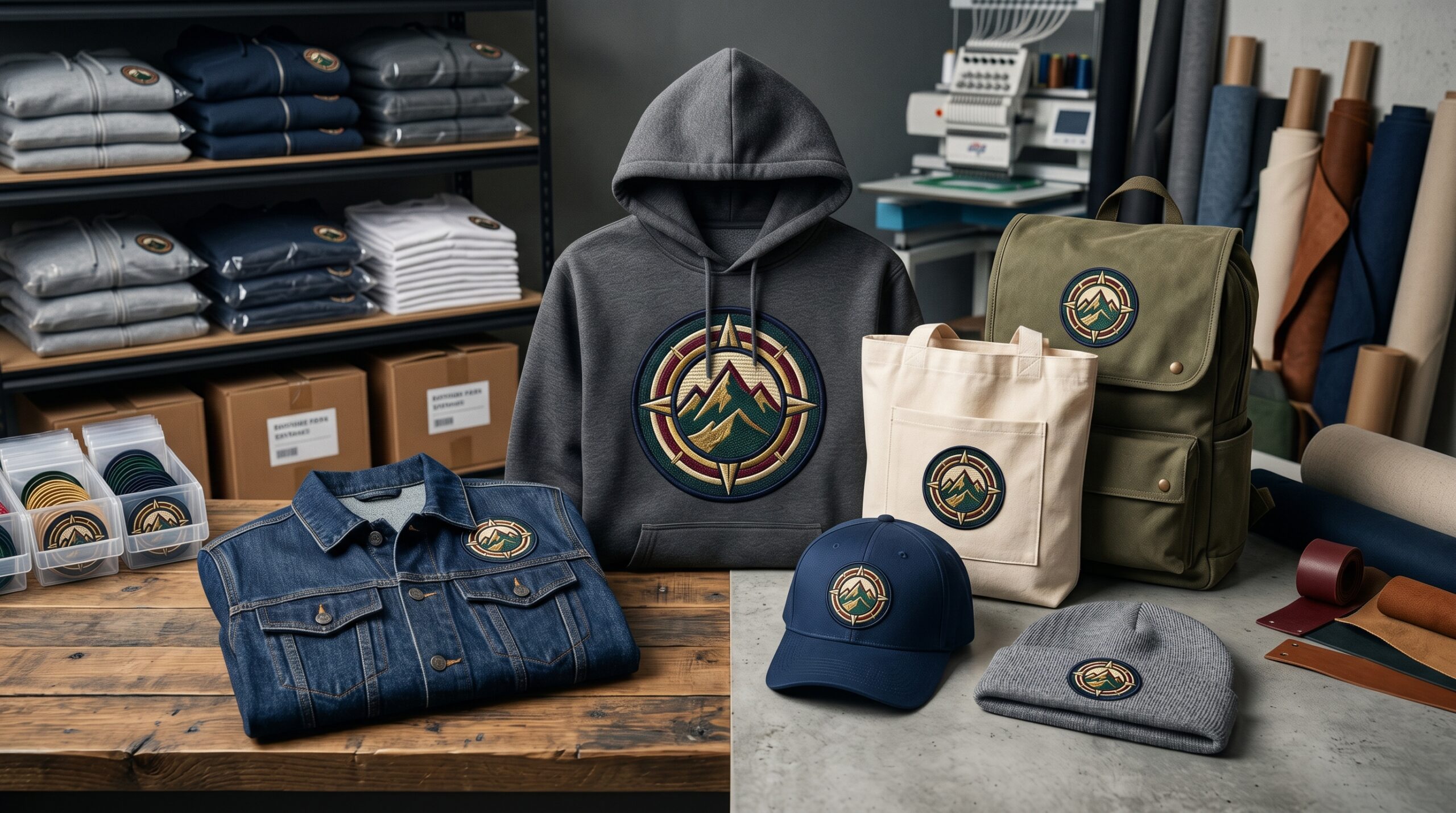
Step One: Define Your Merchandise Patch Brief Clearly Before Designing
The single most common source of production delays and disappointing results in custom patch manufacturing is an incomplete or unclear brief. Before any design work begins, define the following:
Intended application: Where do you plan to place the patch? A chest patch on a jacket, a front panel patch on a cap, a side panel patch on a tote bag? The placement determines the appropriate patch size and shape.
Garment or product type: What garment or product do you plan to attach the patch to? The fabric type affects which backing option is correct and whether iron-on, sew-on, or Velcro is the right specification.
Brand guidelines: If the patch carries a logo or brand mark, prepare your brand guidelines in advance, including Pantone color references, approved logo files in vector format, and any rules your team follows when presenting the logo.
Order quantity: Know your volume before approaching a manufacturer. Minimum order quantities significantly affect per-unit pricing, and knowing your quantity from the start helps you build accurate cost projections.
Timeline: How quickly do you need the patches? Standard production at CustomPatches4U runs 7 to 14 business days from proof approval. If your timeline is shorter, confirm rush production availability before committing to a deadline.
Confirming these details before design begins saves time, reduces revision cycles, and ensures the final patch meets both the visual and functional requirements of your merchandise program.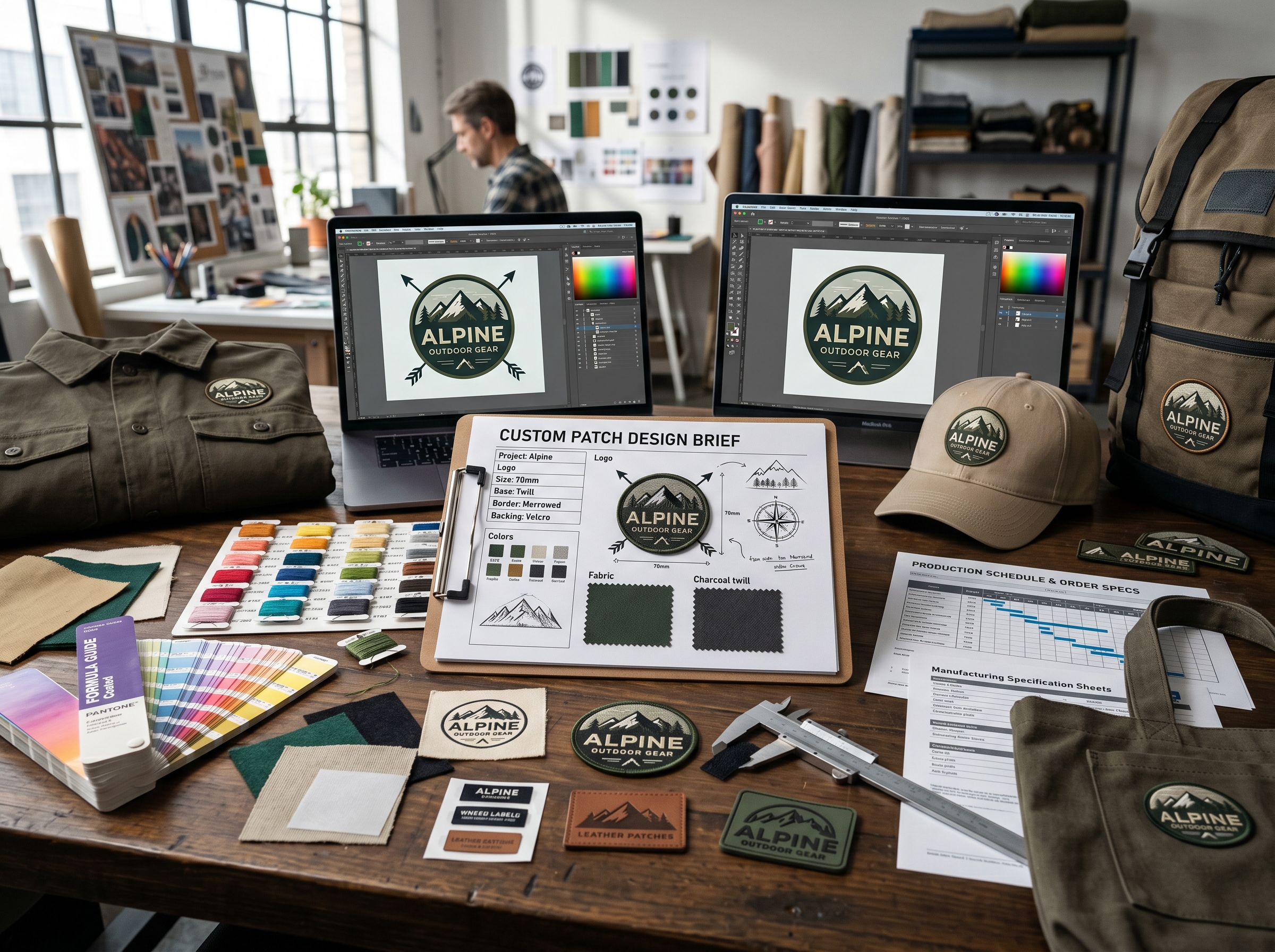
Step Two: Choose the Right Patch Type for Your Merchandise
Selecting the correct patch type for your merchandise is a design and commercial decision that affects both the visual result and the per-unit cost. The main options are as follows.
Custom Embroidered Patches for Merchandise
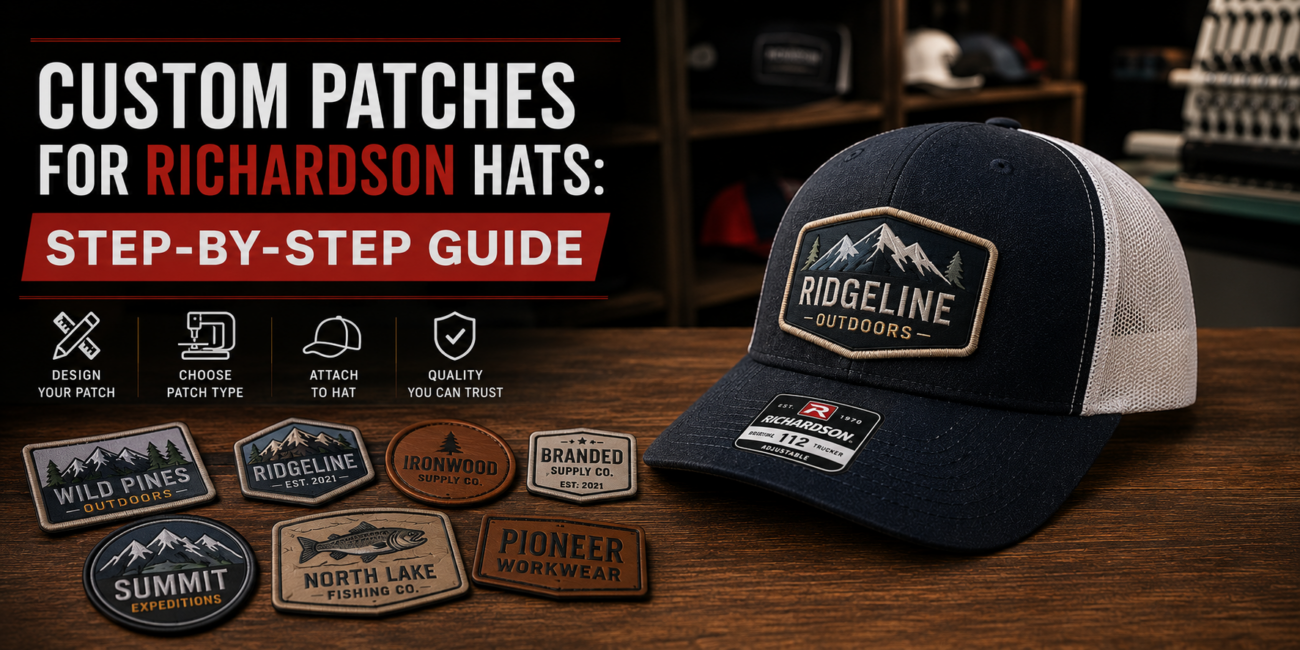
Custom embroidered patches are the standard choice for branded merchandise across fashion, promotional, and uniform applications. Manufacturers produce them by stitching thread over a woven backing, which gives them a raised, textured surface and a classic appearance that reads as premium quality.
For merchandise patches carrying logos, brand marks, and text at sizes between 2 and 6 inches, embroidered patches deliver the best combination of visual quality, durability, and cost at volume. Manufacturers produce this format more widely than any other globally, and most recipients associate it with quality branded merchandise.
The key design consideration for embroidered patches is stitch coverage. Designs with 60 to 80 percent thread coverage produce the cleanest results. Very fine lines, small text under 4 millimeters in height, and complex photographic imagery do not reproduce well in embroidery and should either be simplified or transferred to a woven or sublimated format.
Custom Logo Patches for Brand Merchandise
Manufacturers produce custom logo patches as embroidered or woven patches specifically designed to carry a brand mark. They are the most common format in corporate merchandise, staff uniform programs, franchise apparel, and branded retail.
For best results with logo patches, provide your artwork as a vector file (AI, EPS, or SVG) rather than a raster image. Vector files allow the digitization specialist to accurately trace every element of the logo and translate it into a stitch file without loss of detail. Raster images, particularly low-resolution ones, introduce inaccuracies during digitization that affect the finished patch.
Woven Patches for Merchandise with Fine Detail
Manufacturers produce woven patches on a loom using fine threads, which allows significantly higher detail resolution than embroidery. A woven format clearly reproduces small text, thin lines, and intricate graphic elements that embroidery would otherwise lose.
For merchandise programs where the logo or design contains fine detail or small text that must be legible, woven patches are the correct choice. They sit flatter against the fabric than embroidered patches and have a cleaner, less textured surface, which suits fashion labels and retail merchandise positioning toward a refined aesthetic.
PVC Patches for Outdoor and Workwear Merchandise
Manufacturers mold PVC merchandise patches from soft rubber, making them waterproof, chemical resistant, and highly durable. They have a three-dimensional quality that stands out from flat embroidered or woven alternatives and suit merchandise positioned toward outdoor, athletic, or industrial markets.
For promotional merchandise distributed at outdoor events, sporting activities, or in industrial workplace contexts, PVC patches handle conditions that would damage embroidered alternatives. Streetwear and contemporary fashion brands also frequently use them in merchandise where the tactile, modern aesthetic of molded rubber adds visual distinction.
Sublimated Patches for Full-Color Merchandise Designs
Manufacturers produce sublimated patches using dye-sublimation printing on polyester fabric. They support unlimited colors, gradients, and photographic-quality imagery within the same price structure regardless of color count, making them the correct choice for complex artwork that cannot be simplified for embroidery production.
For merchandise featuring illustrated characters, detailed photographic imagery, or multi-color gradients, sublimated patches deliver the full design without compromise. Per-unit costs are competitive with embroidered patches at equivalent quantities.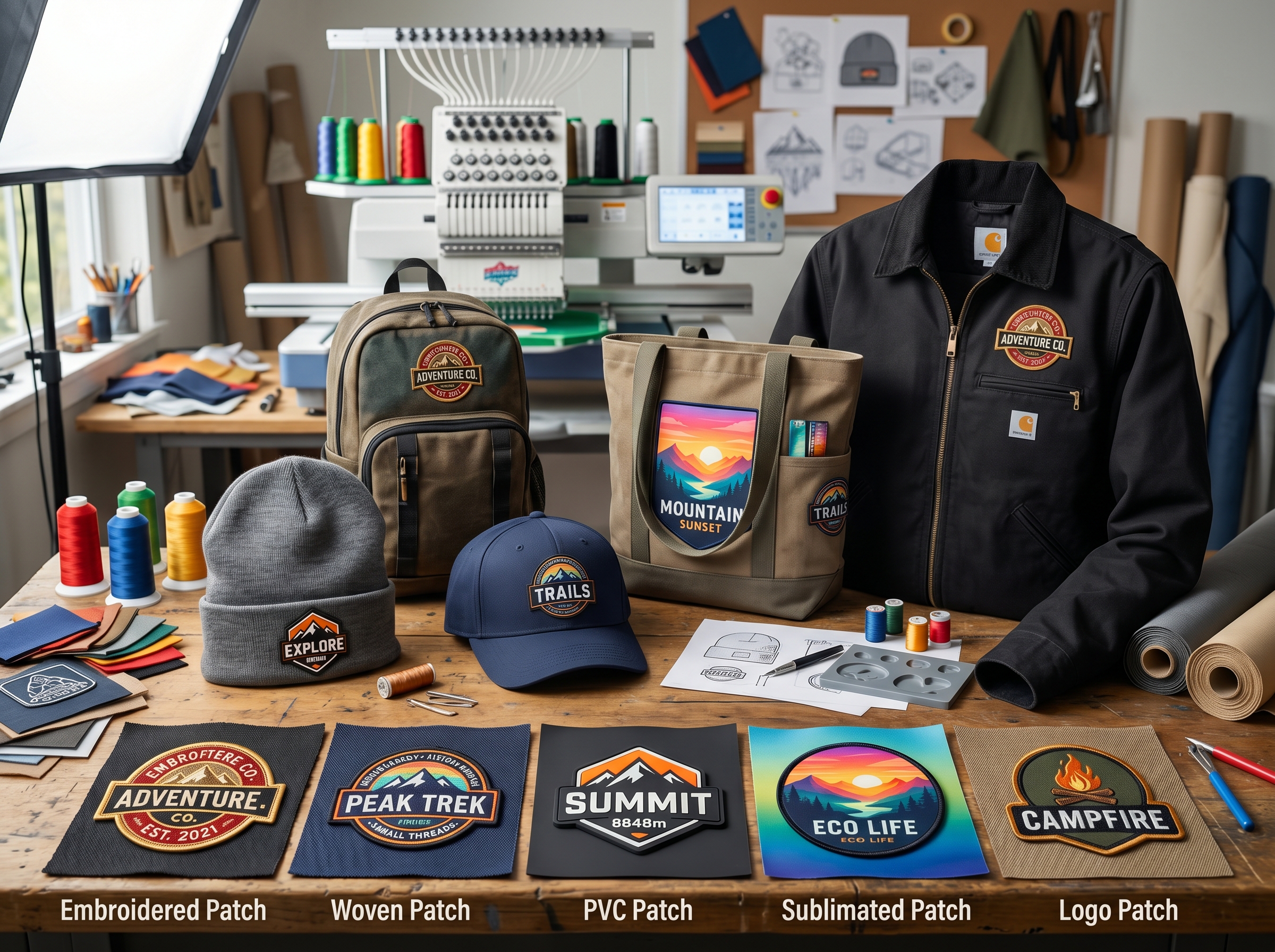
Step Three: Patch Design Tips for Clothing Brands and Merchandise Programs
Getting the design right before production begins is the most important factor in achieving a merchandise patch that performs commercially. These patch design tips apply across all formats.
Simplify Complex Logos for Embroidery Production
Most brands design their logos for digital display and print. They contain fine lines, small text, color gradients, and detailed graphic elements that reproduce well on screen or paper but not in thread. When preparing a logo for embroidered patch production, simplification is often necessary and nearly always beneficial.
Increase line weights to a minimum of 1 to 1.5 millimeters. Increase text size to a minimum of 4 to 5 millimeters in height. Remove gradient fills and replace with solid Pantone-matched thread colors. Consolidate very small detail elements into bolder shapes. The result is a patch that reads cleanly at a distance and holds up through years of washing.
Use Contrasting Background and Thread Colors
The visual impact of a custom merchandise patch depends heavily on the contrast between the background fabric of the patch and the thread colors used in the design. Light thread on a dark background and dark thread on a light background both produce clean, legible results. Low-contrast combinations, navy thread on a black background, for example, reduce legibility significantly and make the patch appear flat and unclear.
When specifying colors, provide Pantone references for both the background fabric and the thread colors. This is the most reliable way to ensure color accuracy across a large production run.
Match Patch Background Color to the Garment Colorway
A patch background color that clashes with or disappears into the garment undermines the investment in the patch design itself. During the design stage, confirm the primary colorway of the garment or product where you plan to place the patch and select the patch background accordingly.
A black patch on a black jacket is nearly invisible. A cream, red, or yellow patch on a black jacket creates immediate visual contrast and draws attention to the design. Build this consideration into the brief from the start rather than discovering the issue after production.
Keep Text Legible at the Intended Viewing Distance
People typically view patches on jackets and bags from 3 to 10 feet away. Text that looks legible on screen at design stage may not read clearly at that distance on a finished patch. As a general rule, set any text you want readers to read clearly on a merchandise patch at a minimum of 6 millimeters in height in the finished design.
For brand names and key messages, use clean sans-serif typefaces that hold up in thread. Script and decorative typefaces with very fine strokes require a woven patch format rather than embroidery to maintain legibility.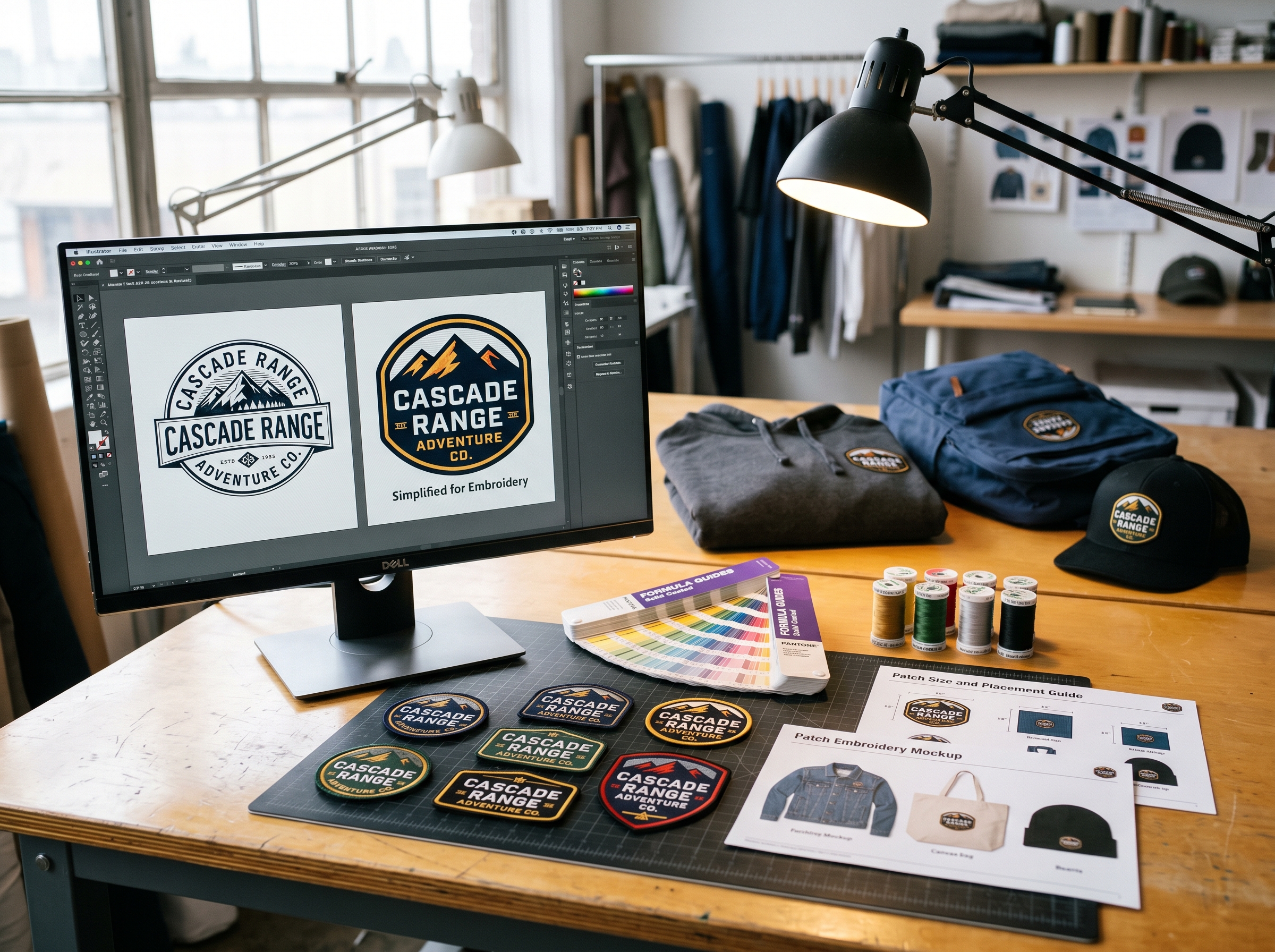
Step Four: Select the Correct Backing for Your Merchandise Application
The backing type determines how the patch attaches to the merchandise item and affects both application method and long-term durability.
Iron-on backing uses heat-activated adhesive for fast application without sewing. Appropriate for cotton, denim, canvas, and polyester blend fabrics under standard washing conditions. For retail merchandise and fashion applications, iron-on is the most practical and widely used backing option.
Sew-on backing requires perimeter stitching to attach. Creates a mechanical bond that is significantly more durable than adhesive under heavy use and industrial washing conditions. Recommended for workwear merchandise, sports uniforms, and any application where the patch must remain securely attached through demanding daily use over multiple years.
Velcro backing allows users to attach and remove patches repeatedly. Standard specification for tactical and military merchandise where patches need to be interchangeable across different garments. Also used in promotional contexts where event-specific patches are distributed and worn temporarily.
Heat-seal backing provides an industrial-grade adhesive bond for large-scale uniform programs using heat-press equipment. Produces a stronger and more consistent bond than household iron-on application and is preferred for high-volume garment decoration in professional settings.
For most B2B merchandise programs, iron-on backing with the option of additional perimeter stitching covers the majority of applications. Confirm the intended use with your supplier before finalizing backing specifications.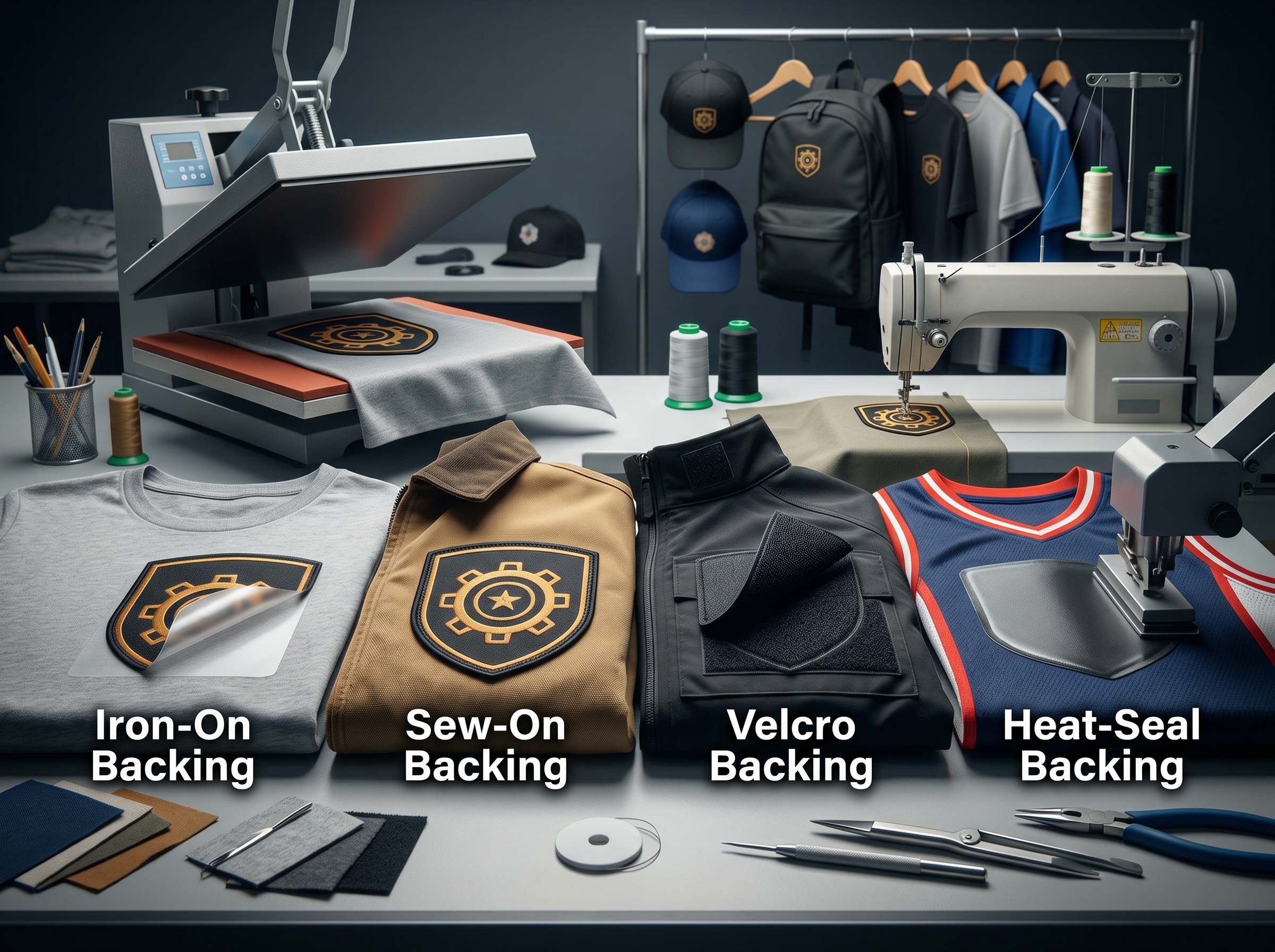
Step Five: Understand Patch Manufacturing Costs and How to Control Them
Understanding how custom patch manufacturing costs are structured allows B2B buyers to make informed decisions that control per-unit costs without compromising quality.
Digitization cost is the one-time fee for converting your artwork into an embroidery stitch file. At CustomPatches4U, this cost is included in the order and the file is saved for all future repeat orders at no additional charge.
Stitch count is the primary variable cost in embroidered patch production. Stitch count is determined by the size of the patch and the percentage of the surface covered by thread. Larger patches with high thread coverage have higher stitch counts and higher per-unit costs. For cost-sensitive merchandise programs, optimizing the patch size and coverage percentage is the most direct way to manage production cost.
Order quantity is the most significant lever available to buyers. The difference in per-unit cost between a 50-unit order and a 500-unit order is substantial. For merchandise programs with predictable volume requirements, ordering at a higher quantity in a single run consistently produces better economics than placing multiple smaller orders over time.
Patch type affects cost structure. Embroidered patches at standard coverage are the lowest-cost format for most designs. PVC patches have a higher base cost due to mold production. Sublimated patches are cost-competitive for full-color designs. Woven patches sit between embroidered and sublimated in the typical price range.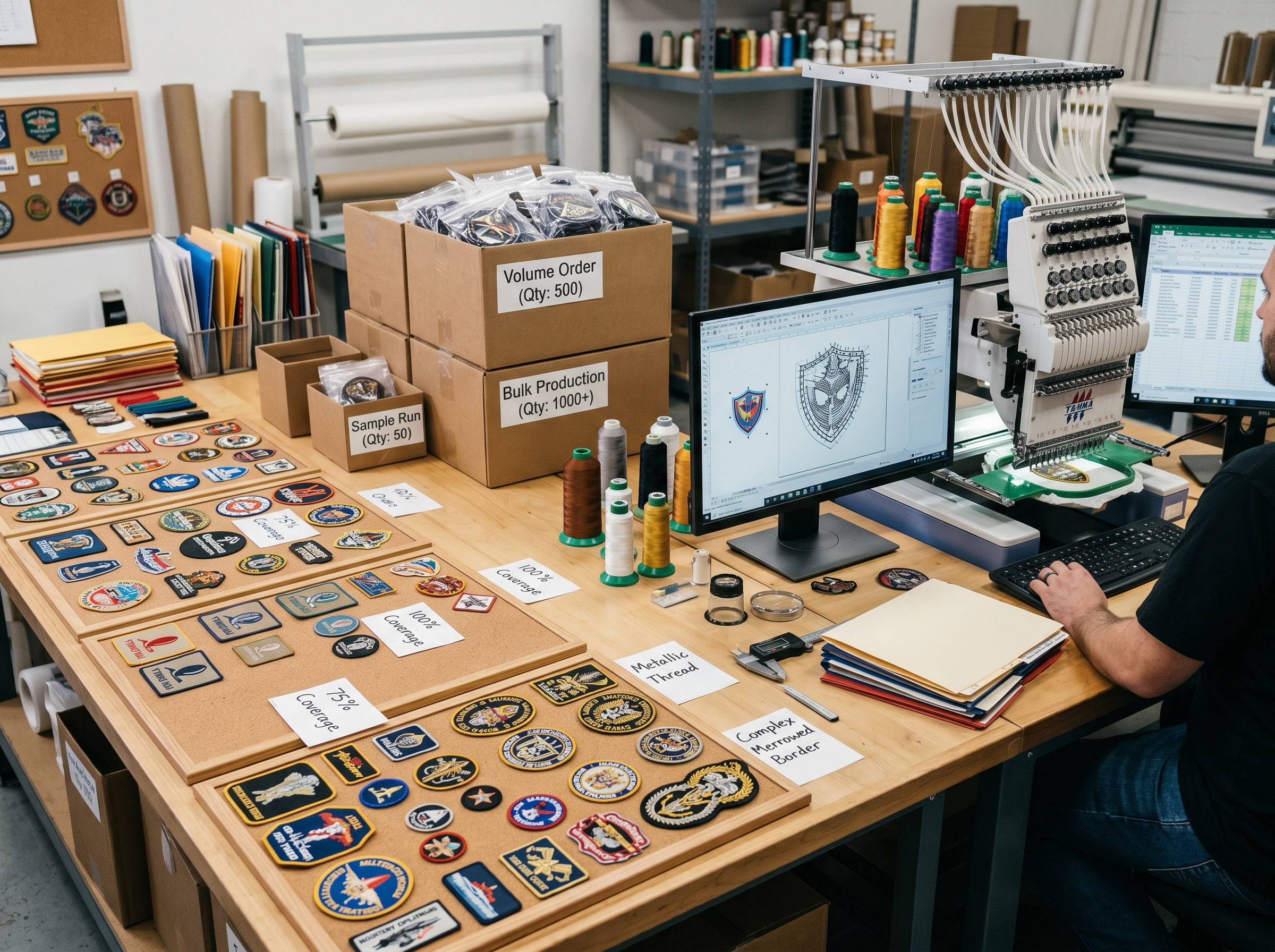
How to Work With a Custom Patch Manufacturer: What the Process Looks Like
For buyers placing their first custom merchandise patch order, understanding the production workflow removes uncertainty and helps set realistic expectations.
Brief submission: Submit your artwork, patch specifications, quantity, and delivery requirements. CustomPatches4U accepts vector files, high-resolution PNG files, and detailed written briefs where artwork is not yet finalized.
Digitization and proof preparation: The production team digitizes your artwork and prepares a digital proof for review. For PVC patches, a mold design proof is prepared. For sublimated patches, a print-ready digital proof is produced.
Proof approval: Review the proof against your brief and approve or request revisions. Physical pre-production samples are available on request for first-time orders or complex designs.
Full production: Production begins after written proof approval. Standard embroidered patches ship within 7 to 14 business days. Repeat orders using saved files ship faster.
Quality control and delivery: Finished patches are inspected before packing and shipped with tracking. Worldwide delivery is available from CustomPatches4U.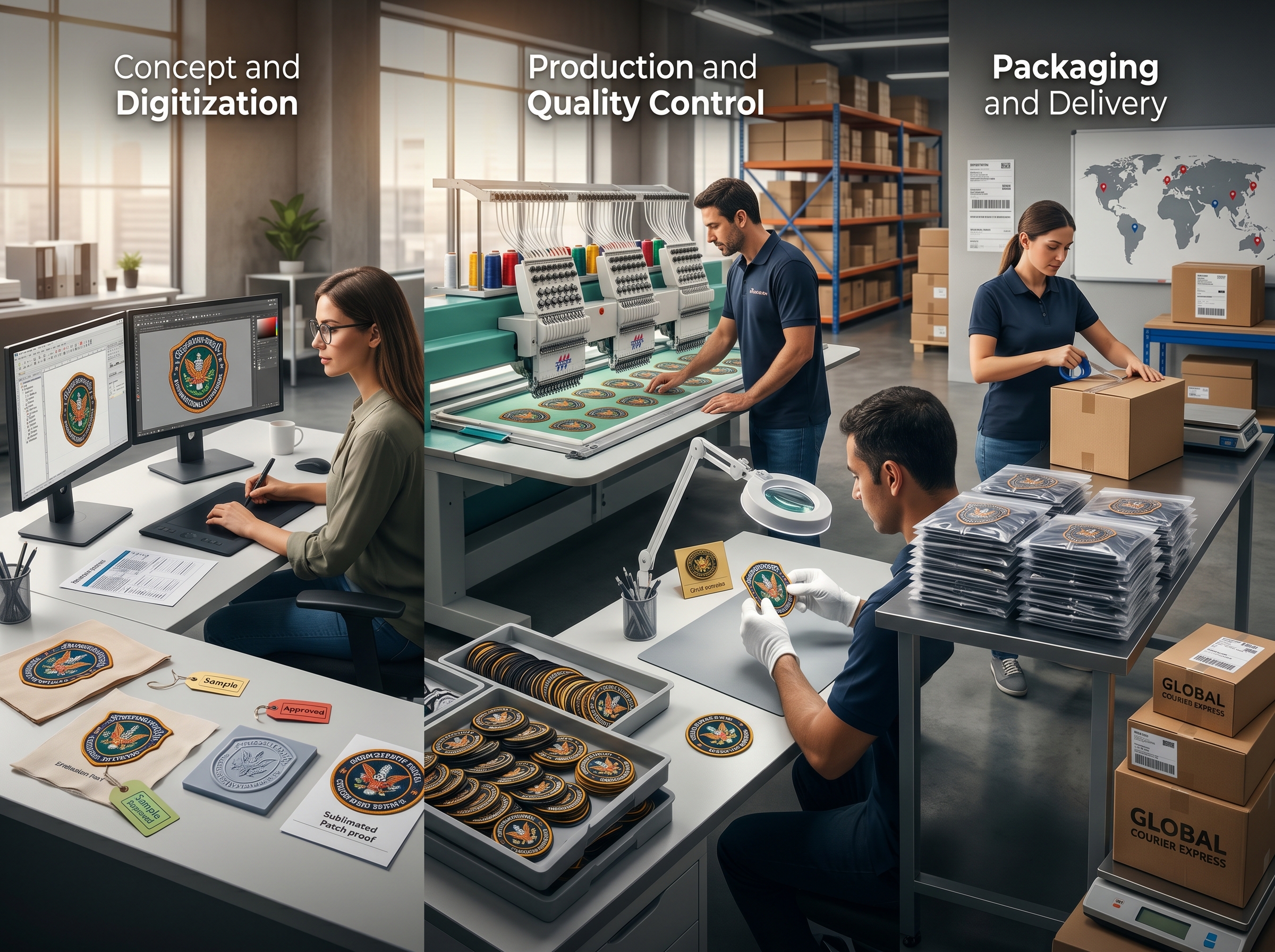
Frequently Asked Questions About Creating Custom Patches for Merchandise
How do I create custom patches for my merchandise brand?
Define your design, patch type, size, backing, and order quantity. Submit your artwork as a vector or high-resolution file to a patch manufacturer. Review the proof, approve production, and receive finished patches ready for application. CustomPatches4U handles the full process from artwork to delivery.
What is the minimum order quantity for custom merchandise patches?
CustomPatches4U accepts orders from 50 units per design. Significant per-unit cost reductions apply at 250, 500, and 1,000 units. For first-time orders, 100 to 250 units is a common starting quantity that balances cost efficiency with manageable stock levels.
How much do custom embroidered patches for merchandise cost?
Per-unit cost depends on patch size, stitch count, order quantity, and patch type. At CustomPatches4U, competitive pricing is available across all volume levels with transparent breakdowns provided at quote stage. Digitization is included in the order cost and carries no repeat fee on future orders.
What file format should I submit for custom logo patch production?
Vector files in AI, EPS, or SVG format are the preferred submission format for embroidered and woven patch production. High-resolution PNG files are accepted where vector originals are unavailable. For sublimated patches, high-resolution print-ready files are required.
How long does it take to produce custom merchandise patches?
Standard production at CustomPatches4U is 7 to 14 business days from proof approval for embroidered patches. PVC patches may require additional lead time for first-order mold production. Repeat orders using saved files ship faster. Rush production options are available.
Can I get a sample before placing a full merchandise patch order?
Yes. Physical pre-production samples are available on request before full production begins. This is recommended for first-time orders, new designs, or large-volume programs where visual and quality confirmation before full production is commercially important.
What is the best patch type for promotional merchandise?
Custom embroidered patches are the most widely used format for promotional merchandise due to their high perceived value, durability, and visual quality at competitive per-unit costs. For complex full-color designs, sublimated patches are the correct choice. For outdoor or tactical promotional programs, PVC patches provide superior durability.
How do I attach custom patches to merchandise items?
Iron-on patches apply with a household iron or heat press, with firm pressure applied for 15 to 30 seconds at medium-high heat. Sew-on patches attach via perimeter stitching by hand or machine. Velcro-backed patches press directly onto corresponding Velcro panels. For high-volume garment programs, heat-seal bonding with commercial press equipment produces the most consistent and durable bond.
Conclusion
Creating custom patches for merchandise successfully comes down to five things: a clear brief, the right patch type for the design and application, design decisions that account for production realities, correct backing specification, and a manufacturing partner with the capability to deliver consistent quality at your required volume.
Custom embroidered patches, woven patches, PVC patches, and sublimated patches each have a place in a well-structured merchandise program, and choosing between them based on design requirements and end use produces consistently better results than defaulting to a single format regardless of context.
For B2B buyers building branded merchandise ranges, the combination of low per-unit cost at volume, high perceived value, production flexibility, and long service life makes custom patches one of the strongest-performing merchandise formats available in the market today.