
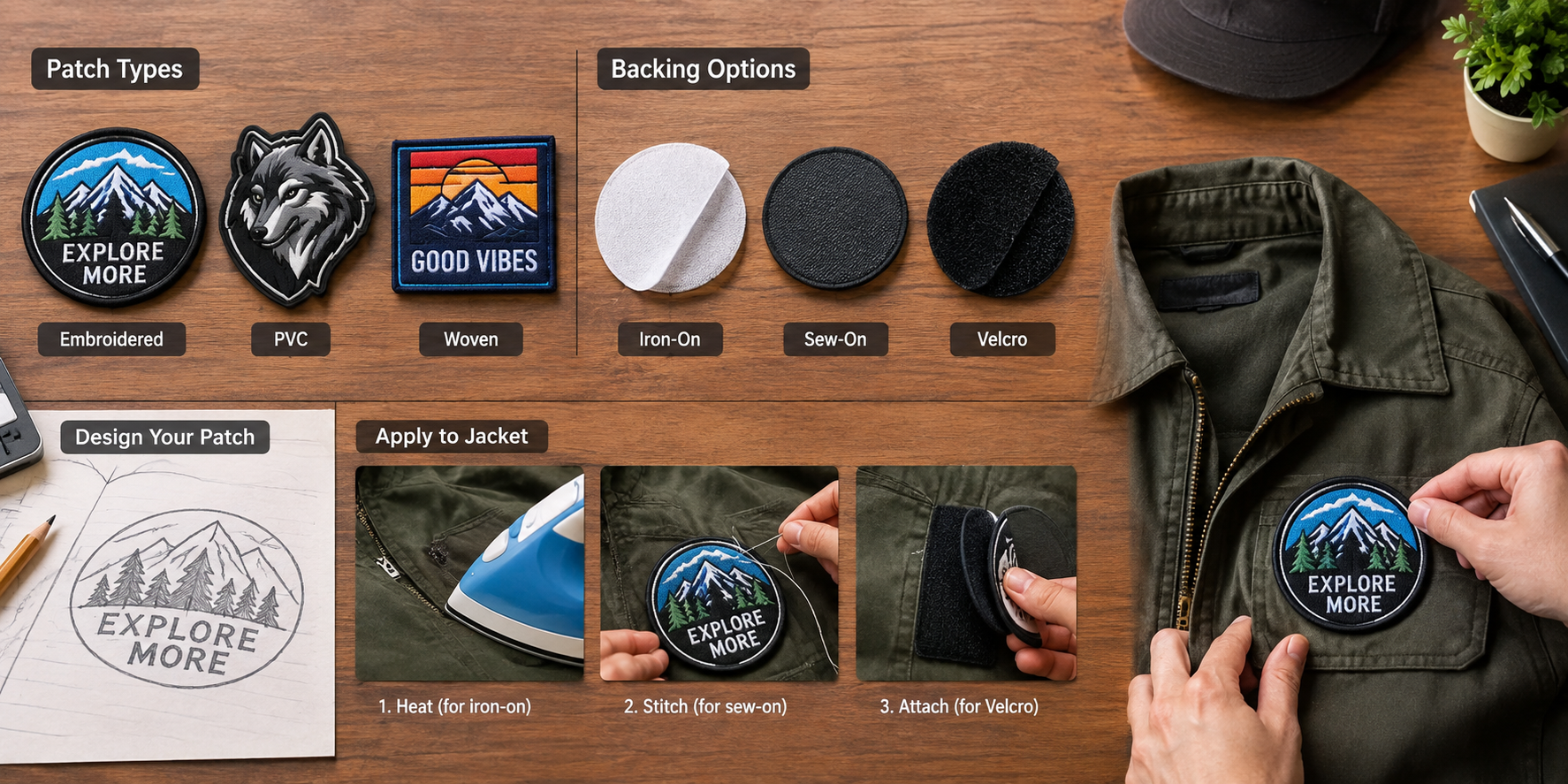
Making custom patches for jackets involves choosing the right patch type, preparing a simple design, and using the correct attachment method, whether that is ironing, sewing, or Velcro. Matching the method to the material keeps the patch secure and the jacket undamaged over time.
Introduction
Adding custom patches to a jacket is one of the easiest ways to personalize gear or promote a brand. Many people are unsure where to start, from choosing a patch type to attaching it properly without damaging the fabric.
This guide walks through the full process in simple steps, so you can make and apply custom patches with confidence.
Quick Answer: To make custom patches for jackets, choose a patch type such as embroidered, PVC, or woven, prepare your design, select the right backing (iron-on, sew-on, or Velcro), and apply it using heat, stitching, or adhesive depending on the material. Proper placement and care keep the patch secure long term.
Why This Matters
A poorly attached patch can peel off, fray, or damage the jacket fabric. Knowing the right method for your patch type saves time and keeps your jacket looking good longer.
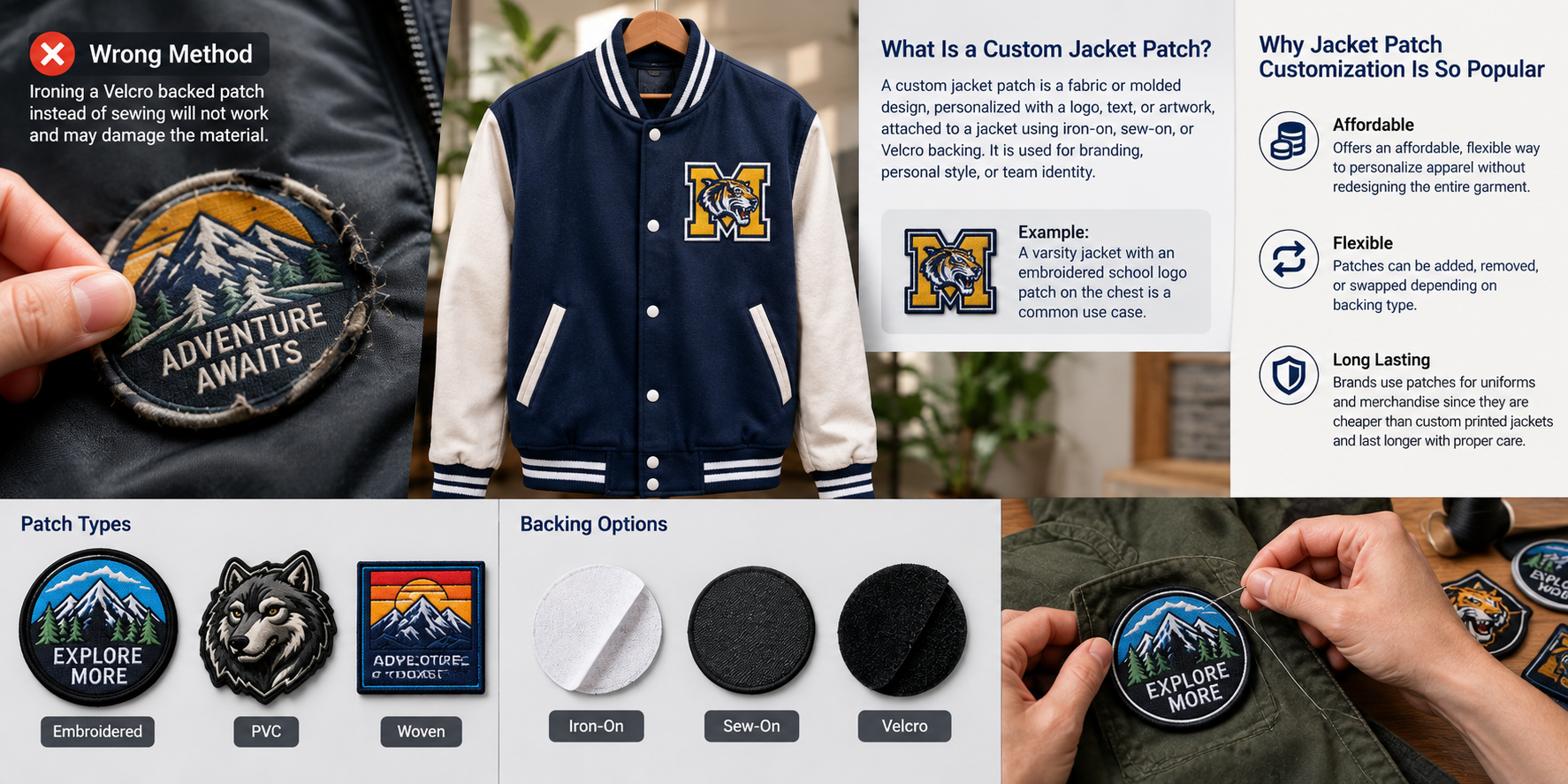
For example, ironing a Velcro backed patch instead of sewing it will not work and may damage the material. Matching the method to the patch type avoids this mistake.
What Is a Custom Jacket Patch?
A custom jacket patch is a fabric or molded design, personalized with a logo, text, or artwork, attached to a jacket using iron-on, sew-on, or Velcro backing. It is used for branding, personal style, or team identity.
Example: A varsity jacket with an embroidered school logo patch on the chest is a common use case.
Why Jacket Patch Customization Is So Popular
Jacket patch customization is popular because it offers an affordable, flexible way to personalize apparel without redesigning the entire garment. Patches can be added, removed, or swapped depending on backing type.
Business Insight: Brands use patches for uniforms and merchandise since they are cheaper than custom printed jackets and last longer with proper care.
Types of Custom Patches
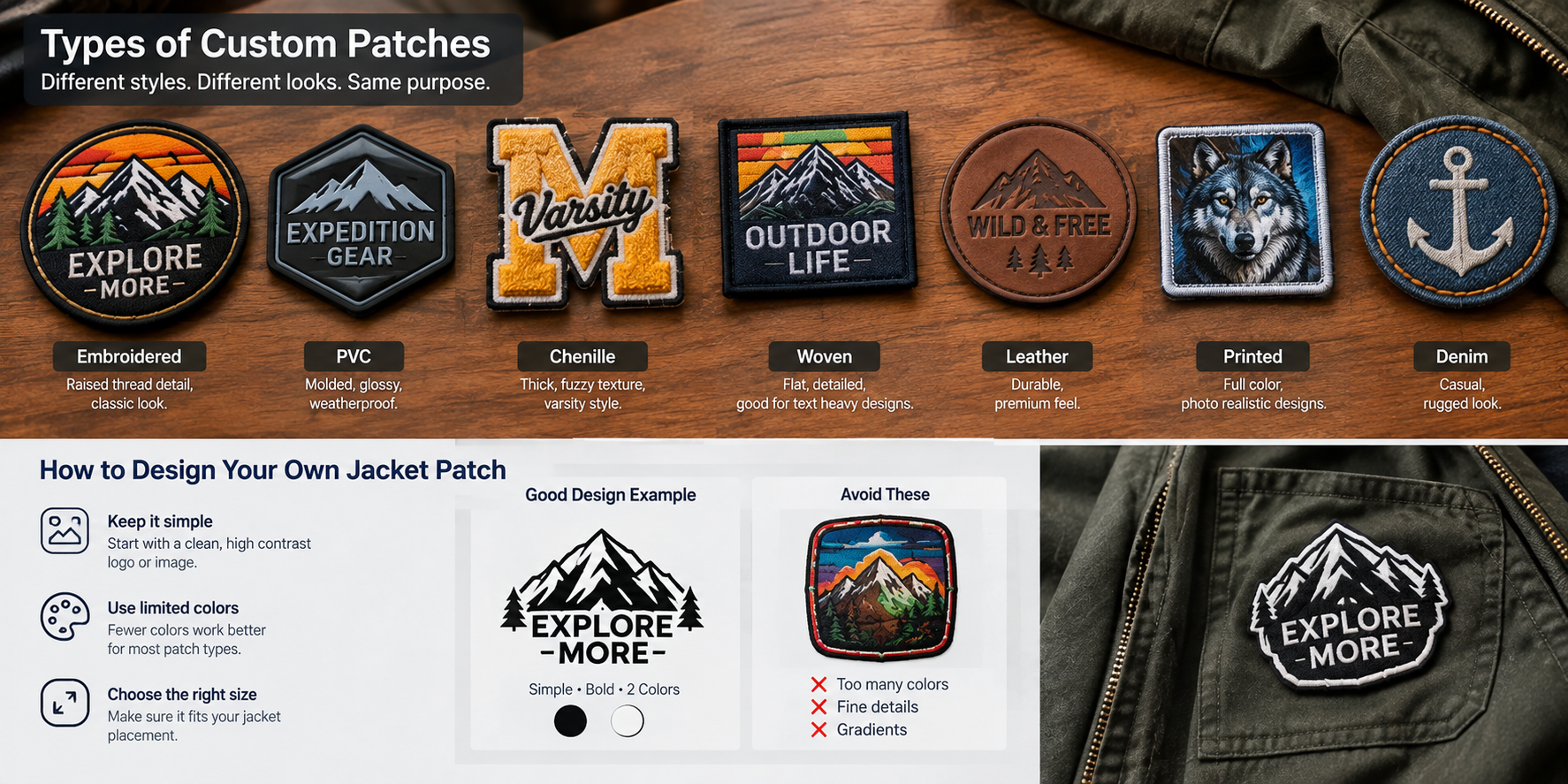
The main types of custom patches include embroidered, PVC, chenille, woven, leather, printed, and denim patches, each offering a different look and durability level. Choosing the right type depends on your design and jacket material.
- Embroidered patches: raised thread detail, classic look.
- PVC patches: molded, glossy, weatherproof.
- Chenille patches: thick, fuzzy texture, varsity style.
- Woven patches: flat, detailed, good for text heavy designs.
- Leather patches: durable, premium feel.
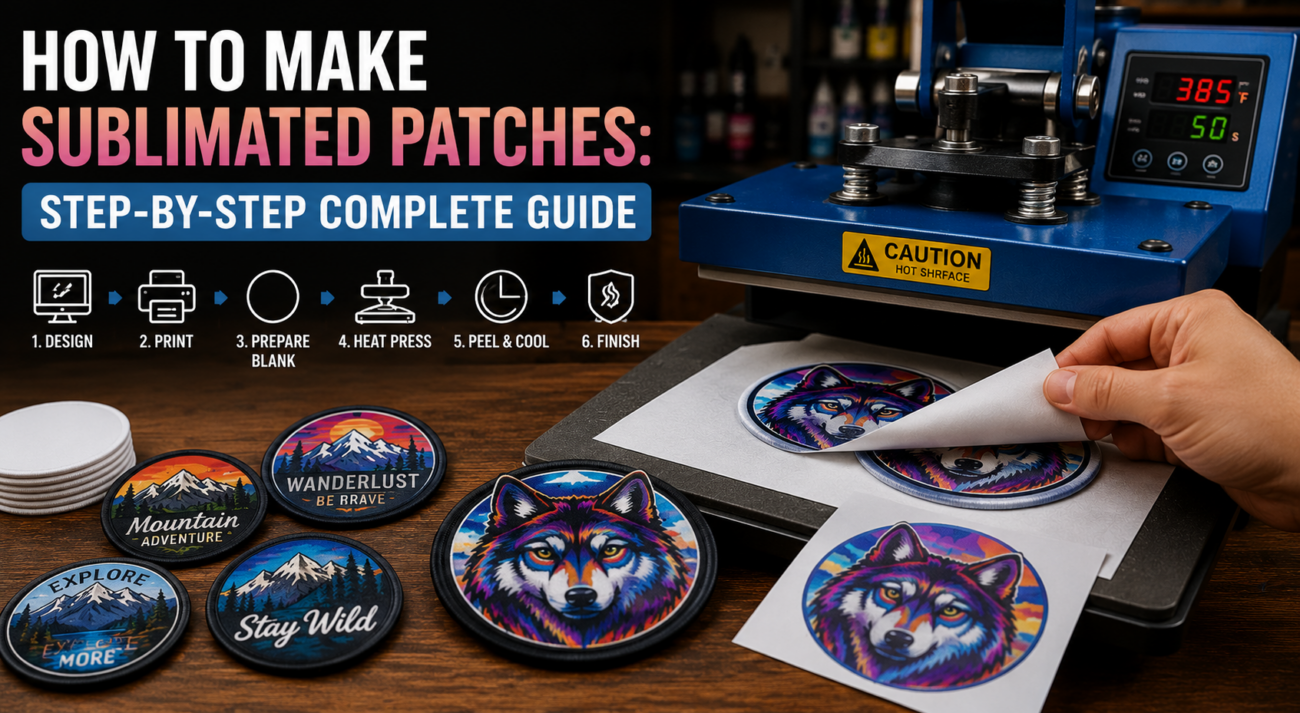
- Printed patches: full color, photo realistic designs.
- Denim patches: casual, rugged look.
How to Design Your Own Jacket Patch
Start your patch design with a simple, high contrast logo or image, keep colors limited, and choose a size that fits your jacket placement. Simple designs translate better into stitched or molded patches.
Example: A two color logo with bold outlines works better as an embroidered patch than a design with fine gradients.
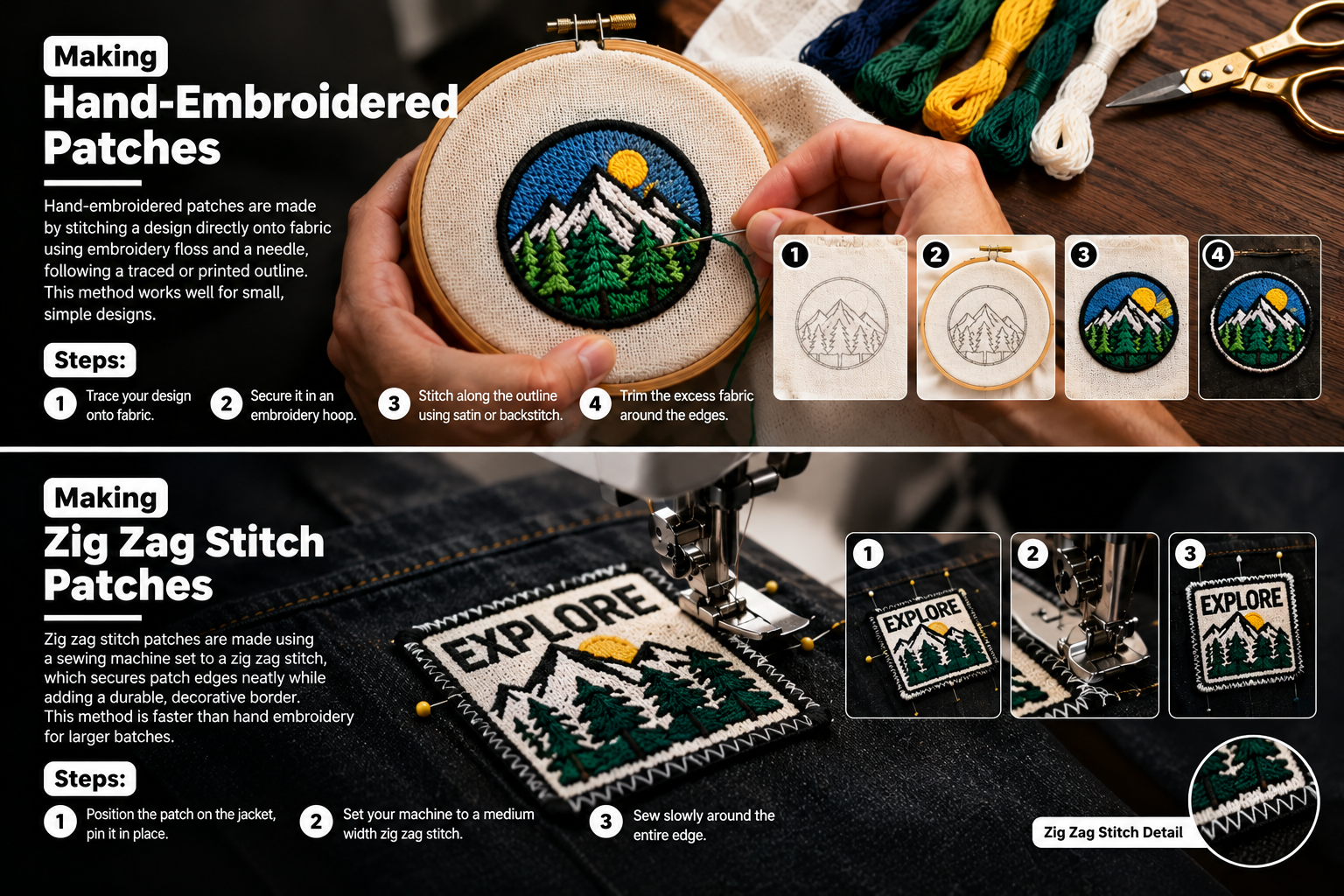
Making Hand-Embroidered Patches
Hand-embroidered patches are made by stitching a design directly onto fabric using embroidery floss and a needle, following a traced or printed outline. This method works well for small, simple designs.
Steps: trace your design onto fabric, secure it in an embroidery hoop, stitch along the outline using satin or backstitch, then trim the excess fabric around the edges.
Making Zig Zag Stitch Patches
Zig zag stitch patches are made using a sewing machine set to a zig zag stitch, which secures patch edges neatly while adding a durable, decorative border. This method is faster than hand embroidery for larger batches.
Steps: position the patch on the jacket, pin it in place, set your machine to a medium width zig zag stitch, and sew slowly around the entire edge.
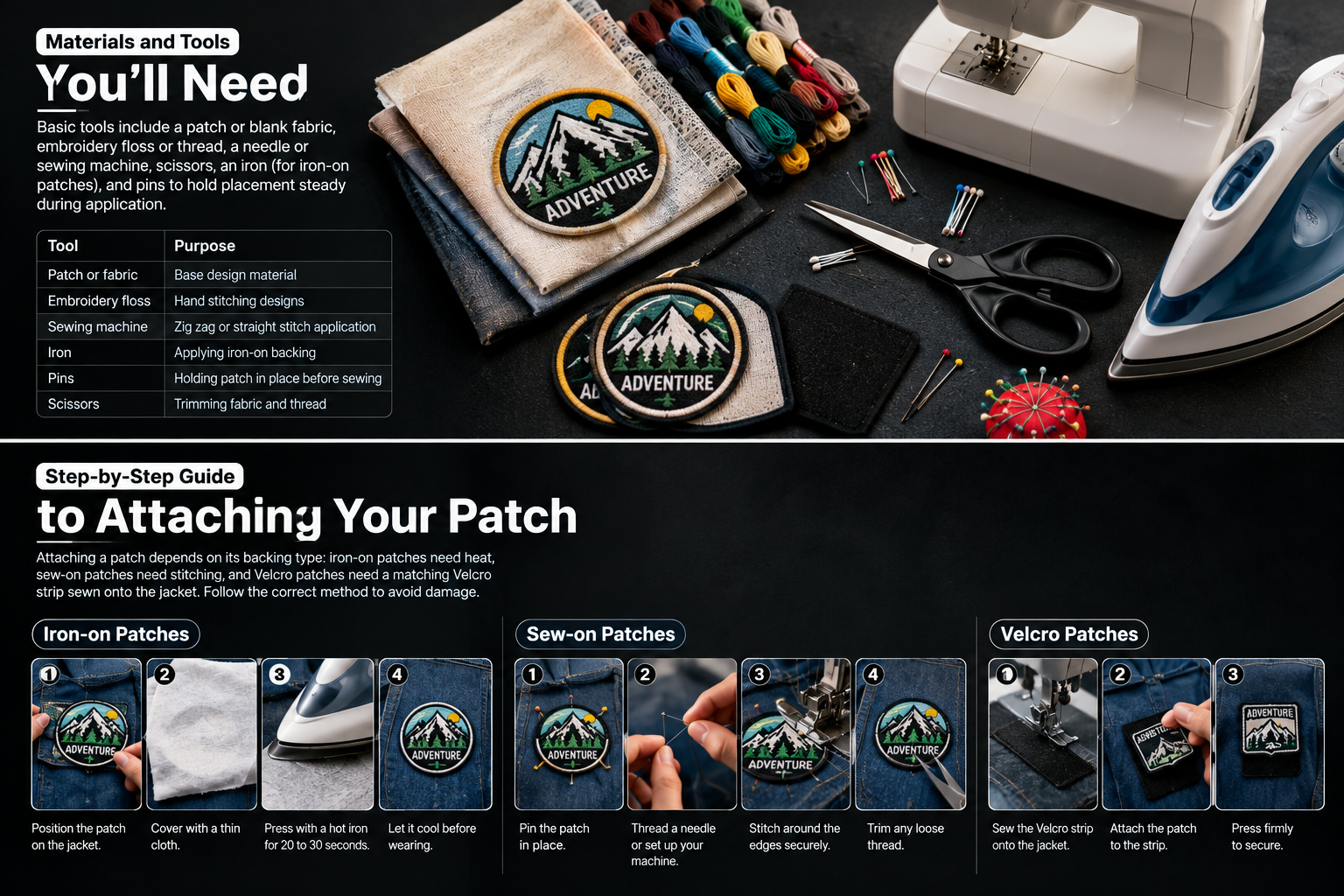
Materials and Tools You’ll Need
Basic tools include a patch or blank fabric, embroidery floss or thread, a needle or sewing machine, scissors, an iron (for iron-on patches), and pins to hold placement steady during application.
| Tool | Purpose |
|---|---|
| Patch or fabric | Base design material |
| Embroidery floss | Hand stitching designs |
| Sewing machine | Zig zag or straight stitch application |
| Iron | Applying iron-on backing |
| Pins | Holding patch in place before sewing |
| Scissors | Trimming fabric and thread |
Step-by-Step Guide to Attaching Your Patch
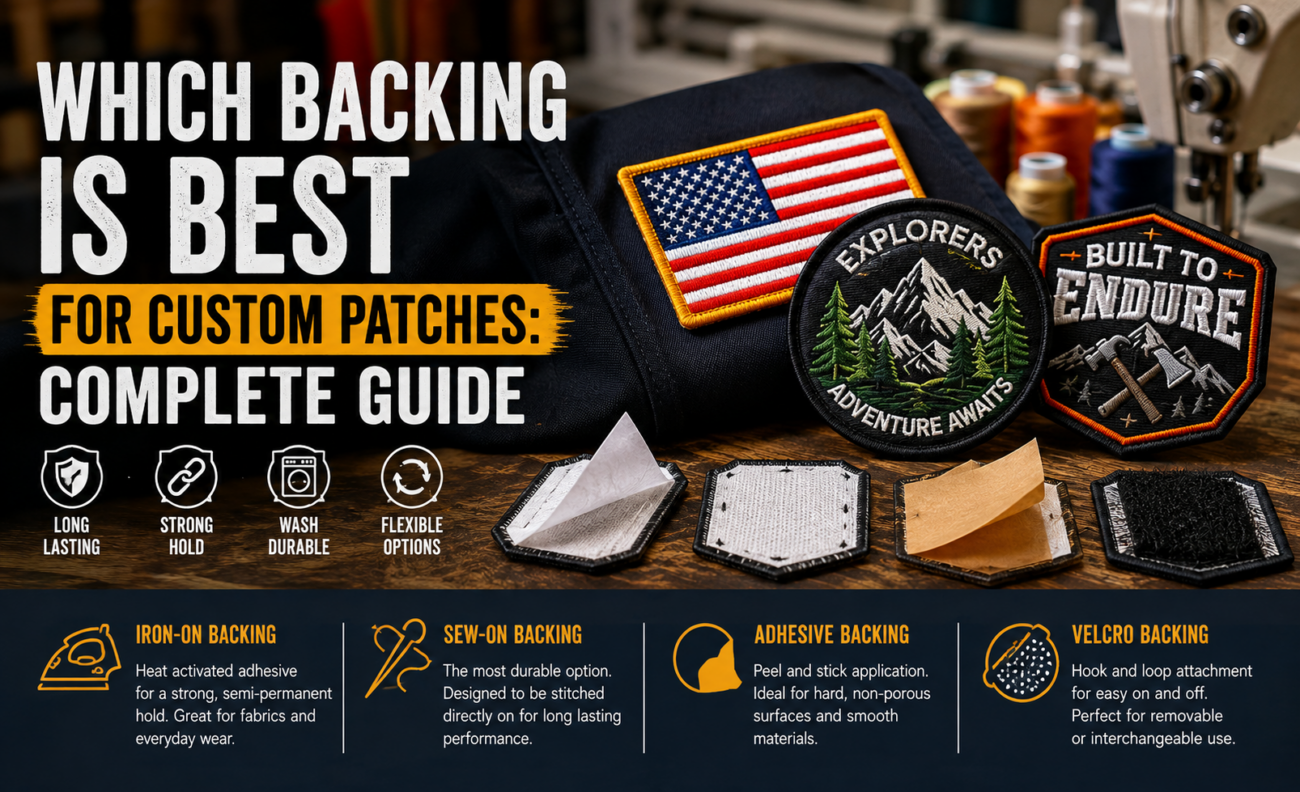
Attaching a patch depends on its backing type: iron-on patches need heat, sew-on patches need stitching, and Velcro patches need a matching Velcro strip sewn onto the jacket. Follow the correct method to avoid damage.
Iron-on patches:
- Position the patch on the jacket.
- Cover with a thin cloth.
- Press with a hot iron for 20 to 30 seconds.
- Let it cool before wearing.
Sew-on patches:
- Pin the patch in place.
- Thread a needle or set up your machine.
- Stitch around the edges securely.
- Trim any loose thread.
Velcro patches:
- Sew the Velcro strip onto the jacket.
- Attach the patch to the strip.
- Press firmly to secure.
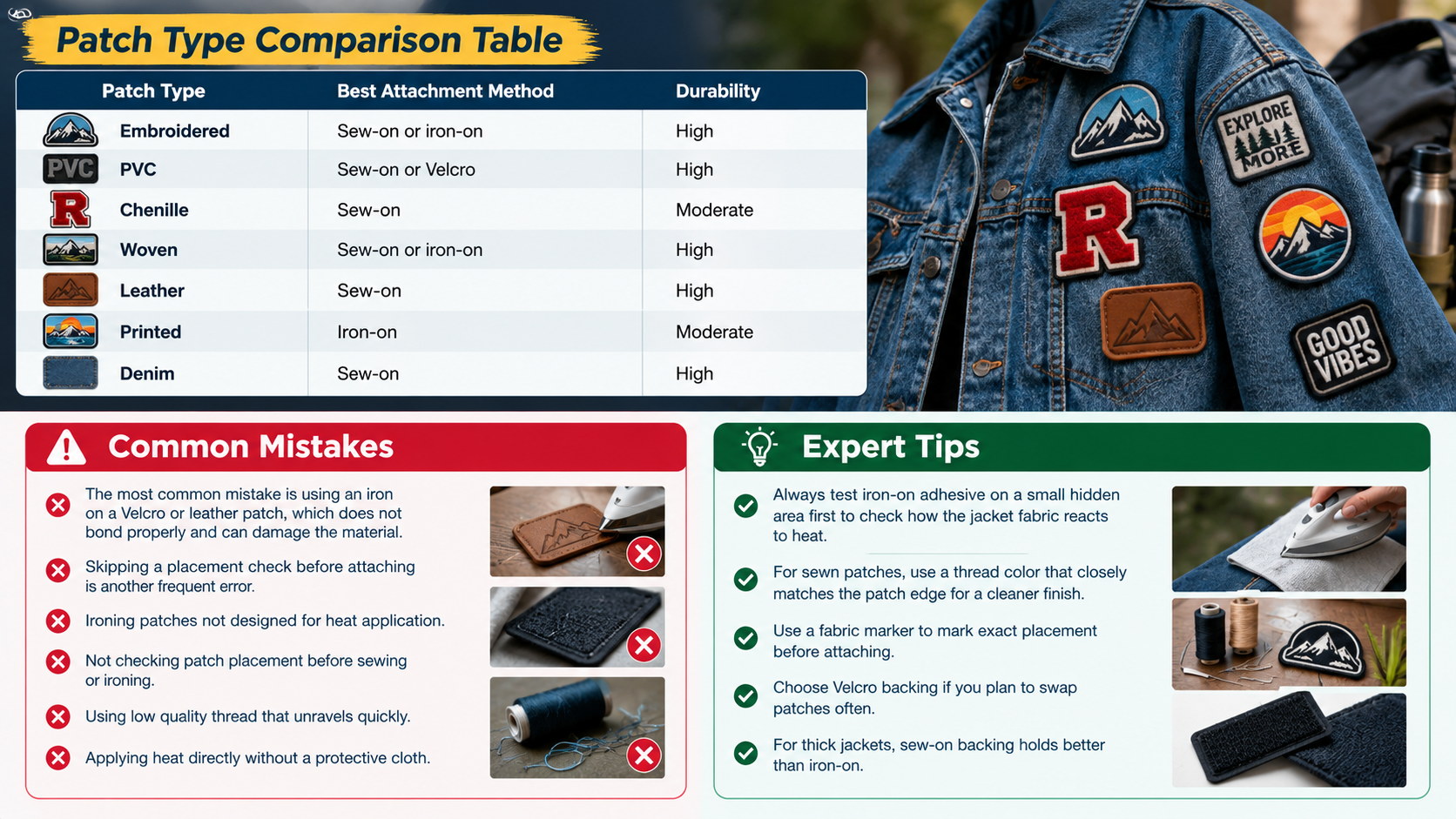
Comparison Table
| Patch Type | Best Attachment Method | Durability |
|---|---|---|
| Embroidered | Sew-on or iron-on | High |
| PVC | Sew-on or Velcro | High |
| Chenille | Sew-on | Moderate |
| Woven | Sew-on or iron-on | High |
| Leather | Sew-on | High |
| Printed | Iron-on | Moderate |
| Denim | Sew-on | High |
Common Mistakes
The most common mistake is using an iron on a Velcro or leather patch, which does not bond properly and can damage the material. Skipping a placement check before attaching is another frequent error.
- Ironing patches not designed for heat application.
- Not checking patch placement before sewing or ironing.
- Using low quality thread that unravels quickly.
- Applying heat directly without a protective cloth.
Expert Tips
Always test iron-on adhesive on a small hidden area first to check how the jacket fabric reacts to heat. For sewn patches, use a thread color that closely matches the patch edge for a cleaner finish.
- Use a fabric marker to mark exact placement before attaching.
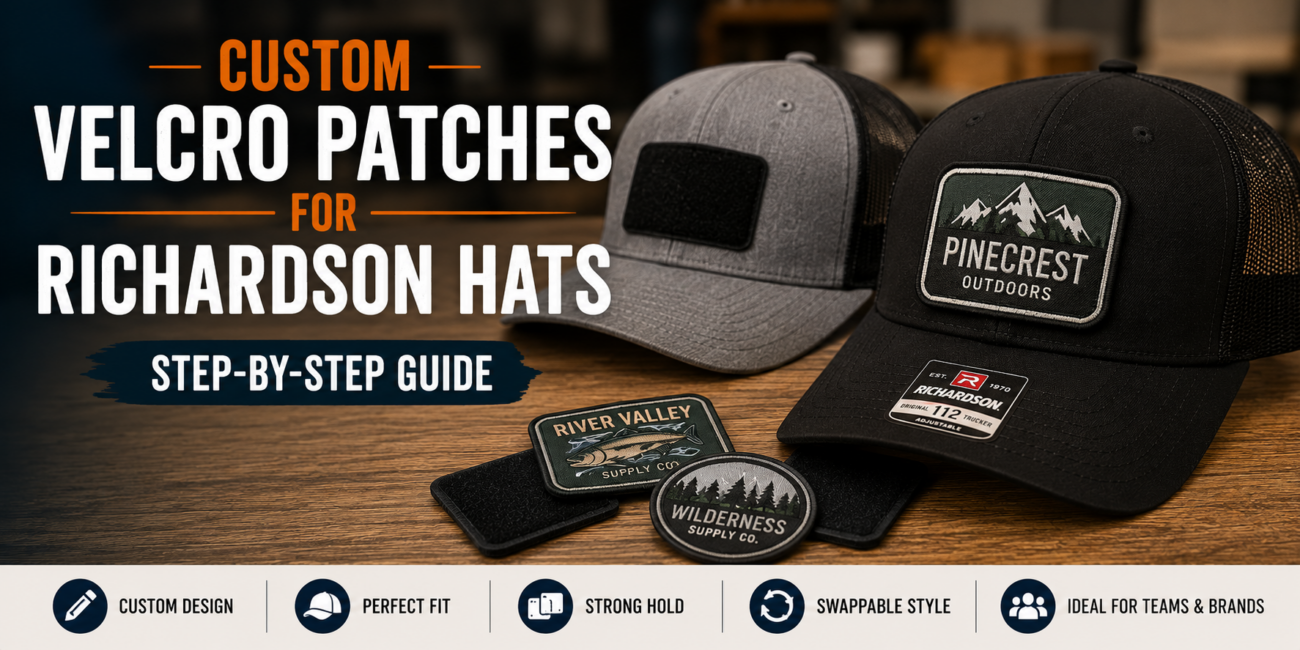
- Choose Velcro backing if you plan to swap patches often.
- For thick jackets, sew-on backing holds better than iron-on.
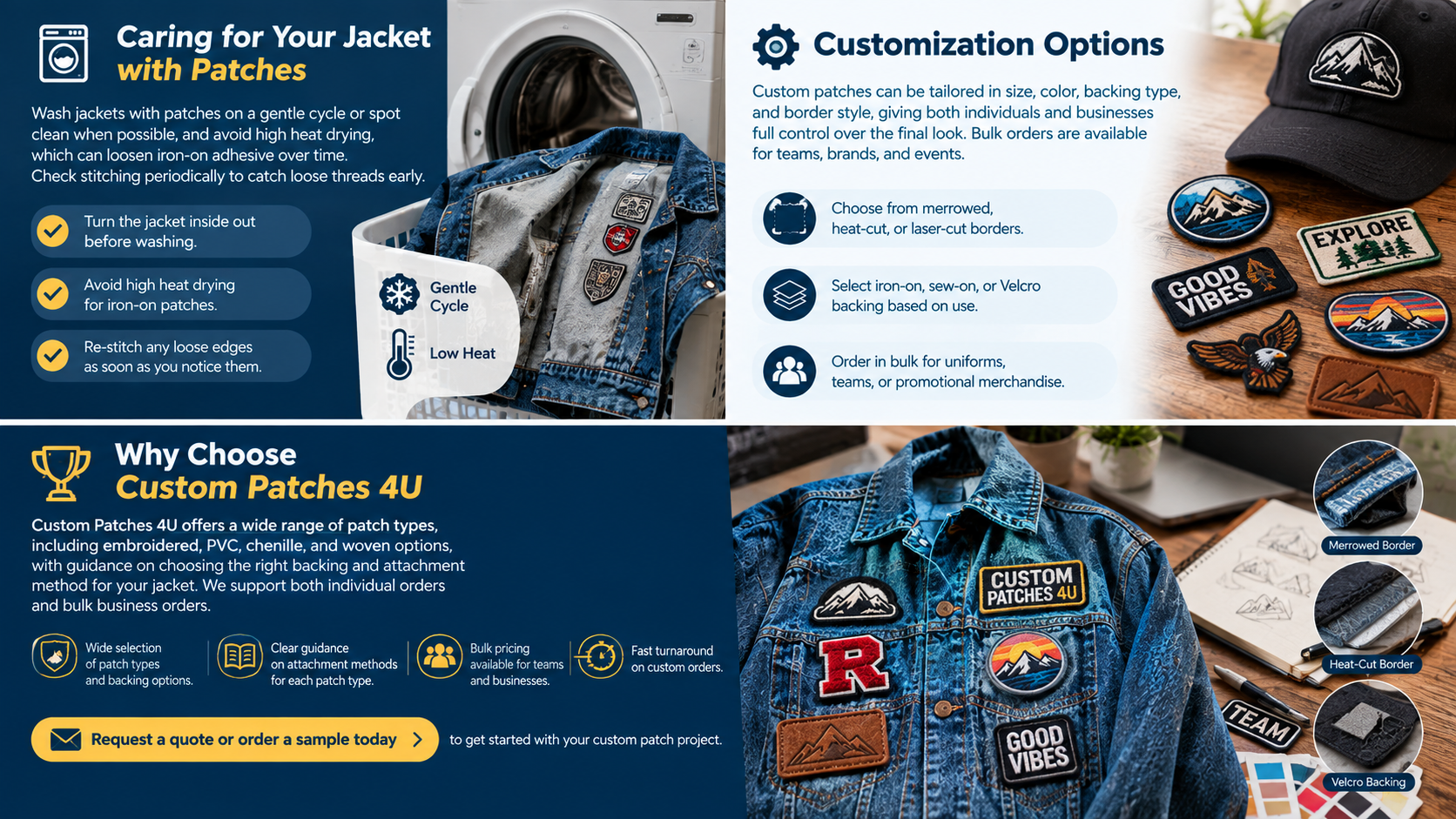
Caring for Your Jacket with Patches
Wash jackets with patches on a gentle cycle or spot clean when possible, and avoid high heat drying, which can loosen iron-on adhesive over time. Check stitching periodically to catch loose threads early.
- Turn the jacket inside out before washing.
- Avoid high heat drying for iron-on patches.
- Re-stitch any loose edges as soon as you notice them.
Customization Options
Custom patches can be tailored in size, color, backing type, and border style, giving both individuals and businesses full control over the final look. Bulk orders are available for teams, brands, and events.
- Choose from merrowed, heat-cut, or laser-cut borders.
- Select iron-on, sew-on, or Velcro backing based on use.
- Order in bulk for uniforms, teams, or promotional merchandise.
Why Choose Custom Patches 4U
Custom Patches 4U offers a wide range of patch types, including embroidered, PVC, chenille, and woven options, with guidance on choosing the right backing and attachment method for your jacket. We support both individual orders and bulk business orders.
- Wide selection of patch types and backing options.
- Clear guidance on attachment methods for each patch type.
- Bulk pricing available for teams and businesses.
- Fast turnaround on custom orders.
Request a quote or order a sample today to get started with your custom patch project.
FAQs
What is the easiest way to attach a patch to a jacket?
Iron-on patches are the easiest to attach for beginners, since they only require heat and a few minutes of pressing time.
Can I sew a patch onto a leather jacket?
Yes, sew-on backing works well on leather jackets, though a strong needle and thread are needed due to the thicker material.
How long does an iron-on patch last?
With proper care and avoiding high heat drying, iron-on patches typically last one to two years before needing reapplication.
What is the best patch type for a varsity jacket?
Chenille patches are the traditional choice for varsity jackets due to their thick, textured look.
Can I remove a sewn patch without damaging the jacket?
Yes, carefully cutting the stitches with a seam ripper allows you to remove a sewn patch without significant fabric damage.
Do PVC patches need special attachment methods?
PVC patches are usually sewn on or attached with Velcro, since their molded material does not respond well to iron-on heat.
How do I design my own patch?
Start with a simple, high contrast logo, limit your color palette, and choose a size that fits your intended jacket placement.
What tools do I need to make a hand embroidered patch?
You need fabric, embroidery floss, a needle, an embroidery hoop, and scissors to trim the finished design.
Can custom patches be ordered in bulk for a business?
Yes, most patch types support bulk ordering, with lower per unit costs at higher quantities.
Is Velcro backing better than sew-on for jackets?
Velcro backing is better if you want to swap patches often, while sew-on backing offers a more permanent, secure attachment.
Get Your Custom Patches Made Today
Ready to add custom patches to your jacket or order in bulk for your team? Request a quote or contact Custom Patches 4U to get started with a design that fits your style and budget.