
Your Complete Guide to Custom Patches for Brands, Businesses & Fashion Professionals | CustomPatches4U.com
Custom patches have quietly become one of the most reliable and commercially practical tools in the modern fashion and apparel industry. Whether you are running a corporate uniform program, building a streetwear brand, supplying team sports apparel, or looking for a durable promotional product, custom patches deliver results that few other garment decoration methods can match at the same price point.
The numbers support this. The global embroidered patches and badges market stood at approximately USD 3.21 billion in 2024 and is forecast to reach USD 5.67 billion by 2033, growing at a compound annual growth rate of 6.8%. Demand is rising across fashion retail, sportswear, military supply, and corporate merchandise, which means businesses that understand how to use custom patches effectively hold a genuine competitive advantage.
This guide covers the full range of benefits of using a custom patch in today’s fashion landscape, written specifically for B2B buyers, brand managers, uniform suppliers, and anyone sourcing patches at volume.
What Exactly Is a Custom Patch and How Is It Used in Fashion?
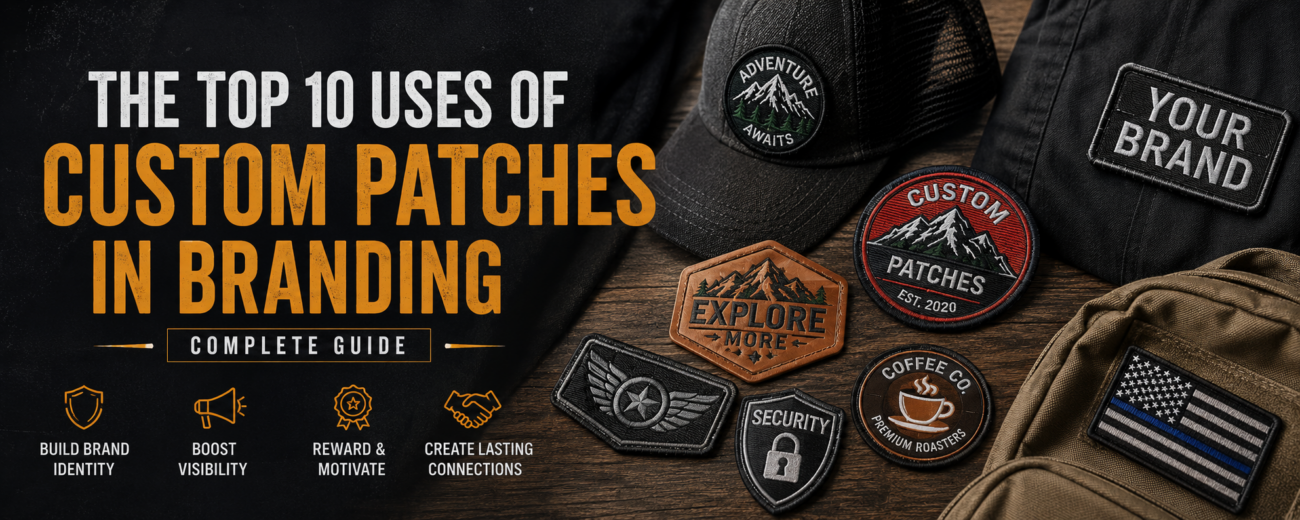
A custom patch is a fabric or molded element, produced separately from a garment, that carries a design, logo, text, or symbol. It is then attached to clothing, bags, hats, jackets, or accessories using iron-on adhesive, sew-on stitching, Velcro, or heat-seal bonding.
Custom patches are produced using several manufacturing methods, each suited to different applications:
- Embroidered patches: Thread stitched over a woven backing for a classic, textured look
- Woven patches: Loom-produced for fine detail and small text
- PVC patches: Molded rubber, waterproof and highly durable
- Chenille patches: Looped yarn surface, associated with varsity and collegiate apparel
- Sublimated patches: Full-color printing on polyester for complex, photographic designs
- Leather patches: Debossed or laser-engraved for premium garment applications
Each type serves a specific commercial purpose, and selecting the right one for your product or uniform program makes a measurable difference in the final result.
The Core Benefits of Using Custom Patches in the Fashion Industry
1. Custom Patches Build a Consistent Brand Identity Across Every Product
Brand consistency is a non-negotiable requirement for any business producing apparel at scale. When your logo or brand mark appears on 500 jackets, 200 bags, and 1,000 caps, every single one needs to look identical. Custom patches make that possible.
Because patches are manufactured as finished units before being applied to garments, they carry the same color profile, thread density, and dimension every time. There is no variation from item to item, no fading between production runs, and no dependency on the operator applying decoration directly to each garment.
For franchise businesses, reseller networks, and corporate uniform programs, this consistency is especially important. A patch produced today should match one produced three years from now, and with saved digitization files and production records, it does.
2. Durability Makes Custom Patches the Most Cost-Effective Long-Term Decoration Option
When businesses calculate the true cost of garment decoration, they rarely factor in replacement frequency. A screen-printed logo that fades after 20 washes, or a heat transfer that peels after 15 cycles, drives up the total cost of ownership significantly over a uniform program’s lifespan.
Quality embroidered patches, by contrast, are produced using polyester or rayon thread on a durable twill or felt backing. They resist washing, abrasion, and UV exposure. Independent testing consistently shows that well-produced embroidered patches maintain color and structural integrity through 50 or more industrial wash cycles without degradation.
For workwear, sports uniforms, and hospitality apparel that are washed daily or near-daily, that durability represents real financial savings across a multi-year program.
PVC patches push durability even further. Being waterproof and chemical resistant, they are standard specification in military, law enforcement, and outdoor workwear sectors where conditions are demanding and replacement costs are high.
3. Significant Cost Savings in Bulk Patch Production
For B2B buyers, one of the most important practical benefits of custom patches is their cost structure at volume. Patch production scales well. The per-unit cost at 500 units is substantially lower than at 50 units, and the cost at 2,000 units drops further still.
More importantly, patches can be ordered in advance, stored, and applied to garments over time. This decouples patch ordering from garment production, which is a significant logistical advantage for brands producing collections in multiple stages or across different manufacturers.
A single patch design can be applied to polo shirts, fleece jackets, bags, and caps within the same collection, without retooling or reordering. For businesses managing multiple product categories under one brand, that flexibility reduces both cost and complexity.
Minimum order quantities at CustomPatches4U start from as low as 50 units, making quality custom patches accessible for growing businesses as well as established operations placing large-scale orders.
4. Patches Work on Virtually Any Fabric, Which Direct Embroidery Cannot
Direct embroidery has a well-known limitation: not every fabric can support a needle and hoop. Stretch fabrics pucker. Thin nylon distorts. Very lightweight textiles tear. Leather and suede require special equipment. These limitations mean that direct embroidery is simply not a viable decoration option for many modern garment types.
Custom patches solve this completely. Because the patch is produced on its own backing material, it can be applied to almost any fabric surface without risk of damage or distortion. Iron-on backing works reliably on cotton, polyester blends, denim, and canvas. Sew-on application handles heavyweight fabrics and workwear. Velcro-backed patches attach to tactical gear and equipment without any sewing required.
For brands producing across multiple fabric categories, this versatility means one decoration solution covers the entire product range.
5. Custom Patches Function as High-Value, Low-Cost Marketing Collateral
Every time a staff member wears a branded uniform, every time a customer carries a bag with your patch on it, every time an event attendee wears merchandise, your brand is in public view. That is earned media at zero recurring cost.
Custom patches are among the most cost-efficient brand impression tools available to any business. A branded patch applied to a frequently worn jacket generates thousands of impressions over its lifespan. Compared to paid digital advertising, where cost-per-impression rises continuously, the economics of wearable brand marketing via custom patches are exceptionally favorable.
This makes patches a smart choice for:
- Staff and corporate uniform programs
- Event merchandise and trade show giveaways
- Sponsorship and co-branding arrangements
- Brand ambassador and influencer apparel programs
- Franchise and reseller branded uniform packages
6. Patches Signal Team Identity, Membership, and Earned Achievement
There is a dimension to custom patches that no other garment decoration method replicates: the social and psychological significance of a patch as a symbol of belonging. In sports teams, military units, motorcycle clubs, scout organizations, corporate departments, and academic institutions, a patch is not simply a logo. It marks membership. It signals rank. It represents something earned.
For businesses supplying these sectors, recognizing this significance is commercially important. Customers in these markets are not buying decoration. They are buying identity markers, and they treat those markers accordingly. A patch is kept, maintained, and transferred to new garments when old ones wear out.
This behavior creates consistent reorder demand. Teams grow. New members join. Insignia updates. Each of these events generates a new order. For patch suppliers, team sports, military, and organizational sectors represent dependable, repeat-purchase customers.
7. Custom Patches Support Garment Longevity and Sustainable Fashion Practices
The fashion industry generates an estimated 92 million tonnes of textile waste annually. One practical response to that problem, increasingly adopted by both consumers and brands, is repairing and refreshing garments rather than replacing them. Custom patches are one of the most functional tools in that approach.
A patch can cover a worn area, repair a small tear, or simply refresh the appearance of an older garment at a fraction of the cost of replacement. For brands positioning themselves around sustainability, durability, and conscious consumption, incorporating patches into product design or offering a repair patch program is a credible and commercially practical strategy.
Patch production itself also generates less waste than screen printing or digital printing processes, which require inks, solvents, and setup materials for every production run.
8. Faster Turnaround and Flexible Production Timelines
Custom patches can be produced and shipped independently of the garments they will eventually be applied to. This separation of patch production from garment manufacturing reduces lead time risk considerably, particularly for businesses managing complex supply chains across multiple suppliers.
For repeat orders using saved digitization files, turnaround times at CustomPatches4U are typically between 7 and 14 business days for standard embroidered patches. PVC, woven, and sublimated patches follow similar or shorter timelines depending on order volume and complexity.
For businesses operating on tight seasonal schedules or responding to fast-moving demand, that speed and flexibility is a genuine operational advantage.
Custom Patch Types and Their Best Applications
| Patch Type | Best For | Key Advantage |
| Embroidered | Uniforms, corporate apparel, sportswear | Classic look, excellent durability |
| Woven | Fine logos, small text, fashion labels | High detail, flat profile |
| PVC | Military, outdoor, tactical workwear | Waterproof, chemical resistant |
| Chenille | Varsity, collegiate, club apparel | Bold visual impact, tactile appeal |
| Sublimated | Complex designs, full-color artwork | Unlimited colors, photographic quality |
| Leather | Premium fashion, denim, heritage brands | High-end finish, tactile brand element |
Industries That Rely on Custom Patches
Corporate and Hospitality Uniforms: Custom patches allow large uniform programs to maintain brand consistency across departments, locations, and garment types, with the ability to update branding without full uniform replacement.
Sports and Athletic Apparel: From youth leagues to professional clubs, custom patches identify teams, display sponsor logos, and mark achievement. Embroidered patches withstand the repeated washing demands of athletic environments.
Military and Law Enforcement: Rank insignia, unit identification, qualification badges, and commemorative patches are standard across global military and law enforcement uniform systems. PVC and embroidered formats are the primary production types.
Fashion Retail and Streetwear: Contemporary fashion labels use custom patches as design elements, brand signatures, and limited-release collectibles. The streetwear sector in particular has driven sustained demand for patch-based decoration.
Promotional Products and Events: Custom patches generate higher retention rates than most standard promotional merchandise. Recipients keep and use them, creating long-term brand exposure from a single production cost.
Frequently Asked Questions About Custom Patches in Fashion
What are the main benefits of using custom patches on clothing?
Custom patches provide durable, consistent branding and decoration that can be applied to almost any fabric type. They are cost-effective in bulk production, resistant to washing and abrasion, and far outlast heat transfers and screen prints under regular use conditions.
Are custom patches good for business branding?
Yes. Custom patches are one of the most cost-efficient brand impression tools available. Applied to frequently worn uniforms or merchandise, a single patch generates thousands of impressions over its lifespan at no recurring cost, making them highly effective for corporate uniform programs, events, and promotional campaigns.
How long do custom embroidered patches last?
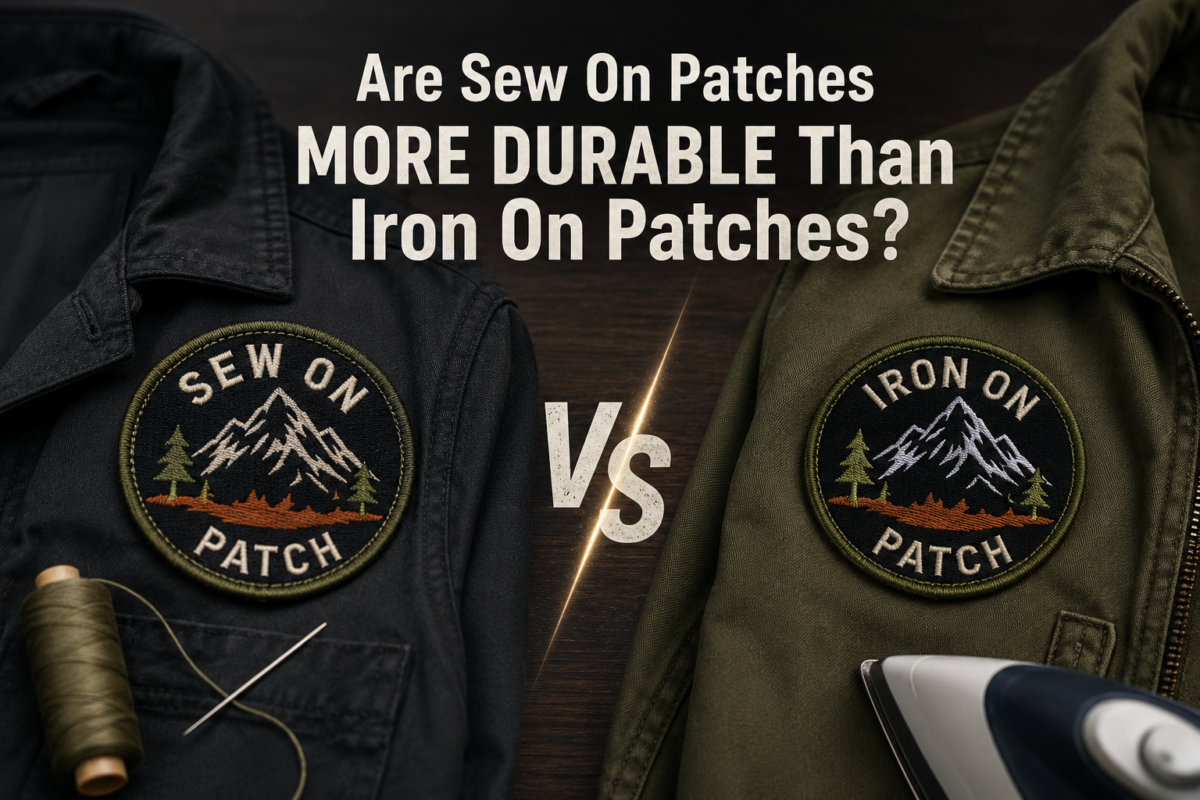
Well-produced custom embroidered patches using polyester thread and quality backing material consistently maintain color and structural integrity through 50 or more industrial wash cycles. Sew-on patches generally offer greater longevity than iron-on applications under heavy-use conditions.
What is the minimum order quantity for custom patches?
Minimum order quantities vary by manufacturer and patch type. CustomPatches4U accepts orders from as low as 50 units, with significant cost-per-unit reductions available at higher volumes.
What types of custom patches work best for outdoor or industrial use?
PVC custom patches are the preferred option for outdoor, military, and industrial applications due to their waterproof construction and resistance to chemicals and physical abrasion. Heavy-duty sew-on embroidered patches are also suitable where a more traditional appearance is required.
Can custom patches be removed and reused?
Velcro-backed custom patches can be removed and reapplied repeatedly, making them ideal for tactical gear, temporary uniform programs, and applications where the same patch needs to move between multiple items. Iron-on and sew-on patches are intended as permanent applications.
How are custom patches attached to garments?
Custom patches attach via iron-on heat adhesive, sew-on stitching, Velcro hook-and-loop, or industrial heat-seal bonding. The correct method depends on the fabric type, garment use, and durability requirement.
What is the difference between embroidered and woven custom patches?
Embroidered patches are produced by stitching thread over a backing fabric, creating a raised, textured surface suitable for bold logos and designs. Woven patches are constructed on a loom using finer threads, producing a flatter profile that supports greater detail and smaller text reproduction.
Conclusion
Custom patches remain one of the most commercially sound and versatile garment decoration solutions available to fashion brands, uniform suppliers, and promotional merchandise buyers. Their combination of durability, cost efficiency at scale, design flexibility, and broad fabric compatibility gives them a clear advantage over most alternative decoration methods.
Whether you are building a corporate uniform program, sourcing merchandise for a large event, supplying team sports apparel, or adding a brand mark to a fashion collection, custom patches deliver consistent, lasting results at a price point that makes commercial sense.