
Choosing the right branding material for your business apparel, promotional merchandise, or corporate uniforms is a critical decision. For decades, custom embroidery has remained the industry standard for custom branding, but is it the right choice for your specific project?
When bulk ordering corporate supplies, understanding the pros & cons of embroidered patches helps you invest your marketing budget wisely. This comprehensive guide breaks down the financial, practical, and aesthetic advantages and disadvantages of embroidered patches, helping B2B buyers choose the right application methods and materials for their brand.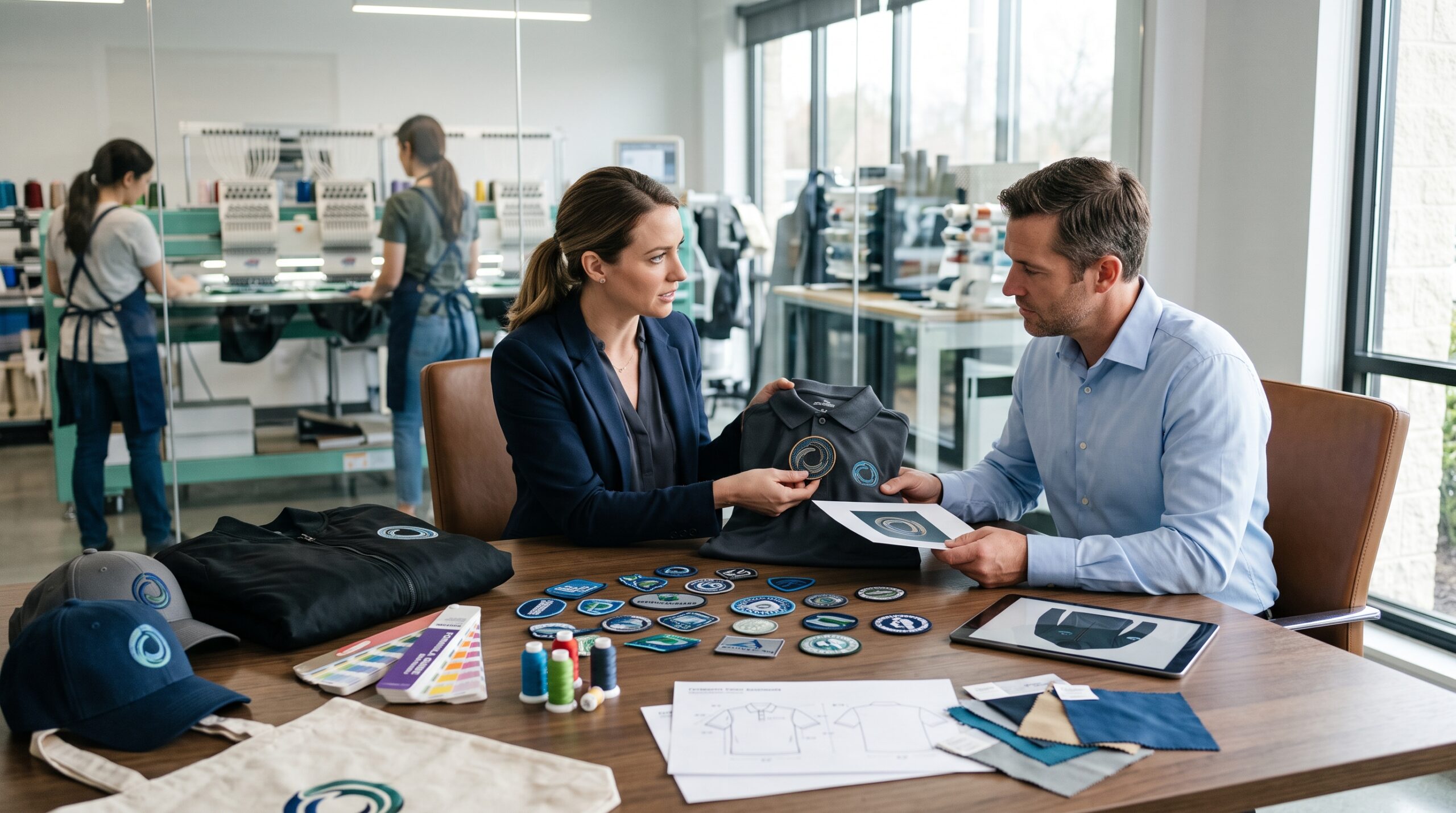
What are Custom Embroidered Patches?
An embroidered patch is a piece of branding artwork created by stitching high-quality rayon or polyester threads onto a heavy-duty backing fabric. Unlike direct embroidery, which stitches designs straight into a garment, manufacturers produce these patches separately and attach them to clothing, bags, or accessories afterward.
Featured Snippet Optimization (What are Embroidered Patches):
Custom embroidered patches are independent pieces of fabric branding created by stitching durable threads onto a backing substrate. They display a classic, textured, three-dimensional look. Businesses use them as versatile, cost-effective alternatives to direct embroidery for branding uniforms, promotional gear, and apparel.
Pros & Cons of Embroidered Patches: The Complete Analysis
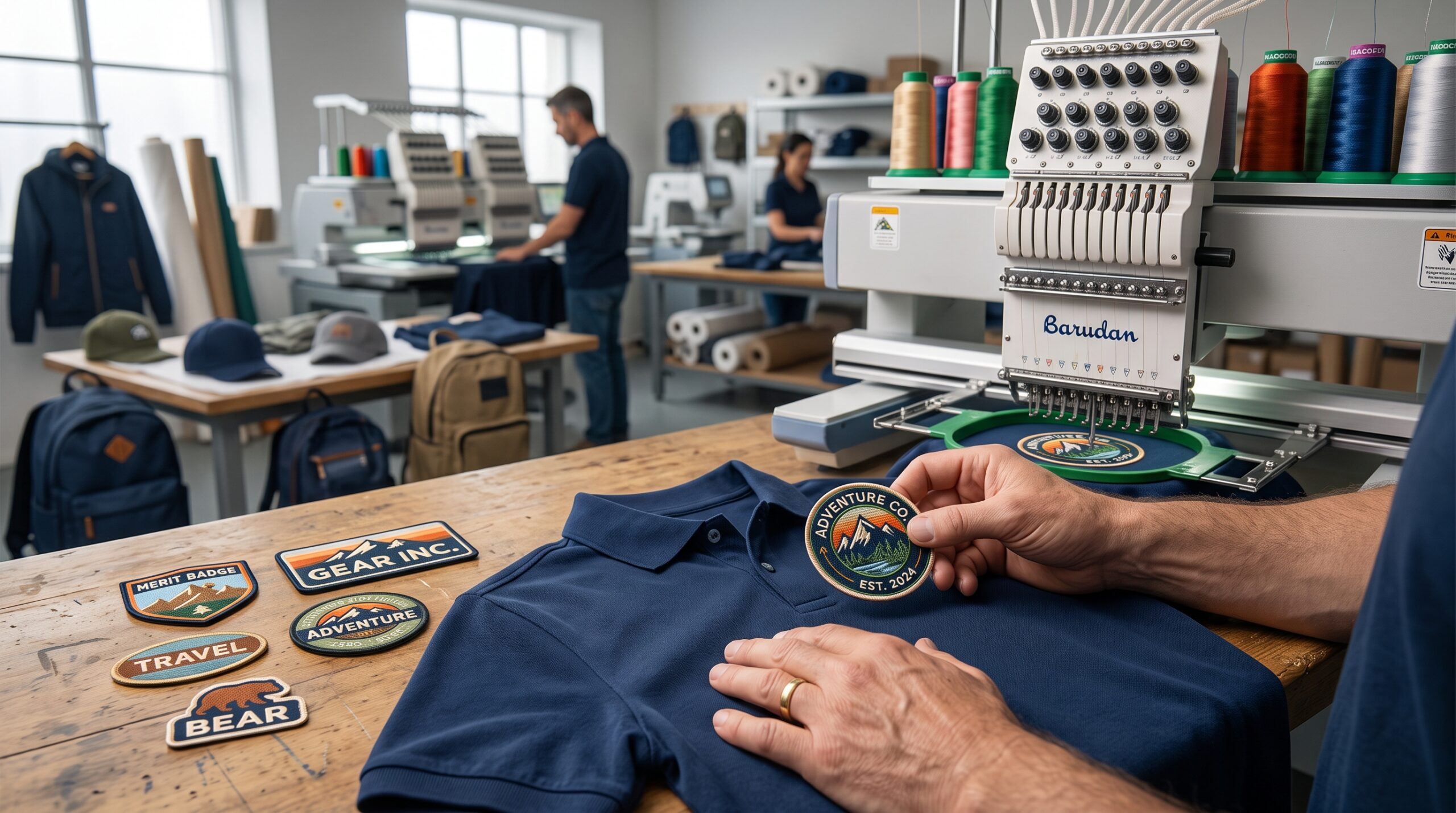
Every branding material has distinct performance characteristics. Evaluating the explicit benefits of embroidered patches alongside the practical limitations of embroidery patches ensures your final product meets production expectations.
The Advantages and Disadvantages of Embroidered Patches
| Pros (Advantages) | Cons (Limitations) |
| High-grade durability and resistance to fading | Incapable of replicating complex color gradients |
| Premium, textured three-dimensional appearance | Tiny text (under 0.2 inches) becomes illegible |
| High cost-effectiveness for bulk B2B production | Higher setup cost for small, short-run orders |
| Exceptional versatility across multiple fabric types | Rigid structure can distort ultra-thin fabrics |
| Removable and reusable backing configurations | High thread-count designs increase weight |
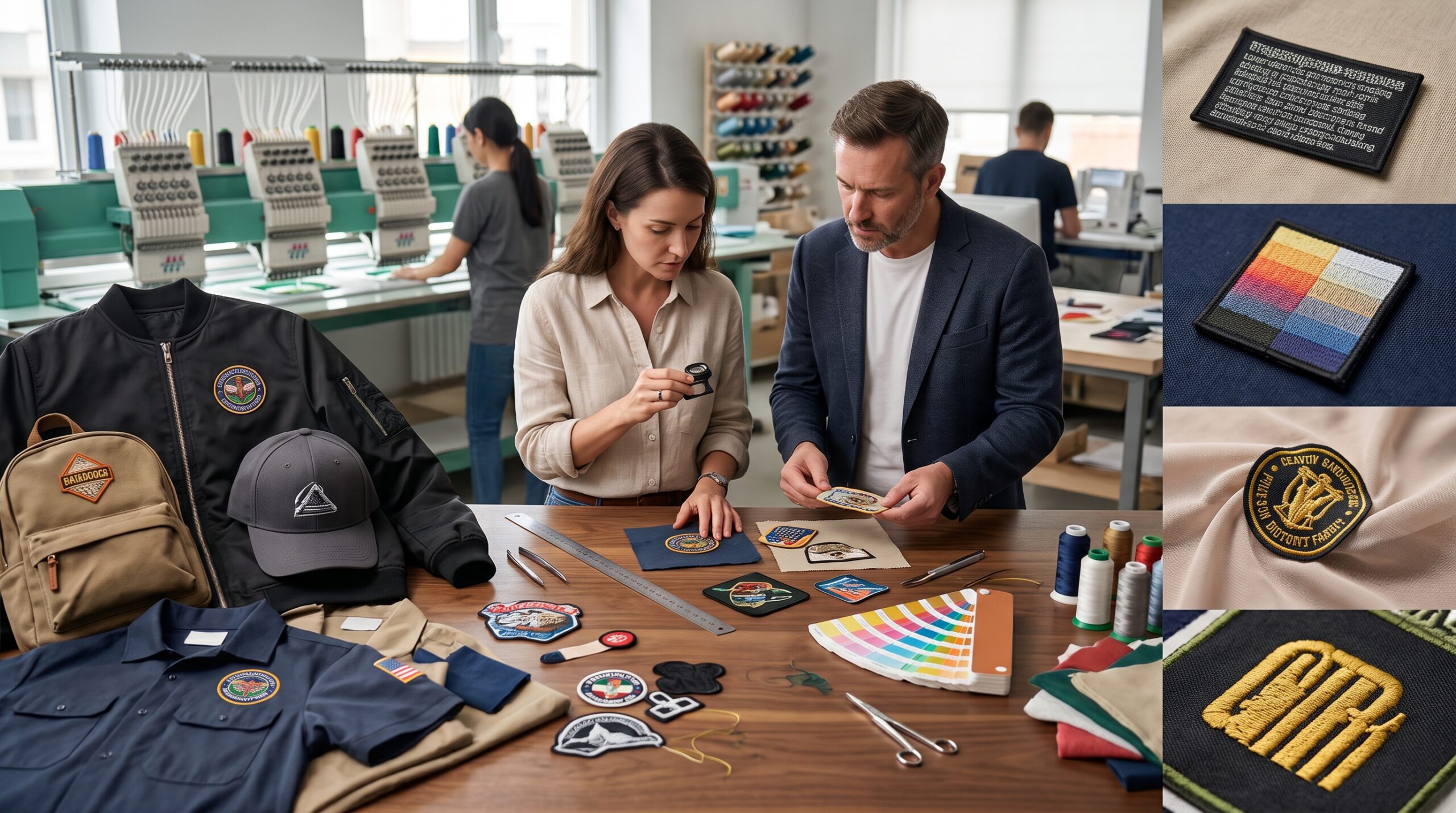
Detailed Benefits of Embroidered Patches
- Long-Term Performance: Are embroidered patches durable? Yes, they handle industrial laundering and harsh weather conditions without fraying or losing color vibrancy.
- Premium Brand Perception: The raised thread texture offers high-quality embroidered patches features that screen printing or vinyl transfers cannot replicate, giving corporate gear an upscale appearance.
- Flexibility in Inventory: Since patches are produced separately, you do not need to commit to specific garment sizes upfront. You can order patches in bulk and apply them to jackets, hats, or bags as demand dictates.
- Cost-Efficiency: For large production runs, bulk pricing makes them incredibly cost-effective custom patches, lowering the unit cost significantly compared to direct-to-garment stitching.
Detailed Limitations of Embroidery Patches
- Graphic Simplification: The physical thickness of embroidery thread restricts fine lines. Photographic images or complex digital artwork must be simplified before production.
- Fabric Compatibility Restrictions: Because embroidered patches are dense and relatively heavy, they can pull or sag on lightweight materials like silk, thin performance polyester, or sheer nylon.
- Text Constraints: Small font styles, fine script lettering, and dense copyright symbols do not translate well into thread, requiring clean, bold typography for maximum legibility.
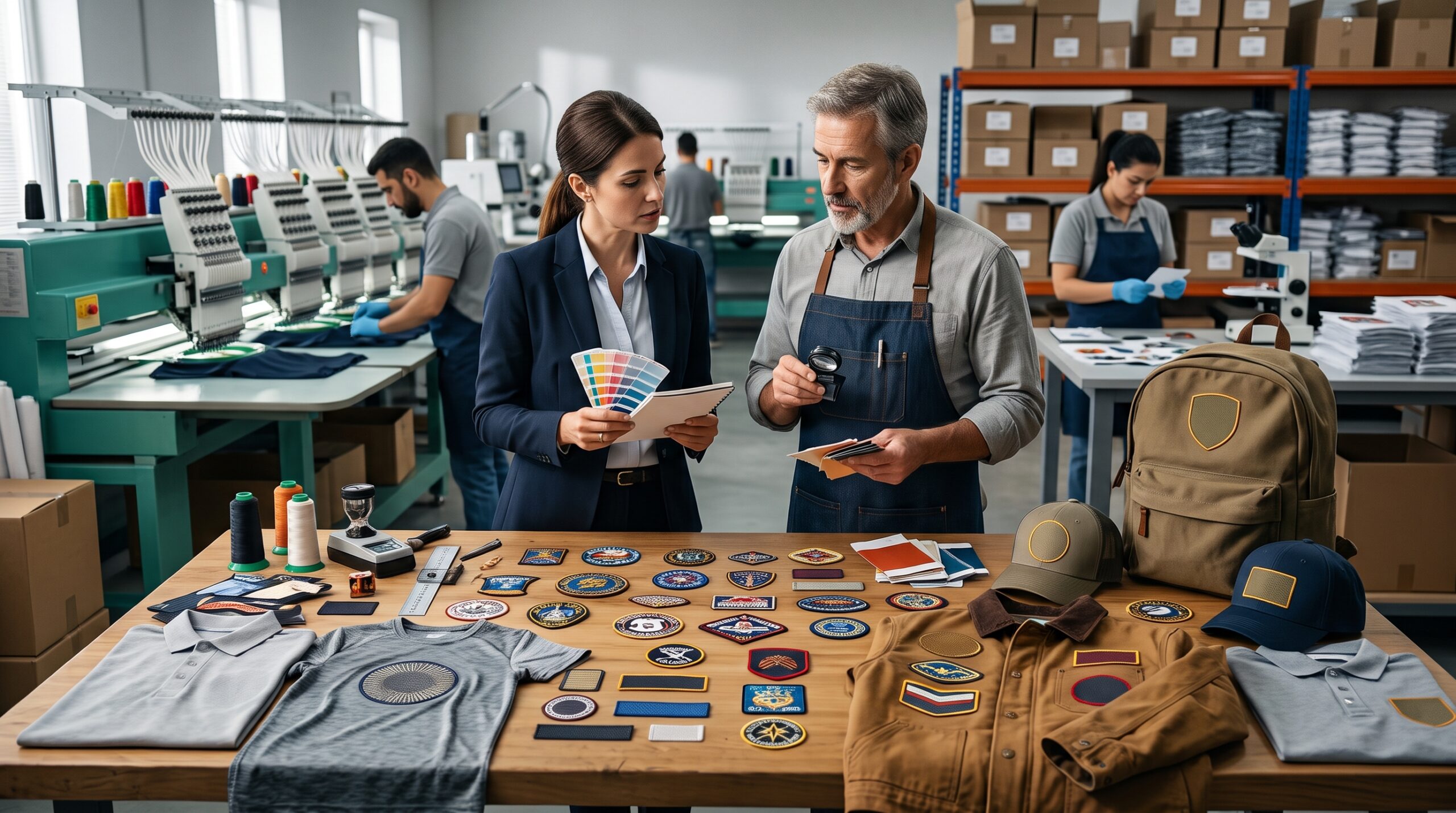
Why Embroidered Patches Matter for B2B Businesses
For brands, utility companies, security firms, and fashion labels, apparel choices impact the bottom line. Ordering uniform elements requires a balance of longevity and budget predictability.
- Scalable Marketing Assets: Affordable embroidered patches for clothing allow companies to distribute branded merchandise that endures, acting as mobile advertisements for years.
- Simplified Inventory Management: Instead of stocking hundreds of pre-printed shirts across small, medium, and large sizes, B2B buyers stock a single box of patches to apply as needed.
- Professional Identification: In service industries like security, logistics, and field repairs, bold embroidered patches establish immediate authority, trust, and brand recognition with customers.
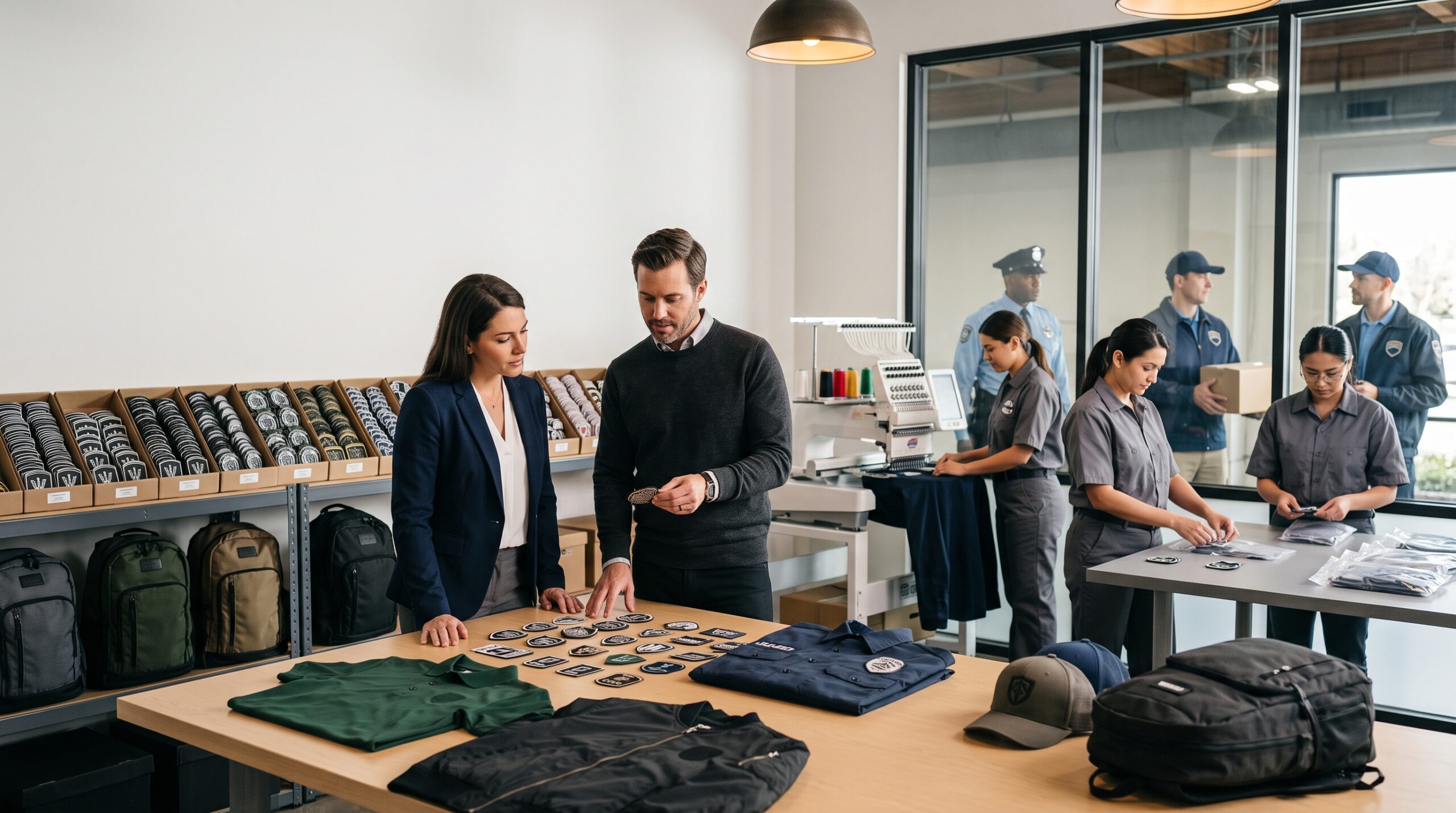
Cheap vs Premium Embroidered Patches: How to Spot Quality
Not all manufacturers produce custom patches to the same standards. Choosing cheap vs premium embroidered patches often determines whether your branding lasts for years or unravels after three washes.
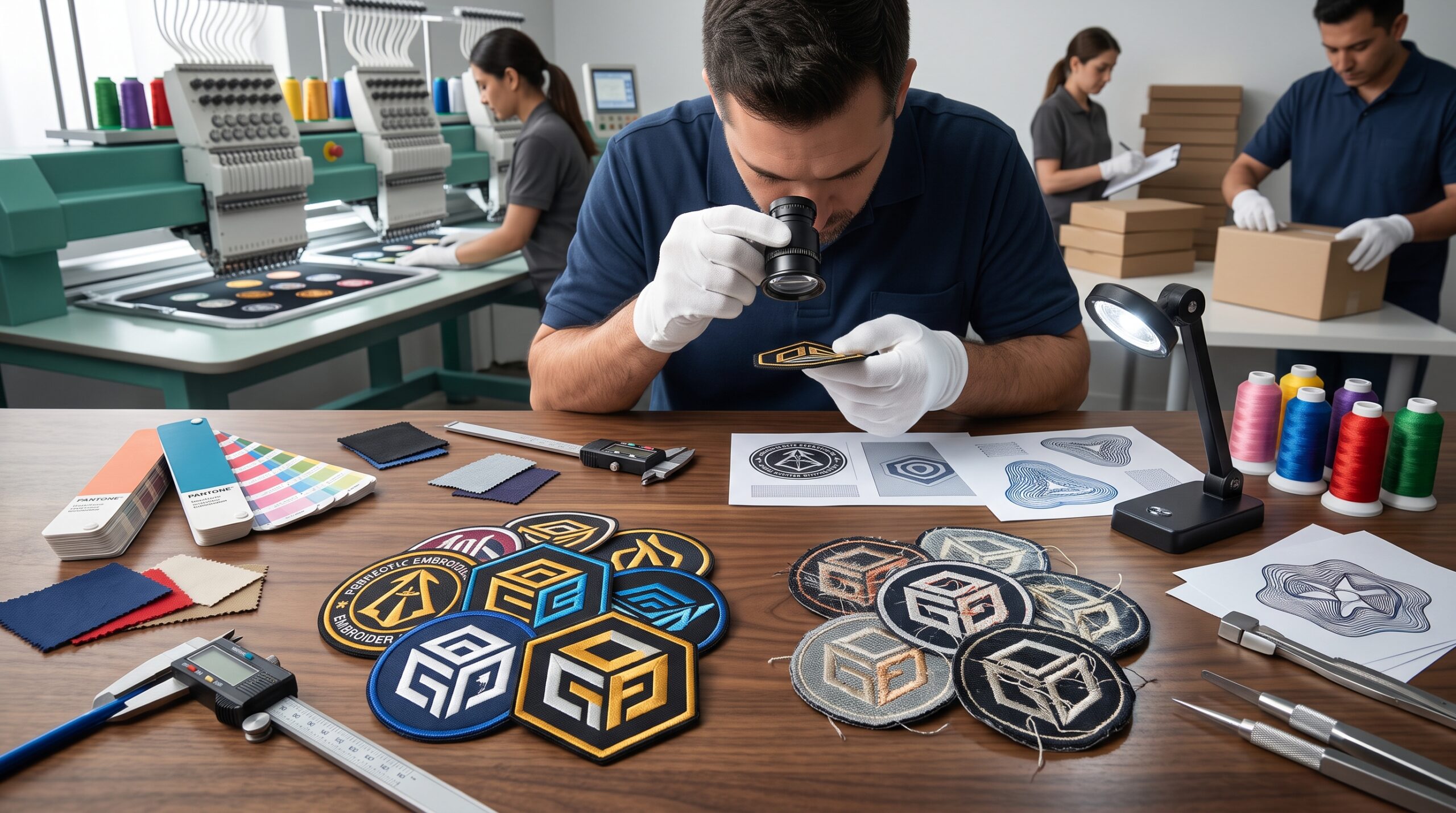
Features of High-Quality Embroidered Patches
- Stitch Density: High-quality patches use dense, tight stitching patterns that completely cover the underlying base fabric without gaps or loose loops.
- Thread Selection: Premium manufacturers use top-tier polyester or rayon threads that resist bleaching, color bleeding, and UV fading.
- Border Construction: A clean merrowed border or a precise laser-cut heat-sealed edge prevents the patch perimeter from fraying over time.
- Design Precision: High-end digitizing ensures complex brand logos retain clean geometric proportions without warping during embroidery machine runs.
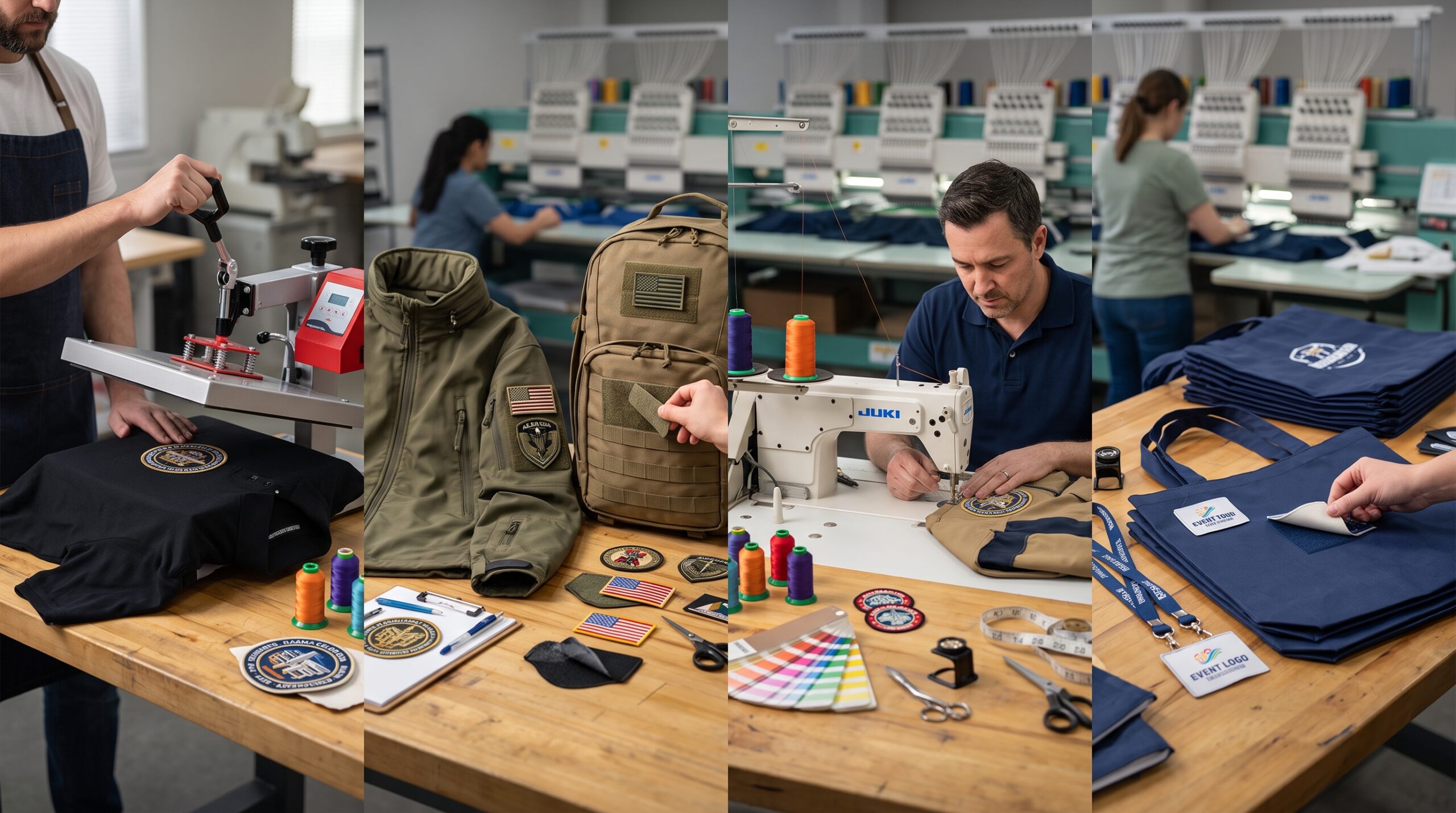
Embroidered Patch Backing Options: Pros and Cons
The attachment method you select changes the durability, flexibility, and reuse value of your corporate apparel. Here is an analysis of embroidered patch backing options pros and cons.
Iron-On (Heat Seal) Backing
- Pros of iron-on embroidered patches: Quick and easy to apply using a commercial heat press or standard iron; creates a permanent bond on cotton and denim.
- Cons of iron-on embroidered patches: Heat application can melt synthetic fabrics like nylon or polyester; the adhesive can degrade after repeated high-temperature commercial laundering.
Velcro (Hook and Loop) Backing
- Velcro embroidered patches advantages: Highly flexible option allowing rapid patch swapping; perfect for tactical gear, military uniforms, and multi-role workwear; you can remove patches before washing to extend their lifespan.
- Disadvantages: Requires sewing the loop side onto the garment first; adds overall thickness and rigidity to the patch assembly.
Sew-On Backing
- Advantages: The strongest, most permanent attachment method available; handles unlimited washing cycles and extreme physical wear without failing.
- Disadvantages of sewing on patches: Requires professional sewing equipment or manual labor; application takes longer per garment compared to heat pressing.
Adhesive (Peel-and-Stick) Backing
- Advantages: Ideal for temporary events, trade shows, conferences, or single-day marketing campaigns; easily applies to almost any flat surface instantly.
- Disadvantages: Non-permanent bond; residue can remain on the fabric after removal; not suitable for machine laundering.
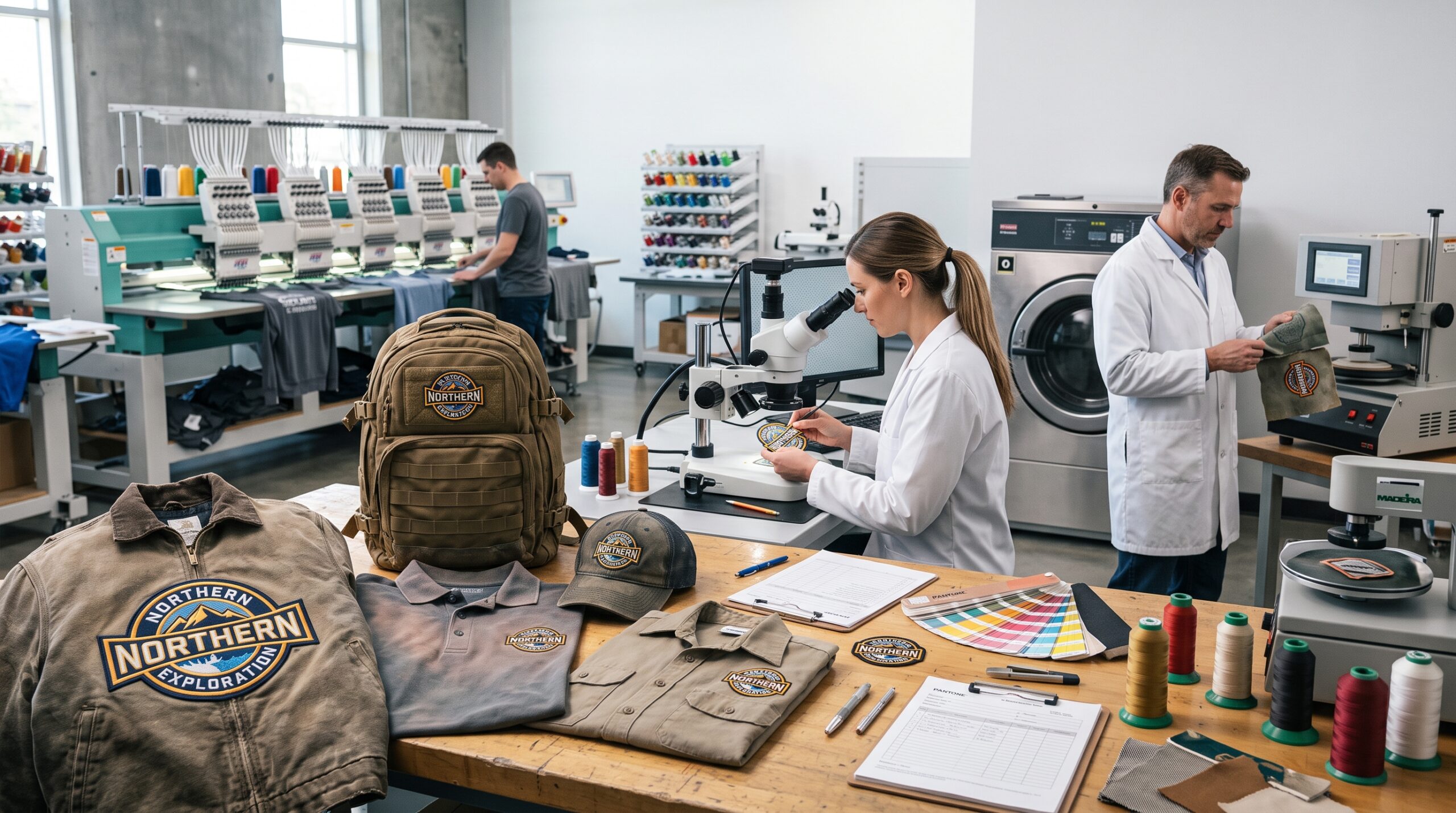
Performance Metrics: How Long Do Embroidered Patches Last?
When assessing the return on investment for branding materials, durability is a primary factor for procurement managers.
Featured Snippet Optimization (How Long Do Embroidered Patches Last):
High-quality embroidered patches generally last between 5 to 10 years, frequently outliving the underlying garment. Their lifespan depends on the attachment method. Sewn patches provide maximum longevity through industrial laundering, while iron-on backings typically last 20 to 30 washes before the adhesive bond weakens.
B2B Industry Use Cases and Applications
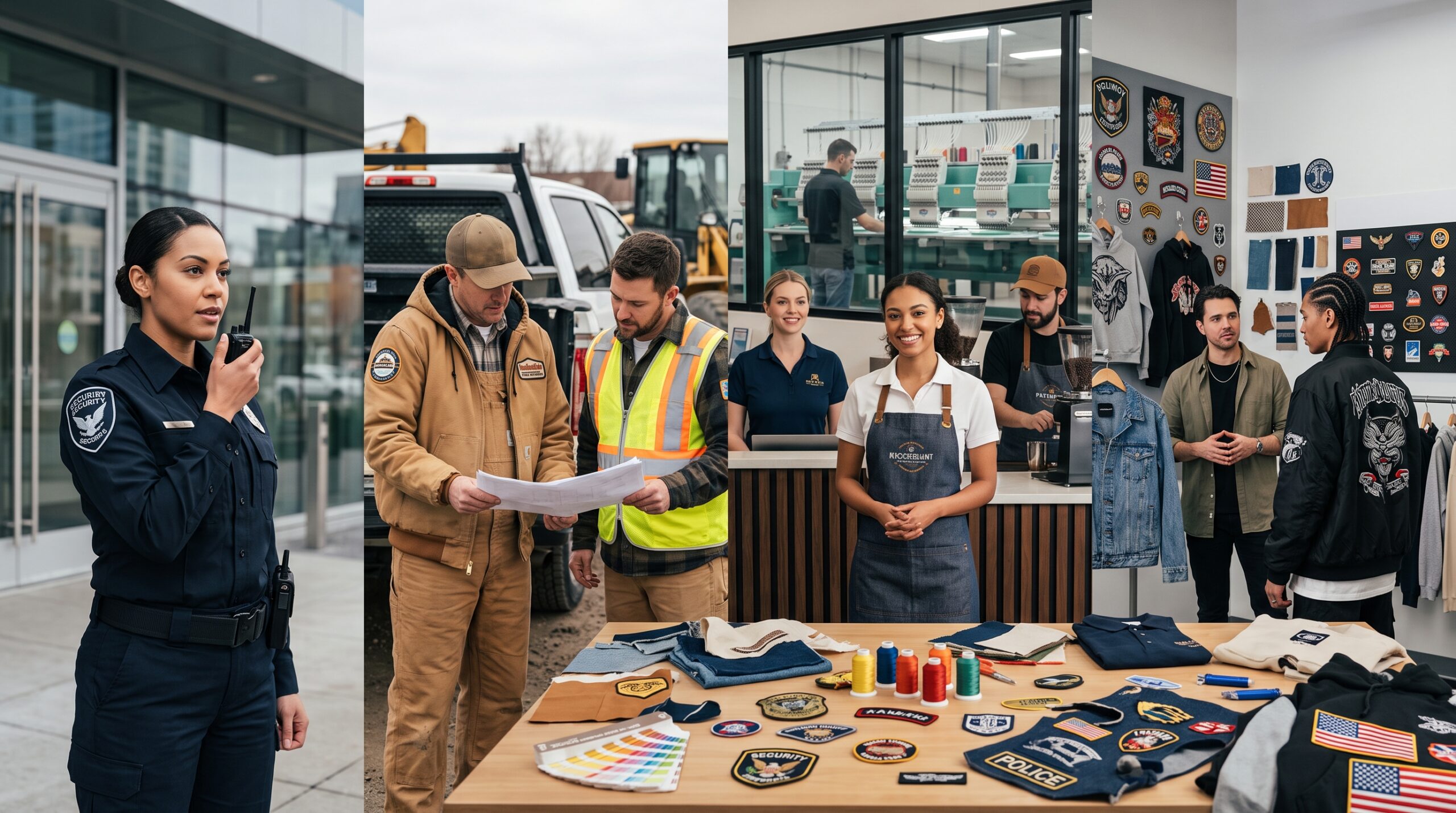
Different market sectors utilize custom patches to solve distinct operational and branding challenges.
- Security & Law Enforcement: Highly visible, professional shoulder emblems with reflective or high-contrast thread structures for rapid identification.
- Field Services & Construction: Heavy-duty, flame-retardant thread configurations attached to canvas work jackets and overalls using sew-on backings.
- Corporate Hospitality & Retail: Elegant, low-profile patches with high thread counts applied to polo shirts, aprons, and caps for a polished customer-facing look.
- Fashion & Streetwear Brands: Large, artistic back-patches or collectible sets with Velcro backing options to drive brand engagement and consumer customization.
When to Choose Embroidered Patches Over Other Patch Types
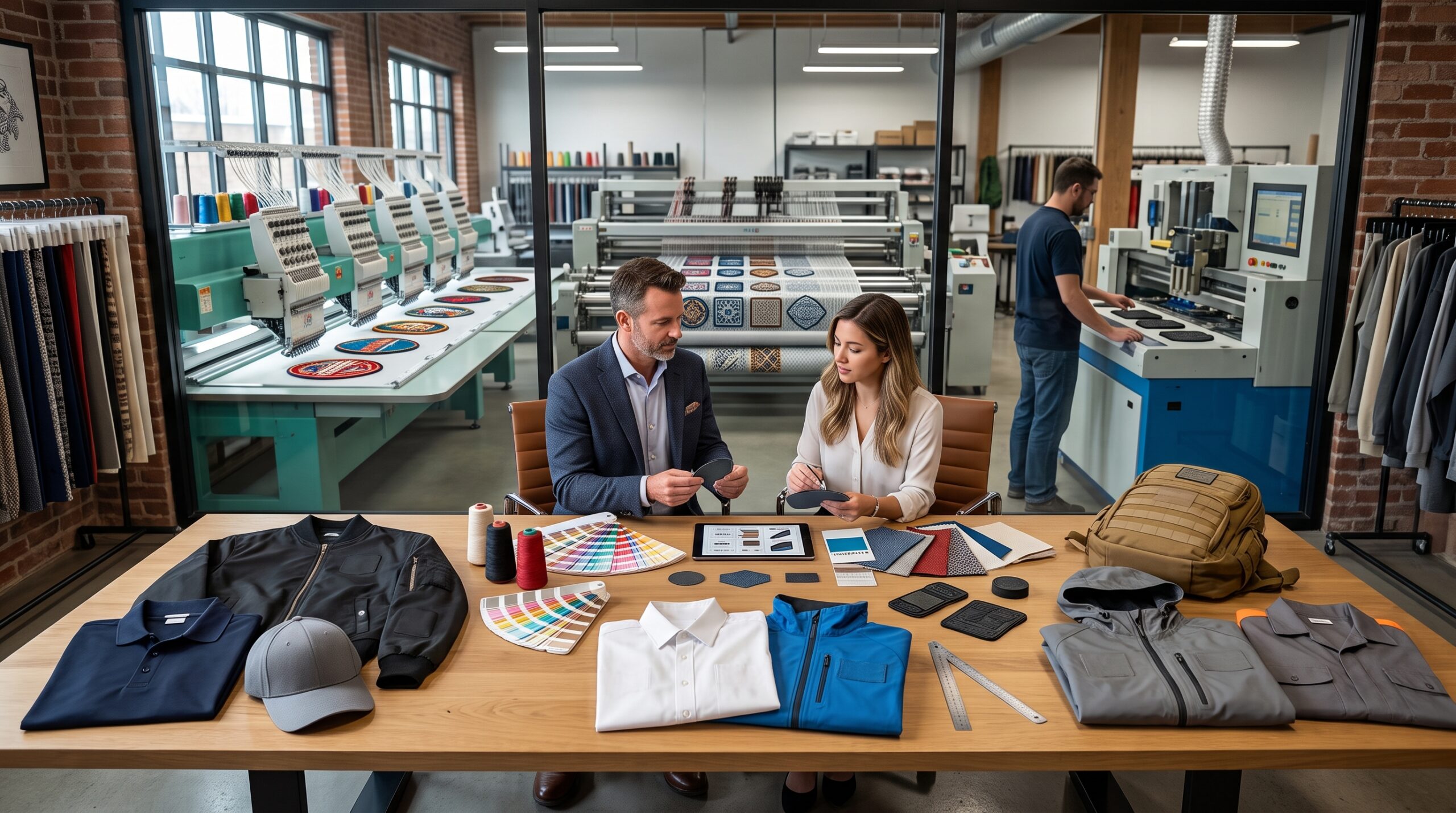
Understanding when to choose embroidered patches instead of alternative materials like PVC, woven, or direct-to-film (DTF) prints prevents unexpected project outcomes.
- Choose Embroidery When: You need a traditional, classic look with a clear, dimensional thread texture, and your logo has clean lines and distinct solid color sections.
- Choose Woven When: Your corporate logo contains ultra-fine text, delicate details, or intricate geometric lines that cannot be rendered cleanly with thicker embroidery threads.
- Choose PVC When: Your patches will face constant exposure to outdoor elements, mud, water, or chemical environments, making waterproof, wipe-clean rubberized material a necessity.
How Custom Patches 4U Manufactures Bulk Orders
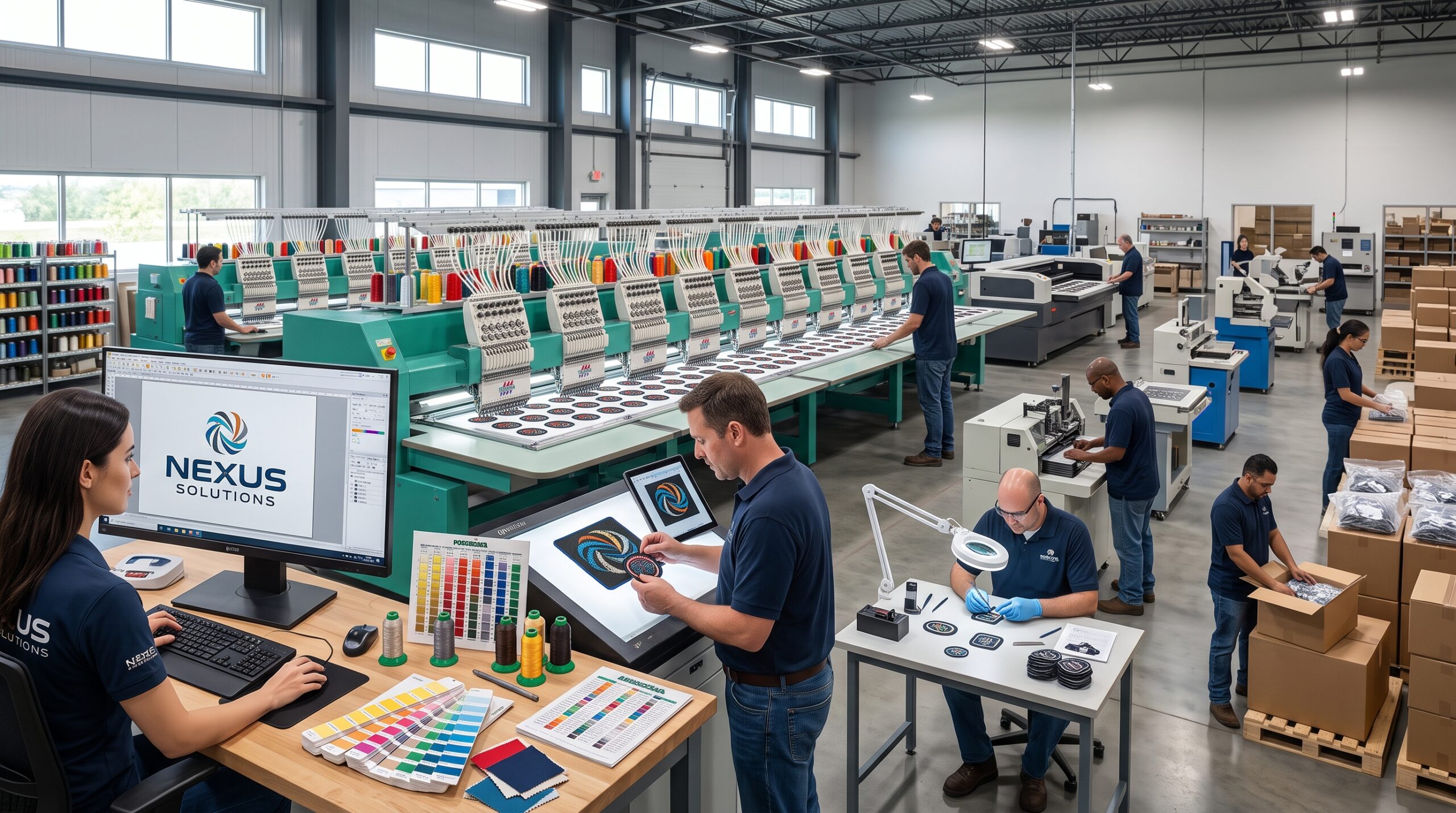
We tailor our production pipeline to meet strict commercial timelines and high quality control standards for B2B buyers.
- Step 1: Digital Artwork Optimization: Our professional digitizers convert your corporate logo files into a specialized machine-readable stitch file, optimizing thread vectors for clean clarity.
- Step 2: Sample Approval: We generate a digital or physical prototype sample patch to verify color matching, borders, and stitch quality before launching full-scale factory production.
- Step 3: High-Speed Automated Production: Your order runs on multi-head commercial embroidery machines, ensuring uniform consistency across hundreds or thousands of units.
- Step 4: Edge Finishing and Quality Control: Patches undergo laser cutting or merrow border stitching, followed by individual manual inspection to ensure no loose threads exist.
- Step 5: Backing Integration: The selected backing system whether heat-seal, Velcro, or pressure-sensitive adhesive is bonded permanently to the patch base.
Are Custom Embroidered Patches Worth It?
For the vast majority of commercial applications, custom embroidered patches are worth the investment. They bridge the gap between high premium quality and long-term affordability. By providing modular flexibility, exceptional durability, and a classic aesthetic that consumers respect, patches deliver a lower cost-per-impression than temporary print methods. They protect your uniform budget from frequent replacement costs.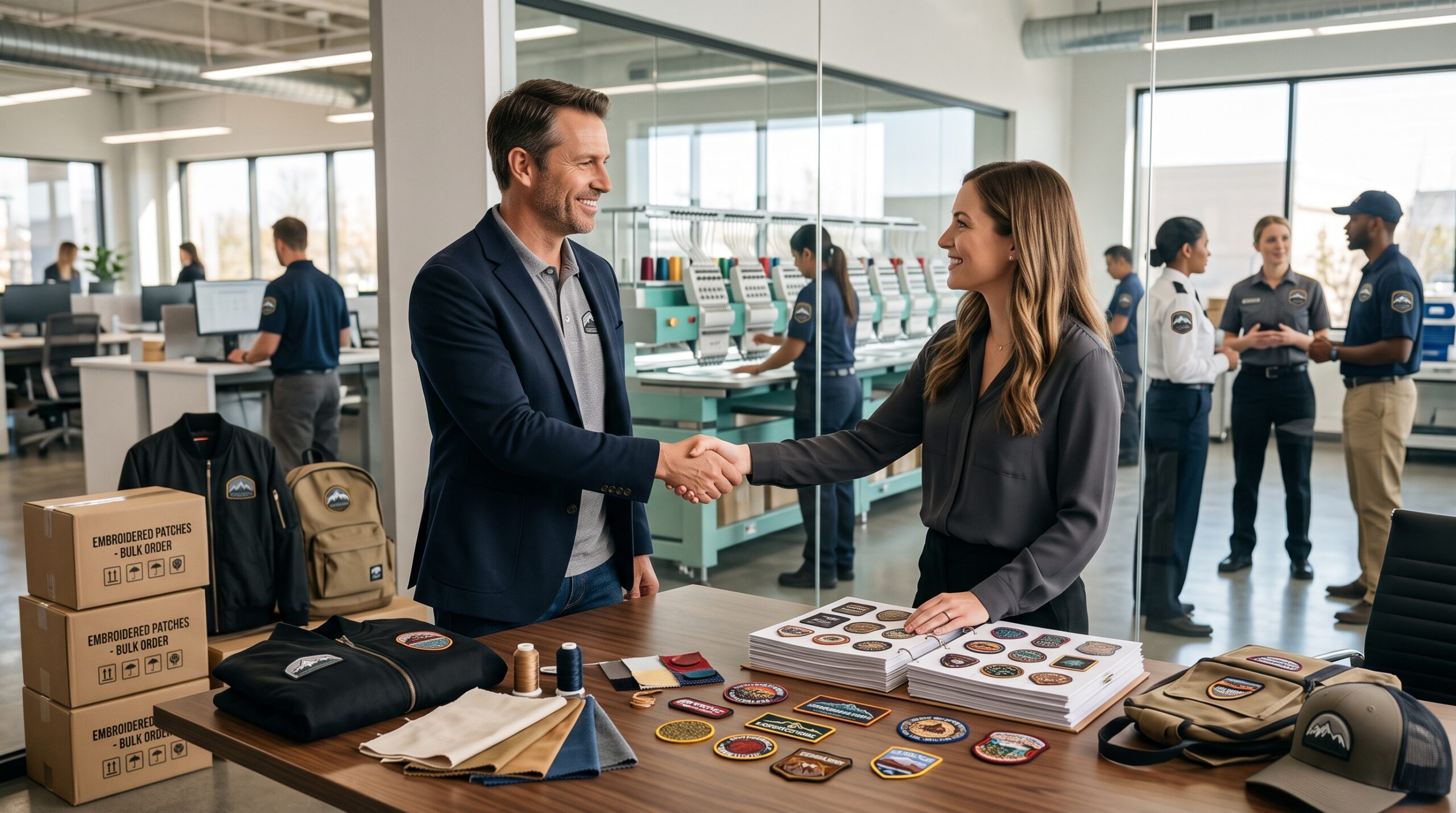
Frequently Asked Questions
Are embroidered patches durable?
Yes, premium embroidered patches are exceptionally durable. They resist fading, fraying, and shrinking, allowing them to withstand years of regular wear and standard machine washing cycles.
Can you put iron-on patches on any fabric?
No, iron-on backings require high heat to activate the adhesive glue. They work beautifully on cotton, denim, and canvas, but they can scorch or melt synthetic fabrics like polyester, nylon, or silk.
What is the minimum order quantity for bulk B2B patch orders?
Our production lines are set up to handle commercial volume efficiently. Contact our sales department directly to discuss minimum batch sizes, custom sample runs, and wholesale tier pricing for your business.
How do you wash garments that have custom patches attached?
For maximum lifespan, turn the garment inside out before laundering. Wash on a gentle cycle using cold water, and air dry or use low heat settings in commercial dryers.
What is the turnaround time for a wholesale patch order?
Standard production and shipping timelines generally range from 10 to 14 business days following final digital proof approval, depending on the complexity of your design and total volume.
Can an embroidered patch have gradients or photographic details?
No, embroidery machines use solid thread strands, making smooth color gradients impossible. For photographic designs, woven or printed custom patches are recommended instead.