
PVC patches bring real advantages in durability, waterproofing, and color accuracy, making them a strong choice for outdoor gear and bold, colorful logos. The trade-offs come down to a glossy finish that isn't right for every brand and some loss of clarity with very fine detail. Weighing these pros and cons against your specific design and use case is the best way to decide if PVC is the right fit.
Introduction
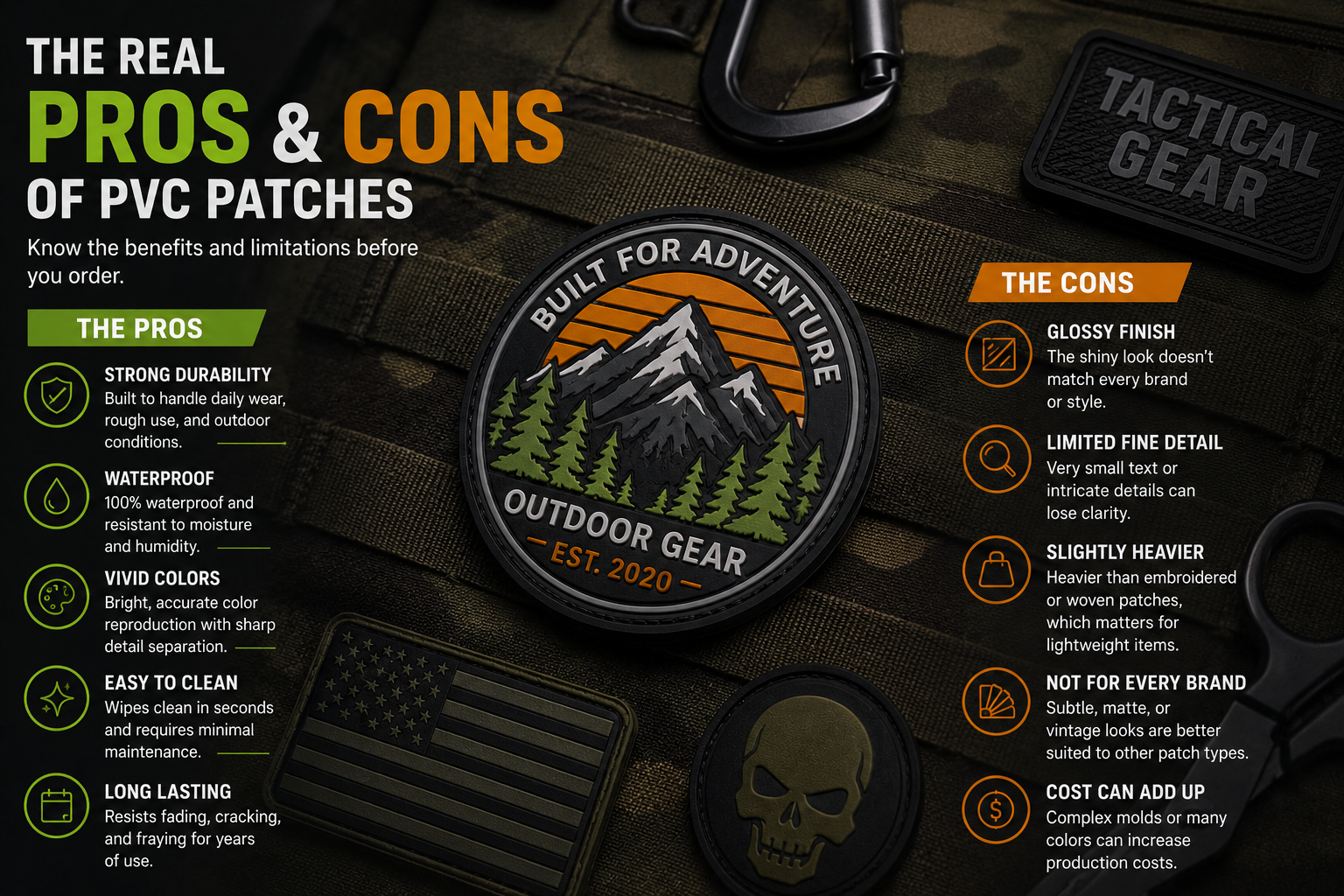
PVC patches show up on everything from tactical gear to retail merchandise, but they’re not the right fit for every project. This guide breaks down the real pros and cons of PVC patches so you know exactly what you’re getting before you order.
Featured Snippet Answer
PVC patches offer strong durability, full waterproofing, and vivid color detail, making them ideal for outdoor gear and colorful logos. The main downsides are a glossy finish that isn’t always brand-appropriate and less flexibility for very fine text or detail compared to embroidery. They work best for bold, colorful designs that need to survive rough conditions.
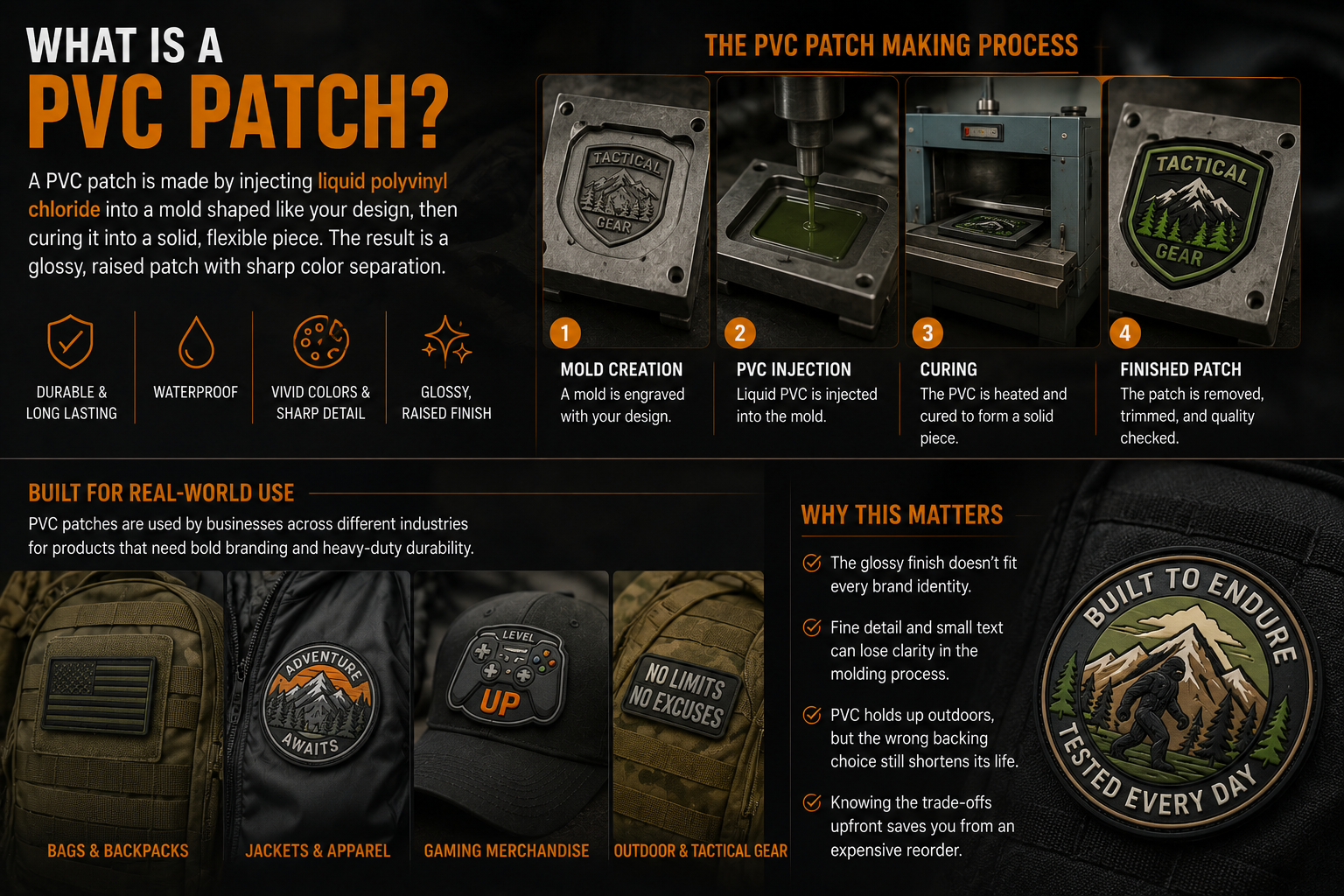
Why This Matters
PVC patches look great in photos, but the wrong project can expose their limits fast.
- The glossy finish doesn’t fit every brand identity.
- Fine detail and small text can lose clarity in the molding process.
- PVC holds up outdoors, but the wrong backing choice still shortens its life.
- Knowing the trade-offs upfront saves you from an expensive reorder.
Understanding the Basics: What Is a PVC Patch
A PVC patch is made by injecting liquid polyvinyl chloride into a mold shaped like your design, then curing it into a solid, flexible piece. The result is a glossy, raised patch with sharp color separation. Businesses use PVC for bags, jackets, gaming merchandise, and any product needing colorful, durable branding.
The Real Pros of Using a PVC Patch
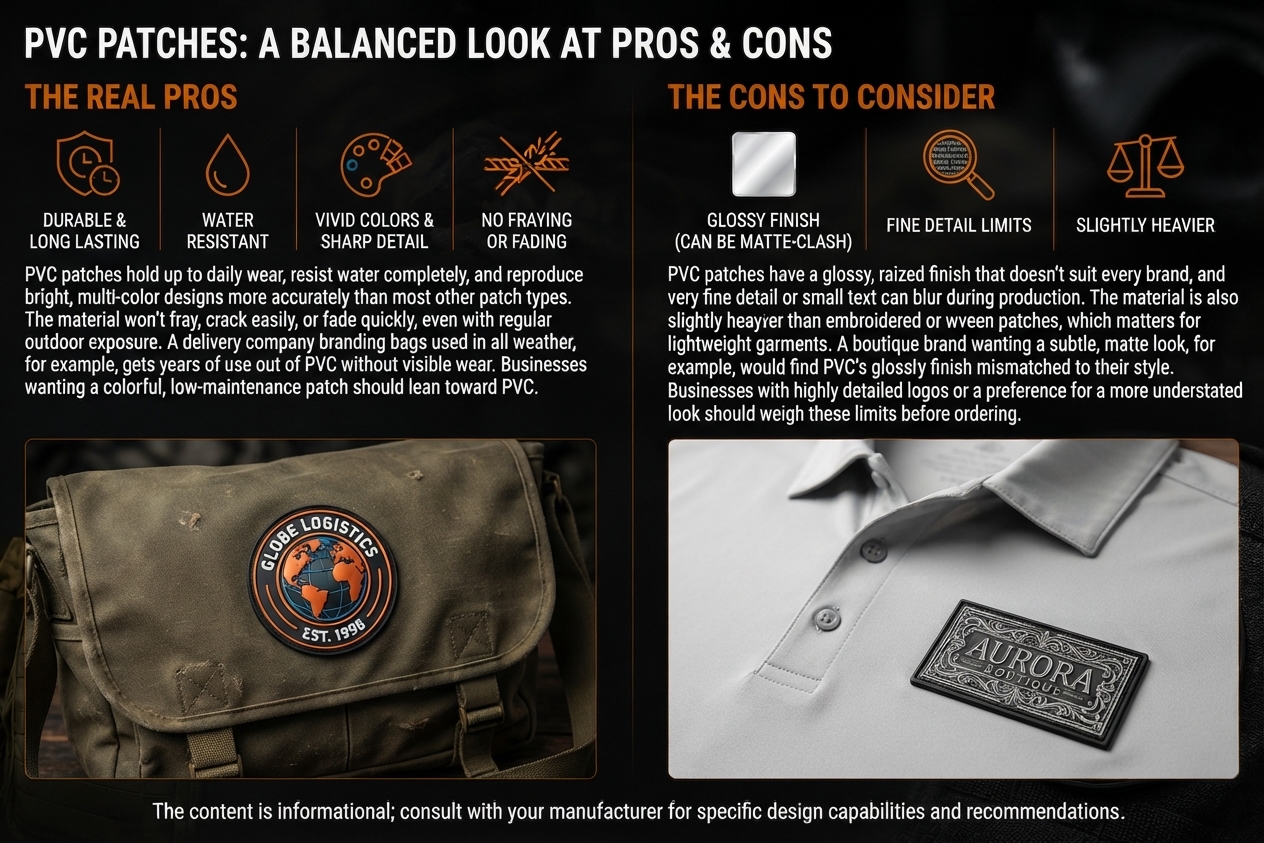
PVC patches hold up to daily wear, resist water completely, and reproduce bright, multi-color designs more accurately than most other patch types. The material won’t fray, crack easily, or fade quickly, even with regular outdoor exposure. A delivery company branding bags used in all weather, for example, gets years of use out of PVC without visible wear. Businesses wanting a colorful, low-maintenance patch should lean toward PVC.
The Cons to Consider
PVC patches have a glossy, raised finish that doesn’t suit every brand, and very fine detail or small text can blur during production. The material is also slightly heavier than embroidered or woven patches, which matters for lightweight garments. A boutique brand wanting a subtle, matte look, for example, would find PVC’s glossy finish mismatched to their style. Businesses with highly detailed logos or a preference for a more understated look should weigh these limits before ordering.
Everyday Uses for Custom PVC Patches
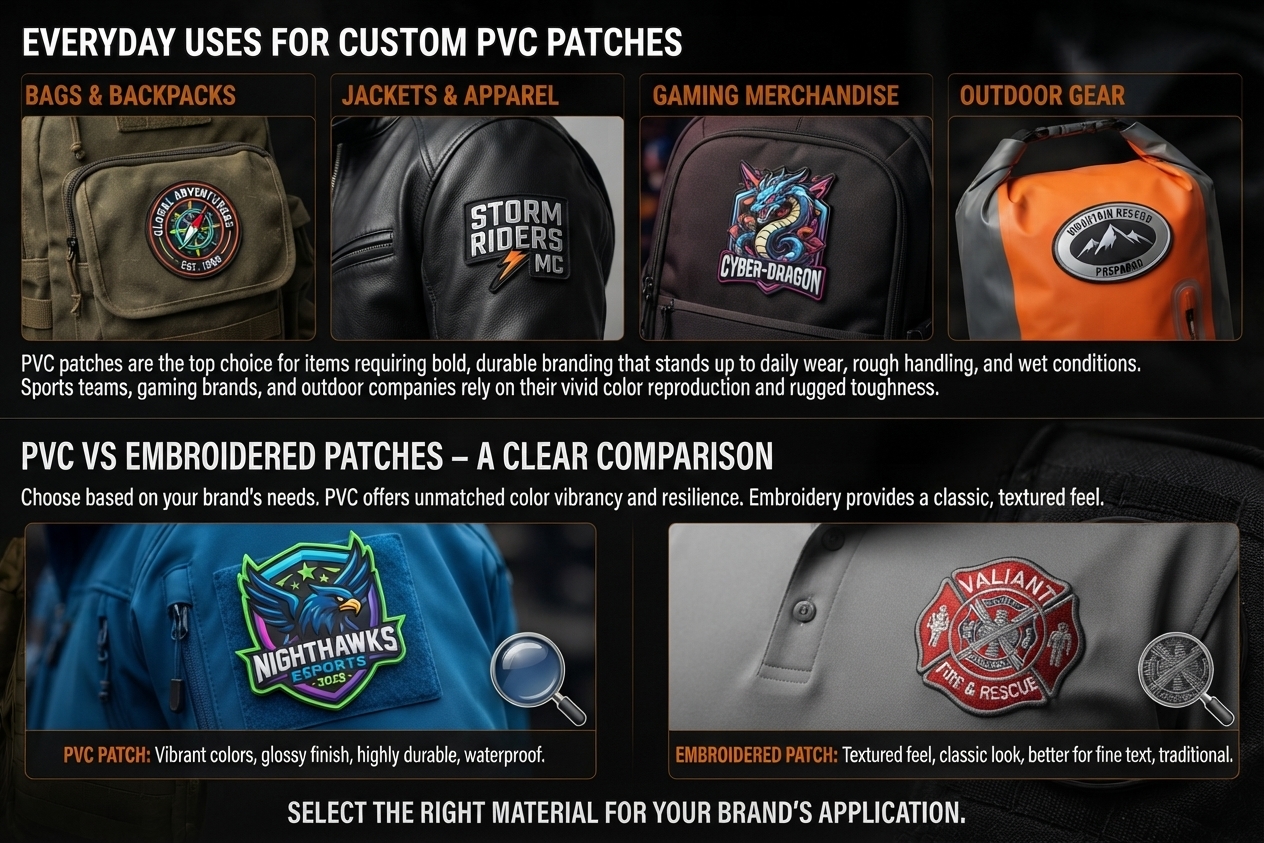
PVC patches commonly appear on bags, jackets, gaming merchandise, and outdoor gear where color and durability matter more than a subtle finish. Sports teams, gaming brands, and companies with bold, colorful logos favor PVC for its vivid reproduction and toughness. A gaming brand adding a colorful character patch to merchandise, for example, gets a sharper result with PVC than with embroidery. Any product exposed to rough handling or wet conditions is a strong candidate for PVC.
PVC vs Embroidered Patches
PVC offers a glossy finish with strong color detail, while embroidered patches offer a classic, textured look with better handling of fine text. PVC resists water and wear better outdoors, while embroidery suits uniforms and professional apparel needing a traditional feel. A company choosing between the two should base the decision on whether color vibrancy or classic texture matters more for their brand.
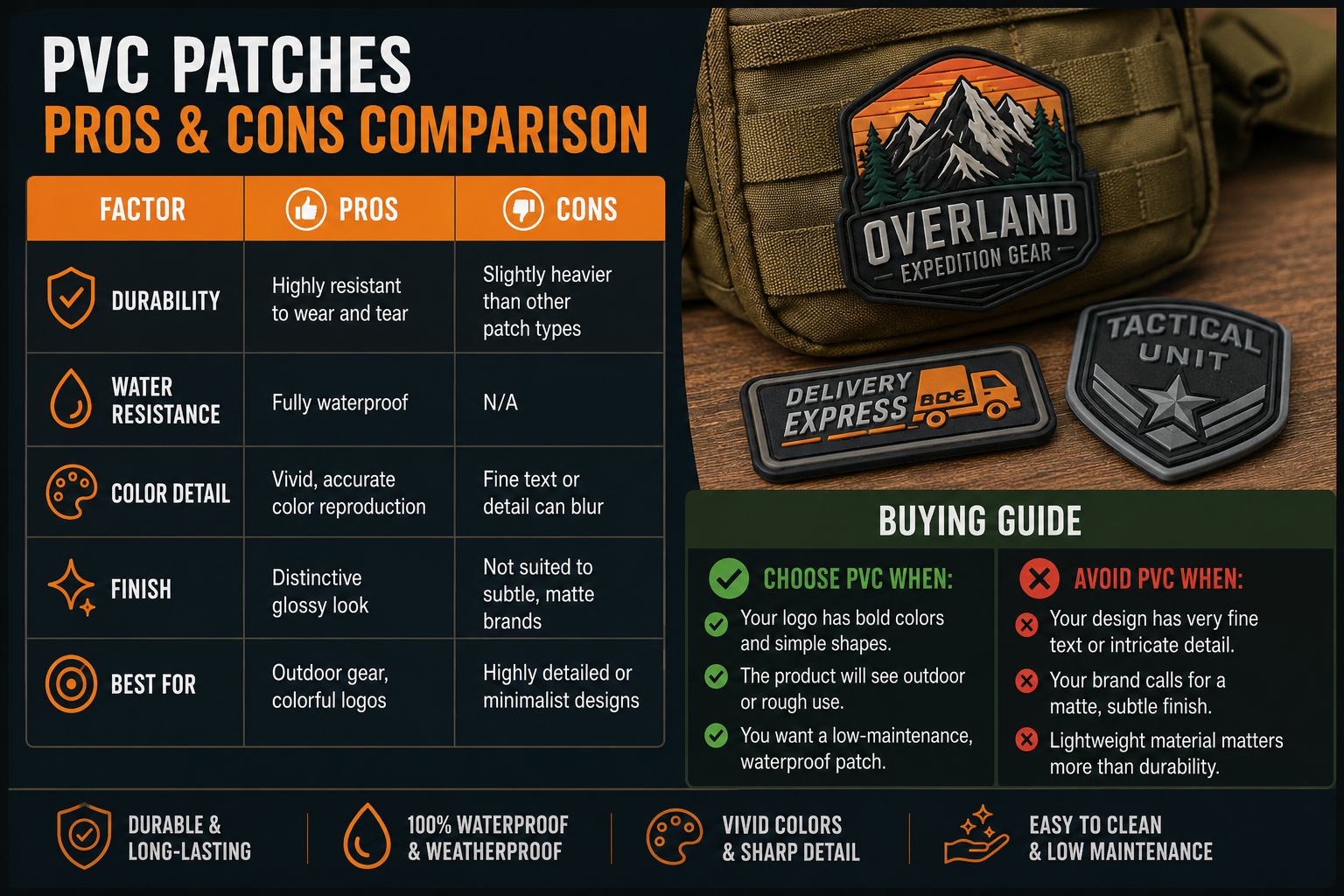
Comparison Table, PVC Patch Pros and Cons
| Factor | Pros | Cons |
|---|---|---|
| Durability | Highly resistant to wear and tear | Slightly heavier than other patch types |
| Water Resistance | Fully waterproof | N/A |
| Color Detail | Vivid, accurate color reproduction | Fine text or detail can blur |
| Finish | Distinctive glossy look | Not suited to subtle, matte brands |
| Best For | Outdoor gear, colorful logos | Highly detailed or minimalist designs |
Buying Guide
- Choose PVC when:
- Your logo has bold colors and simple shapes.
- The product will see outdoor or rough use.
- You want a low-maintenance, waterproof patch.
- Avoid PVC when:
- Your design has very fine text or intricate detail.
- Your brand calls for a matte, subtle finish.
- Lightweight material matters more than durability.
Common Mistakes
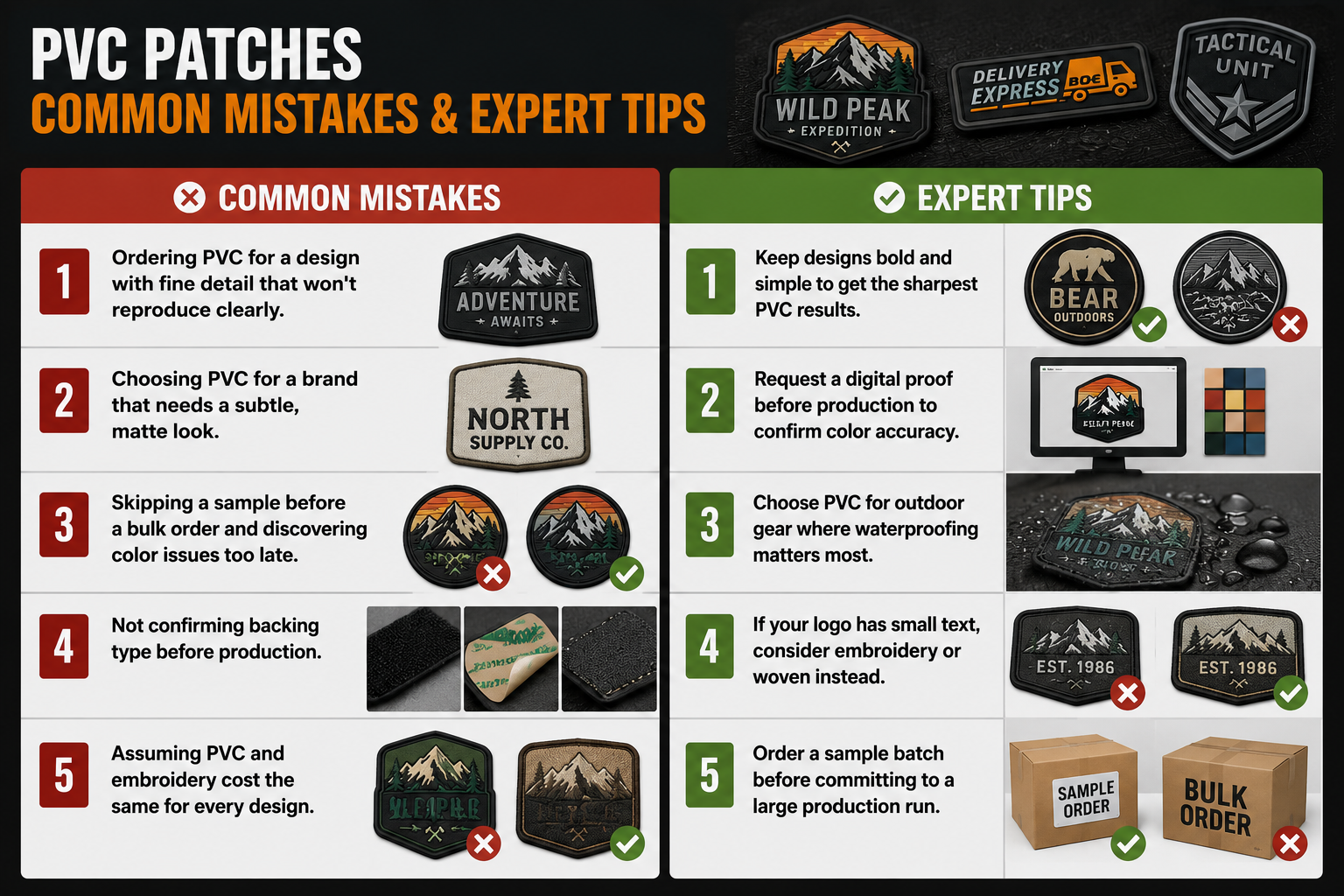
- Mistake 1: Ordering PVC for a design with fine detail that won’t reproduce clearly.
- Mistake 2: Choosing PVC for a brand that needs a subtle, matte look.
- Mistake 3: Skipping a sample before a bulk order and discovering color issues too late.
- Mistake 4: Not confirming backing type before production.
- Mistake 5: Assuming PVC and embroidery cost the same for every design.
Expert Tips
- Tip 1: Keep designs bold and simple to get the sharpest PVC results.
- Tip 2: Request a digital proof before production to confirm color accuracy.
- Tip 3: Choose PVC for outdoor gear where waterproofing matters most.
- Tip 4: If your logo has small text, consider embroidery or woven instead.
- Tip 5: Order a sample batch before committing to a large production run.
Customization Options
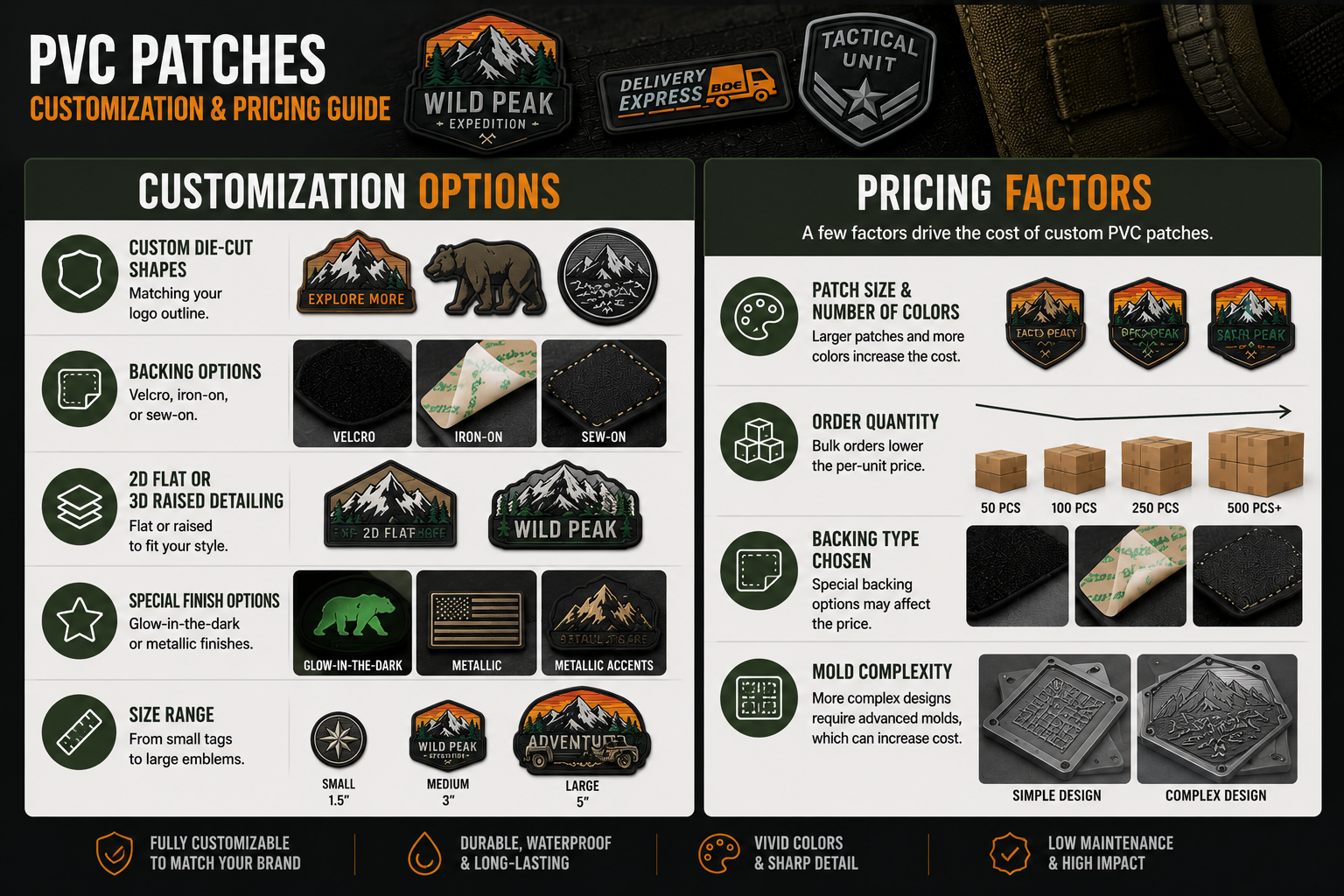
Custom PVC patches support several customization choices.
- Custom die-cut shapes matching your logo outline.
- Backing options: Velcro, iron-on, or sew-on.
- 2D flat or 3D raised detailing.
- Glow-in-the-dark or metallic finish options.
- Size range from small tags to large emblems.
Pricing Factors
A few factors drive the cost of custom PVC patches.
- Patch size and number of colors.
- Order quantity, since bulk orders lower the per-unit price.
- Backing type chosen.
- Mold complexity for detailed designs.
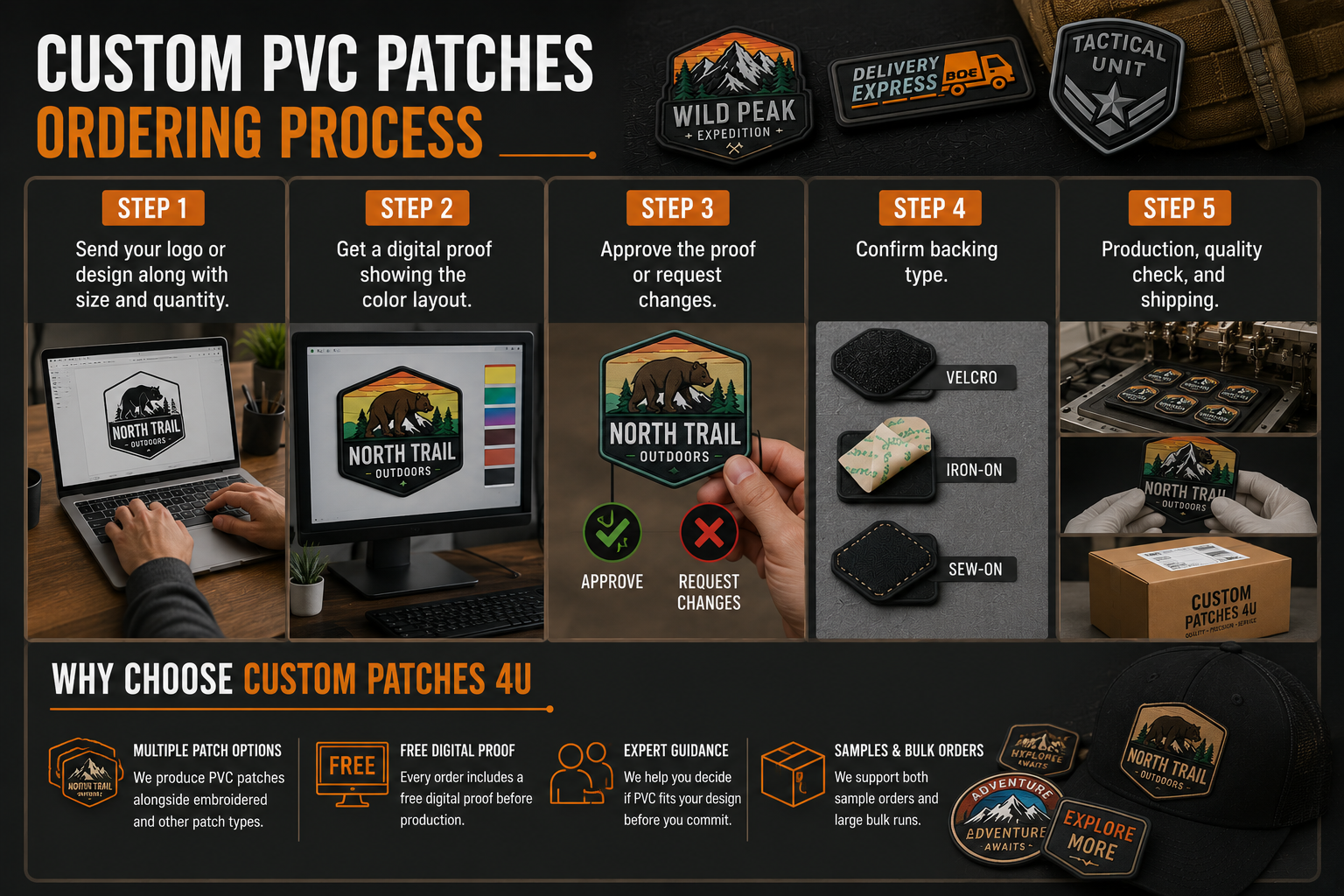
Ordering Process
Ordering custom PVC patches follows a simple sequence.
- Step 1: Send your logo or design along with size and quantity.
- Step 2: Get a digital proof showing the color layout.
- Step 3: Approve the proof or request changes.
- Step 4: Confirm backing type.
- Step 5: Production, quality check, and shipping.
Why Choose Custom Patches 4U
- We produce PVC patches alongside embroidered and other patch types.
- Every order includes a free digital proof before production.
- We help you decide if PVC fits your design before you commit.
- We support both sample orders and large bulk runs.
FAQs
What are the main pros of PVC patches?
PVC patches offer strong durability, full waterproofing, and vivid, accurate color reproduction.
What are the main cons of PVC patches?
The glossy finish doesn’t suit every brand, and fine detail or small text can blur during production.
What is a PVC patch made of?
PVC patches are made by injecting liquid polyvinyl chloride into a mold shaped like your design, then curing it into a solid piece.
Are PVC patches waterproof?
Yes, PVC patches are fully waterproof and hold up well to outdoor exposure.
Can PVC patches handle detailed, multi-color logos?
PVC handles bold, simple color separation well, but very fine detail or small text can lose clarity.
What are common uses for PVC patches?
Common uses include bags, jackets, gaming merchandise, and outdoor gear needing colorful, durable branding.
Is PVC better than embroidery?
Neither is universally better; PVC suits colorful, durable designs, while embroidery suits classic, textured looks and fine text.
Do PVC patches fade over time?
High-quality PVC resists fading well under normal use, though extreme long-term UV exposure can affect any patch material.
Can I get a sample before ordering PVC patches in bulk?
Yes, requesting a sample first is recommended to confirm color accuracy and finish before a bulk order.
Are PVC patches heavier than other patch types?
Yes, PVC patches are slightly heavier than embroidered or woven patches, which matters for very lightweight garments.
Get Your Custom PVC Patches Made
Not sure if PVC is the right fit for your design? Reach out to Custom Patches 4U for a free proof, sample request, or bulk pricing before you place your order.