
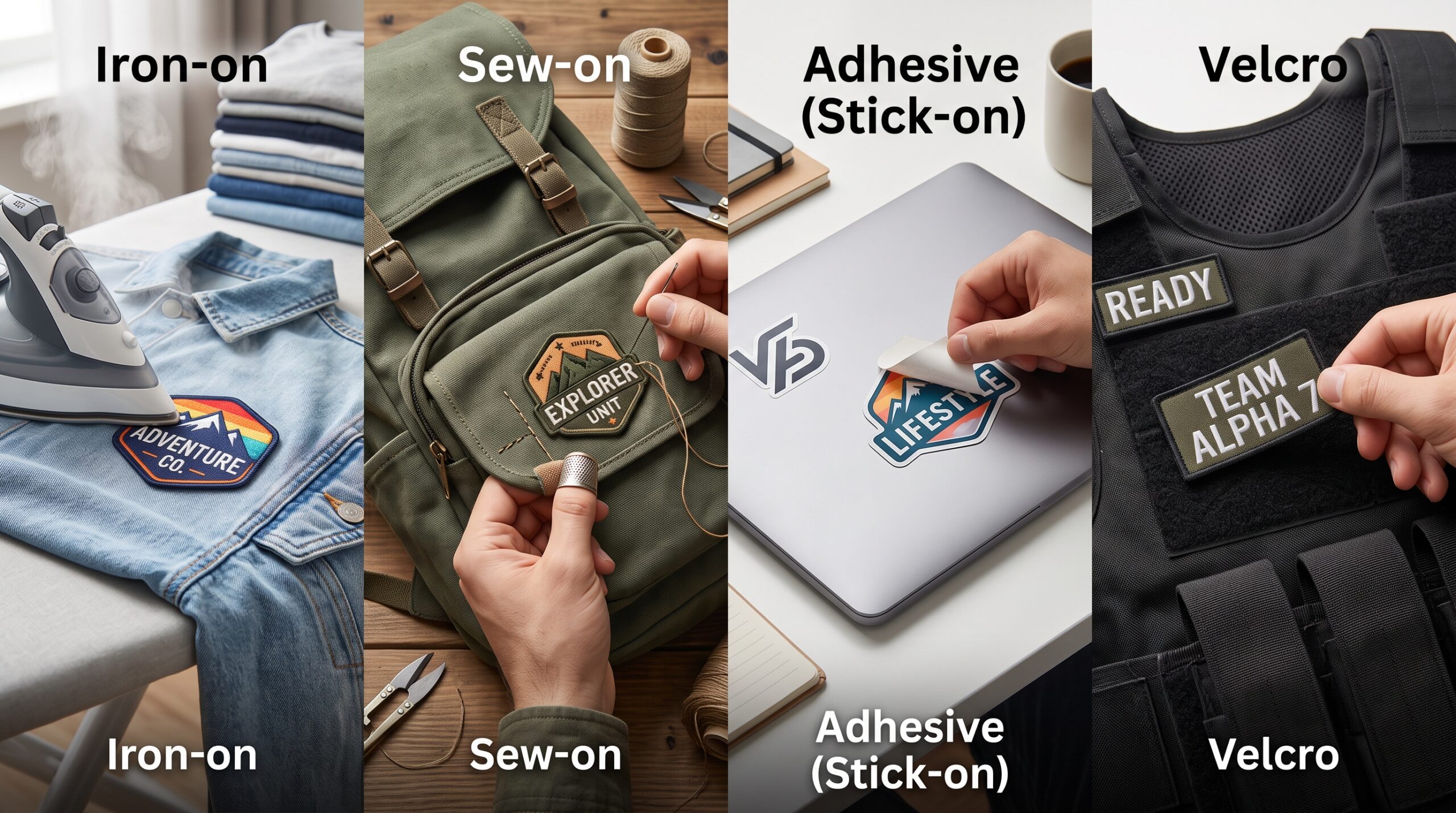
Choosing the best patch backing depends entirely on your specific application: iron-on suits washable clothing needing a strong bond, sew-on offers maximum durability for heavy-use items, adhesive works well on hard non-washable surfaces, and Velcro supports patches that need to be swapped regularly. Matching backing type to your surface, wash frequency, and durability needs, rather than assuming one option is universally best, leads to the most reliable results. For maximum durability on important garments, combining iron-on backing with reinforcing stitches offers the best of both approaches.
Introduction
Choosing a patch backing might seem like a minor detail compared to design and color, but it’s often the difference between a patch that lasts for years and one that peels off after a few uses. With iron-on, sew-on, adhesive, and Velcro all available, picking the right one depends on your specific surface, wash frequency, and how permanent you want the attachment to be. This guide compares each backing type directly, so you can choose with confidence.
Featured Snippet Answer
The best patch backing depends on the application: iron-on backing works best for washable clothing needing a strong, semi-permanent bond, sew-on backing offers the most durable option for heavy-use garments, adhesive backing suits hard non-washable surfaces, and Velcro backing works best for patches that need to be swapped or removed regularly.
Why This Matters
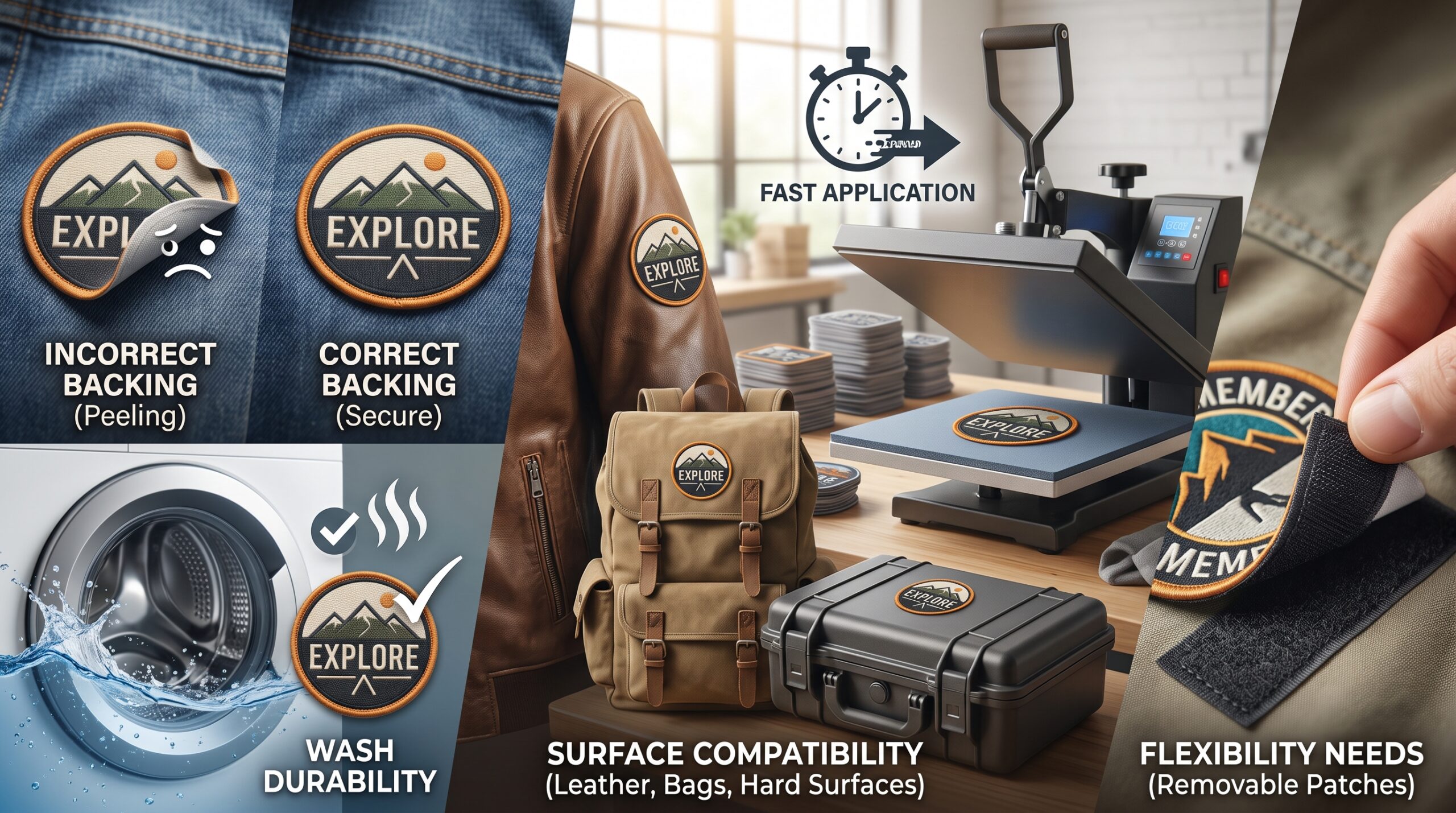
Choosing the wrong patch backing often means dealing with peeling, lifting, or a patch that simply won’t attach properly to your intended surface.
- Wash durability: Frequently washed garments need a backing built to withstand repeated laundering.
- Surface compatibility: Not every backing type works on every material, especially leather, bags, or hard surfaces.
- Application speed: Bulk orders benefit from a backing type that applies quickly and consistently.
- Flexibility needs: Some projects need removable patches, which rules out permanent backing types entirely.
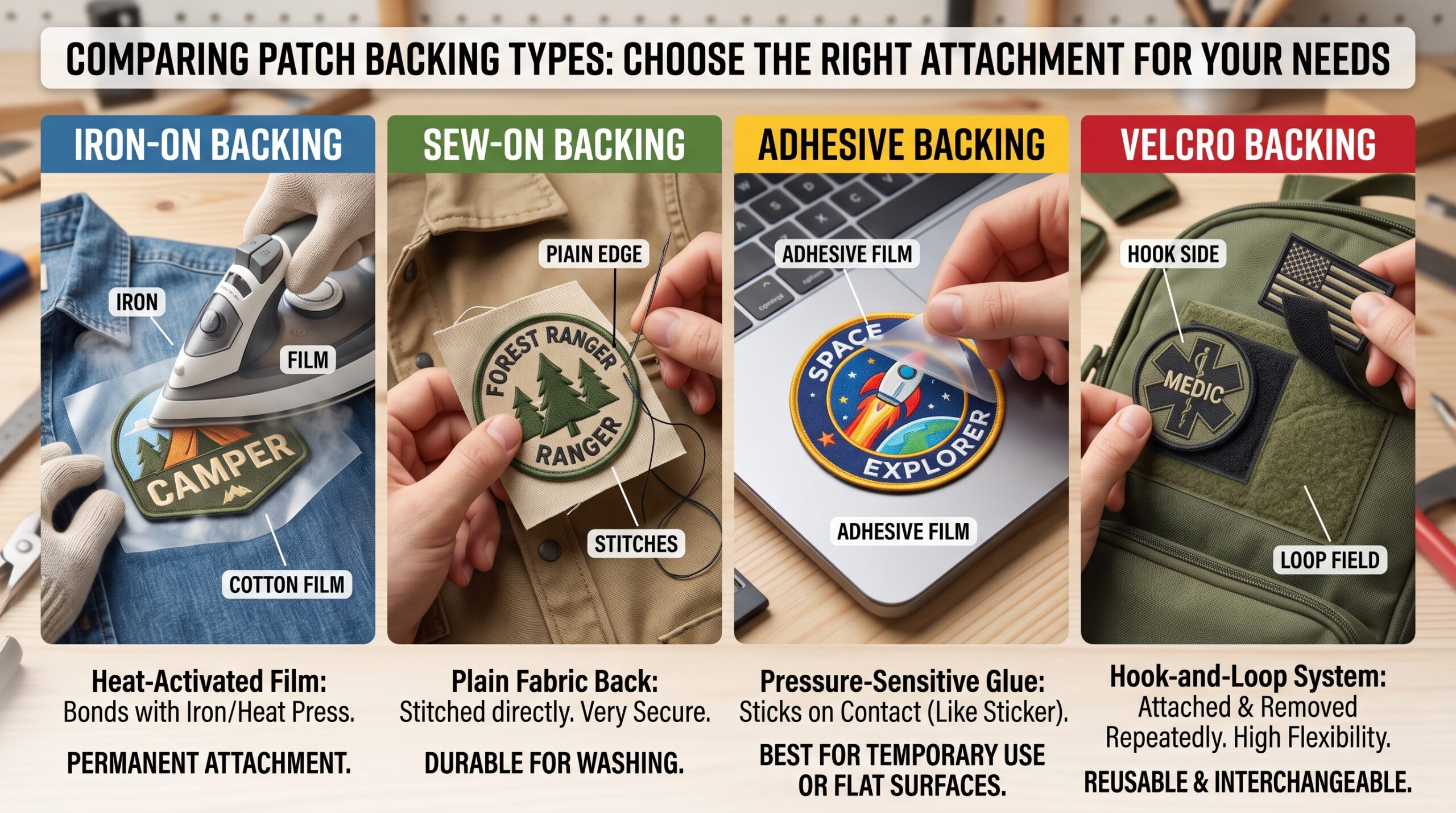
What Each Backing Type Is
- Iron-on backing: A heat-activated adhesive film that bonds when pressed with an iron or heat press.
- Sew-on backing: A plain fabric back designed to be stitched directly onto a garment or item.
- Adhesive backing: A pressure-sensitive glue layer that sticks on contact, similar to a sticker.
- Velcro backing: A hook-and-loop fastener system allowing patches to be attached and removed repeatedly.
Business Insight: Each backing type solves a different problem, permanence, surface type, or flexibility, which is why there’s no single “best” backing without considering your specific use case first.
Iron-On Backing for Patches
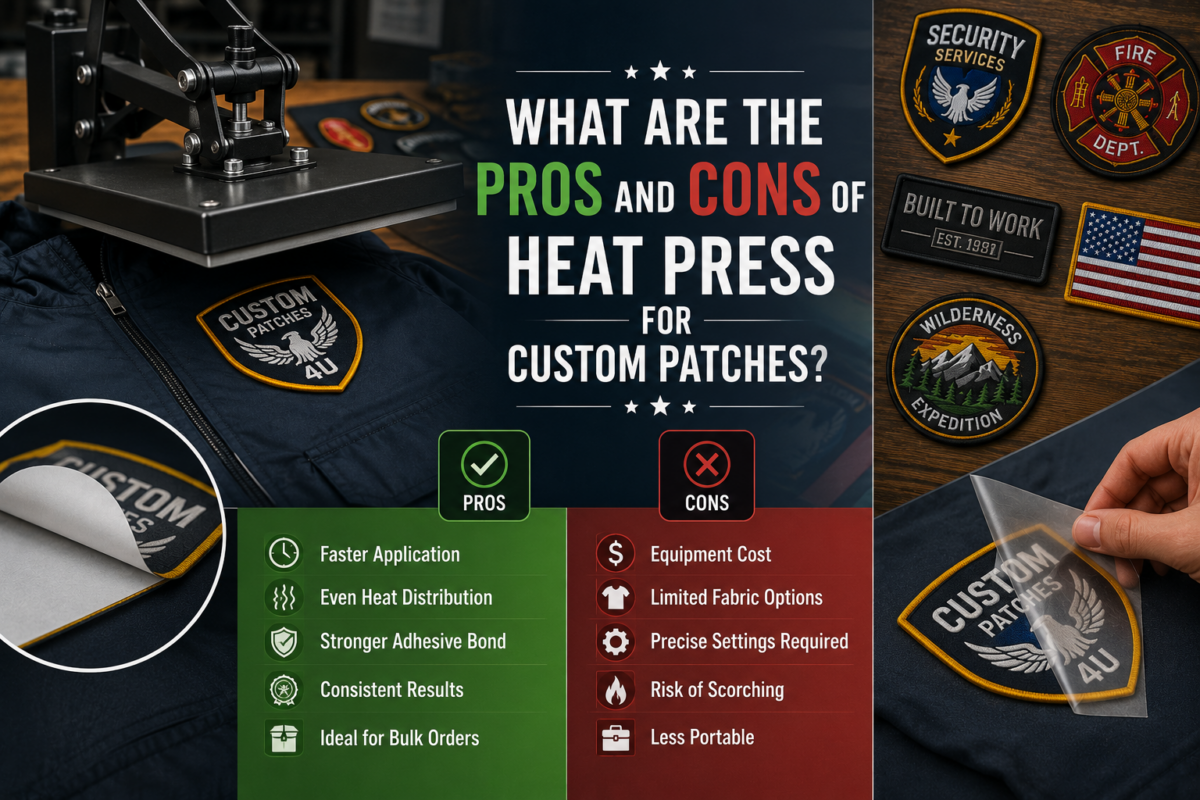
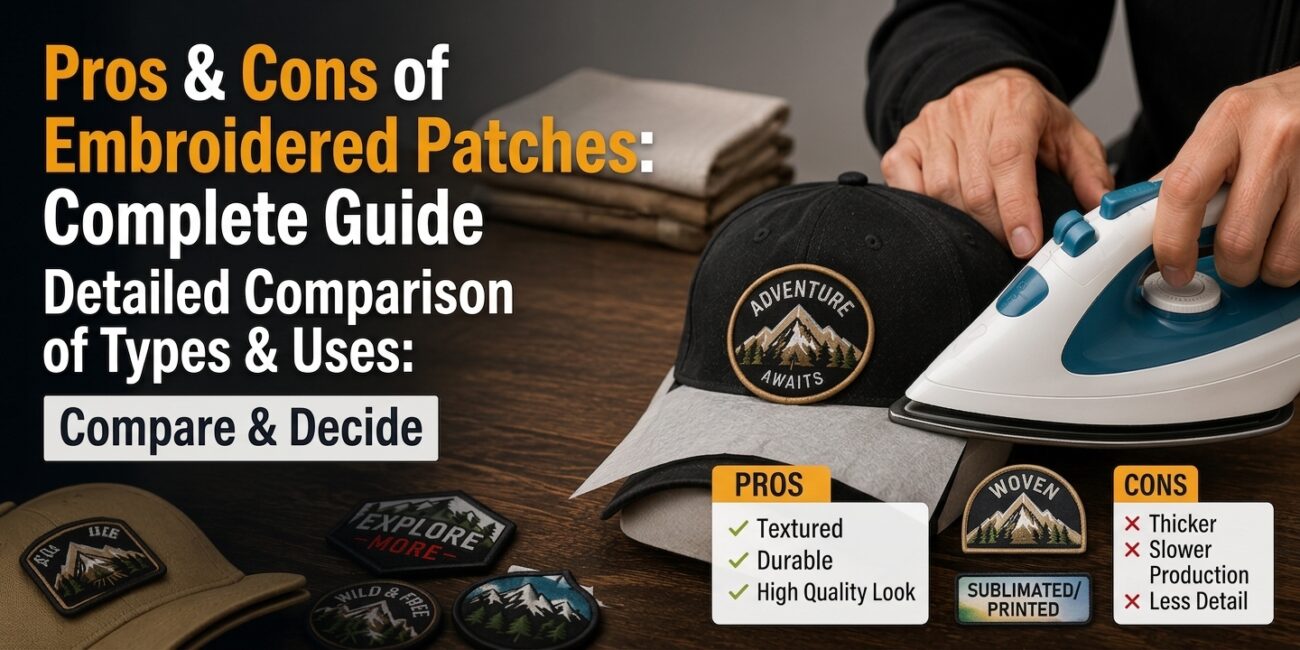
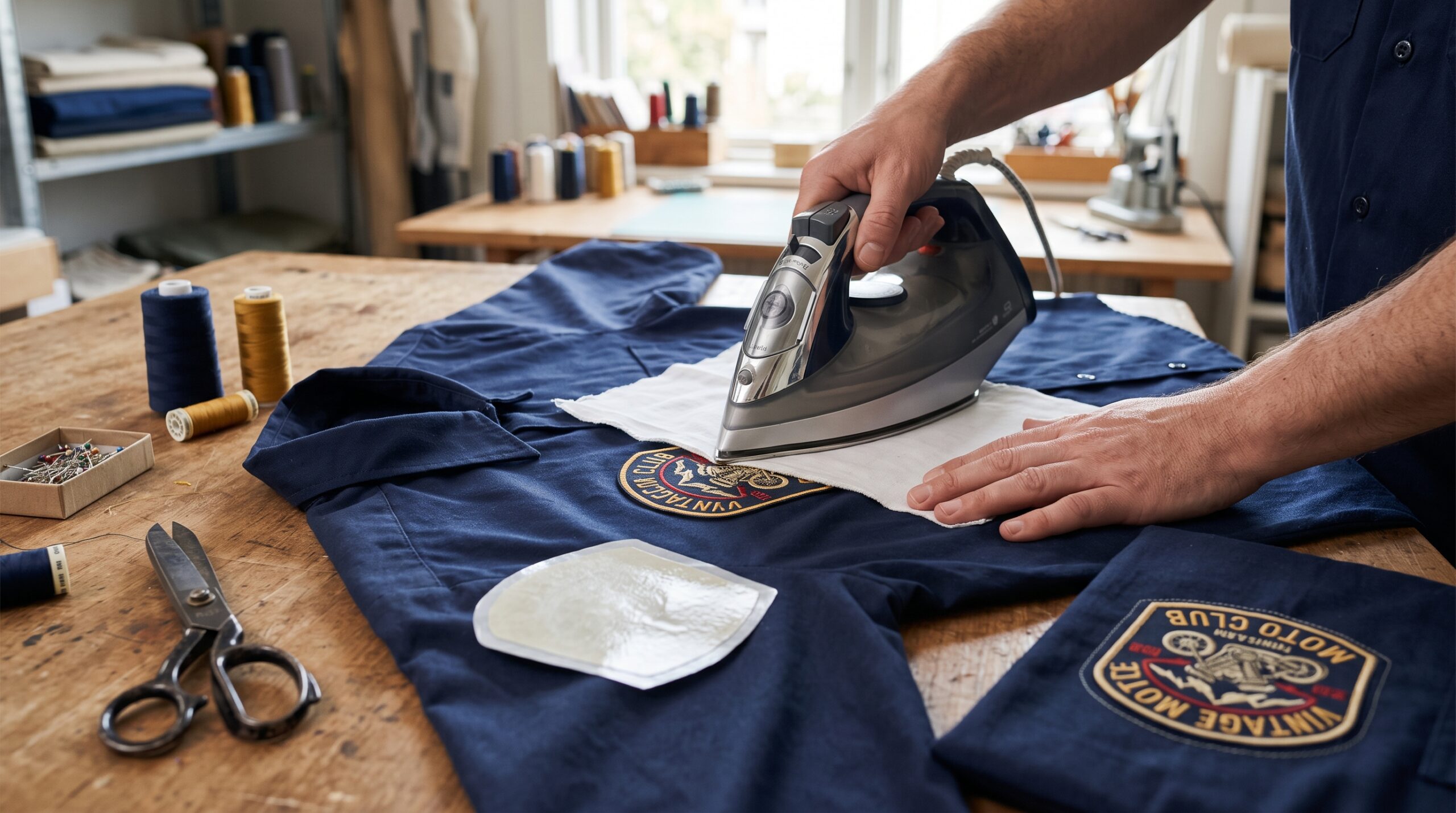
Iron-on patch backing uses a heat-activated adhesive film that bonds to fabric when pressed with an iron or heat press, creating a strong, semi-permanent hold.
- Best surfaces: Cotton, polyester, and other heat-tolerant fabrics.
- Application method: Requires an iron or heat press, a pressing cloth, and consistent heat for 15 to 30 seconds.
- Durability: Holds up well through multiple wash cycles, especially when reinforced with a few stitches.
- Limitations: Not suitable for heat-sensitive materials like leather or certain synthetics.
Example: A logo patch applied to a cotton uniform shirt with iron-on backing typically survives dozens of wash cycles without lifting, particularly when combined with light stitching around the edges.
Sew-On Backing
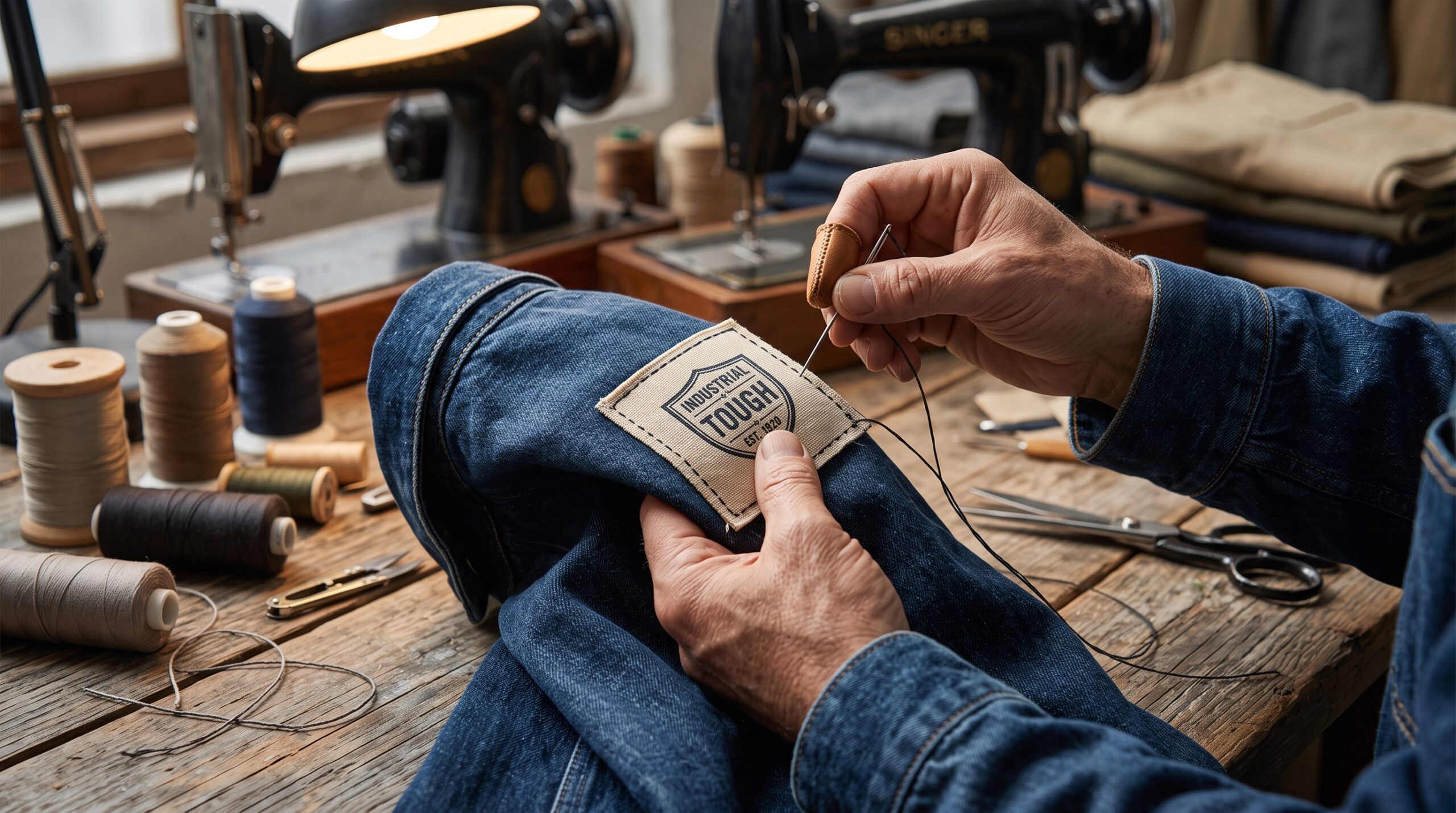
Sew-on backing is a plain fabric back designed for stitching directly onto a garment or item, offering the most durable and permanent attachment method available.
- Best surfaces: Any fabric that can be stitched through, including thicker materials like denim or canvas.
- Application method: Requires needle and thread, either hand-stitched or machine-sewn.
- Durability: The most durable option, resistant to peeling, heat damage, and repeated washing.
- Limitations: Requires more time and skill to apply compared to iron-on or adhesive options.
Business Insight: For heavy-use garments like work uniforms or military-style apparel, sew-on backing remains the industry standard because it holds up to conditions that would eventually loosen an iron-on or adhesive patch.
Adhesive Backing
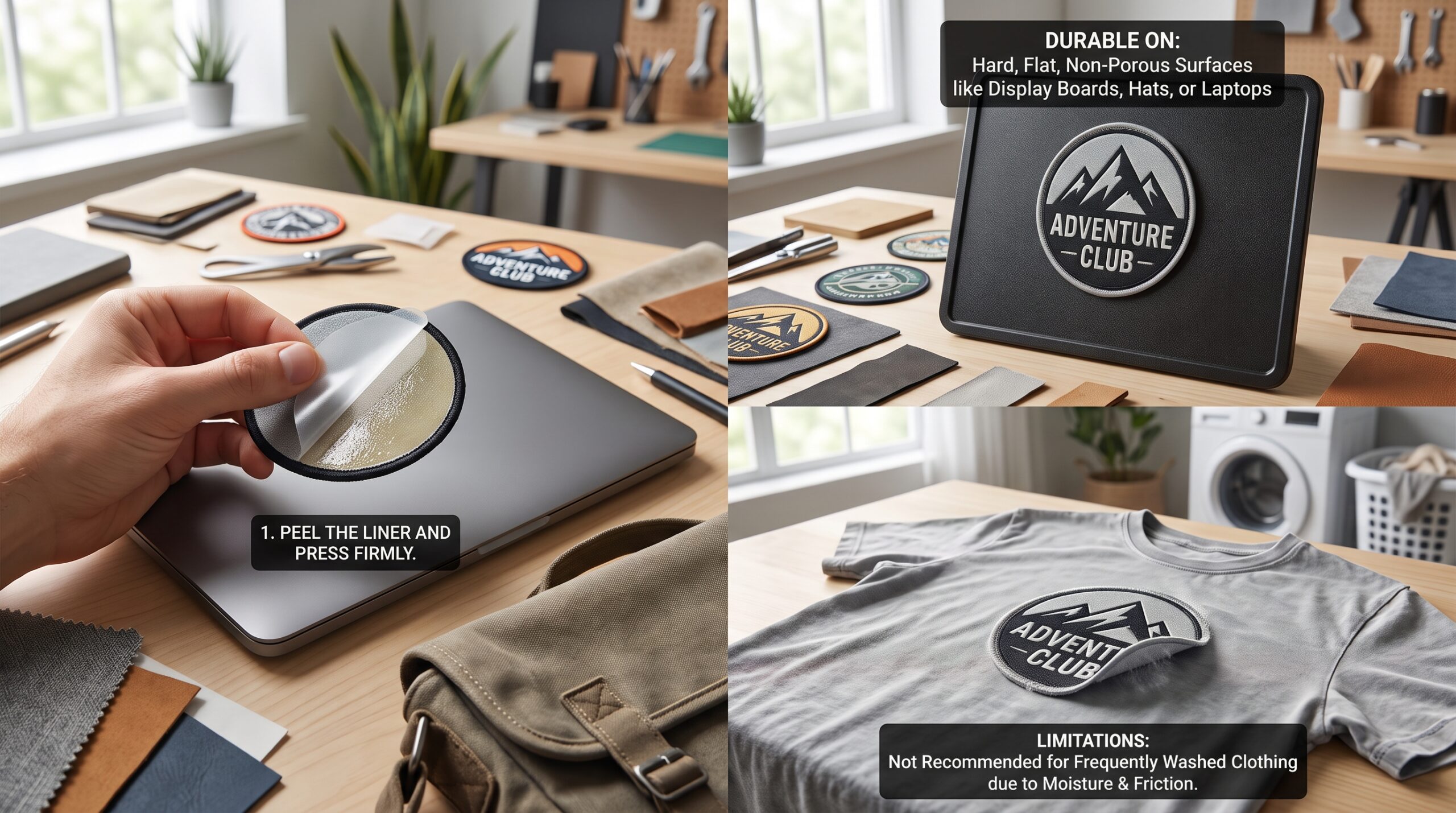
Adhesive backing is a pressure-sensitive glue layer that bonds to a surface on contact, without requiring heat or stitching.
- Best surfaces: Hard, flat, non-porous surfaces like hats, bags, laptops, or display boards.
- Application method: Peel the protective liner and press the patch firmly onto the surface.
- Durability: Weaker and less permanent than iron-on or sew-on, especially with movement or washing.
- Limitations: Not recommended for frequently washed clothing, since moisture and friction weaken the bond over time.
Example: A promotional patch applied to a hard plastic display board holds well with adhesive backing, while the same patch on a regularly worn t-shirt would likely lift within a few washes.
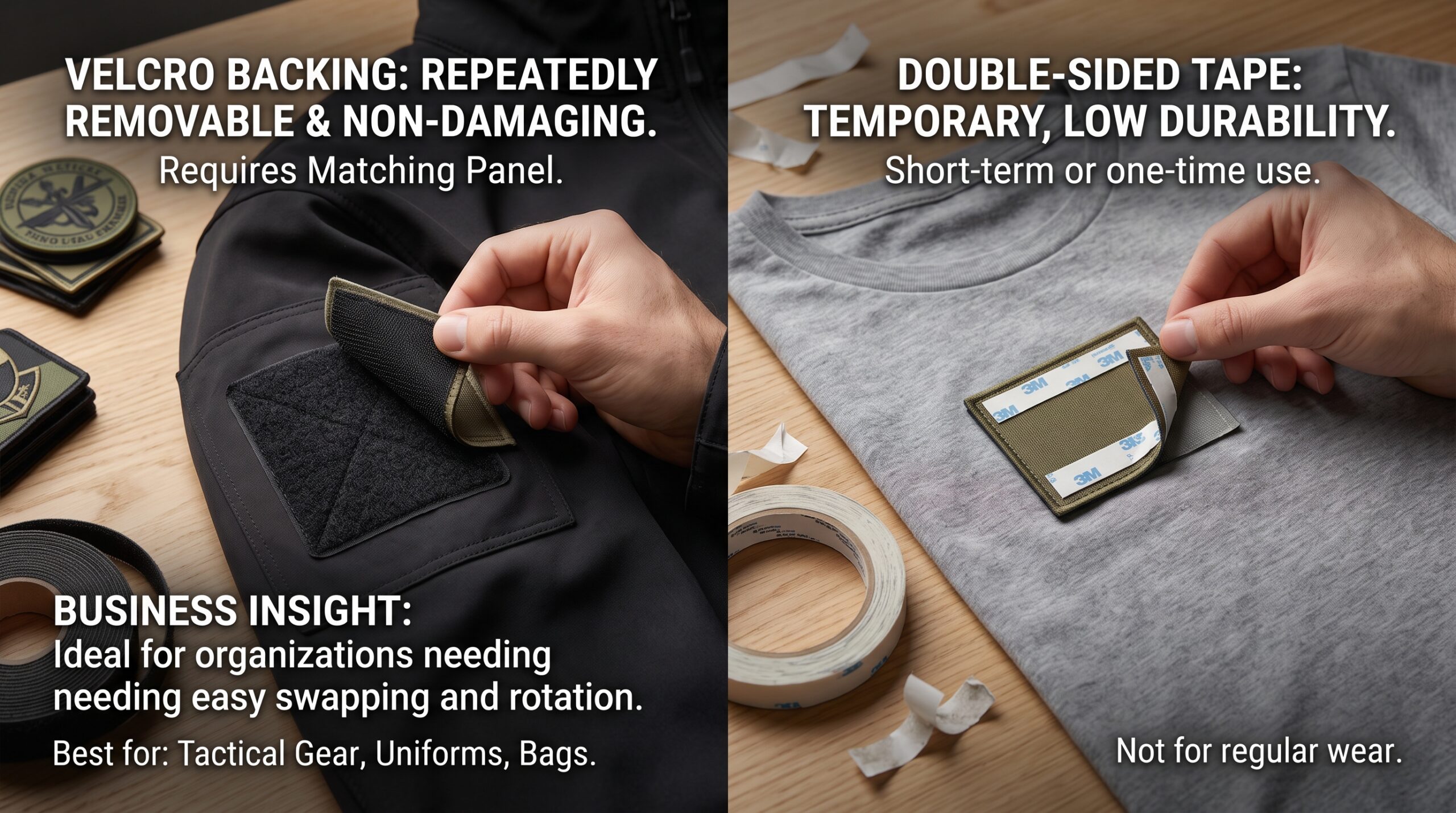
Velcro and Double-Sided Tape
Velcro backing uses a hook-and-loop fastener system, allowing patches to be attached and removed repeatedly without damaging the patch or the garment.
- Best surfaces: Tactical gear, uniforms, and bags designed with a matching Velcro-compatible panel.
- Application method: Requires a corresponding loop or hook panel sewn onto the garment beforehand.
- Durability: Highly durable for repeated attachment and removal, though not a standalone option without the matching panel.
- Double-sided tape: A temporary, low-durability option best suited for short-term or one-time use rather than regular wear.
Business Insight: Velcro backing is the only option among these four that supports easy swapping, making it the standard choice for organizations that regularly update or rotate patches, such as tactical or team-based uniforms.
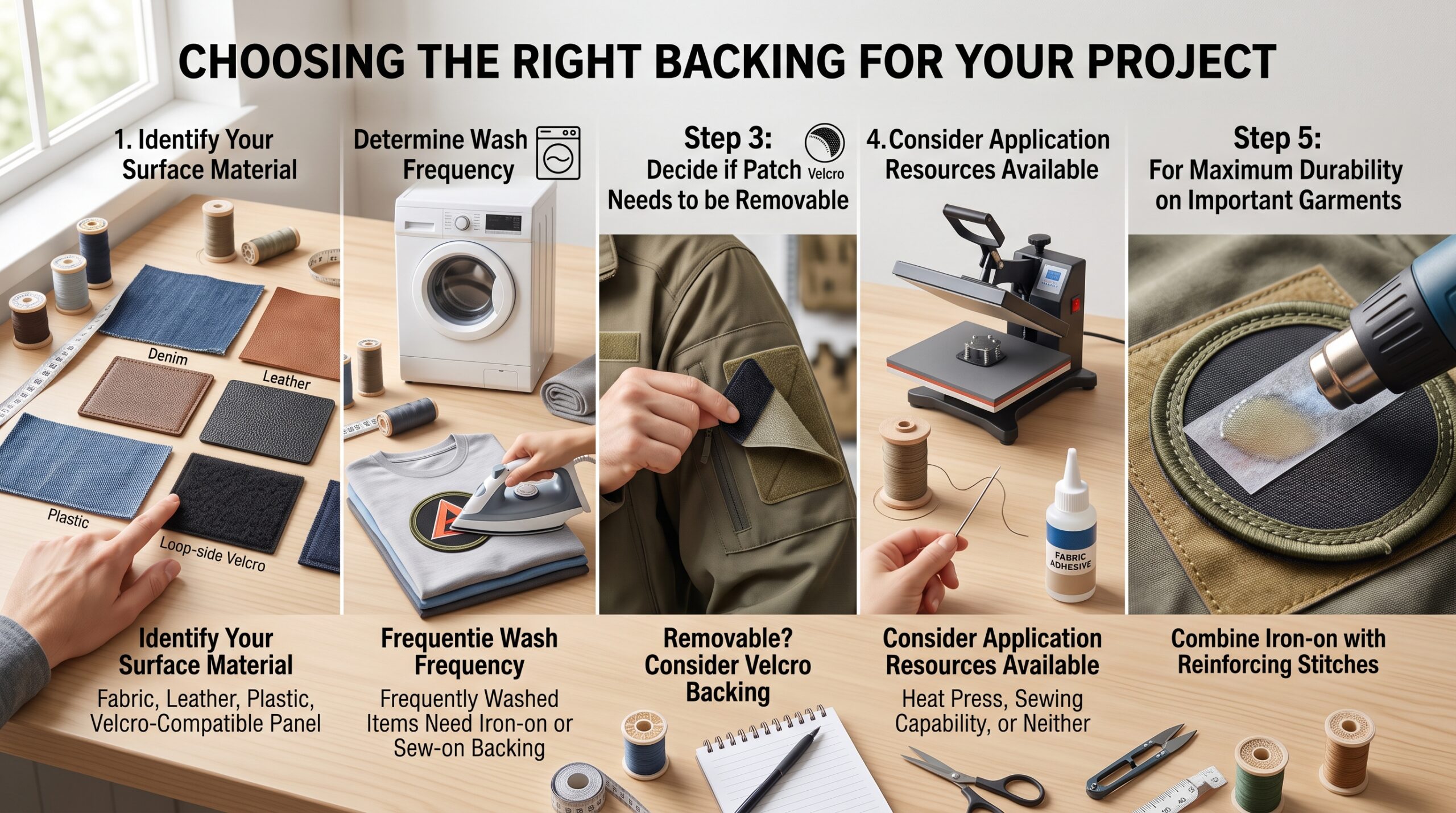
How to Choose the Right Backing for Your Project
- Step 1: Identify your surface material, fabric, leather, hard plastic, or Velcro-compatible panel.
- Step 2: Determine wash frequency, since frequently washed items need iron-on or sew-on backing.
- Step 3: Decide if the patch needs to be removable, which points toward Velcro backing.
- Step 4: Consider application resources available, heat press equipment, sewing capability, or neither.
- Step 5: For maximum durability on important garments, consider combining iron-on with reinforcing stitches.
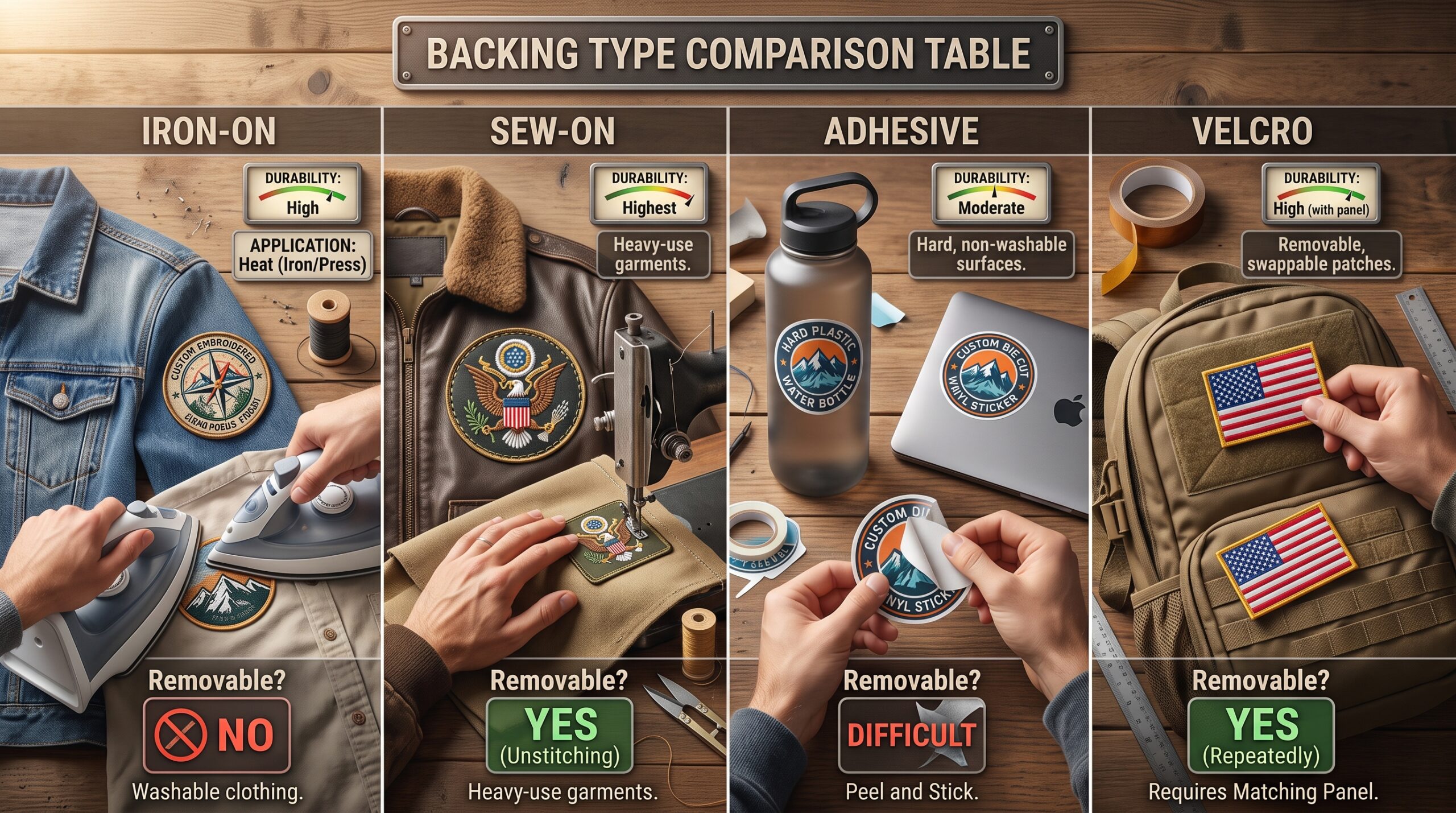
Backing Type Comparison Table
| Backing Type | Best For | Durability | Application Method | Removable |
|---|---|---|---|---|
| Iron-On | Washable clothing | High | Heat press or iron | No |
| Sew-On | Heavy-use garments | Highest | Needle and thread | Yes (with unstitching) |
| Adhesive | Hard, non-washable surfaces | Moderate | Peel and stick | Difficult |
| Velcro | Removable, swappable patches | High (with panel) | Requires matching panel | Yes, repeatedly |
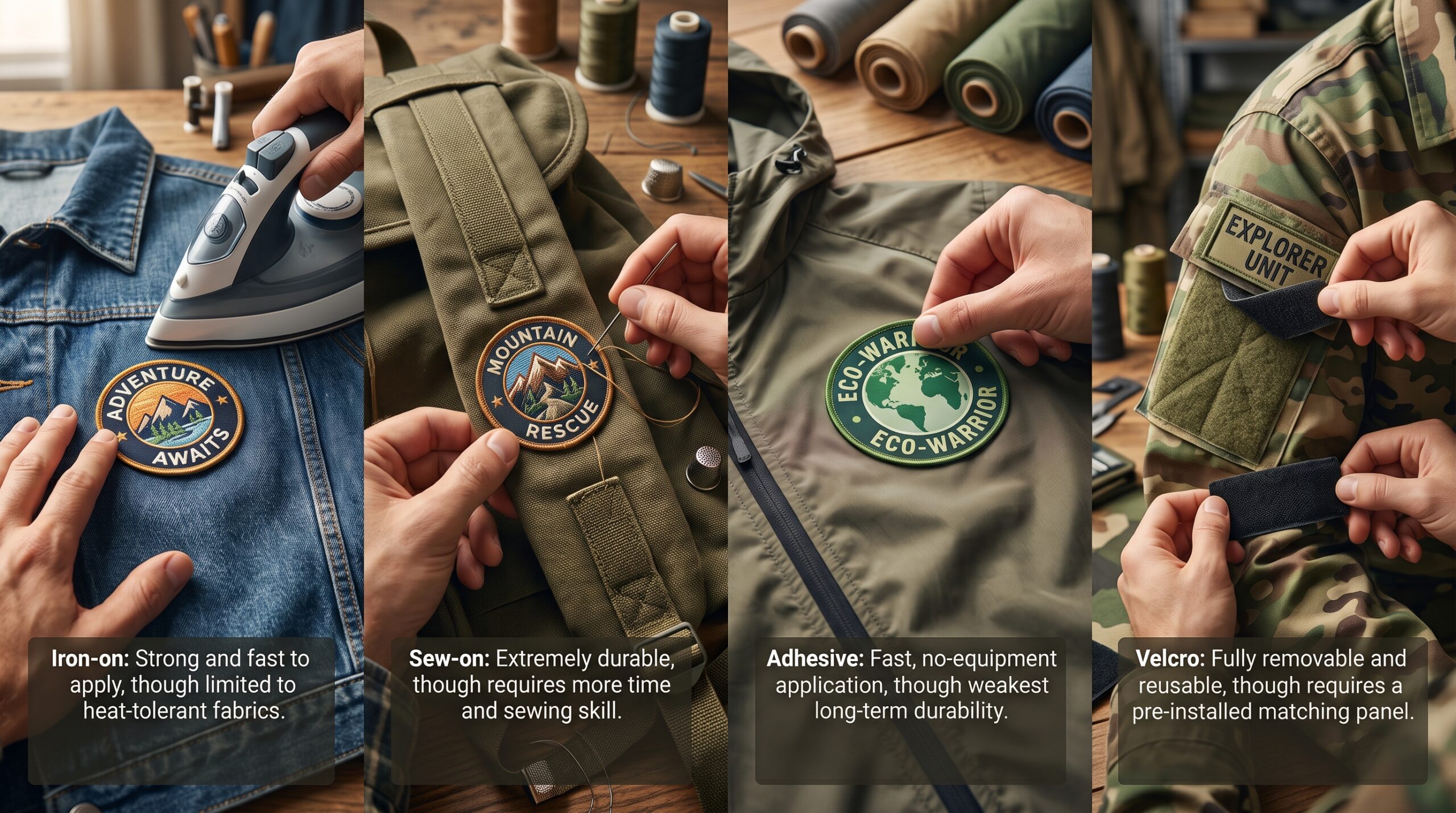
Benefits and Limitations by Backing Type
- Iron-on: Strong and fast to apply, though limited to heat-tolerant fabrics.
- Sew-on: Extremely durable, though requires more time and sewing skill.
- Adhesive: Fast, no-equipment application, though weakest long-term durability.
- Velcro: Fully removable and reusable, though requires a pre-installed matching panel.
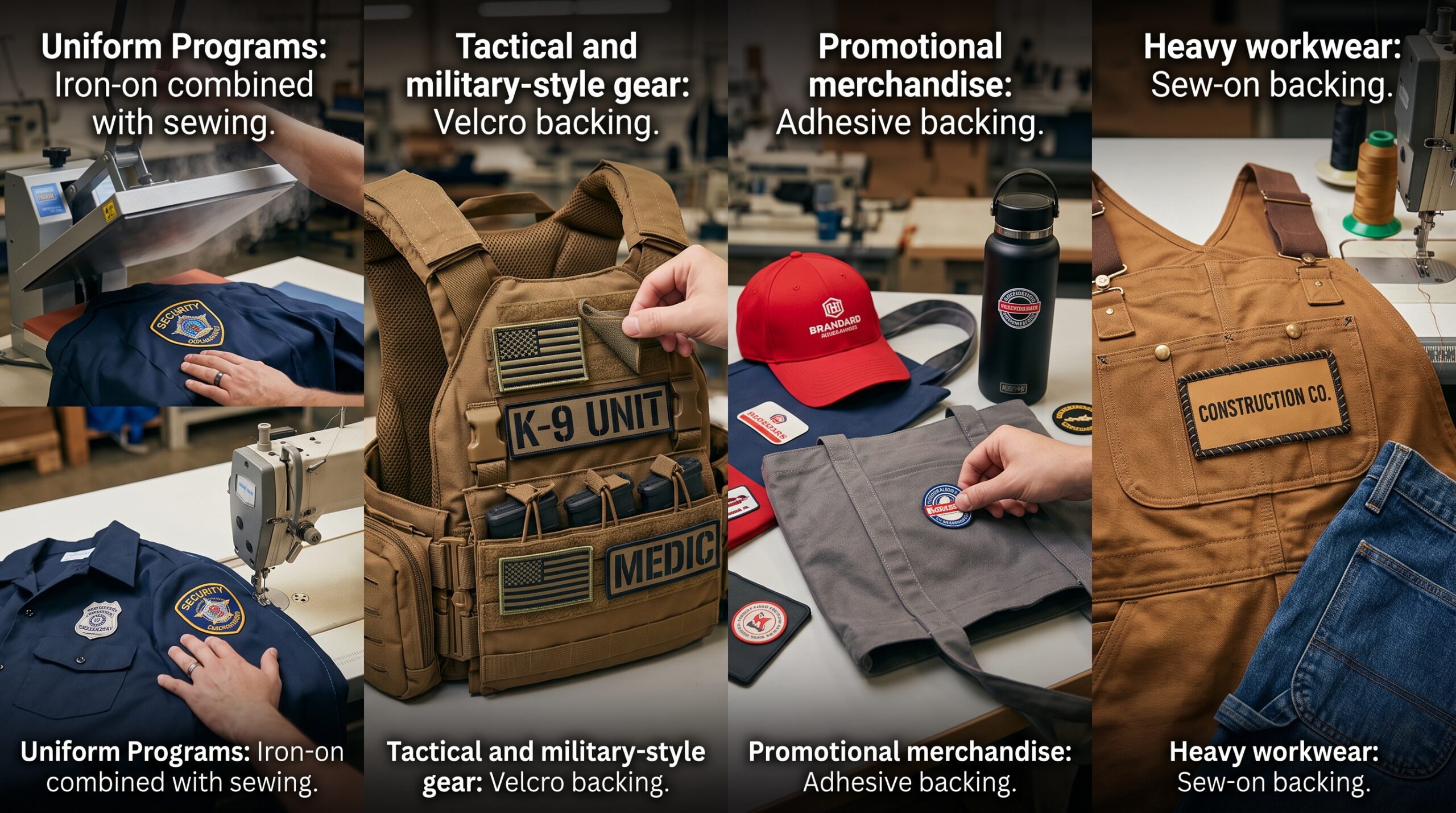
Industry Applications and Use Cases
- Uniform programs: Iron-on combined with sewing for long-term durability.
- Tactical and military-style gear: Velcro backing for quick patch swapping.
- Promotional merchandise: Adhesive backing for hats, bags, or hard display items.
- Heavy workwear: Sew-on backing for maximum durability in demanding conditions.
Buying Guide
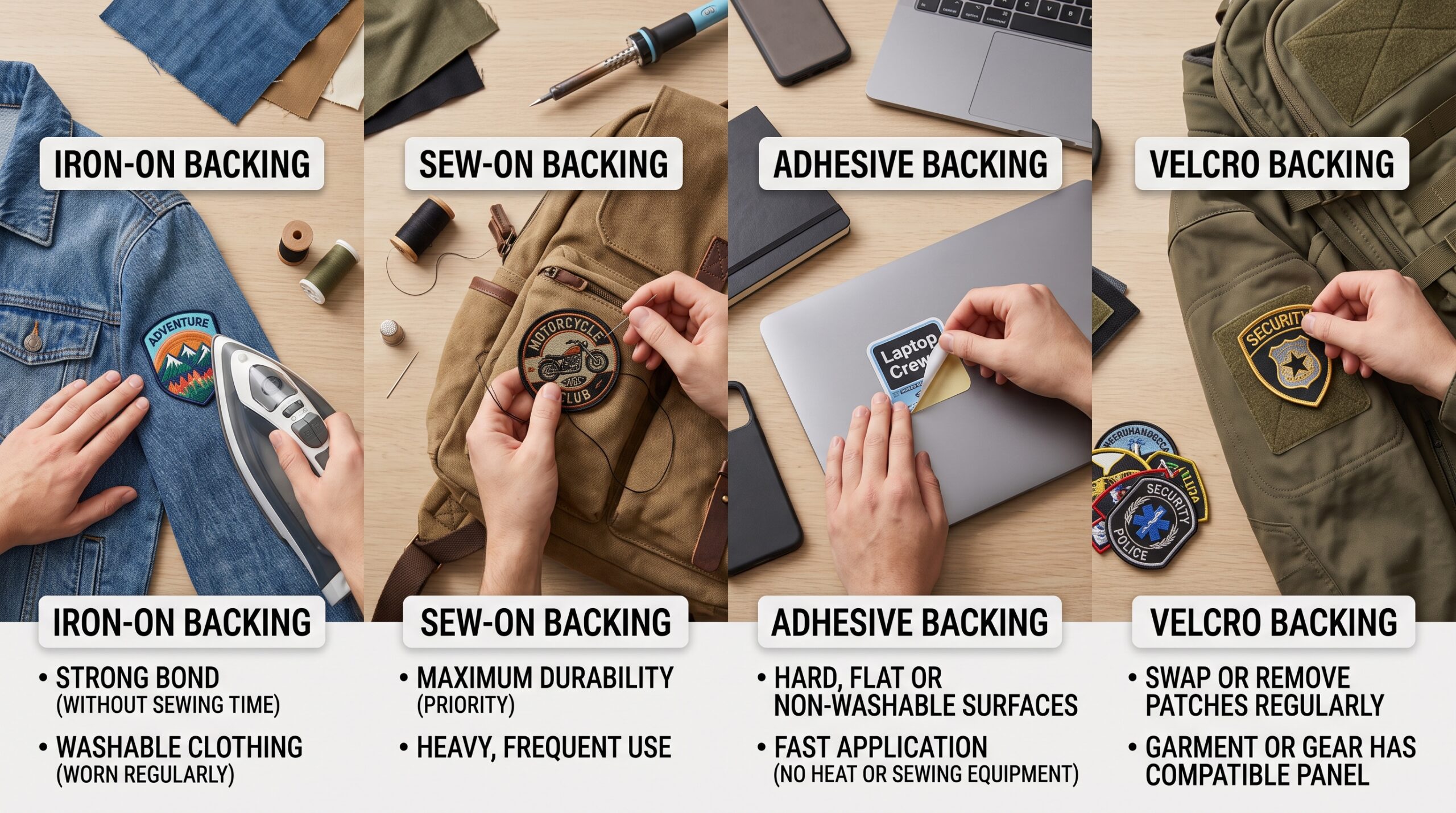
- Choose iron-on backing when:
- Your patches go on washable clothing worn regularly.
- You want a strong bond without the time investment of sewing.
- Choose sew-on backing when:
- Maximum durability is the priority.
- The item will see heavy, frequent use.
- Choose adhesive backing when:
- Your surface is hard, flat, or non-washable.
- You need fast application without heat or sewing equipment.
- Choose Velcro backing when:
- You need to swap or remove patches regularly.
- Your garment or gear already has a compatible panel.
Common Mistakes When Choosing Backing
- Mistake 1: Using adhesive backing on frequently washed clothing, leading to early lifting.
- Mistake 2: Choosing iron-on for leather or other heat-sensitive materials.
- Mistake 3: Assuming Velcro backing works without a pre-installed matching panel.
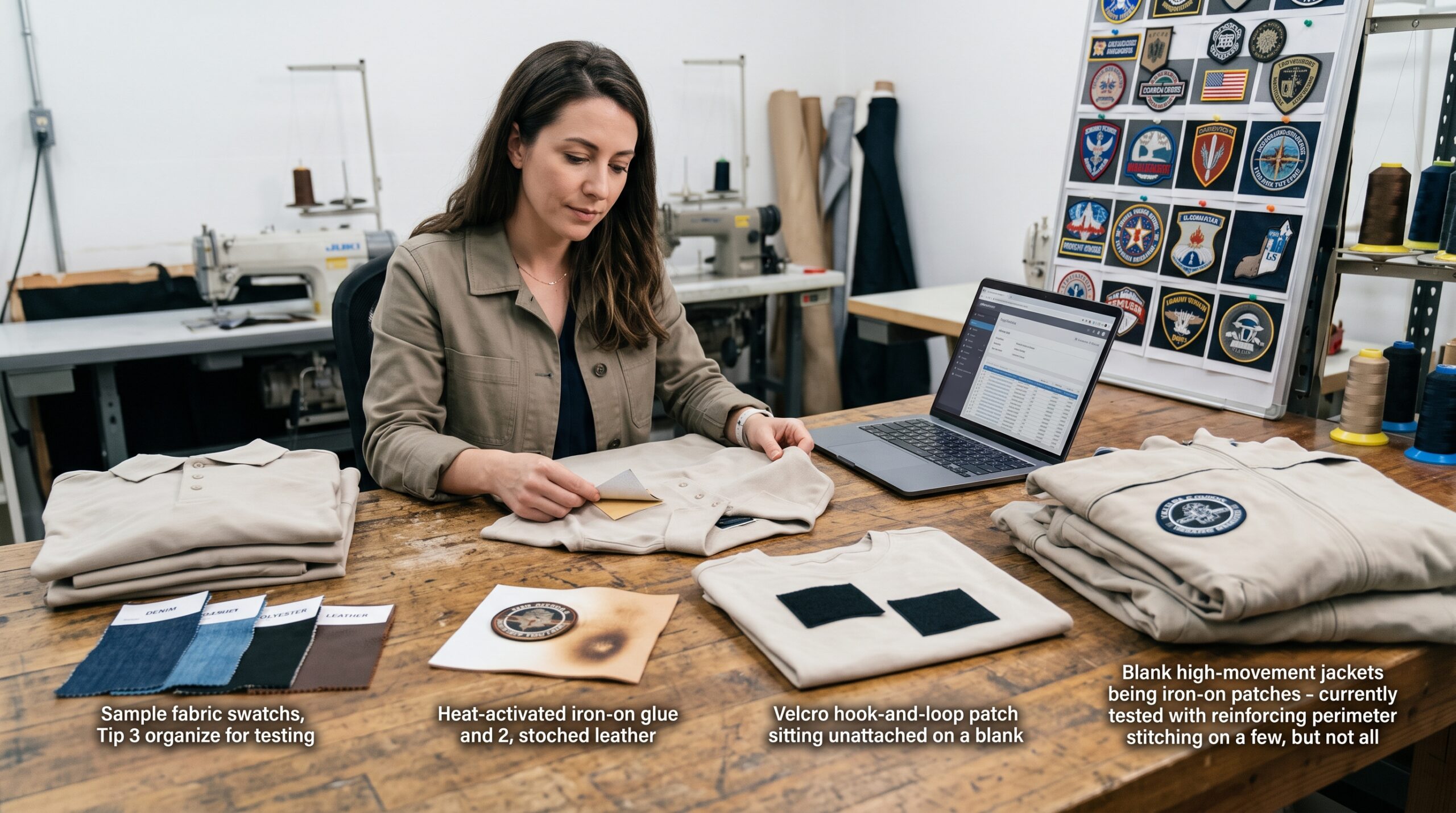
- Mistake 4: Skipping reinforcement stitching on high-movement areas for iron-on patches.
- Mistake 5: Choosing sew-on for a large bulk order without accounting for the added labor time.
Expert Tips for B2B Buyers
- Tip 1: For uniform programs, combine iron-on backing with reinforcing stitches for the most reliable long-term durability.
- Tip 2: Confirm whether your garments already have Velcro panels before ordering Velcro-backed patches.
- Tip 3: Request a sample to test backing performance on your specific fabric before a bulk order.
- Tip 4: For promotional items on hard surfaces, adhesive backing offers the fastest turnaround.
- Tip 5: Ask your supplier about combination backing options for maximum flexibility across a mixed-use order.
Ordering Process
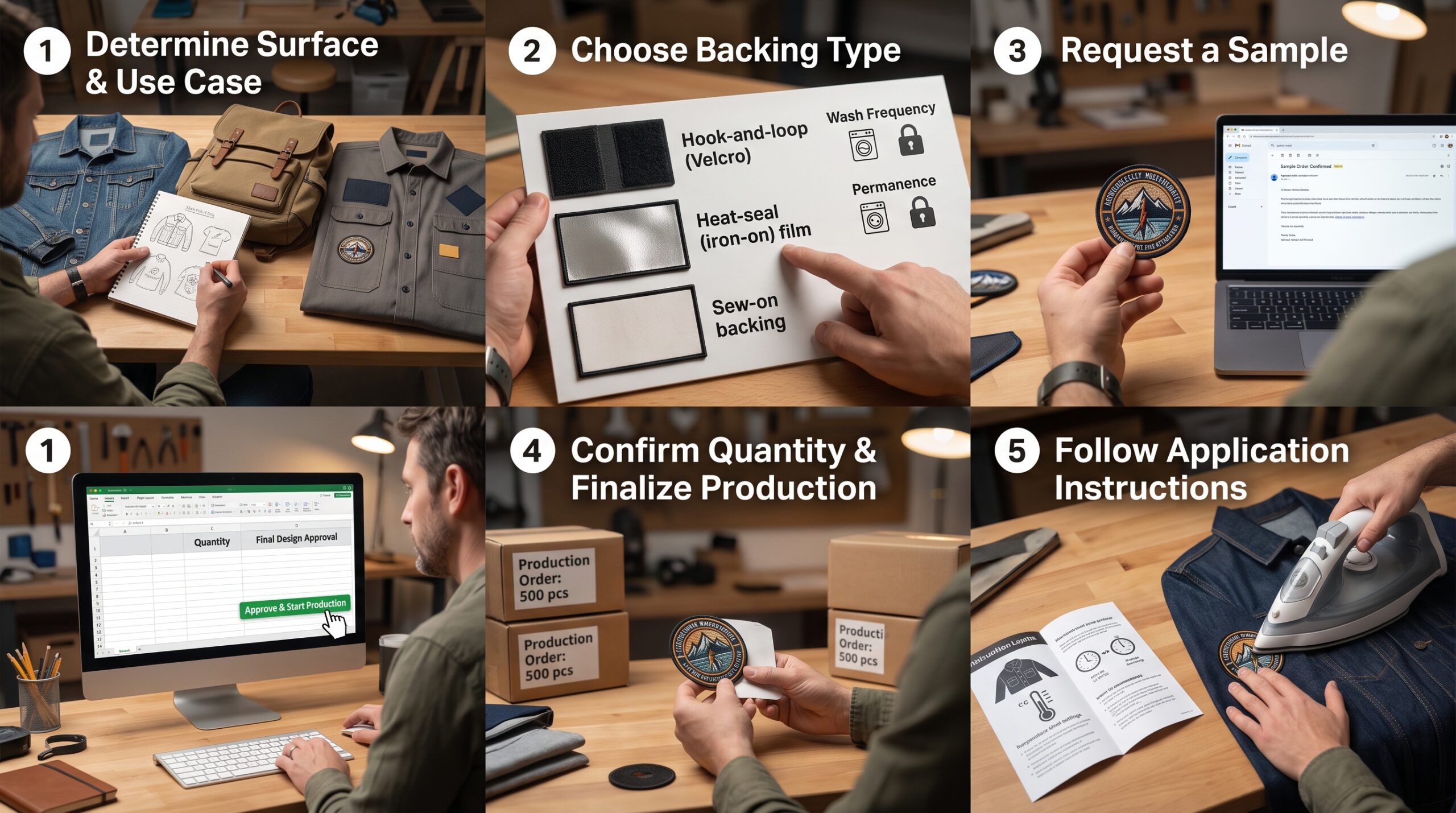
- Step 1: Determine your patch’s intended surface and use case.
- Step 2: Choose backing type based on wash frequency, permanence needs, and application resources.
- Step 3: Request a sample to confirm application and durability before a bulk order.
- Step 4: Confirm quantity and finalize production.
- Step 5: Follow application instructions specific to your chosen backing type.
Why Choose Custom Patches 4U
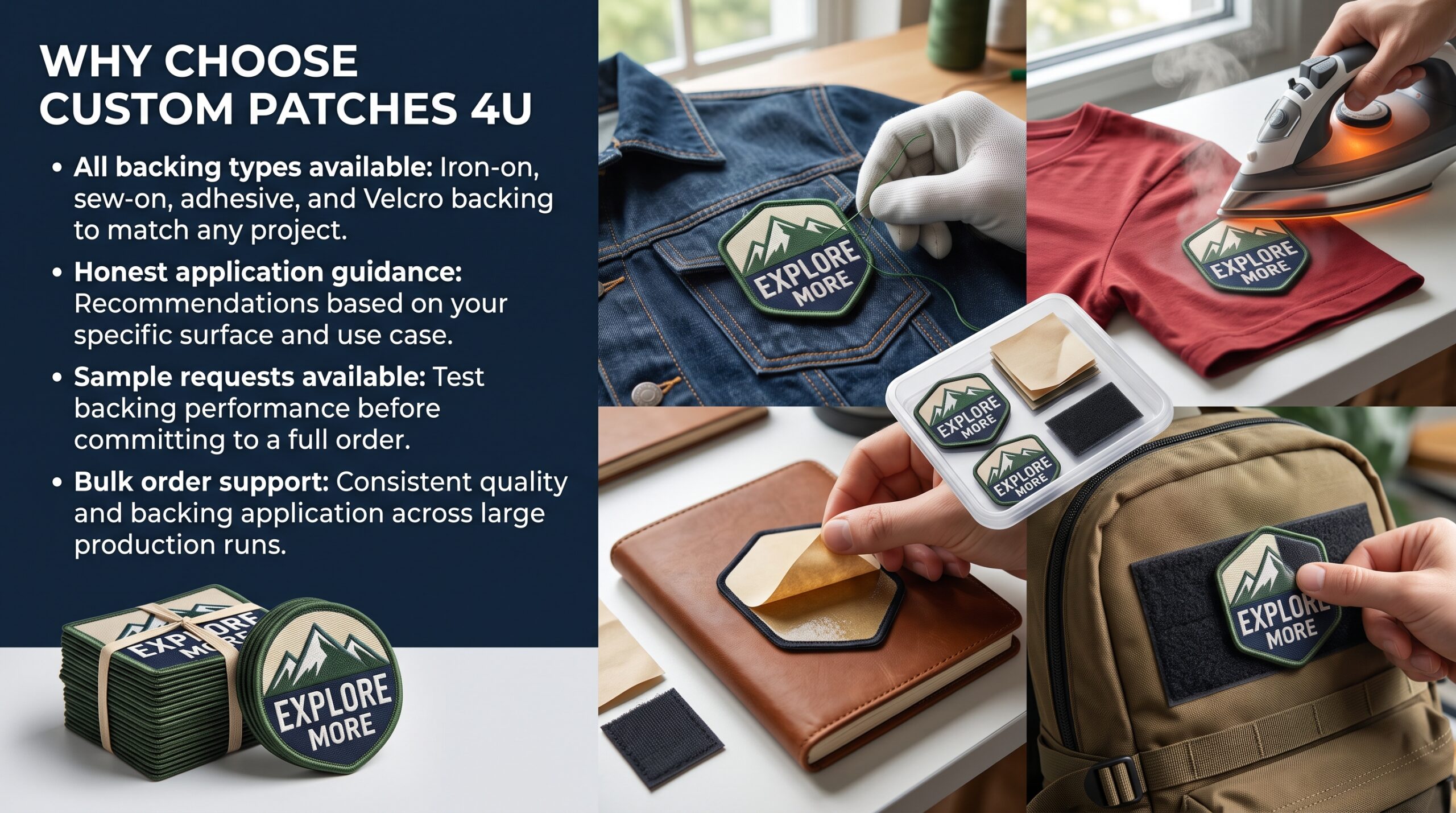
- All backing types available: Iron-on, sew-on, adhesive, and Velcro backing to match any project.
- Honest application guidance: Recommendations based on your specific surface and use case.
- Sample requests available: Test backing performance before committing to a full order.
- Bulk order support: Consistent quality and backing application across large production runs.
FAQs
Which backing is best for custom patches?
It depends on your use case: iron-on for washable clothing, sew-on for maximum durability, adhesive for hard surfaces, and Velcro for removable patches.
What is iron-on backing for patches?
Iron-on backing is a heat-activated adhesive film that bonds to fabric when pressed with an iron or heat press.
Is sew-on backing more durable than iron-on?
Yes, sew-on backing is generally the most durable option, since it doesn’t rely on heat-activated adhesive that can weaken over time.
Can I use adhesive backing on clothing?
Adhesive backing is not recommended for frequently washed clothing, since the bond tends to weaken with moisture and friction over time.
What’s the difference between Velcro backing and double-sided tape?
Velcro backing supports repeated attachment and removal with a matching panel, while double-sided tape is a weaker, more temporary option.
Do I need special equipment for iron-on patch backing?
Yes, an iron or heat press along with a pressing cloth is needed to properly apply iron-on backing.
Can iron-on backing be combined with sewing for extra durability?
Yes, combining iron-on adhesive with reinforcing stitches is a common method for maximizing patch durability on frequently worn items.
What backing works best for hats and bags?
Adhesive backing is often preferred for hats and bags due to its fast, no-heat application on firmer surfaces.
Does Velcro backing require anything on the garment itself?
Yes, Velcro backing requires a corresponding hook or loop panel already installed on the garment or gear.
Which backing type is fastest to apply in bulk?
Adhesive backing is generally the fastest to apply at scale, since it requires no heat or stitching equipment.
Get the Right Backing for Your Patch Order
If you're placing a patch order and unsure which backing type fits your project, share your intended surface and use case for a personalized recommendation. Request a sample, ask about bulk pricing, or get application guidance before you finalize your order.