
A Complete B2B Guide for Fashion Brands, Outerwear Manufacturers & Bulk Buyers | CustomPatches4U.com
Winter apparel carries a different set of expectations from any other seasonal clothing category. People wear jackets, coats, beanies, and heavy knitwear daily in cold weather. Furthermore, consumers keep these pieces for multiple seasons rather than replacing them each year. Consequently, they treat such garments as long-term wardrobe investments rather than disposable fashion pieces. The decoration and branding on winter apparel needs to match those expectations: durable, visually substantial, and appropriate for premium outerwear aesthetics.
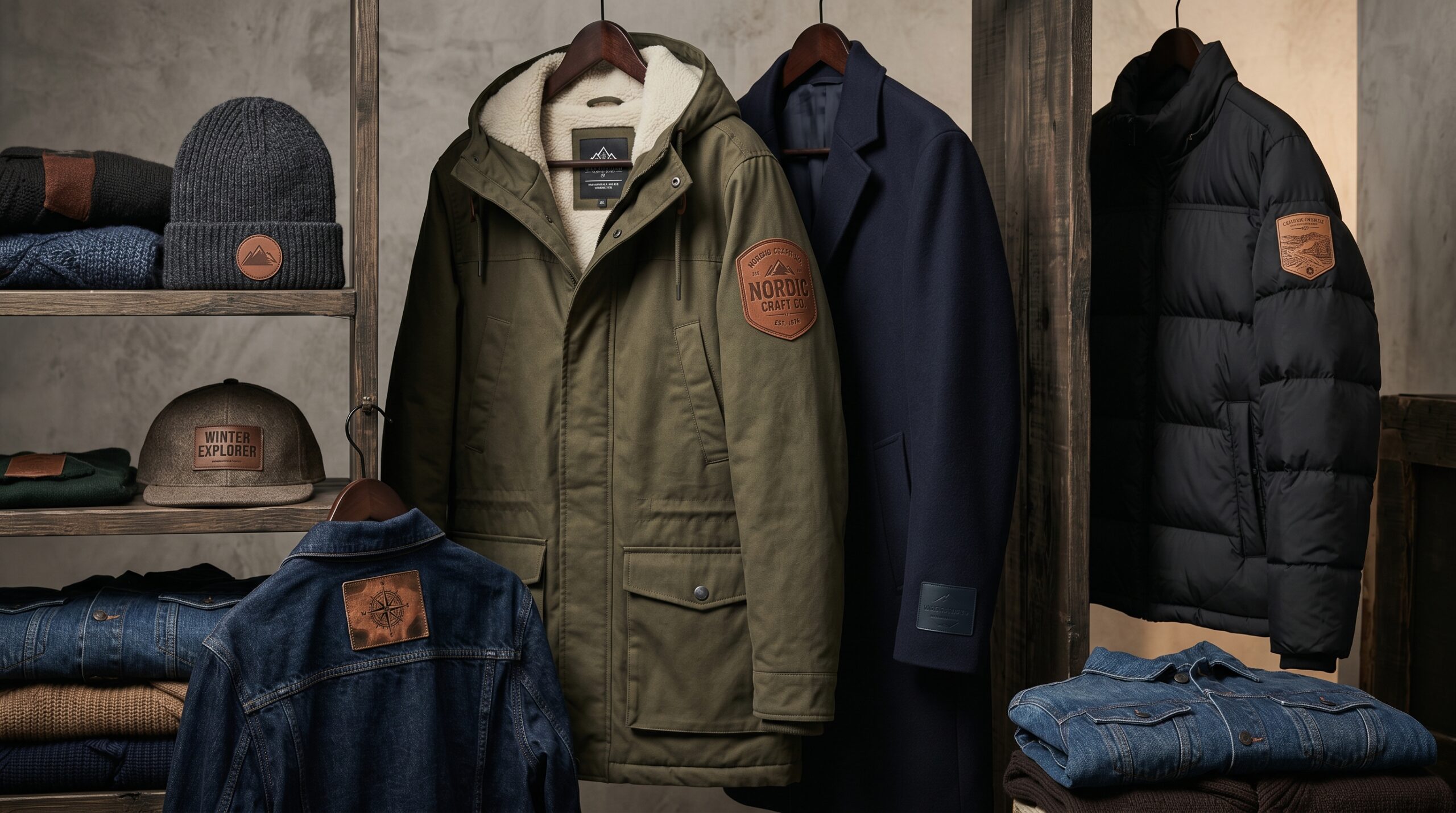
Custom leather patches meet those requirements in a way that embroidered or printed alternatives rarely do on heavyweight winter garments. A leather patch on a wool coat, a denim jacket, or a winter beanie adds a tactile, premium brand element that signals intentional, high-quality craftsmanship. For fashion brands, outerwear manufacturers, and uniform buyers, custom leather patches deliver one of the most commercially effective branding results available in winter apparel programs.
This guide covers everything B2B buyers and fashion professionals need to know about custom leather patches for winter apparel, from material types and production processes to garment applications, design considerations, and ordering guidance.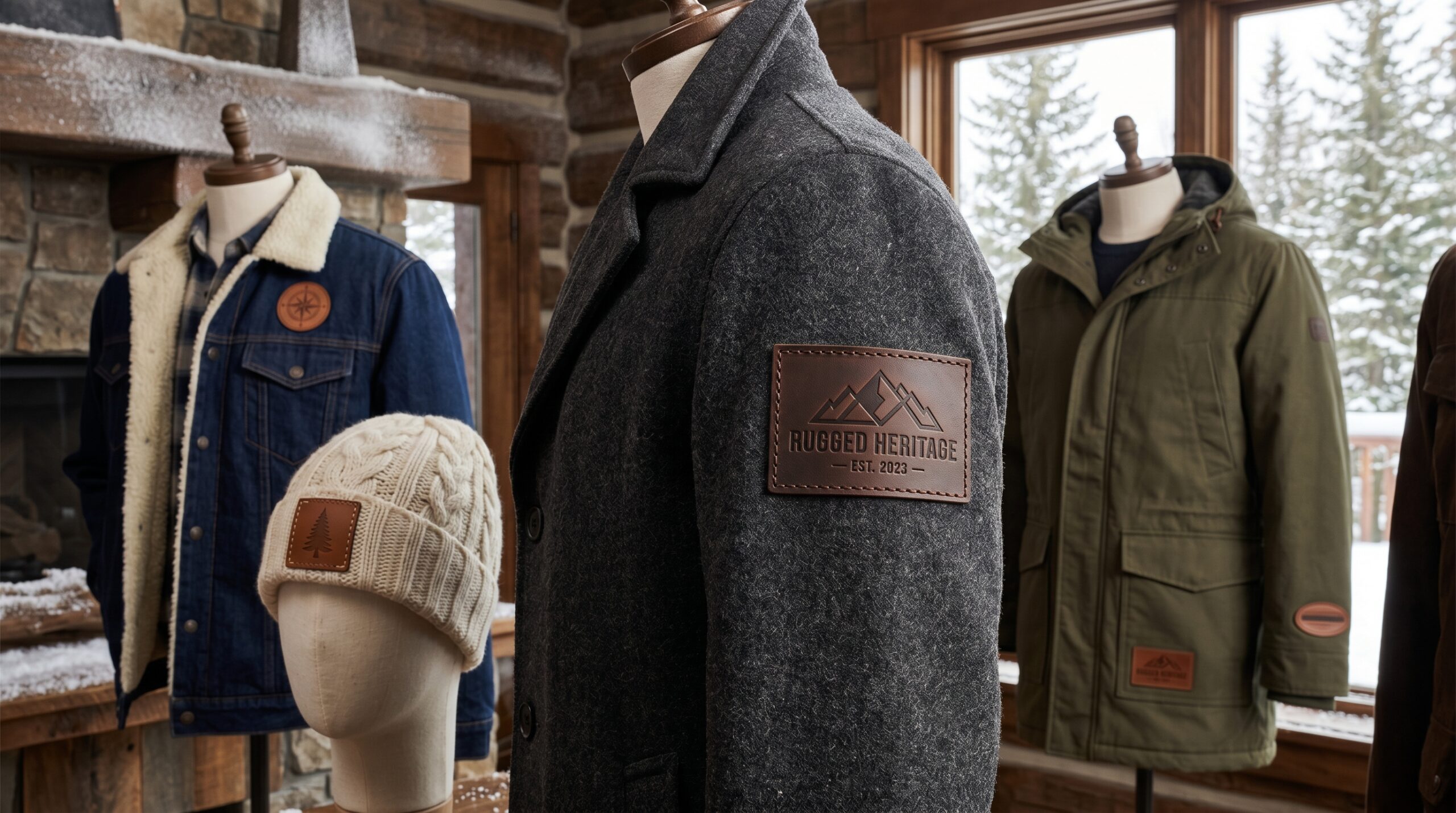
What Are Custom Leather Patches and How Are They Produced?
Custom leather patches are brand marks, logos, labels, or decorative elements produced on genuine or faux leather material and applied to garments and accessories as a standalone decoration unit.
The production process varies by finish type. The three primary production methods are debossing, embossing, and laser engraving, each producing a distinct visual and tactile result.
Manufacturers produce debossed leather patches by pressing a metal die into the leather surface under heat and pressure, creating a recessed design that sits below the leather surface. The result is a clean, understated brand mark with strong tactile quality. Apparel brands choose debossed leather patches as the most common format for premium branding because the recessed design does not catch on clothing or wear away through use.
Embossed leather patches use the same die-pressing process but create a raised design that sits above the leather surface. In contrast to debossed alternatives, embossed patches offer greater three-dimensional visual impact. As a result, brands choose them where a bolder, more prominent brand mark is required.
Laser engraved leather patches use a laser cutting system to etch the design into the leather surface with precision that mechanical dies cannot match. Laser engraving supports fine line detail, small text, and complex graphic elements that standard debossing or embossing would otherwise lose at typical patch sizes. For brands with detailed logos or intricate artwork, laser engraved patches are the correct production choice.
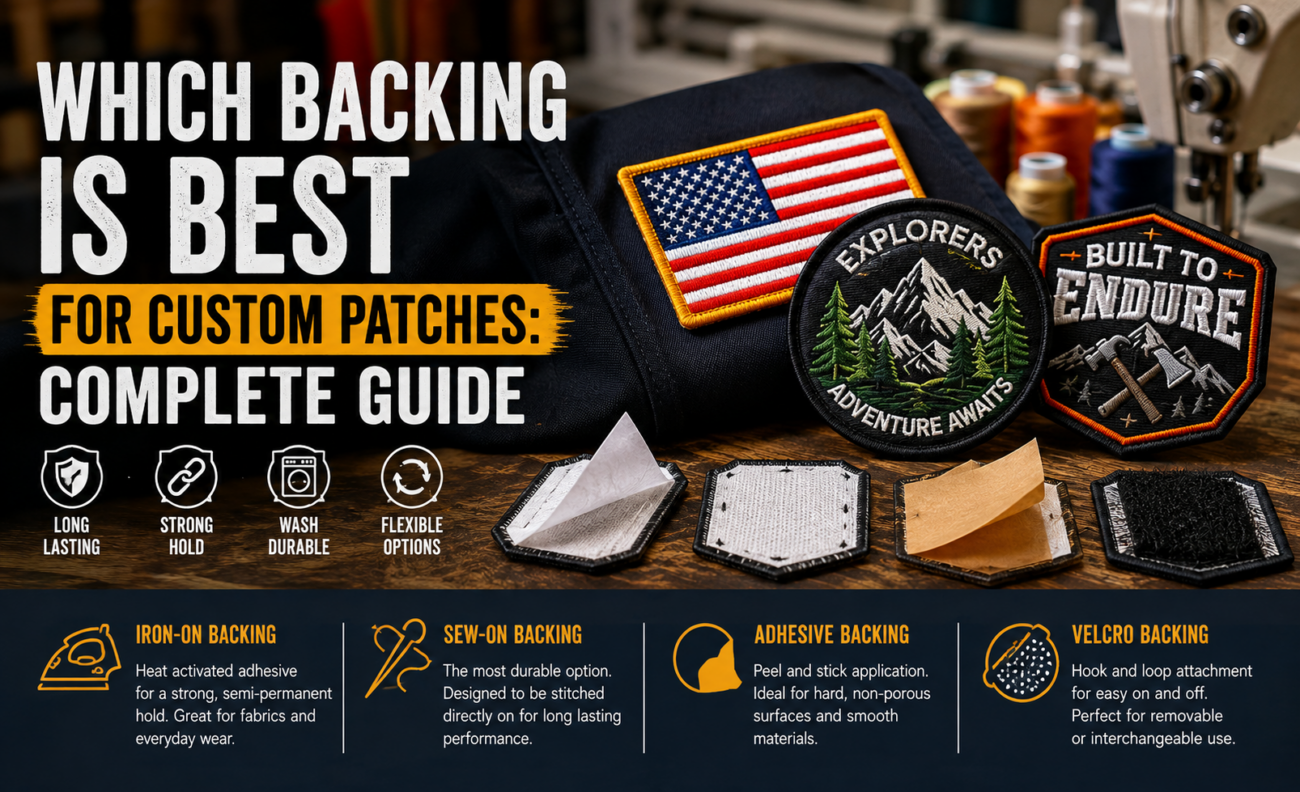
All three formats are available in genuine leather and faux leather at CustomPatches4U, with attachment options including sew-on, iron-on, adhesive backing, and riveted application depending on the garment type.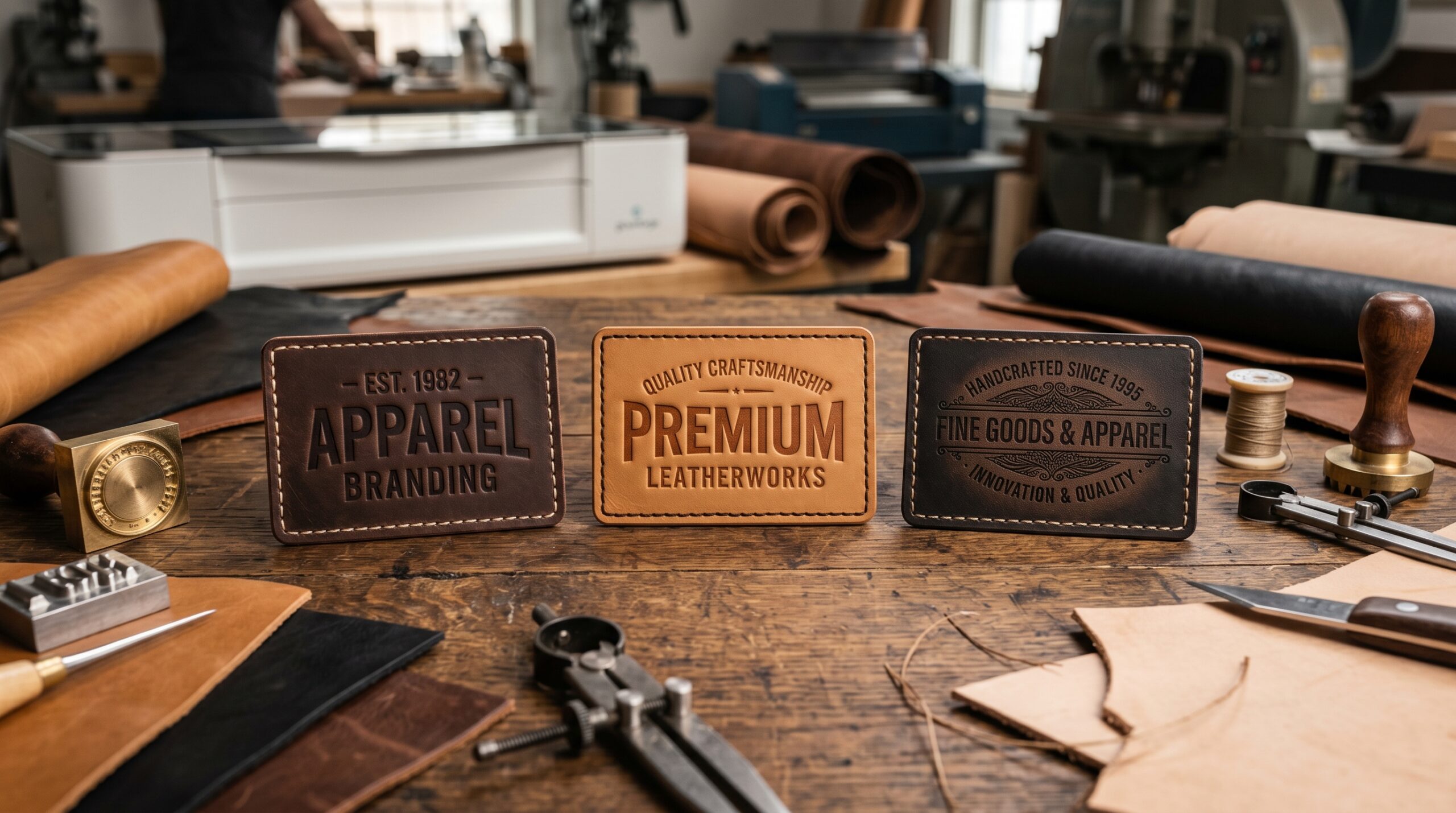
Why Custom Leather Patches Work Specifically for Winter Apparel
The case for leather patches on winter apparel is both aesthetic and practical.
Aesthetic fit: Leather is a natural material associated with warmth, durability, and quality. On winter outerwear, a leather patch sits contextually in a way that a printed label or embroidered patch on a lightweight summer shirt does not. The material registers as appropriate for the garment category, which strengthens the perceived quality of the overall piece.
Surface compatibility: Heavy winter fabrics, wool, thick cotton, melton, canvas, and waxed cotton, are not always ideal surfaces for embroidery. The texture and weight of these fabrics can affect stitch tension and surface appearance in direct embroidery applications. A leather patch applied over the surface bypasses this entirely. Manufacturers produce the patch on its own material and apply it as a finished unit, regardless of what sits beneath it.
Durability through winter conditions: Manufacturers build custom leather patches for outdoor apparel to withstand the conditions that winter garments face. Genuine leather patches treated with appropriate finishes handle moisture, temperature variation, and regular use without degrading. Faux leather patches offer equivalent durability in conditions where genuine leather would be less appropriate, such as vegan-certified product lines.
Brand positioning: For fashion brands positioning outerwear in the mid-to-premium price bracket, a leather patch signals quality in a way that other decoration methods do not. The material cost and production process of a leather patch are visible to the consumer in the finished result, which justifies a higher retail price point and supports premium brand positioning.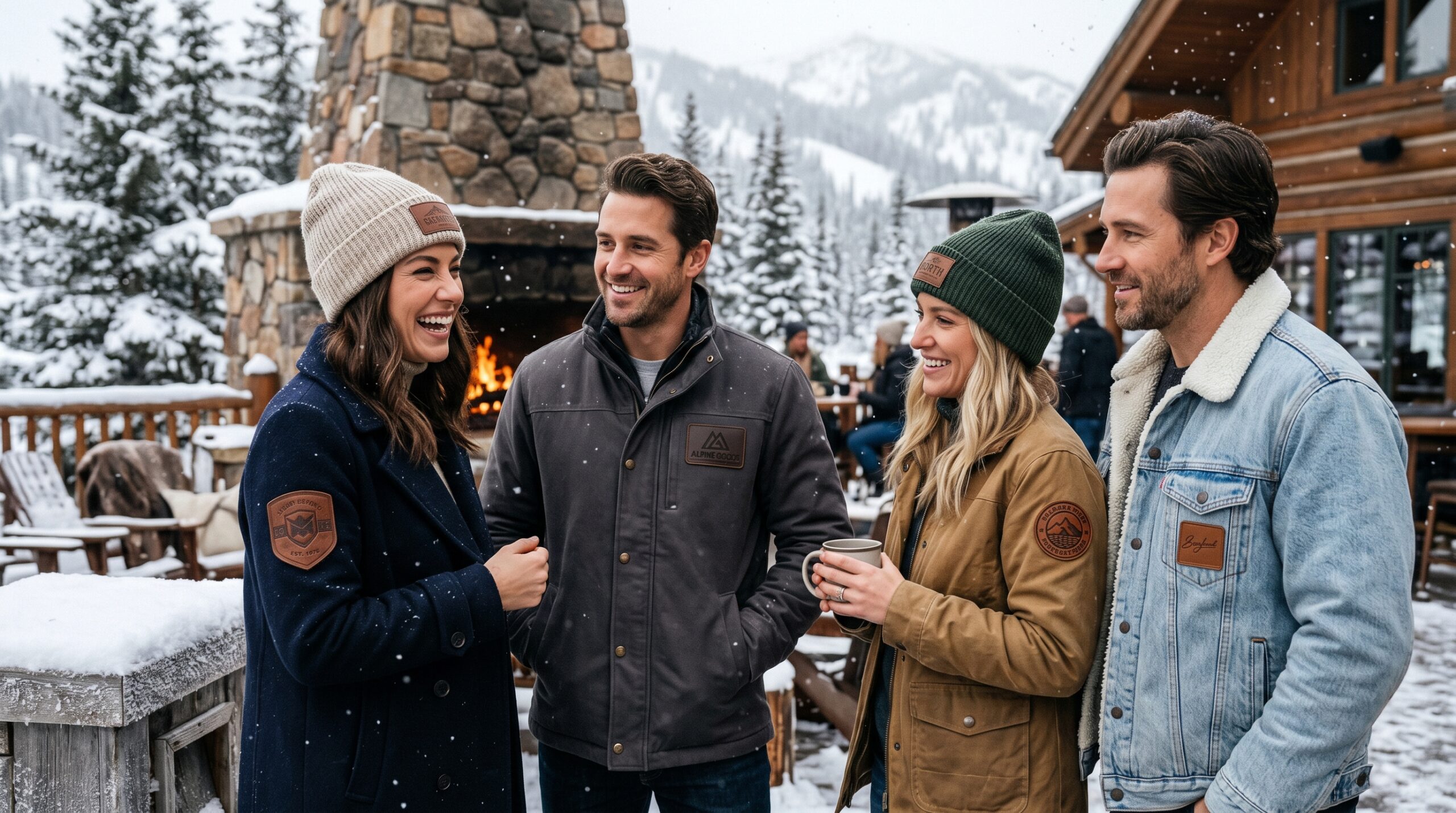
Custom Leather Patches for Jackets: Applications and Placement
Leather jacket patches are one of the most commercially active segments in the custom patch market, driven by demand from fashion retail, workwear programs, motorcycle and outdoor clubs, and corporate uniform buyers.
Back Patches on Winter Jackets
Large leather patches on the back of jackets make a statement format that motorcycle clubs, heritage workwear brands, and outdoor apparel labels have long associated with their identity. A full back patch in leather carries significant visual weight, and wearers treat it as a permanent, identity-defining element of the garment.
For fashion brands, a large debossed or laser engraved leather patch on the back of a winter jacket creates a premium brand mark that the public sees every time the wearer puts the jacket on. For workwear and outdoor apparel brands, a back patch with the brand name and logo in leather provides clear, durable identification in field environments.
Chest and Sleeve Patches on Outerwear
Chest patches on winter jackets serve as the primary brand identification point in most outerwear programs. A leather patch carrying the brand logo on the chest of a wool coat, puffer jacket, or wax cotton field coat adds a tactile brand element that a woven label inside the collar does not provide.
Sleeve patches on winter jackets, typically positioned at the upper arm or cuff, serve as secondary brand marks, collection identifiers, seasonal badges, and team or club insignia. The sleeve placement stays visible when wearers put the jacket on and adds detail to the overall garment presentation without competing with the chest placement.
Personalized Leather Patches for Jackets
Personalized leather patches for jackets carry individual names, initials, numbers, or personal text in addition to or instead of brand marks. Brands use them in staff uniform programs where personal identification requirements apply, in team apparel where player names and numbers appear on outerwear, and in premium retail where retailers offer personalization as an add-on service.
Laser engraving is the preferred production method for personalized leather patches because it handles variable text and individual customization within a standard production workflow without requiring new dies for each variation.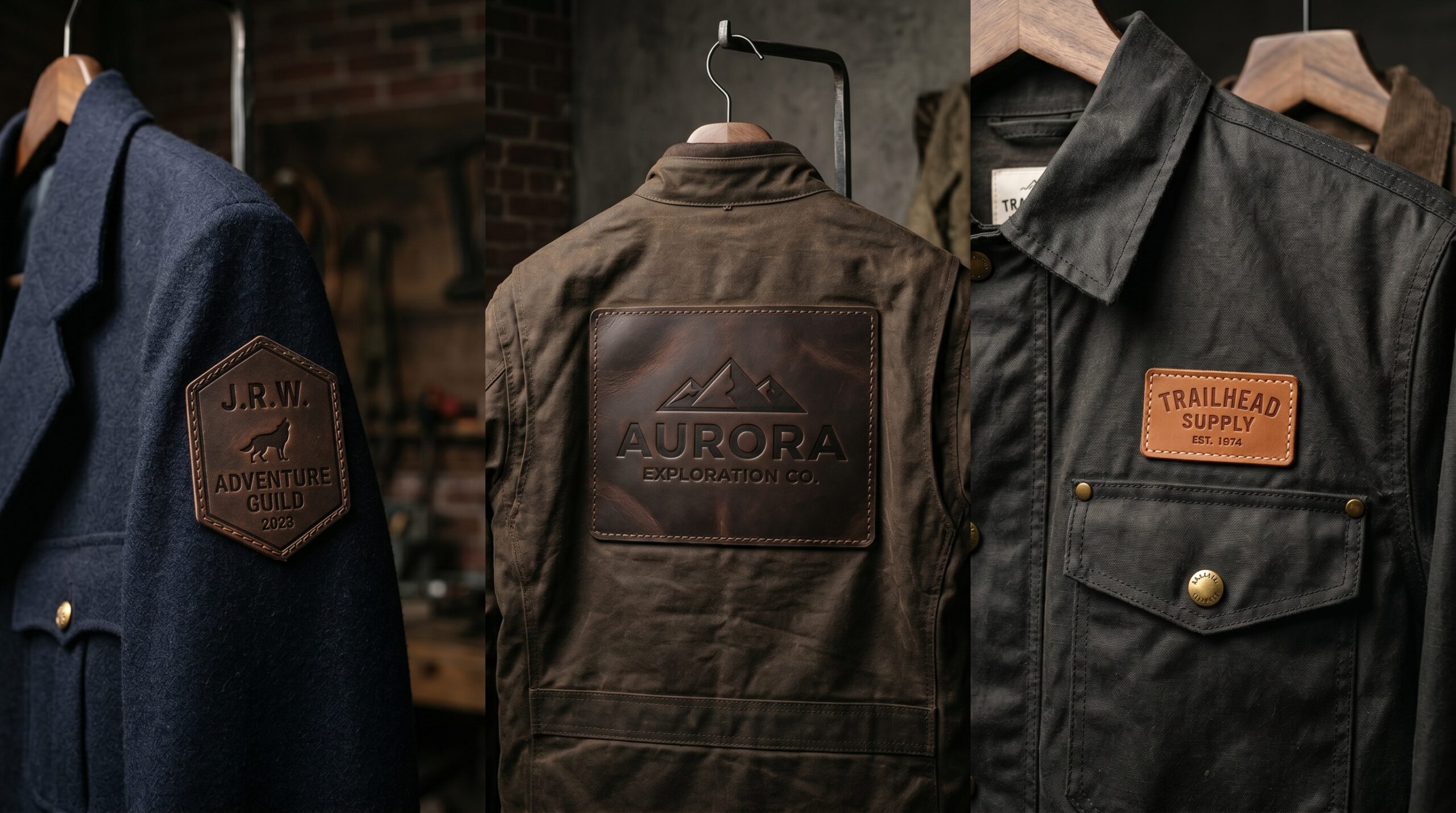
Leather Patches for Hats and Beanies: A Growing Winter Accessory Market
Leather hat patches and leather patches for beanies have become a significant commercial category within the broader custom patch market, driven by demand from headwear brands, outdoor companies, promotional merchandise buyers, and fashion retailers.
The appeal is straightforward. A leather patch on a beanie or winter cap adds a premium material detail to an item that is otherwise simple in construction. The contrast between the soft, knitted surface of a beanie and the firm, textured surface of a leather patch is visually effective and reads as intentional brand design rather than afterthought decoration.
For headwear brands and outdoor apparel companies, custom leather logo patches on beanies and caps are a cost-effective way to add a premium brand mark to a lower-cost item. The patch elevates the perceived value of the headwear without requiring a fundamental change in the garment’s construction or materials.
Attachment for beanies and knitwear: Standard iron-on backing is not reliable on knitted fabrics due to the flexible, looped surface of the material. Sew-on application is the recommended attachment method for leather patches on beanies, using a backing fabric behind the knit to stabilize the patch and prevent distortion of the knitted surface during stitching.
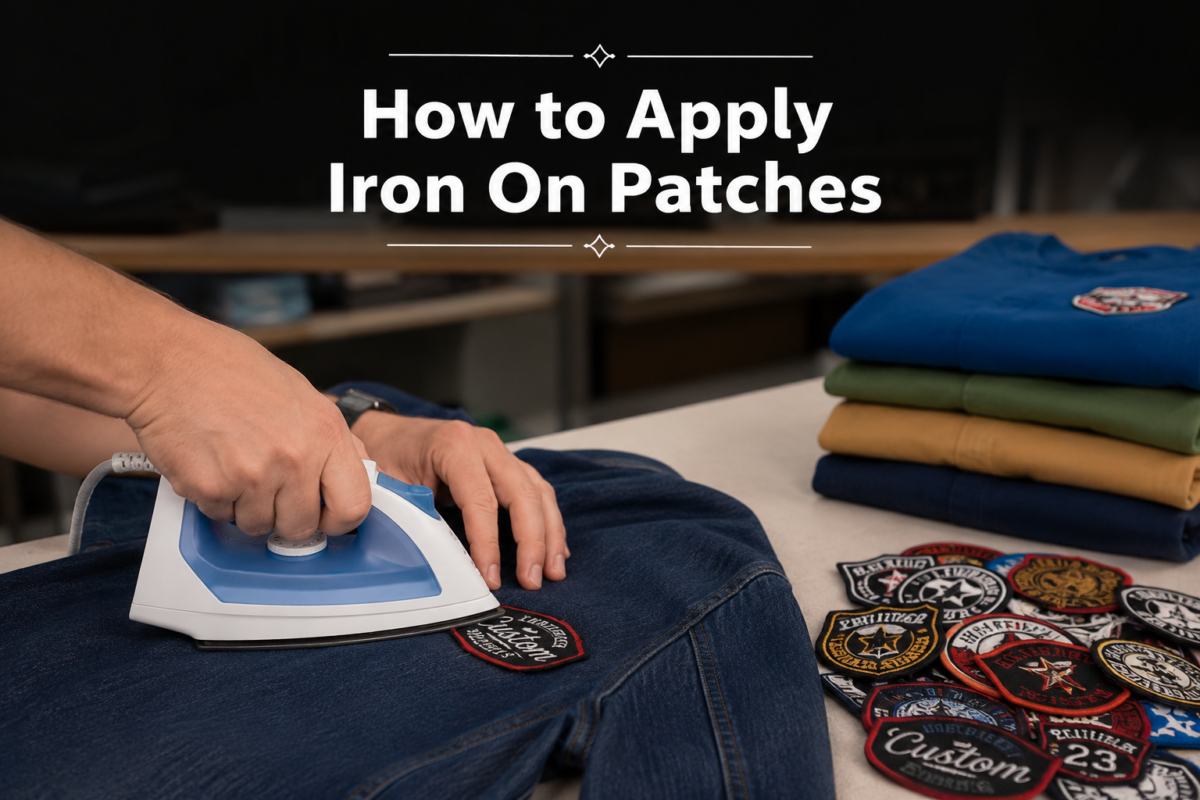
For structured caps and bucket hats with a firm front panel, iron-on and sew-on leather patches both perform reliably. The firm panel provides the stable surface that iron-on adhesive requires for a secure bond.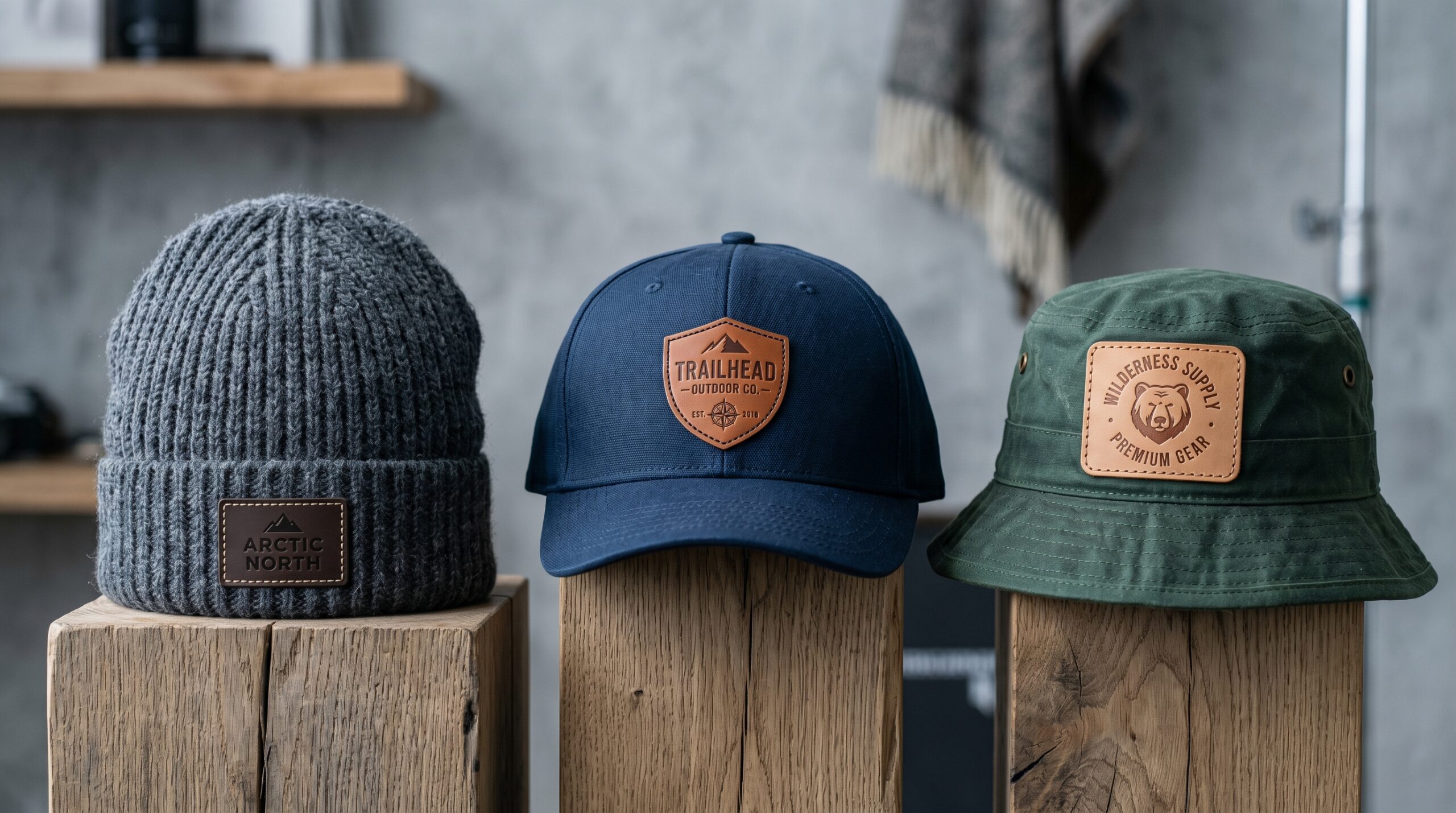
Genuine Leather vs Faux Leather Patches: Which Is Right for Your Brand?
Choosing between genuine leather patches and faux leather patches is a decision that affects cost, brand positioning, sustainability credentials, and end-use suitability.
Manufacturers cut genuine leather patches from full-grain, top-grain, or split leather hides.
They have a natural surface variation, a distinctive material smell, and a tactile quality that synthetic alternatives do not replicate exactly. Genuine leather develops a patina over time, meaning the patch’s appearance improves with age and use rather than degrading. For premium and heritage fashion brands, genuine leather is the correct material choice and the one that best supports a high-end price positioning.
Genuine leather patches are also the most durable option under regular use. Properly treated genuine leather handles moisture, temperature change, and physical abrasion better than most synthetic alternatives over a multi-year period.
Manufacturers make faux leather patches from synthetic materials, typically PU (polyurethane) or PVC-based leather alternatives, and these patches offer a consistent surface finish, a lower price point, and compatibility with vegan and sustainable product certifications. For brands with vegan product lines, ethical sourcing commitments, or sustainability positioning, faux leather patches are the commercially and ethically appropriate choice.
From a visual standpoint, high-quality faux leather patches are difficult to distinguish from genuine leather in most end-use contexts. The debossing and laser engraving processes produce equivalent results on both materials, and the finished patch carries the same visual characteristics regardless of whether the manufacturer uses genuine or faux leather.
For B2B buyers, the decision typically comes down to brand positioning and budget. Genuine leather patches carry a higher material cost but support a premium price point. Faux leather patches deliver equivalent visual quality at a lower cost, with the added benefit of sustainability and vegan-certification compatibility.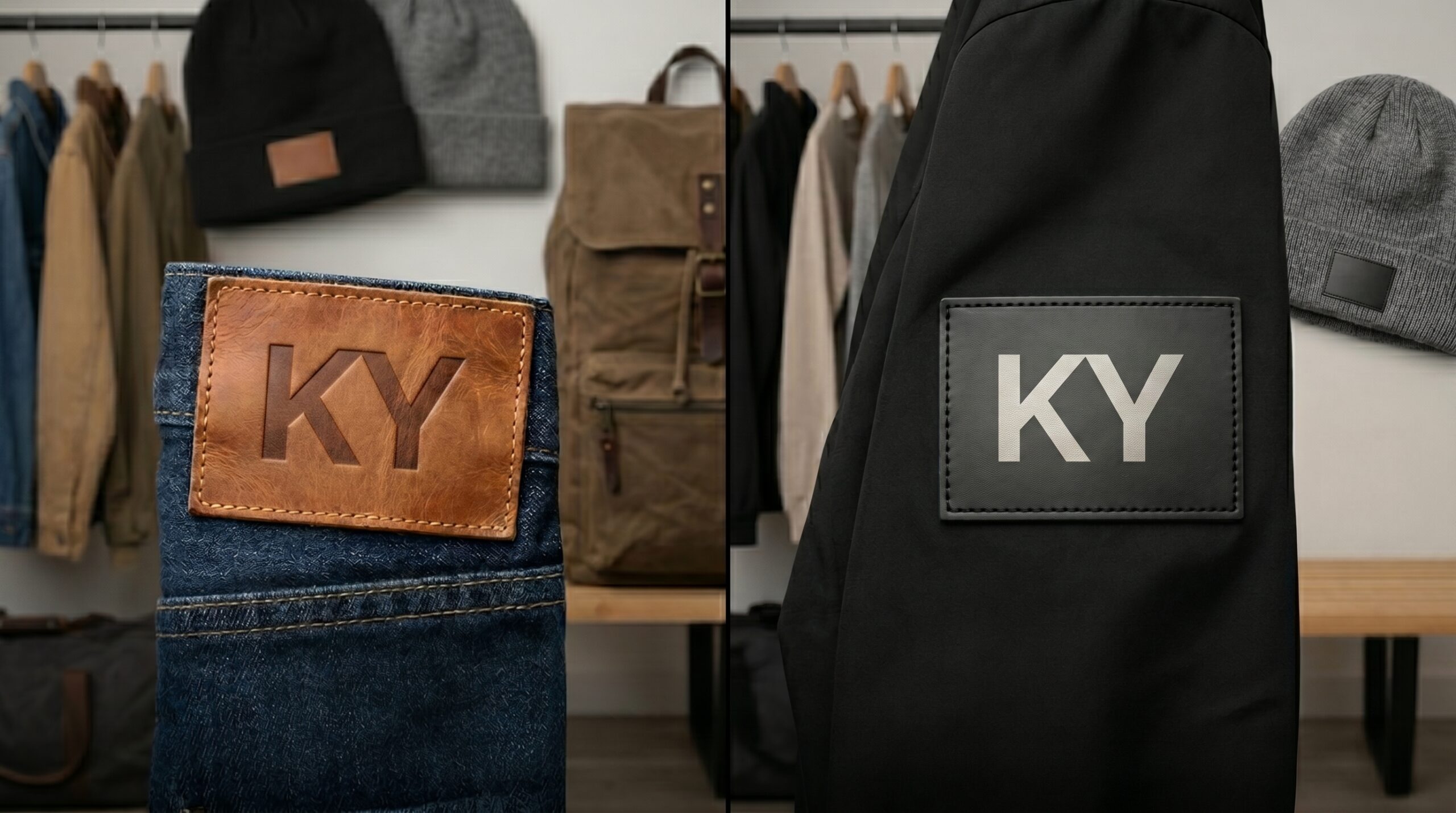
Engraved Leather Patches and Embossed Leather Patches: Design Considerations for Winter Brands
The production method chosen for a leather patch affects not just the visual result but the types of designs that work effectively.
Engraved leather patches suit designs with fine line detail, small text, and complex graphic elements. The laser engraving process can reproduce artwork at a level of precision that mechanical dies cannot achieve, making it the correct choice for logos with intricate details, script typefaces with fine strokes, and multi-element brand marks.
For winter fashion brands with sophisticated logo designs, laser engraved leather patches preserve the full complexity of the artwork in the finished patch rather than requiring simplification for production.
Embossed and debossed leather patches suit clean, bold designs with strong shapes and clear forms. Thick letter strokes, geometric shapes, and simplified brand marks produce the cleanest and most visually impactful results in these formats. The pressing process loses fine details at standard patch sizes, so designers should review and simplify any design intended for embossing or debossing before manufacturers create the die.
Rustic leather patches use deliberately aged or distressed surface treatments to create a heritage, vintage, or artisan aesthetic. For outdoor brands, workwear labels, and fashion brands working with a heritage positioning, rustic leather patches add an authenticity to winter apparel that polished, contemporary leather finishes do not provide.
The choice between a polished finish and a rustic finish should align with the overall visual identity of the brand. A premium contemporary fashion label suits a clean, fine-grained genuine leather patch with precise laser engraving. A heritage outdoor workwear brand suits a thicker, pull-up leather patch with bold debossed lettering and intentional surface variation.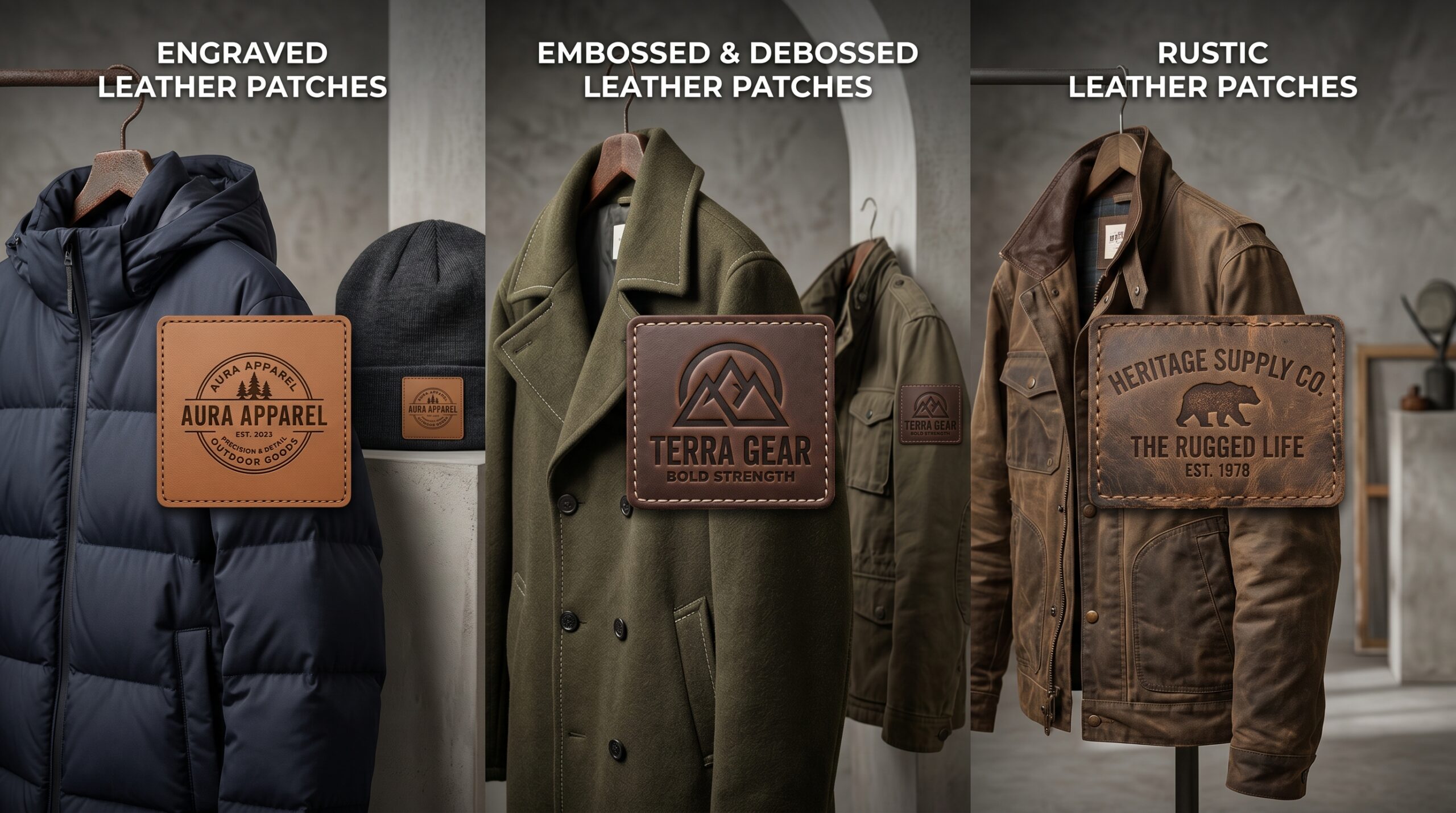
Custom Leather Labels and Badge Patches for Winter Apparel Programs
Custom leather labels and leather badge patches serve specific functions in winter apparel programs that go beyond straightforward branding.
Custom leather labels are smaller format leather patches, typically 1 to 3 inches in size, used as brand labels on the waistband of trousers, the back yoke of jeans, the hem of coats, and the inside cuff of jackets. They replace or supplement woven labels and provide a tactile premium brand touch at a garment location that consumers handle when dressing.
For denim brands and outerwear manufacturers, leather back patch labels on jeans and jacket hems form a signature brand element that heritage American workwear and denim culture have long embraced.
A branded leather label at the back waistband of a pair of jeans is one of the most recognized brand cues in the entire denim category.
Leather badge patches incorporate defined shapes, outlined borders, and layered design elements that give the patch the visual authority of an official badge or insignia. For outdoor clubs, expedition brands, and uniform programs, leather badge patches carry a formality and permanence that fabric patches in equivalent designs do not achieve.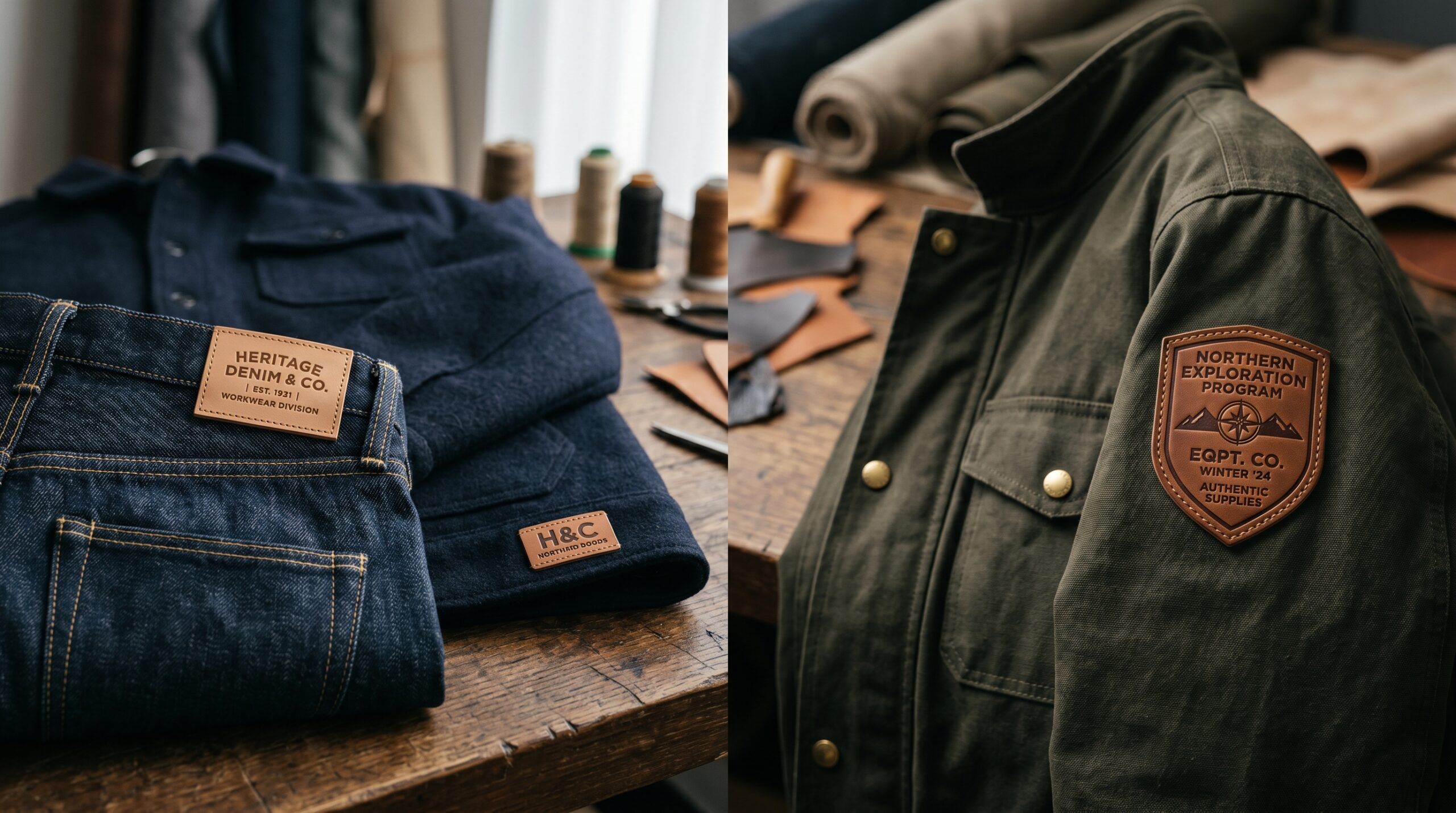
B2B Ordering Guide: Custom Leather Patches at Volume
For businesses placing custom leather patch orders for the first time, the following covers the practical specifics of the process at CustomPatches4U.
Minimum order quantities start at 50 units per design. Volume pricing applies at 100, 250, 500, and 1,000 units with significant per-unit cost reductions at each threshold.
Artwork requirements depend on the production method. Laser engraved patches require vector artwork for precise reproduction. Debossed and embossed patches require clean, bold artwork with a minimum line weight of 1.5 millimeters for die production.
Material selection covers genuine leather in full-grain, top-grain, and split formats, and faux leather in PU and recycled PU options. Material samples are available on request before order placement.
Production timeline for standard leather patches is 10 to 16 business days from proof approval. First-order die creation for embossed and debossed patches adds to this timeline. Repeat orders using saved dies and files ship faster.
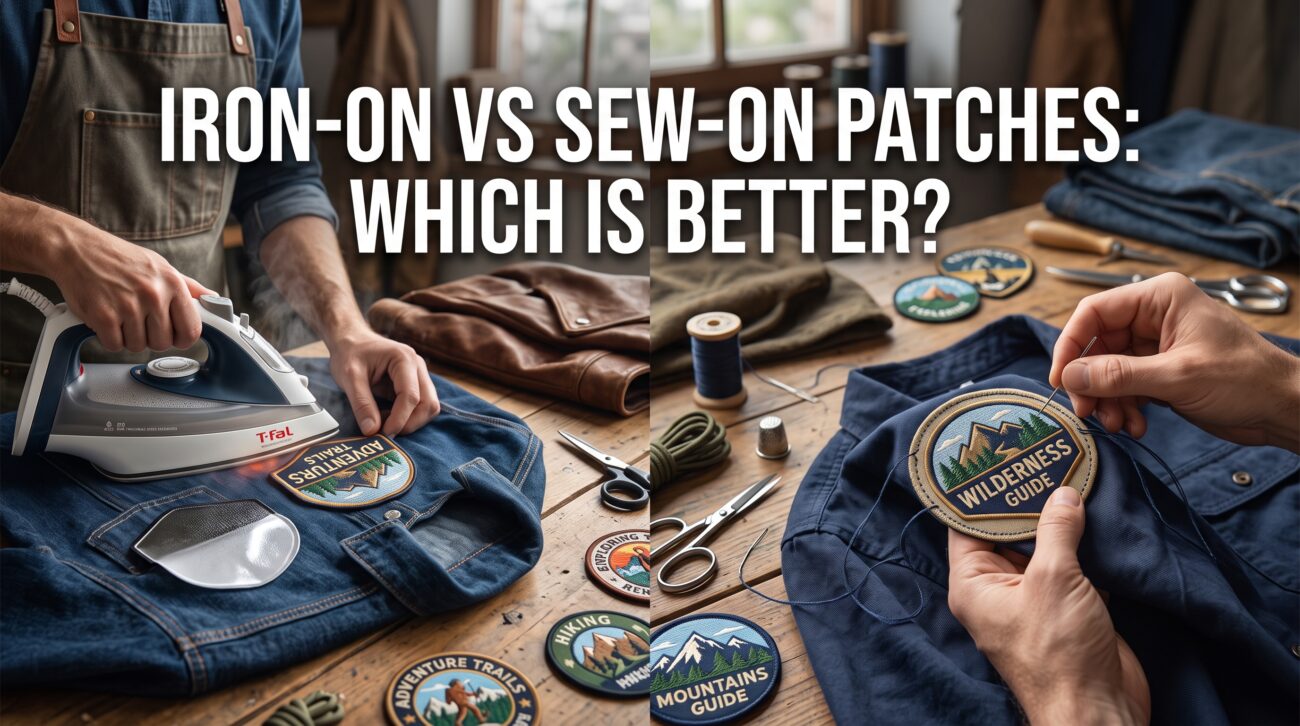
Attachment options include sew-on, iron-on adhesive, adhesive backing, and riveted application. Specify the correct backing for your garment type when placing the order.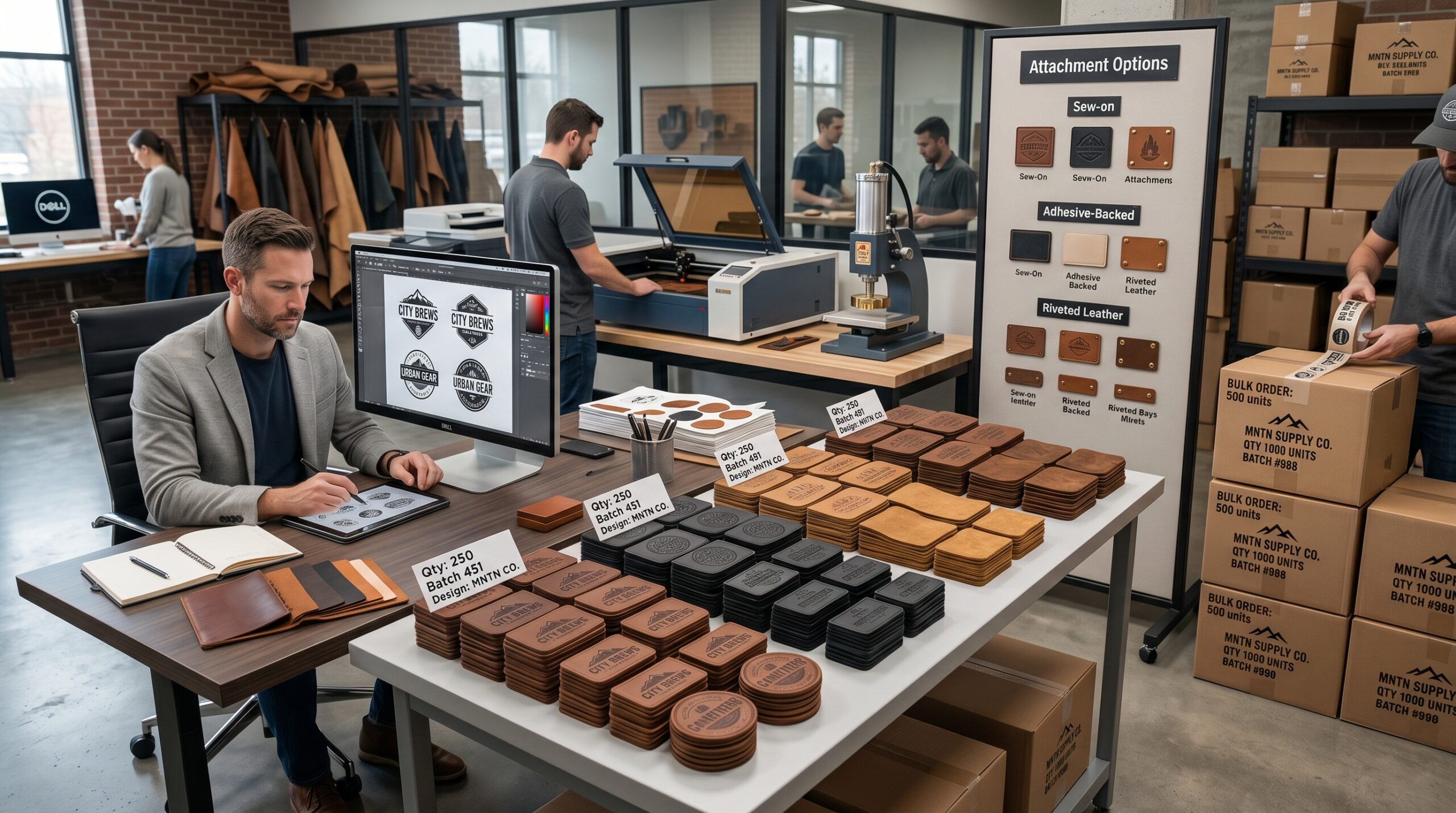
Frequently Asked Questions About Custom Leather Patches for Winter Apparel
What are custom leather patches used for on winter clothing?
Custom leather patches are used as brand marks, logo labels, decorative elements, and personalized identifiers on winter jackets, coats, beanies, caps, and bags. They add a premium material detail to outerwear that embroidered or printed alternatives do not match aesthetically on heavyweight winter fabrics.
What is the difference between genuine leather and faux leather patches?
Genuine leather patches are produced from animal hide and offer natural surface variation, superior long-term durability, and a premium material feel that develops patina over time. Faux leather patches use synthetic PU or recycled materials, offering a consistent surface finish, lower cost, and compatibility with vegan and sustainable product certifications.
How are leather patches attached to winter jackets?
Leather patches on winter jackets are attached via sew-on stitching, iron-on heat-activated adhesive, or rivet application depending on the garment fabric and required durability. Sew-on is the most durable method for heavyweight outerwear. Iron-on is suitable for firm, stable fabric surfaces. Rivets are used for leather garments and heavyweight canvas applications.
Can leather patches be applied to beanies and knitwear?
Yes. Leather patches are applied to beanies and knitted winter accessories using sew-on application with a backing fabric behind the knit to stabilize the patch and prevent distortion of the knitted surface. Iron-on backing is not recommended for knitted fabrics due to the flexible looped surface structure.
What is the minimum order quantity for custom leather patches?
CustomPatches4U accepts orders from 50 units per design. Per-unit cost reduces significantly at 250, 500, and 1,000 units. Material samples are available before order commitment for buyers sourcing leather patches for the first time.
What designs work best on leather patches for winter apparel?
Bold, clean designs with strong shapes and clear letterforms produce the best results on debossed and embossed leather patches. Fine line detail and complex artwork suit laser engraved production. For rustic and heritage aesthetics, bold debossed lettering on thick pull-up leather produces the most authentic result. All designs should be reviewed for production suitability before die or file creation.
How long do custom leather patches last on clothing?
Properly produced and applied genuine leather patches maintain their appearance and structural integrity for the full lifespan of the garment they are applied to, typically 5 to 10 years of regular use. Faux leather patches at high PU quality offer equivalent durability under standard wear conditions. Both materials outlast embroidered and printed decoration methods on winter outerwear.
Where can I order premium custom leather patches in bulk?
CustomPatches4U.com produces genuine leather patches, faux leather patches, engraved leather patches, embossed leather patches, and custom leather labels for bulk orders worldwide. Minimum orders start at 50 units with competitive pricing, material samples available on request, and worldwide delivery.
Conclusion
Custom leather patches for winter apparel occupy a unique position in the garment decoration market. No other patch format matches the material weight, tactile quality, and premium aesthetic that leather brings to heavyweight outerwear, and no other decoration method is as contextually appropriate for the winter apparel category.
For fashion brands building outerwear collections, custom leather patches represent a branding investment that performs both commercially and aesthetically. Similarly, manufacturers supplying winter uniform programs benefit from patches that hold up through repeated washing and daily wear. In addition, retailers sourcing merchandise for cold-season product ranges find that leather patches extend the visual and practical lifespan of the garments manufacturers apply them to.
The choice between genuine and faux leather, debossing, embossing or laser engraving, rustic or polished finish, and sew-on or iron-on application all depend on the specific brand positioning, garment type, and end-use context. Getting these decisions right produces a leather patch that becomes a signature element of the garment rather than simply a decoration detail.