
Everything B2B Buyers, Brands, and Bulk Buyers Need to Know About Custom Patches
Every business that puts its name on a product, uniform, or piece of merchandise is making a branding decision. Custom patches are one of the most practical and durable ways to carry that branding across apparel, accessories, and promotional items. However, choosing the right patch type, material, and supplier requires more than picking a design and placing an order.
This guide covers everything businesses need to know about custom patches, from patch types and materials to ordering in bulk, managing costs, and finding the right manufacturer for consistent, professional results.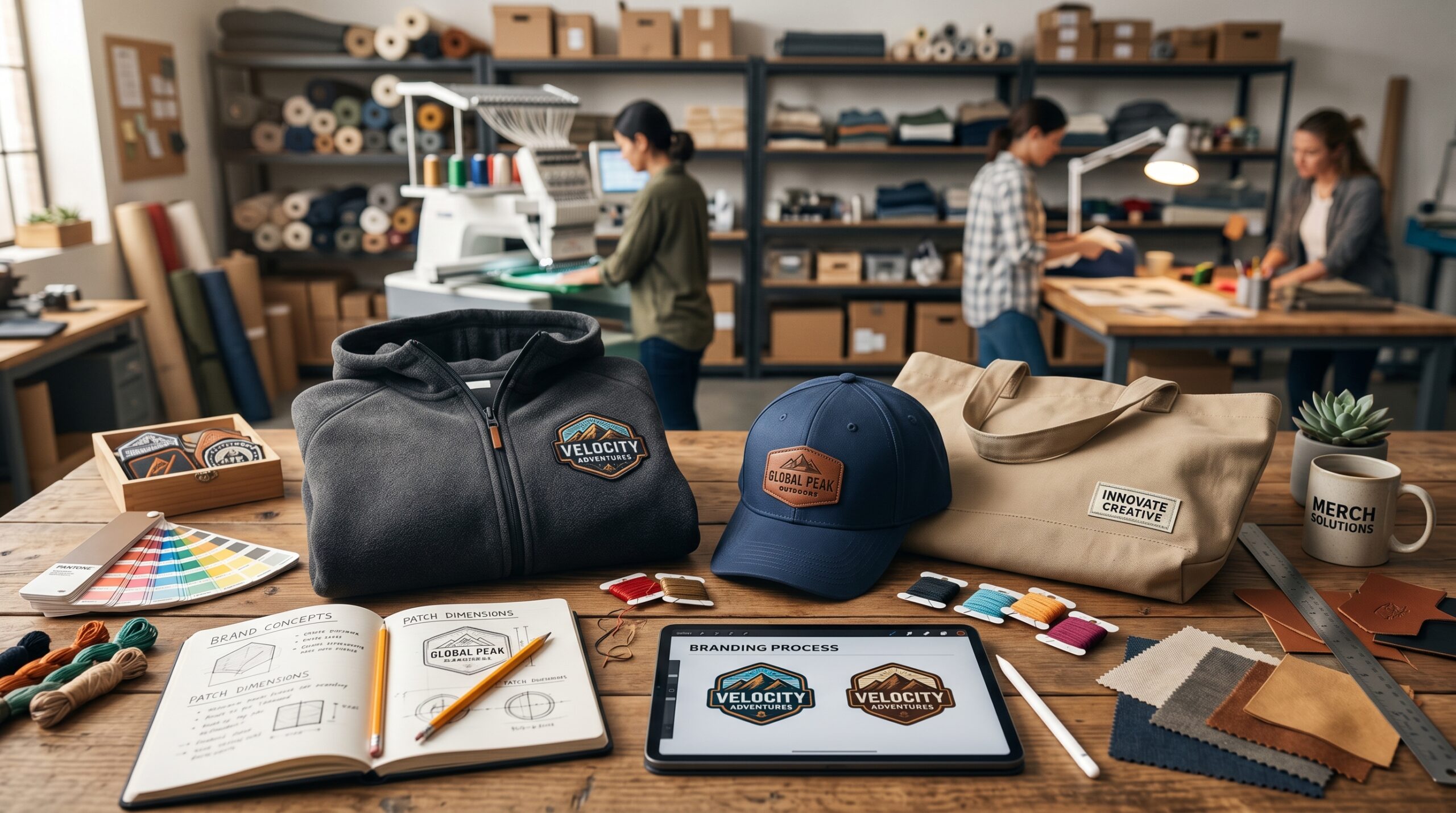
What Are Custom Patches for Businesses?
Custom patches are branded or decorative fabric accessories produced to a specific design and attached to clothing, bags, hats, and accessories as part of a product range, promotional campaign, or uniform program.
Businesses use custom patches to display logos, job titles, department identifiers, rank insignia, and brand marks across workwear, corporate merchandise, and retail apparel. Unlike printed graphics that fade or crack over time, quality custom patches maintain their appearance through repeated use and washing.
In short, custom patches give businesses a reliable, scalable, and visually consistent method for applying brand identity to physical products.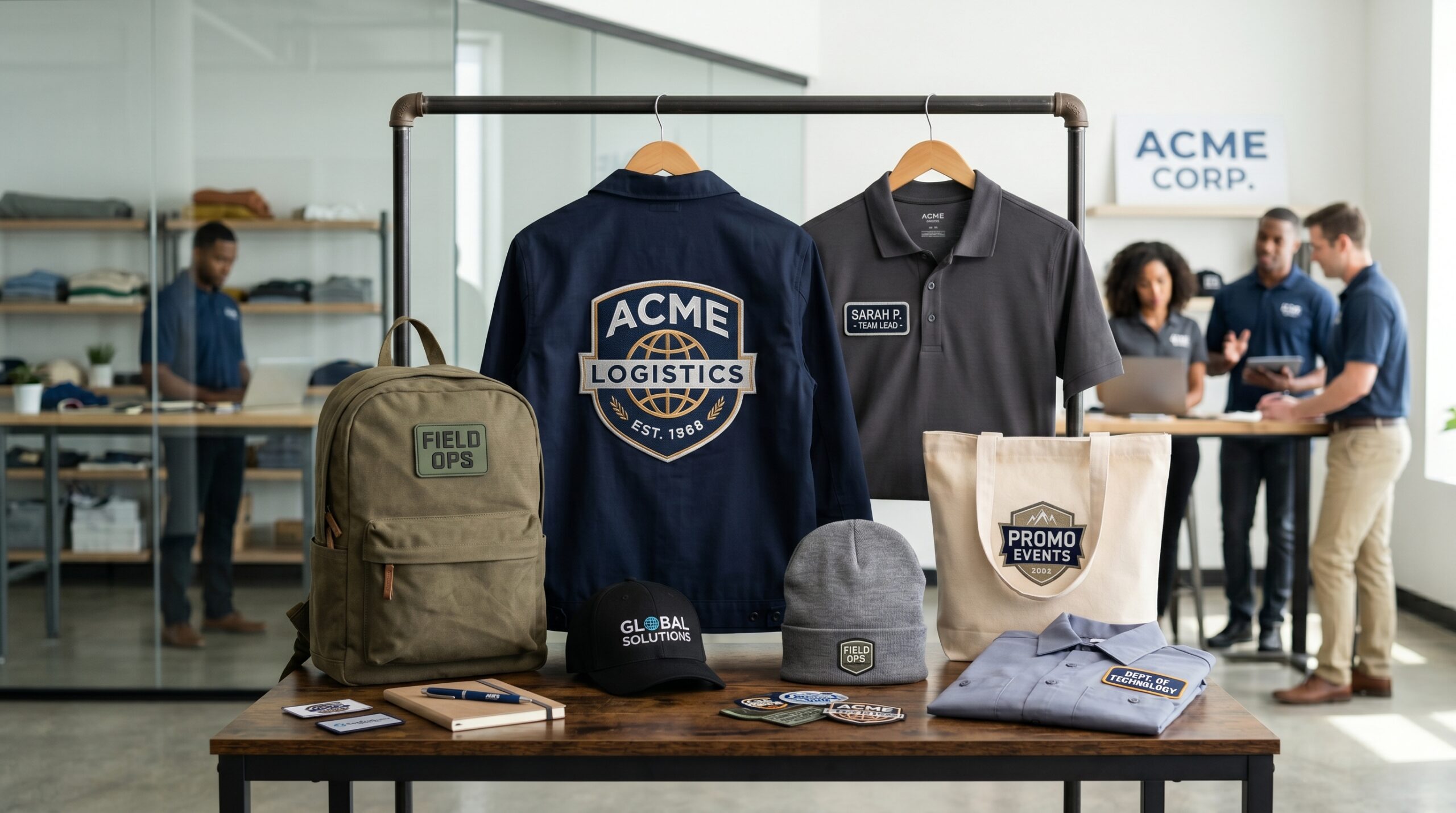
Why Custom Patches Matter for Business Branding
Branding on physical products creates impressions that digital marketing cannot replicate. A patch on a uniform, jacket, or bag is visible in the real world, repeated across every team member or product unit, and seen by everyone those items come into contact with.
For businesses, the practical case for custom patches comes down to four factors.
Consistency across large teams. Custom uniform patches ensure every employee, contractor, or team member carries the same brand representation regardless of where they work or which garment they wear. This matters for franchise operations, field service teams, hospitality businesses, and any organization managing staff appearance across multiple locations.
Durability that outlasts print. Screen-printed graphics on workwear degrade with washing. Embroidered and woven patches hold their structure and color through hundreds of wash cycles, making them a more cost-effective long-term branding solution for uniform programs.
Recipients keep and use branded patches. People keep branded patches on jackets, caps, and bags far longer than most other promotional merchandise formats. This gives custom patches a significantly longer brand exposure period than disposable promotional items.
Production scalability. Manufacturers produce custom patches as standalone units and apply them to garments separately. This means a business can order patches in bulk, store them, and apply them to new garments as needed without reordering the entire uniform or merchandise range.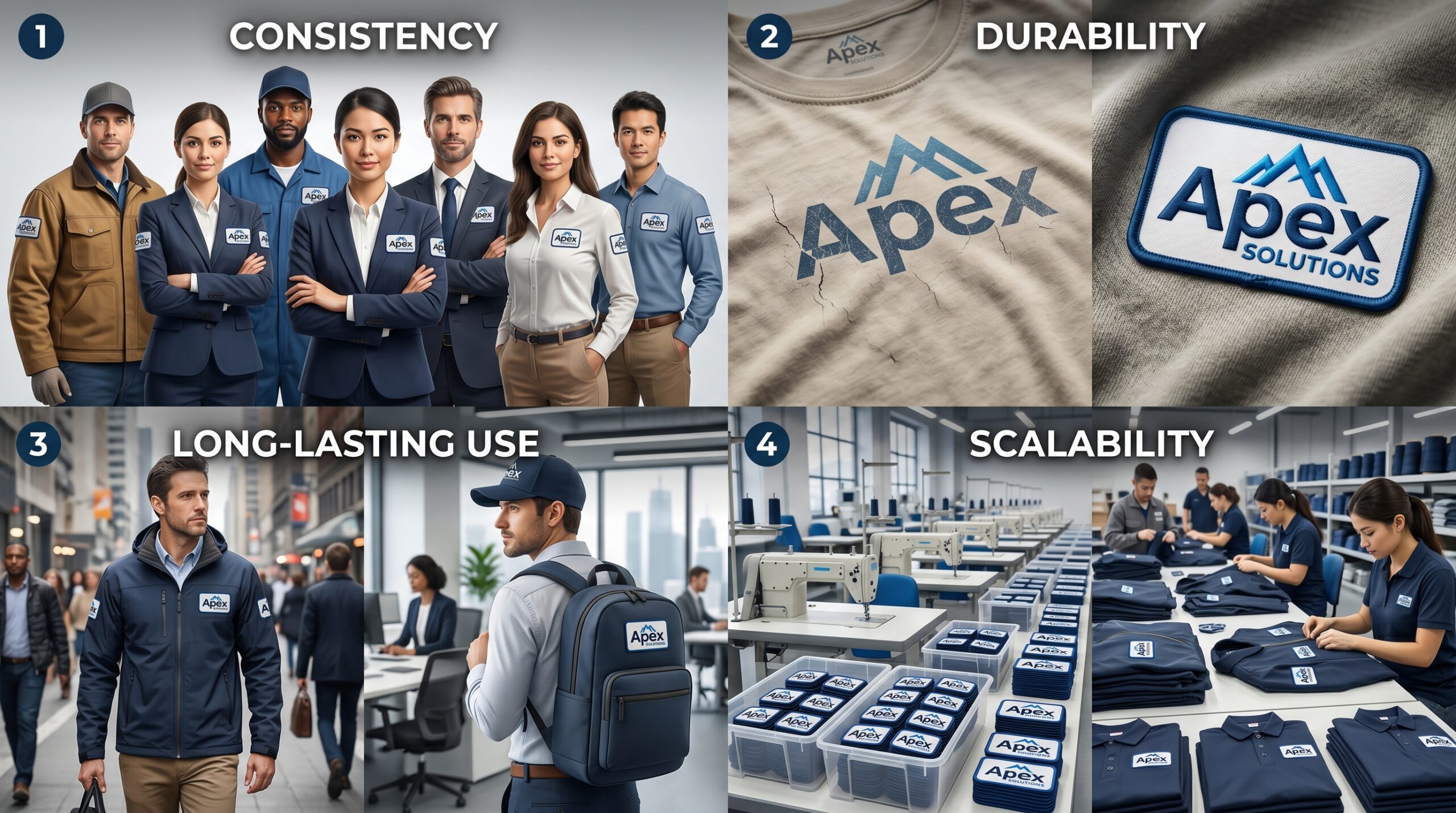
Types of Custom Patches for Business Use
Not all patch types suit every business application. The right format depends on the design complexity, fabric type, intended use, and budget.
Embroidered Custom Patches
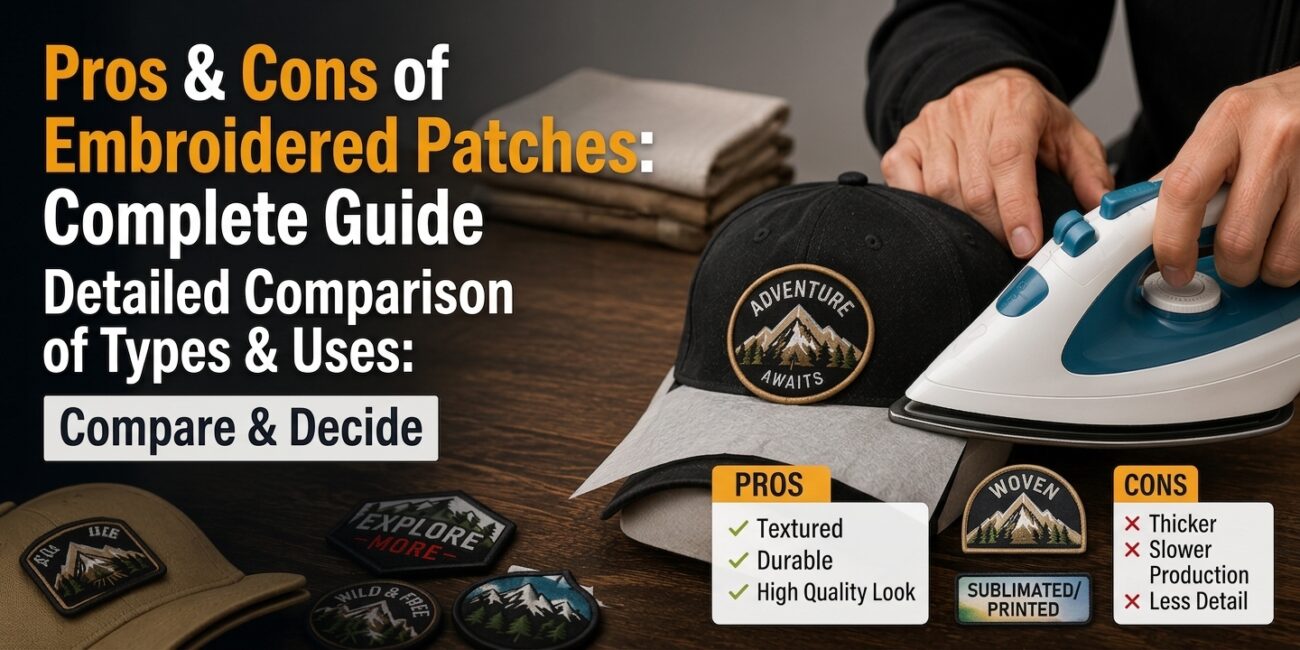
Embroidered patches are the most recognized format in business and uniform branding. Manufacturers produce them by stitching thread over a woven backing, giving them a raised, textured surface and a classic appearance that reads as premium quality.
Embroidered custom patches work well for corporate logos, team crests, department badges, and uniform identification. Manufacturers produce this format more widely than any other globally, and most recipients associate it with quality branded merchandise.
The main limitation of embroidery is design detail. Very small text, fine lines, and photographic images do not reproduce well in thread. For logos with these elements, woven or sublimated patches are better alternatives.
Custom Logo Patches
Manufacturers produce custom logo patches as embroidered or woven patches specifically designed to carry a brand mark. They serve as the primary branding element on corporate uniforms, branded merchandise, and promotional apparel.
For businesses with established brand guidelines, custom logo patches require careful color matching, size specification, and backing selection to ensure the patch accurately represents the brand across all applications.
Woven Patches
Manufacturers produce woven patches on a loom using fine threads, which allows significantly higher detail resolution than embroidery. A woven format clearly reproduces small text, thin lines, and intricate graphic elements that embroidery would otherwise lose.
Woven patches suit businesses with detailed logos, fine typography, or complex artwork that cannot be simplified for embroidery. They are thinner and flatter than embroidered patches, which makes them suitable for lightweight garments where bulk is a concern.
PVC Patches
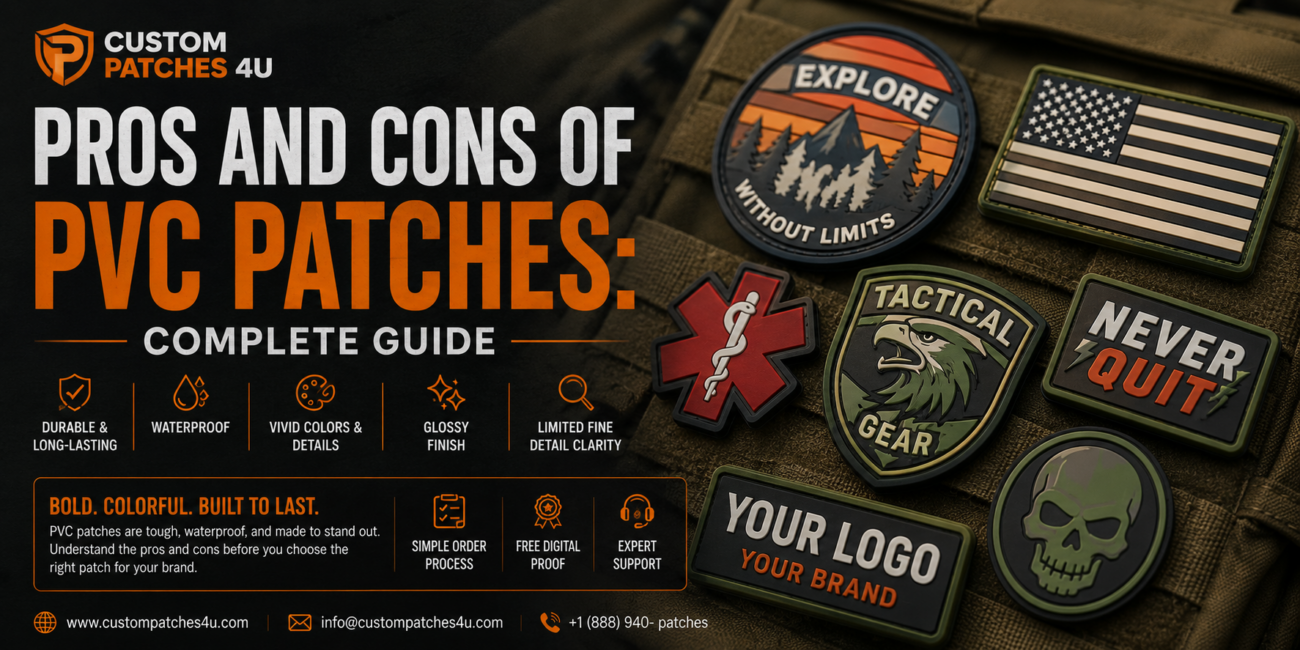
Manufacturers mold PVC patches from soft rubber, making them waterproof, chemical resistant, and highly durable. They suit outdoor workwear, tactical gear, sports apparel, and any application where the patch will face moisture, abrasion, or extreme conditions.
Streetwear and contemporary fashion brands also frequently use them in merchandise where the tactile, modern aesthetic of molded rubber adds visual distinction.
Sublimated Patches
Manufacturers produce sublimated patches using dye-sublimation printing on polyester fabric. This process allows full-color, photographic-quality designs with no thread or molding limitations. Sublimated patches suit businesses with gradient logos, photographic imagery, or designs that use more colors than thread or PVC molding can accommodate cost-effectively.
Iron-On and Sew-On Patches
Patch backing determines how the patch attaches to the garment. Iron-on patches use a heat-activated adhesive for fast application without sewing equipment. Sew-on patches attach permanently with thread and offer greater long-term durability, particularly for high-wash workwear and uniforms.
Users can attach and remove Velcro-backed patches repeatedly, making them suitable for tactical gear, team sports uniforms, and applications where patches need to change between uses.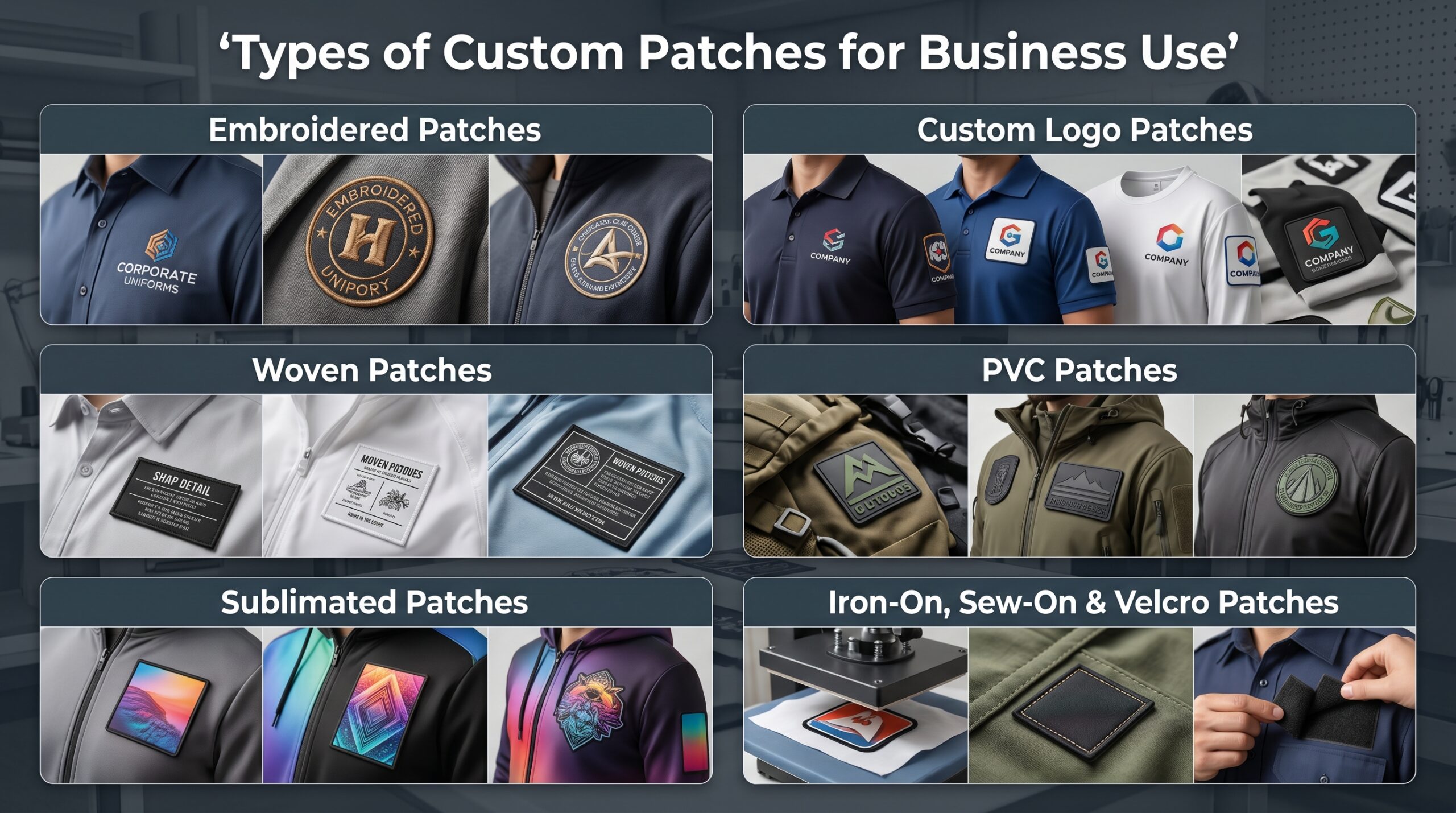
How Custom Patches Are Made: The Production Process
Understanding the production process helps businesses set realistic expectations for lead times, sampling, and quality control.
Step 1: Artwork preparation. The business provides logo files, design briefs, or reference artwork. Most brands design their logos for digital display and print, which means a digitizer or designer must adapt the artwork for the patch format before production begins.
Step 2: Digitizing or design conversion. For embroidered and woven patches, a digitizer converts the artwork into machine-readable stitch files. For PVC patches, a designer creates layered mold specifications. For sublimated patches, the artwork is color-profiled for dye-sublimation output.
Step 3: Sample production. The manufacturer produces a physical sample for approval before full production begins. This step is essential for confirming color accuracy, size, detail reproduction, and backing type.
Step 4: Bulk production. After sample approval, the manufacturer runs the full order quantity. Production time varies by patch type, quantity, and factory capacity.
Step 5: Quality control and dispatch. Finished patches go through quality checks before packaging and shipping. Businesses ordering in bulk should confirm quality control procedures with their supplier before placing orders.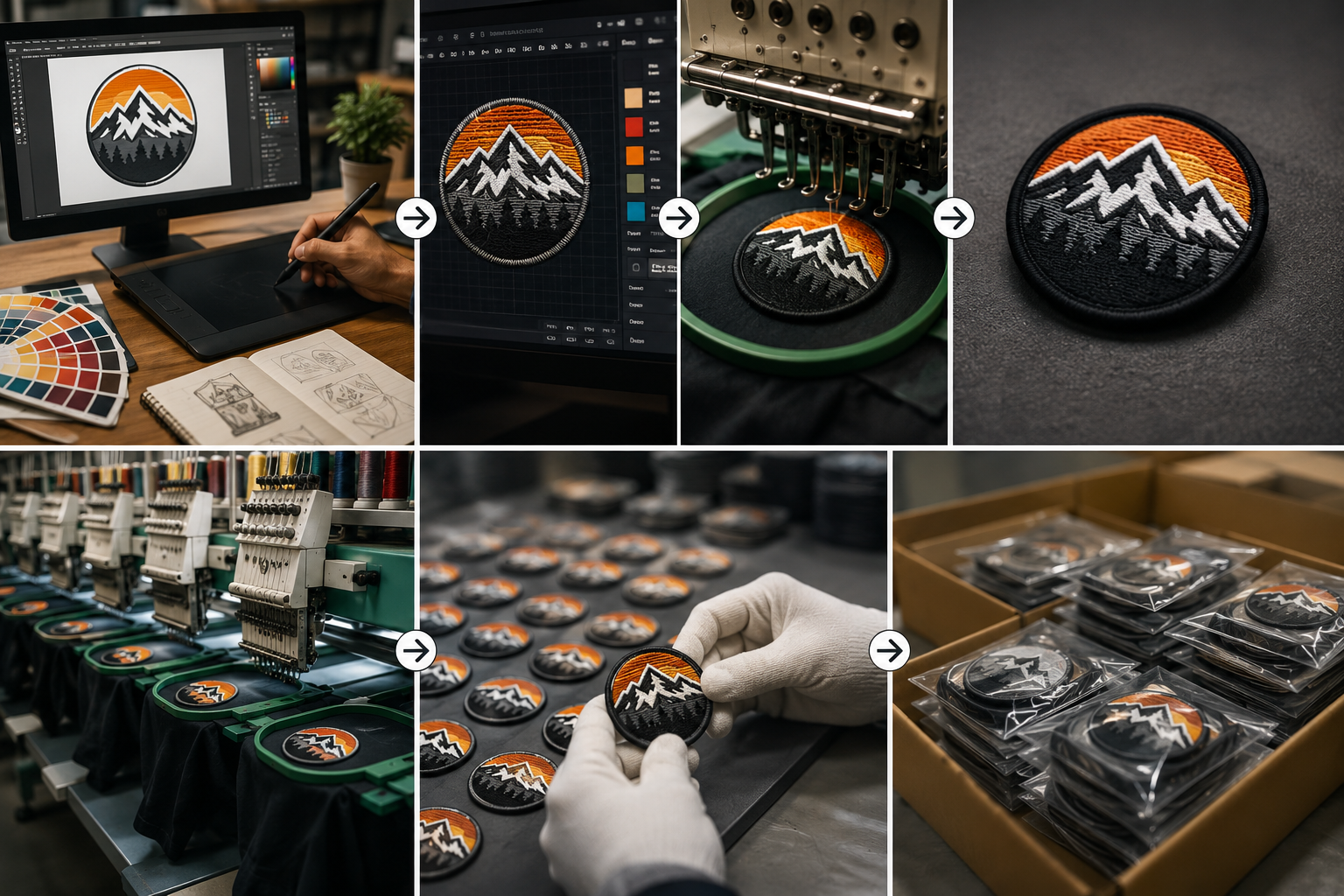
Key Design Considerations for Business Custom Patches
Several design decisions significantly affect the quality and usability of the finished patch.
Color accuracy. Thread colors are matched to Pantone references, not RGB or CMYK values. Businesses should provide Pantone color codes when placing orders to ensure accurate brand color reproduction. If Pantone references are unavailable, the manufacturer will match thread colors as closely as possible to provided samples or digital files.
Background and garment color. A patch background color that clashes with or disappears into the garment undermines the investment in the patch design itself. During the design stage, confirm the primary colorway of the garment or product where you plan to place the patch and select the patch background accordingly.
Text size. People typically view patches on jackets and bags from 3 to 10 feet away. As a general rule, set any text you want readers to read clearly on a merchandise patch at a minimum of 6 millimeters in height in the finished design. Text below this threshold becomes difficult to read and may not reproduce clearly in embroidery.
Border and edge finish. A merrowed border, which is an overlock stitch around the patch perimeter, gives embroidered patches a finished, professional edge. Die-cut edges suit PVC and sublimated patches where a shaped outline is part of the design.
Patch size. Patch size should match the garment location and the viewing distance. A patch too small for its placement looks insignificant, while an oversized patch on a lightweight garment creates visual imbalance.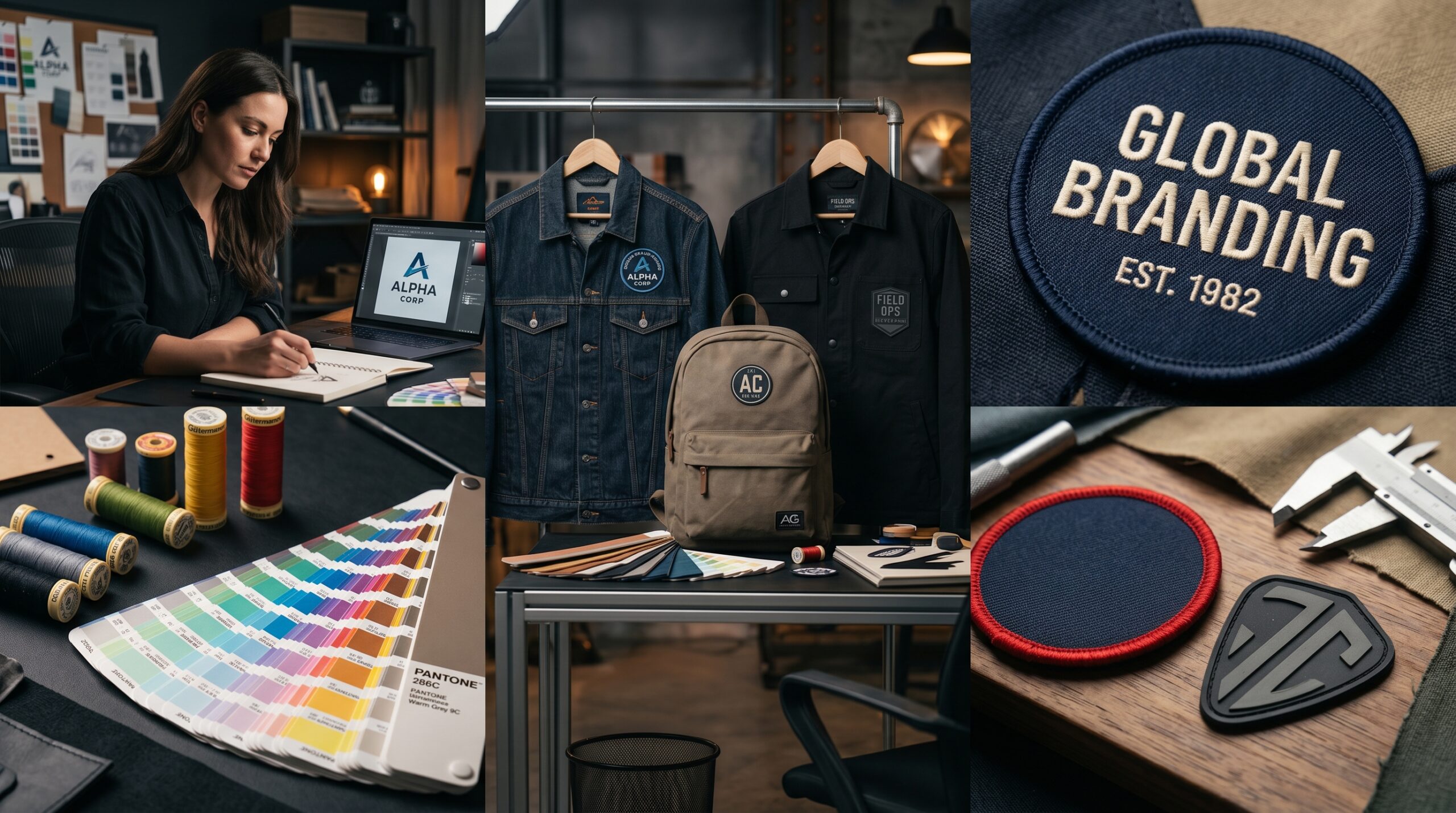
Benefits of Custom Patches for B2B Buyers
Businesses ordering custom patches in bulk gain specific advantages over smaller or one-off orders.
Volume pricing. Per-unit costs drop significantly at higher quantities. Businesses planning uniform rollouts, seasonal merchandise ranges, or long-term promotional campaigns benefit from placing bulk orders that reduce overall cost per patch.
Stock flexibility. Ordering patches separately from garments allows businesses to maintain a patch stock and apply them to new garments as needed. This avoids minimum order requirements on complete uniforms every time a new staff member joins or a garment replacement is needed.
Consistent brand representation. Bulk orders from a single production run ensure color, size, and finish consistency across every unit. This matters for franchise operations, retail chains, and any business where brand standards apply across multiple locations or teams.
Supplier relationship benefits. Established bulk buying relationships with a custom patches manufacturer often include priority production scheduling, dedicated account management, and faster turnaround on repeat orders.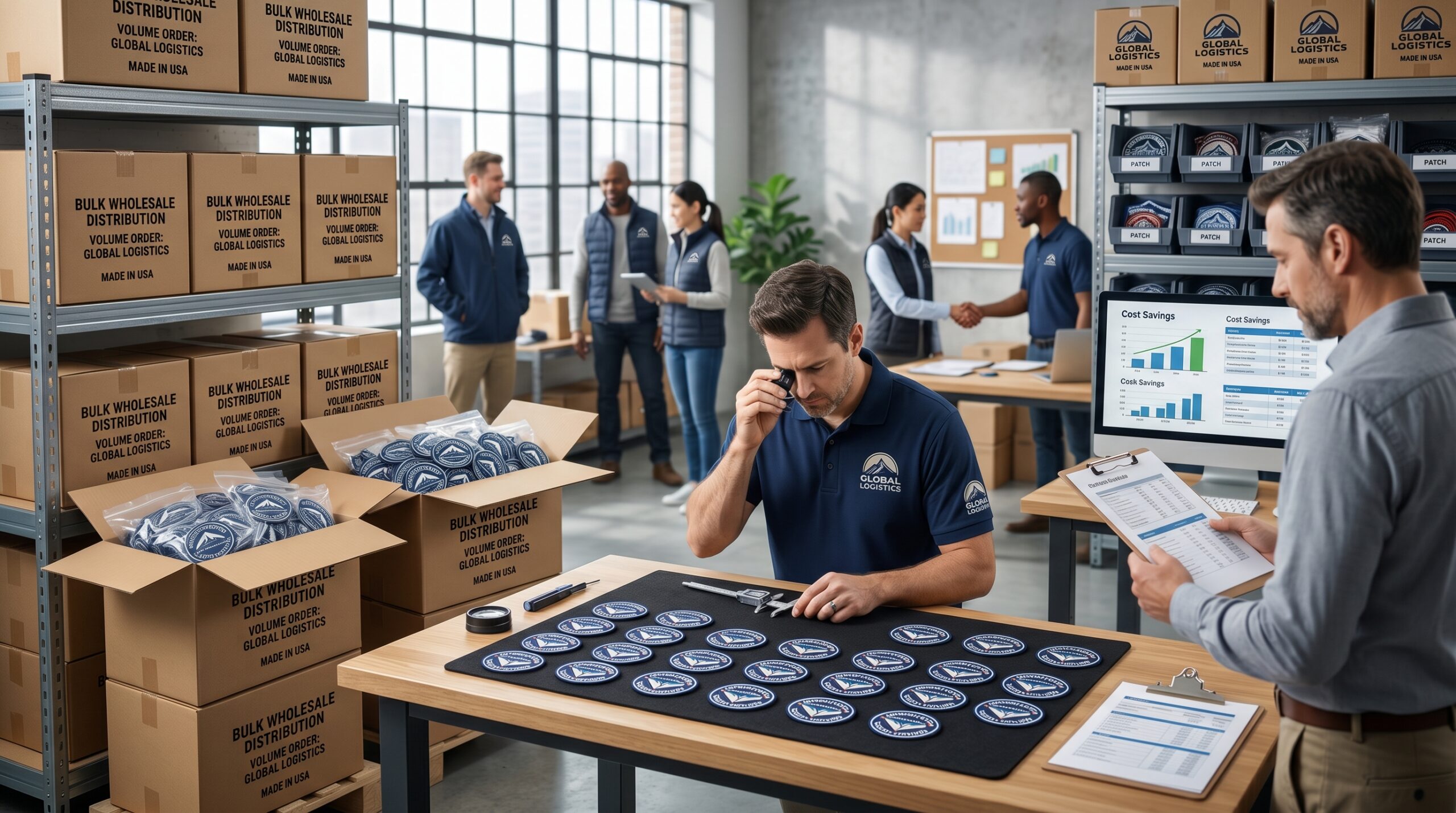
Industry Use Cases for Custom Patches
Custom patches serve a wide range of business applications across multiple industries.
Corporate uniform programs. Companies issue embroidered logo patches on staff uniforms to maintain consistent brand presentation across customer-facing teams. This applies to hospitality, retail, healthcare, security, logistics, and field service businesses.
Workwear and safety apparel. Businesses supplying workwear to construction, utilities, and industrial sectors use custom patches for employee identification, department designation, and contractor badging on high-visibility and protective clothing.
Sports and team apparel. Sports organizations, academies, and fitness brands use custom patches for team crests, sponsor logos, league badges, and player identification on training and match-day kits.
Promotional merchandise. Brands running product launches, trade show campaigns, or loyalty programs use custom patches on tote bags, caps, jackets, and accessories as branded giveaways with longer retention value than printed alternatives.
Streetwear and fashion brands. Independent clothing labels and established fashion brands use custom patches as design elements and brand identifiers on seasonal collections, limited releases, and collaborative merchandise.
Schools and educational institutions. Schools, colleges, and universities use embroidered patches for student uniforms, sports kits, club jackets, and graduation merchandise.
Military, tactical, and emergency services. These sectors use PVC and embroidered patches for rank insignia, unit identification, and operational badging on uniforms and equipment.
How to Order Custom Patches in Bulk: The Process
Ordering custom patches for a business involves several steps that differ from consumer patch purchases.
Step 1: Define your requirements. Before contacting a supplier, confirm patch type, approximate size, quantity, backing method, and intended garment or product. Confirming these details before design begins saves time, reduces revision cycles, and ensures the final patch meets both the visual and functional requirements of your merchandise program.
Step 2: Prepare your artwork. Provide logo files in vector format where possible. AI, EPS, and PDF files give manufacturers the most accurate starting point for digitizing or design conversion. If vector files are unavailable, high-resolution PNG or JPEG files work as references, though additional design fees may apply.
Step 3: Prepare your brand guidelines. If the patch carries a logo or brand mark, prepare your brand guidelines in advance, including Pantone color references, approved logo files in vector format, and any rules your team follows when presenting the logo.
Step 4: Request a quote. Contact the supplier with your requirements and artwork. A detailed brief produces a more accurate quote and reduces the need for back-and-forth communication before pricing is confirmed.
Step 5: Approve a sample. Request a physical sample before approving full production. Digital mockups do not accurately represent thread texture, color depth, or dimensional detail. A physical sample confirms the patch meets your standards before bulk production begins.
Step 6: Approve and produce. Once the sample is approved, confirm the order and production timeline. Minimum order quantities significantly affect per-unit pricing, and knowing your quantity from the start helps you build accurate cost projections.
Step 7: Receive and inspect. On delivery, inspect a representative batch from the order before distributing patches to garments or products. Report any quality issues to the supplier immediately with photographic evidence.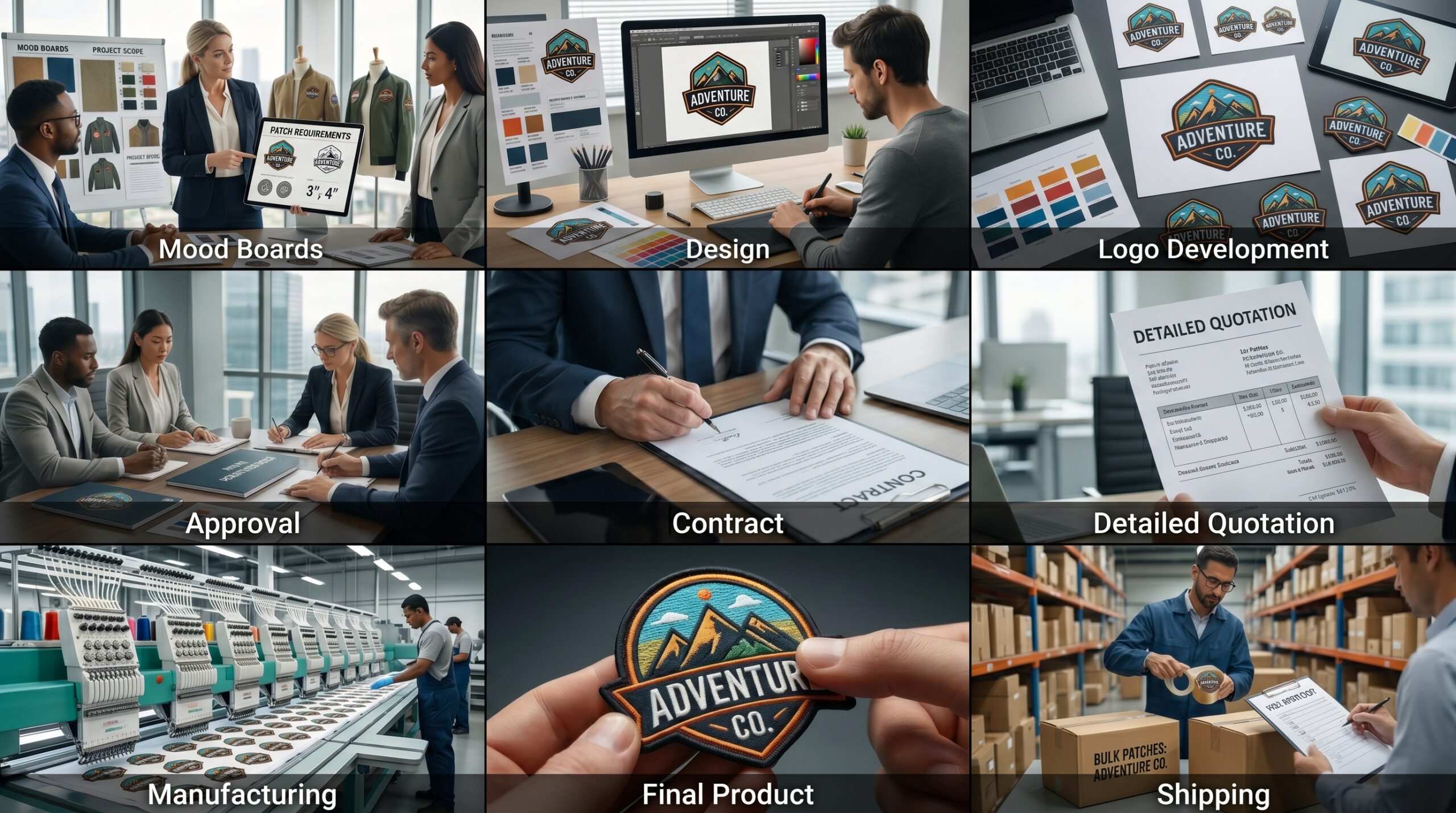
Why Order Custom Patches From custompatches4u.com?
Custompatches4u.com produces custom patches for businesses, brands, and bulk buyers across multiple industries with a focus on quality, consistency, and reliable production timelines.
The product range covers embroidered patches, woven patches, PVC patches, sublimated patches, and iron-on patches with options for sew-on, iron-on, and Velcro backing across all formats. Custom artwork support is available for businesses that need design assistance before production, and wholesale pricing applies to volume orders with competitive per-unit costs at scale.
Every order goes through quality control before dispatch, and repeat orders benefit from stored artwork files that eliminate setup time on reorders.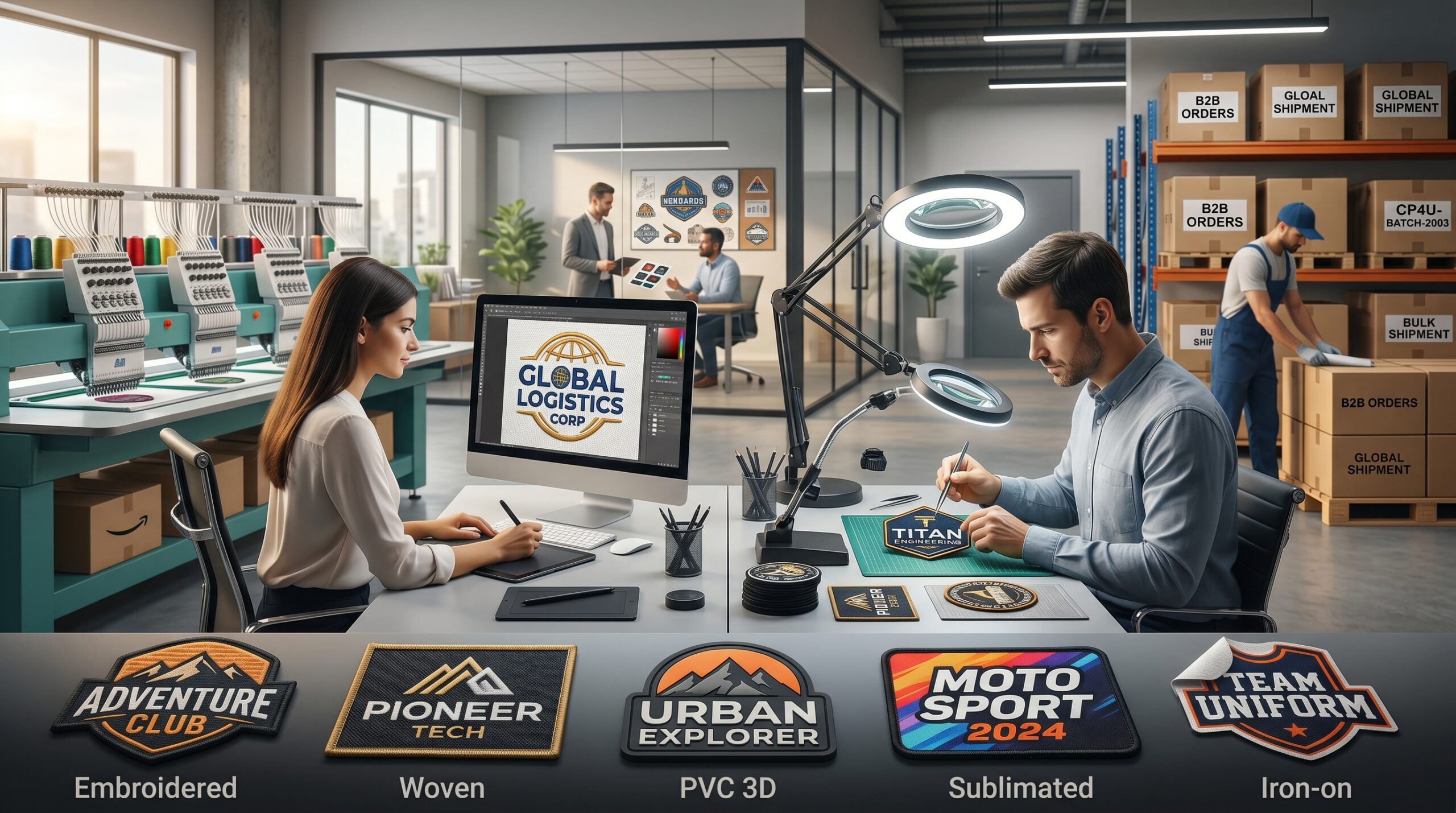
FAQ: Custom Patches for Businesses
What are custom patches used for in business?
Businesses use custom patches for uniform identification, corporate branding, promotional merchandise, workwear badging, and retail apparel decoration. They provide a durable, consistent method for applying logos and brand marks to clothing, bags, hats, and accessories across large quantities.
Why do companies use custom patches instead of printing?
Custom patches, particularly embroidered and woven formats, outlast screen-printed graphics on workwear and uniforms. They maintain color and structure through repeated washing, making them more cost-effective for long-term uniform programs where garments see frequent use and laundering.
How are custom patches made?
Embroidered patches use computerized machines to stitch thread onto woven backing. Woven patches use fine threads on a loom for higher detail. PVC patches use molded rubber. Sublimated patches use dye-sublimation printing on polyester. Each method suits different design requirements and applications.
What is the best type of custom patch for uniforms?
Embroidered patches are the most widely used format for corporate and workwear uniforms due to their durability, professional appearance, and cost-effectiveness at volume. PVC patches suit outdoor and tactical uniforms where waterproofing is required.
Are custom patches good for branding?
Yes. Custom patches provide consistent, durable brand representation across physical products. Unlike digital advertising, a patch on a garment or bag creates repeated real-world impressions wherever the item goes, giving brands ongoing visibility without recurring media costs.
How do I order custom patches in bulk?
Define your patch type, size, quantity, and backing method, then provide vector artwork and brand color references to your supplier. Request a physical sample before approving full production. Suppliers like custompatches4u.com handle bulk orders with wholesale pricing and dedicated production support.
What materials are used in custom patches?
Embroidered patches use polyester or rayon thread on twill or felt backing. Woven patches use fine polyester threads. PVC patches use soft molded rubber. Sublimated patches use polyester fabric. Backing materials include twill, felt, and adhesive layers depending on the attachment method.
How durable are custom embroidered patches?
Quality embroidered patches maintain their appearance for the life of the garment under normal use and washing conditions. Thread colors remain stable through hundreds of wash cycles when garments follow standard care instructions.
What is the cost of custom patches for businesses?
Patch pricing depends on patch type, size, stitch count or complexity, and order quantity. Per-unit costs drop significantly at higher volumes. Contact custompatches4u.com for a detailed quote based on your specific requirements.
What is the difference between iron-on and sew-on patches for business use?
Iron-on patches use heat-activated adhesive for fast application without sewing equipment, suited to moderate-wash garments. Sew-on patches attach permanently with thread and offer greater durability for high-wash workwear and uniforms. Many businesses combine both methods for maximum adhesion.