
Businesses that brand their apparel, uniforms, and merchandise with generic decoration leave recognition and commercial value on the table. Custom patches solve that problem by giving any garment, bag, hat, or accessory a permanent, high-quality branded element that holds its appearance through years of regular use. But what are custom patches exactly, and how do businesses use them to build brand identity at scale? This guide covers the full definition of custom patches, the types available, how manufacturers produce them, what makes them commercially valuable for B2B buyers, and how to order them in bulk for any application.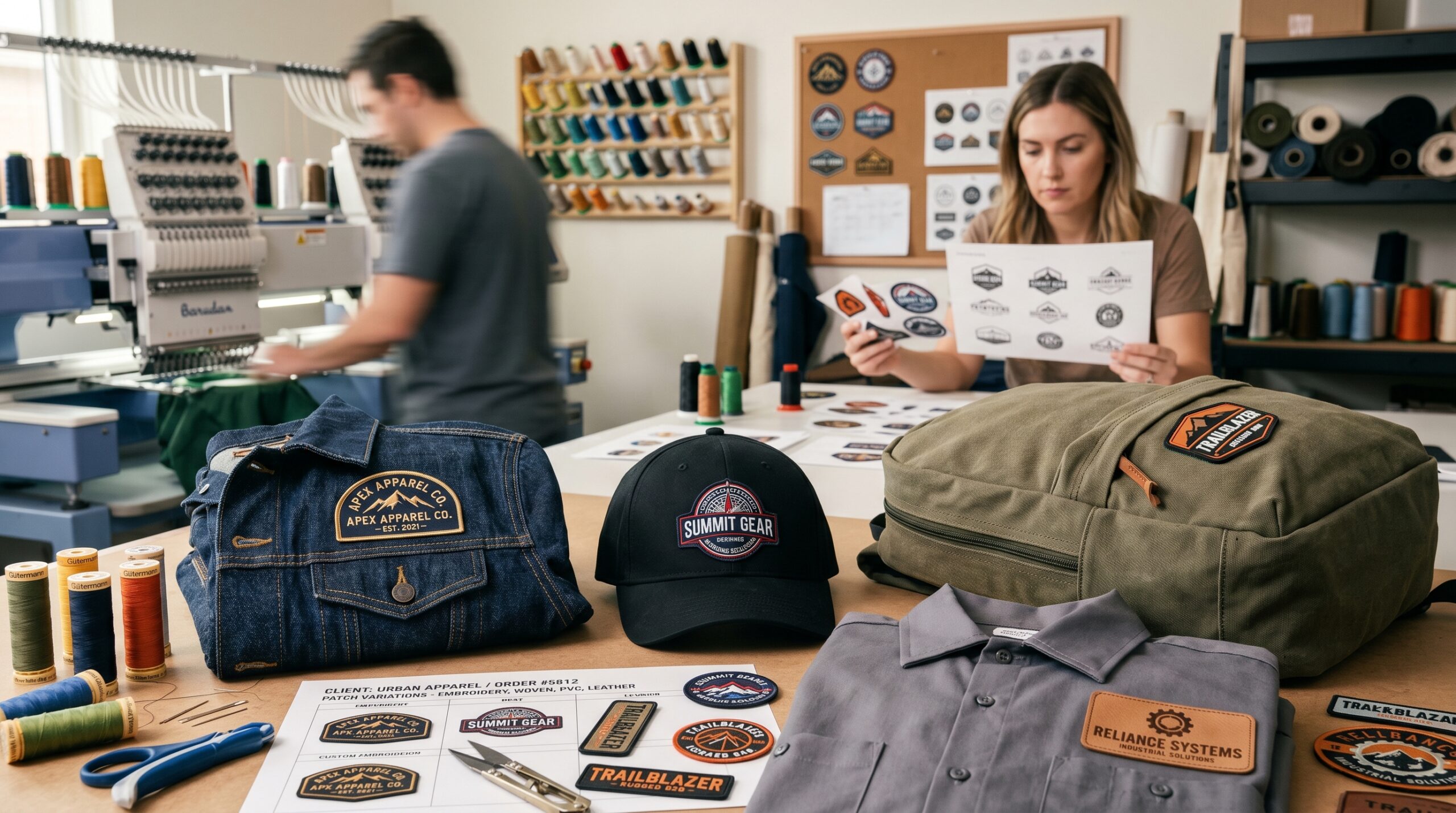
What Are Custom Patches?
Custom patches are fabric-based decorative or identification elements produced to a specific design, logo, or brand mark that businesses, organizations, and brands attach to clothing, accessories, and gear to communicate identity, rank, affiliation, or branding. Manufacturers produce them in embroidered, woven, PVC, leather, chenille, and sublimated formats depending on the design requirements and intended application.
The defining characteristic of a custom patch is that manufacturers produce it to an individual specification rather than from a standard design. Every element of the patch, including the size, shape, thread colors, background material, edge finish, and backing type, reflects the buyer’s specific brief. This makes custom patches fundamentally different from stock or off-the-shelf patches, which offer no design flexibility. For businesses building a consistent brand presence across apparel and merchandise, the ability to produce a patch that matches exact brand guidelines is the core commercial value of the custom format.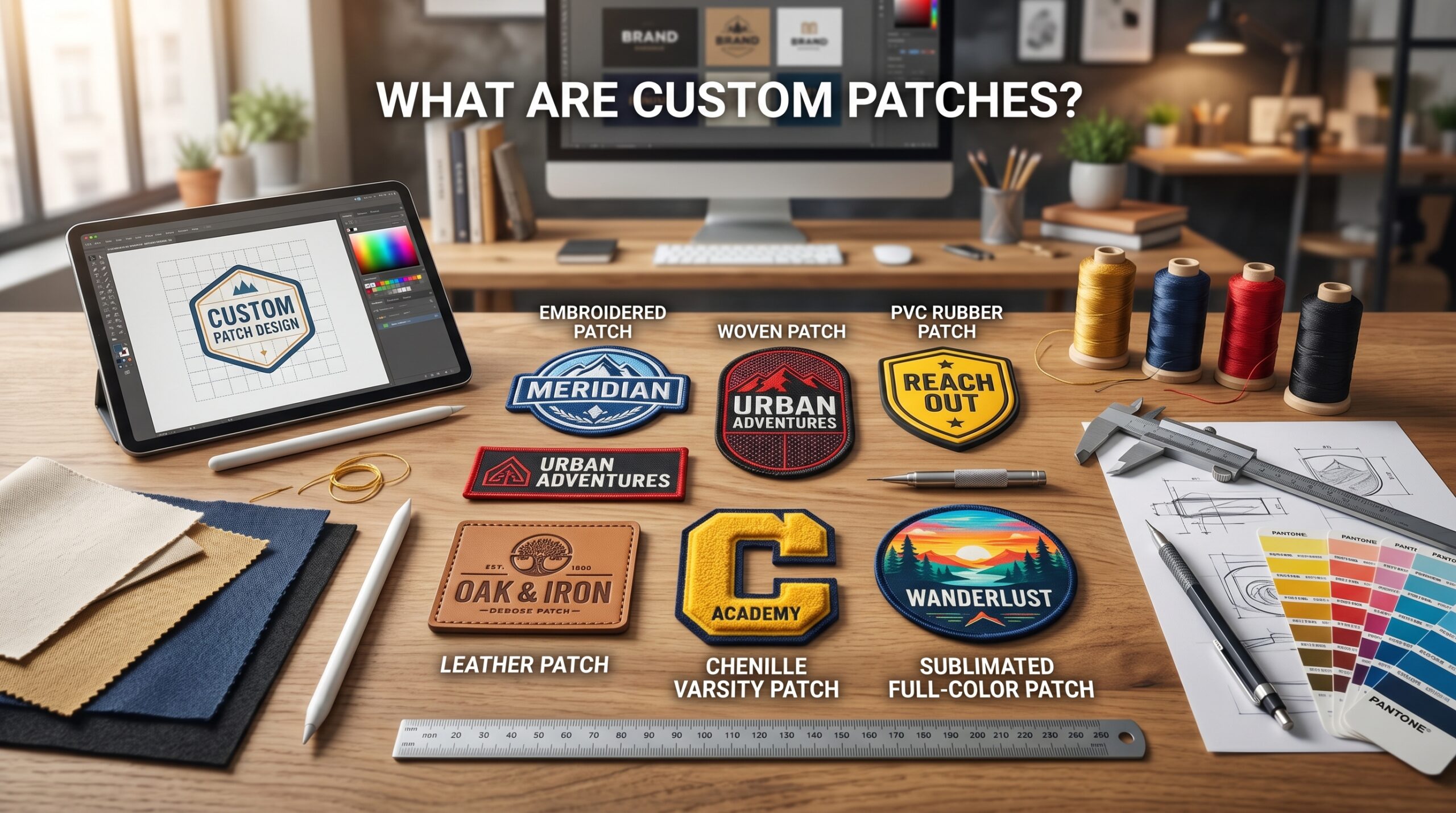
Why Custom Patches Matter for Businesses
Custom patches matter for businesses because they deliver branded decoration with a perceived value that significantly exceeds their production cost, hold up through years of regular wear and laundering without degrading, and work across virtually every garment and accessory type without requiring specialist decoration equipment at the point of application.
A business that decorates uniforms with embroidered custom patches presents a more professional image than one using printed transfers that crack and fade after a few washes. A brand that includes a woven patch on its retail merchandise creates a quality signal that buyers associate with the garment quality itself. For B2B buyers managing uniform programs, branded merchandise ranges, or promotional apparel at volume, the commercial case for custom patches rests on three factors: durability, perceived value, and production scalability across large batches without quality degradation.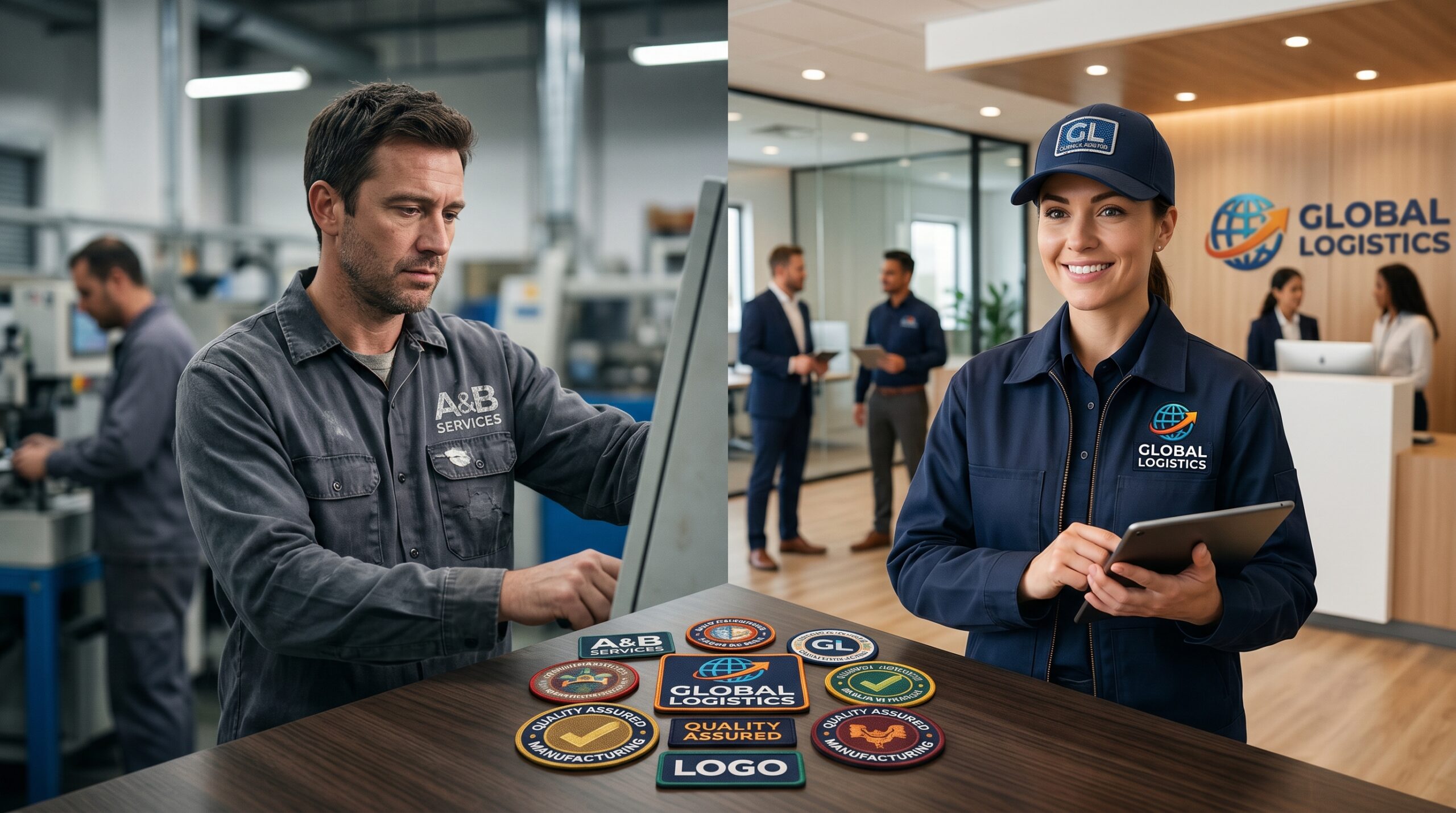
Types of Custom Patches: What Options Does a Business Have?
The main types of custom patches are embroidered patches, woven patches, PVC patches, leather patches, chenille patches, and sublimated patches, each suited to different design requirements, end-use conditions, and visual aesthetics. Ultimately, choosing the right type for a specific brief determines both the visual result and the long-term performance of the finished patch.
Custom Embroidered Patches
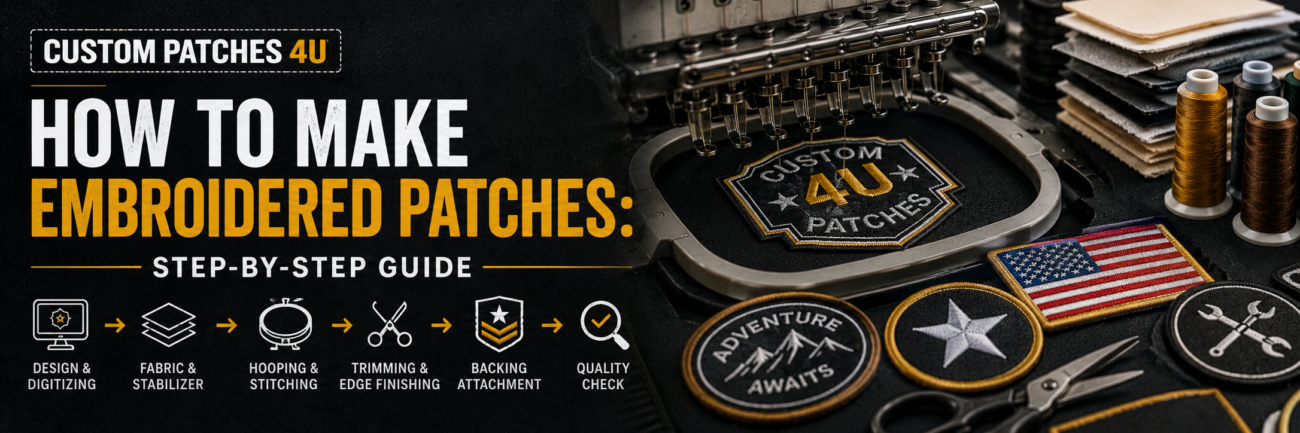
Custom embroidered patches use thread stitched over a woven backing to build up a design with a raised, textured surface. Manufacturers produce them by programming a digitized stitch file and running the design through commercial embroidery machines that place thread in precise patterns to reproduce logos, text, and graphic elements.
Embroidered patches suit logos and brand marks at sizes between 2 and 6 inches, deliver a premium tactile quality that other formats do not match, and hold their appearance through repeated machine washing without fading or surface degradation. They represent the most widely used format for uniform programs, branded outerwear, and promotional merchandise across virtually every industry category.
Custom Woven Patches
Custom woven patches use fine threads on a loom to produce designs with significantly higher detail resolution than embroidery allows. Manufacturers weave the design directly into the patch fabric rather than stitching thread over a backing, which produces a flatter surface and enables fine lines, small text, and intricate graphic elements that embroidery would blur or lose at standard patch sizes.
Fashion brands, retail labels, and businesses with logos containing fine detail or small text frequently choose woven patches over embroidered alternatives because the woven format reproduces those elements clearly at sizes where embroidery cannot.
Custom PVC Patches
Custom PVC patches consist of molded soft rubber that manufacturers shape using a mold created from the design artwork. The molded format gives PVC patches a three-dimensional quality, waterproof durability, and resistance to abrasion that fabric-based patches do not offer.
Outdoor brands, sporting goods companies, military and tactical suppliers, and workwear manufacturers choose PVC patches for applications where exposure to weather, chemicals, and physical wear would damage embroidered or woven alternatives.
Custom Leather Patches
Custom leather patches use genuine or faux leather as the base material, with the design applied through debossing, embossing, or laser engraving. The result is a premium patch that adds material quality and tactile distinctiveness to the garment it appears on.
Denim brands, outerwear manufacturers, heritage workwear labels, and premium fashion brands use leather patches as back labels on jeans and jackets, chest patches on outerwear, and branding elements on bags and accessories where a premium material finish is part of the product positioning.
Chenille Patches
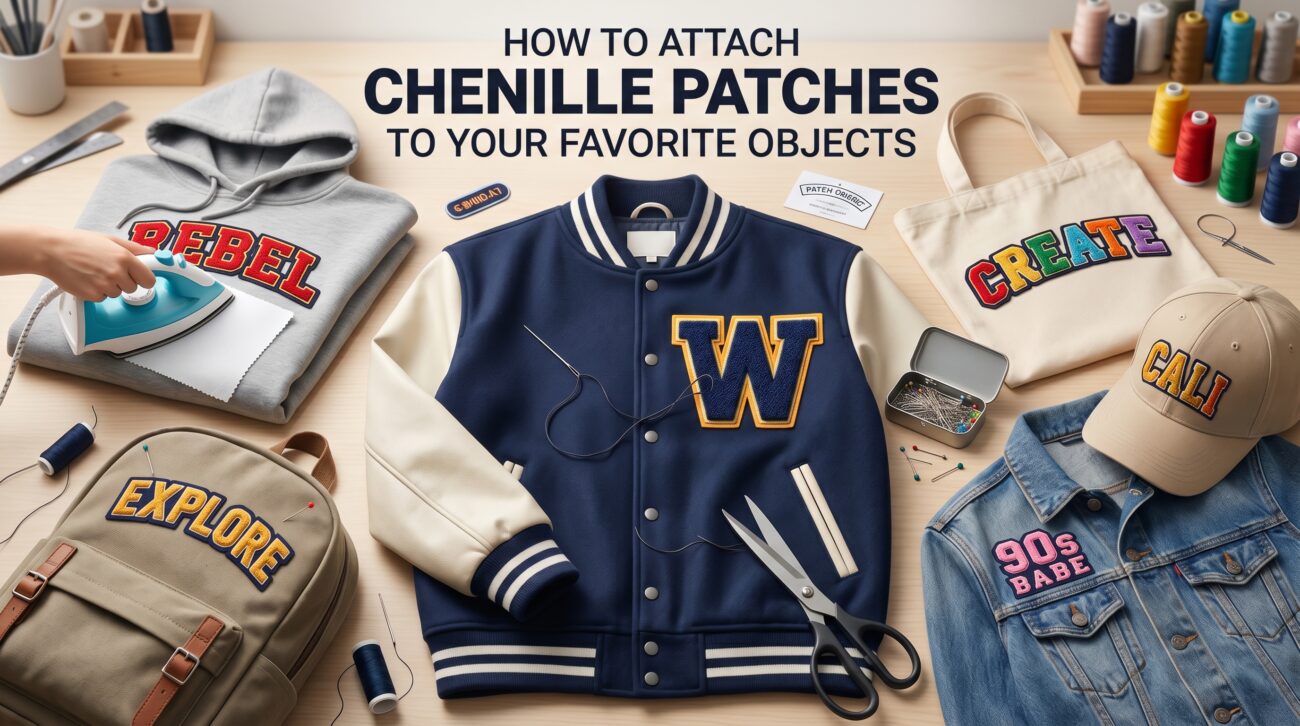
Chenille patches use looped yarn stitched through a felt or twill base to create a soft, raised, textured surface with strong visual presence. Schools, sports teams, and varsity apparel programs traditionally use chenille patches for letter patches and athletic insignia, though contemporary streetwear and fashion brands have adopted the format for its distinctive retro aesthetic.
Sublimated Patches
Sublimated patches use dye-sublimation printing on polyester fabric to produce full-color, photographic-quality imagery within the same price structure regardless of color count. Manufacturers can reproduce gradients, detailed illustrations, and complex multi-color artwork on sublimated patches without the color limitations that embroidery and woven formats impose.
Brands with complex illustrated logos, detailed artwork, or photographic design elements choose sublimated patches when embroidery or woven production would require unacceptable simplification of the original design.
Request a quote and let our team recommend the right patch type for your design and application before production begins.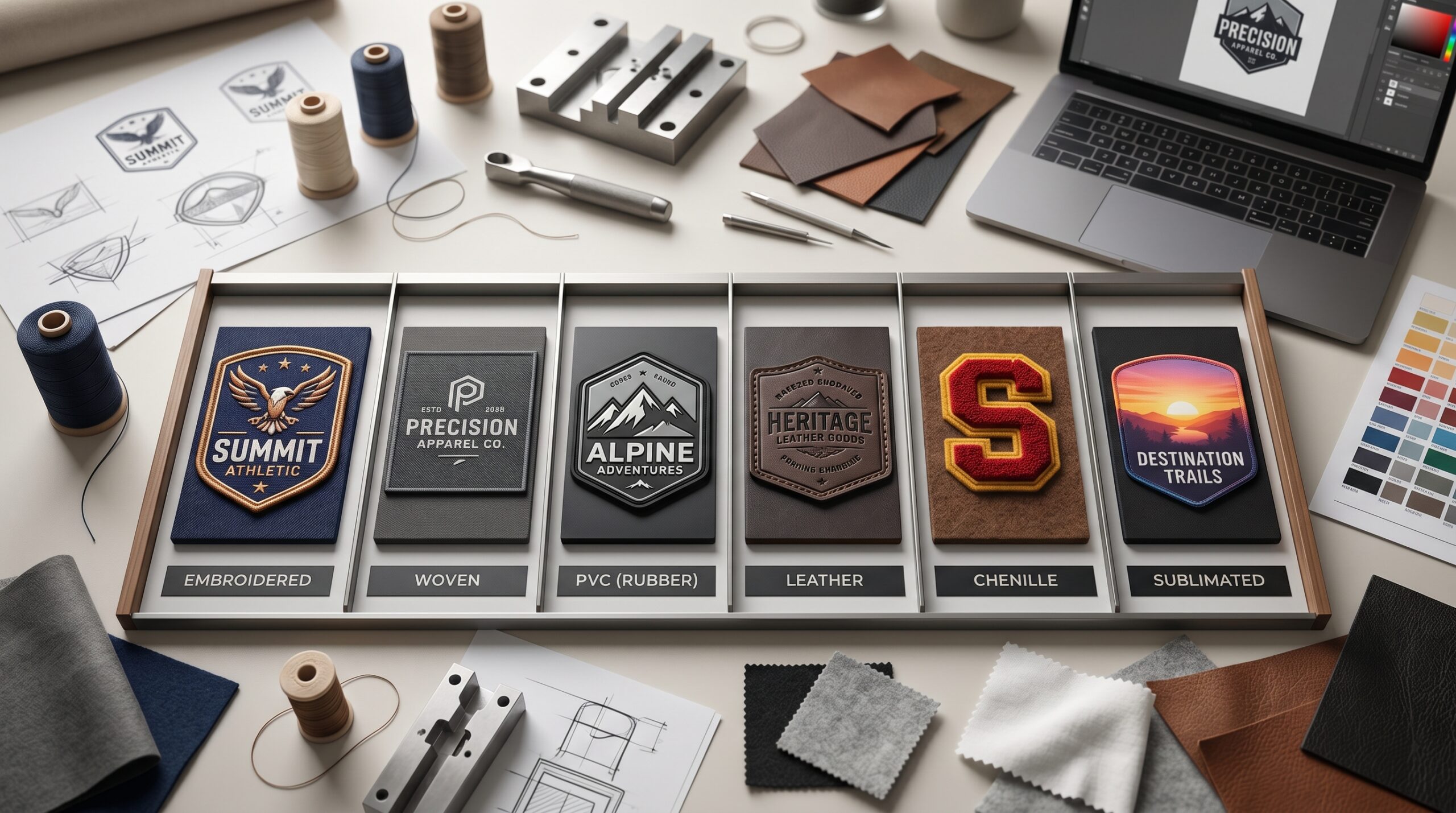
How Manufacturers Produce Custom Patches
Manufacturers produce custom patches through a process that moves from design submission and digitization through proof approval, production, quality inspection, and delivery. Each stage requires specific inputs from the buyer and specific technical execution from the production team to produce a finished patch that matches the brief.
The buyer submits artwork, typically as a vector file for embroidered and woven patches or a detailed design brief for PVC and leather formats. The production team digitizes the artwork into a stitch file for embroidery, programs the loom for woven patches, creates a mold design for PVC, or prepares a laser or deboss specification for leather. The team then produces a digital proof or physical pre-production sample for the buyer to review and approve before full production runs.
Full production begins after written proof approval. Commercial embroidery and weaving machines run the full batch to consistent quality standards, with finished patches inspected before packing. The backing type specified in the brief, whether iron-on, sew-on, Velcro, heat seal, or no backing, is applied during production so the patches arrive ready for application.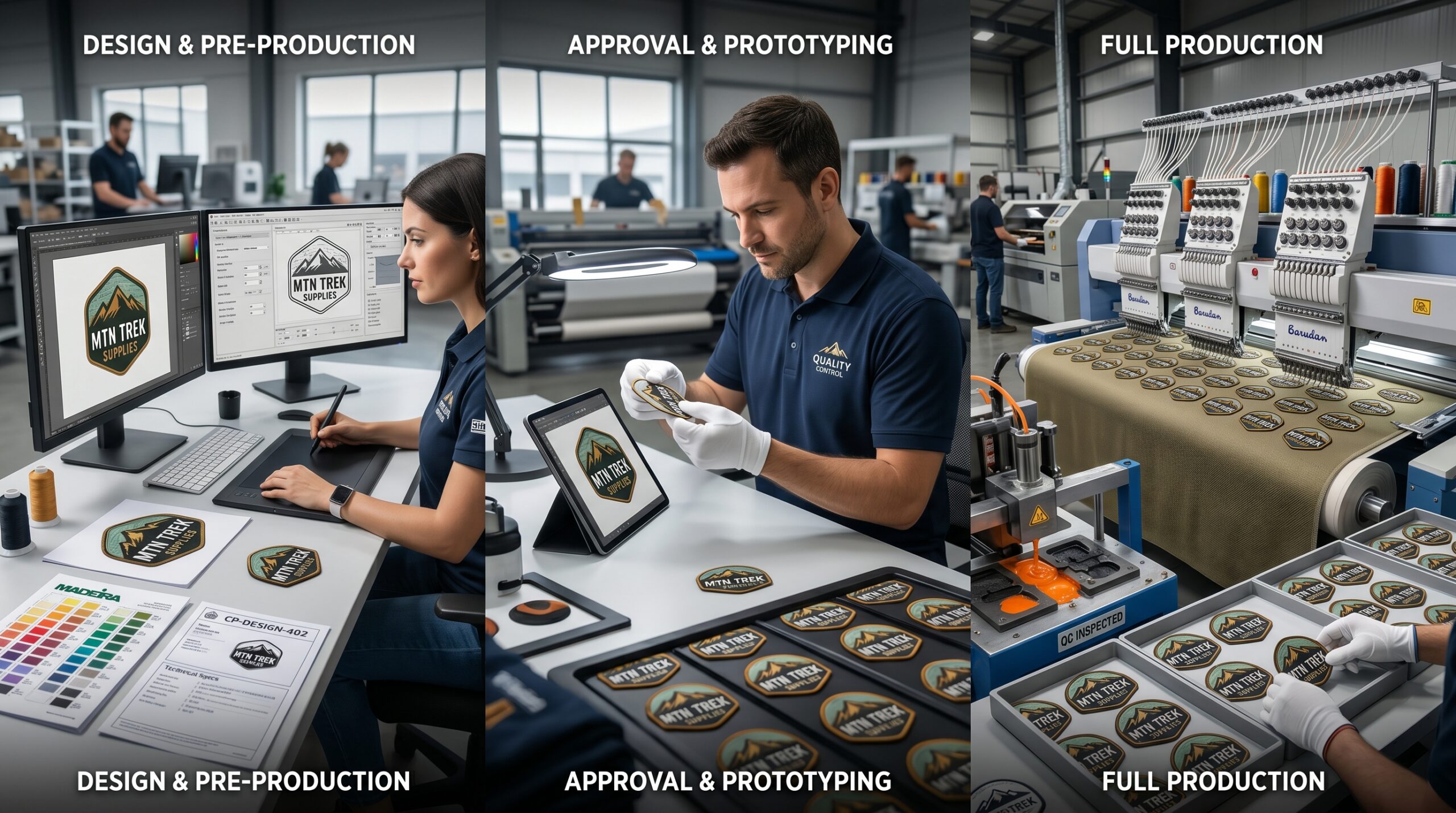
Key Features and Specifications of Custom Patches
High-quality custom patches combine accurate color matching to Pantone references, clean edge finishing in merrowed or laser-cut formats, consistent embroidery density or weave quality across the full batch, and the correct backing type for the intended application surface and laundering conditions.
Color accuracy depends on the thread or material specification. Embroidered patches match thread colors to Pantone references from an industry-standard thread range. Woven patches follow the same yarn color matching process. In both cases, buyers who provide Pantone references get more accurate results than those who describe colors approximately. For PVC patches, the production team matches colors to the molded rubber compound available in the specified color range. Buyers who provide Pantone references rather than approximate color descriptions get more accurate results across large production runs where batch-to-batch consistency matters.
Edge finish affects both appearance and durability. A merrowed edge, produced by overlock stitching around the patch perimeter, reinforces the border and suits standard embroidered and woven formats. A laser-cut edge, produced by cutting the patch with a laser rather than scissors or dies, gives a cleaner, more precise border profile that suits woven patches and some embroidered formats. Heat-cut edges seal synthetic backing materials and prevent fraying without adding stitching.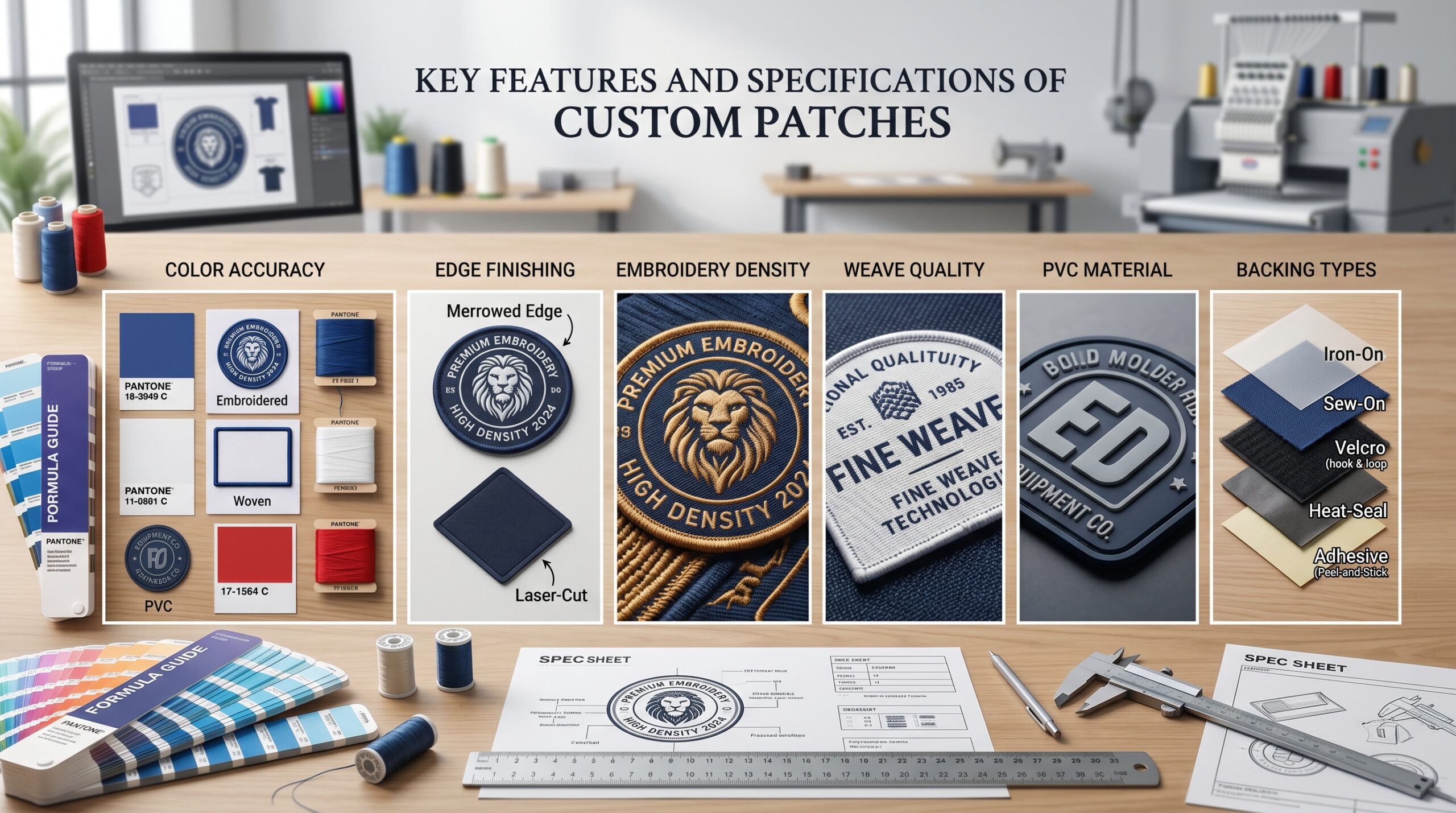
Benefits of Custom Patches for B2B Buyers
Custom patches deliver B2B buyers a combination of production scalability, material durability, design flexibility, and per-unit cost efficiency at volume that most alternative garment decoration methods cannot match across all of these criteria simultaneously.
Manufacturers produce patches as standalone units that buyers store and apply to different products over time, which means one patch design can appear on jackets, caps, bags, and lanyards within the same merchandise range without additional production complexity or tooling costs. This production model also means buyers can order patches ahead of garment production, hold inventory, and apply them as needed rather than committing to decorated garments in fixed quantities.
At volume, the per-unit cost of a custom embroidered patch drops to a level where the decoration cost per garment is low relative to the value it adds to the finished product. For promotional merchandise programs and retail apparel brands, this cost-to-value ratio is a core commercial argument for patches over more expensive decoration alternatives.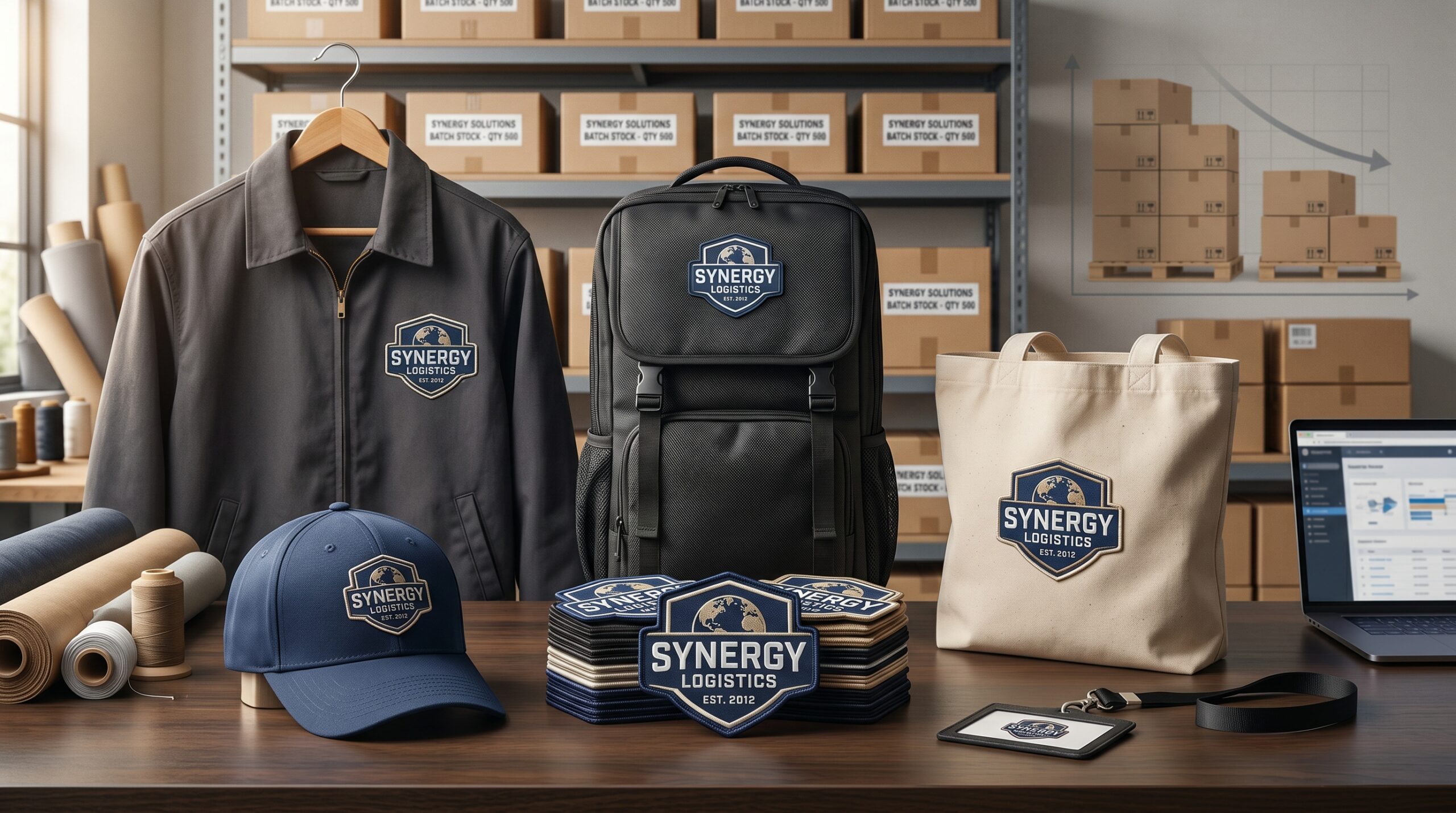
Industry Use Cases: Where Businesses Use Custom Patches
Businesses across a wide range of industries use custom patches for uniform identification, brand decoration on retail merchandise, promotional merchandise distribution, sports team and club apparel, military and tactical gear, workwear branding, and fashion label applications.
Uniform suppliers and corporate buyers use embroidered name patches, department identifiers, and logo patches on staff apparel across hospitality, healthcare, security, retail, and logistics sectors. Sports teams order custom embroidered and chenille patches for jerseys, training wear, and varsity jackets. Military and tactical organizations use embroidered and PVC patches for unit identification, rank insignia, and morale patches on uniforms and gear. Fashion and streetwear brands use woven labels, embroidered logo patches, and leather back patches as brand marks on retail garments and accessories. Motorcycle clubs and outdoor organizations use large embroidered patches as club insignia on jackets and vests.
Contact us for bulk pricing on custom patches for your specific industry and application.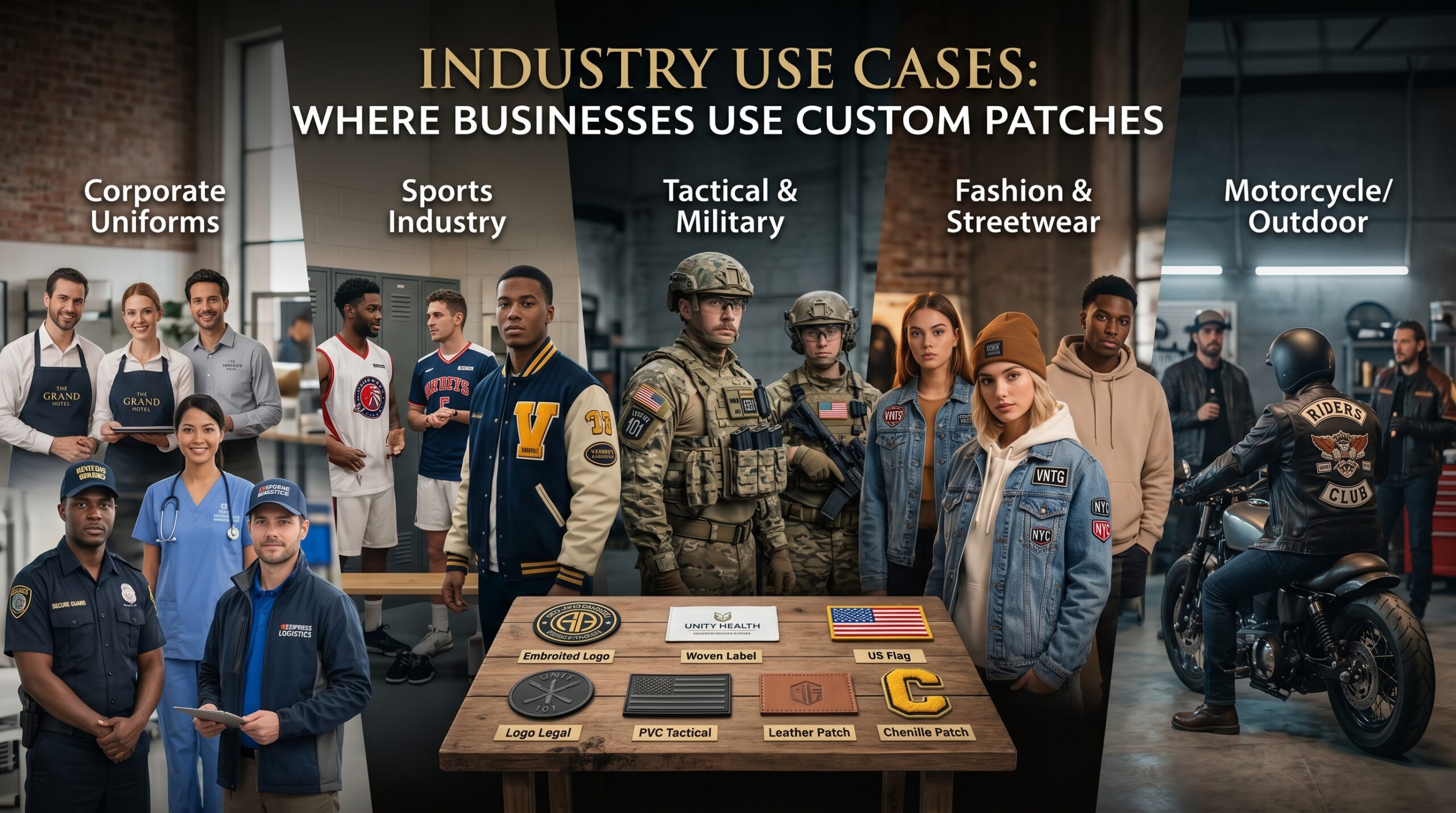
How to Order Custom Patches in Bulk
Ordering custom patches in bulk involves submitting a design brief with artwork, confirming patch type, size, edge finish, and backing specification, approving a digital proof or physical sample, and placing a production order at the required quantity. The production team handles digitization, sampling, and quality control within this process.
First-time buyers typically start with a sample order to confirm color accuracy, embroidery density, and patch quality on their specific application surface before committing to a full program quantity. Sampling is a straightforward step that avoids the more significant cost of discovering quality issues after a full batch runs.
Repeat orders using saved digitization files ship faster than first-time orders, since the production team skips the digitization and proof stage and moves directly to production from the approved file on record.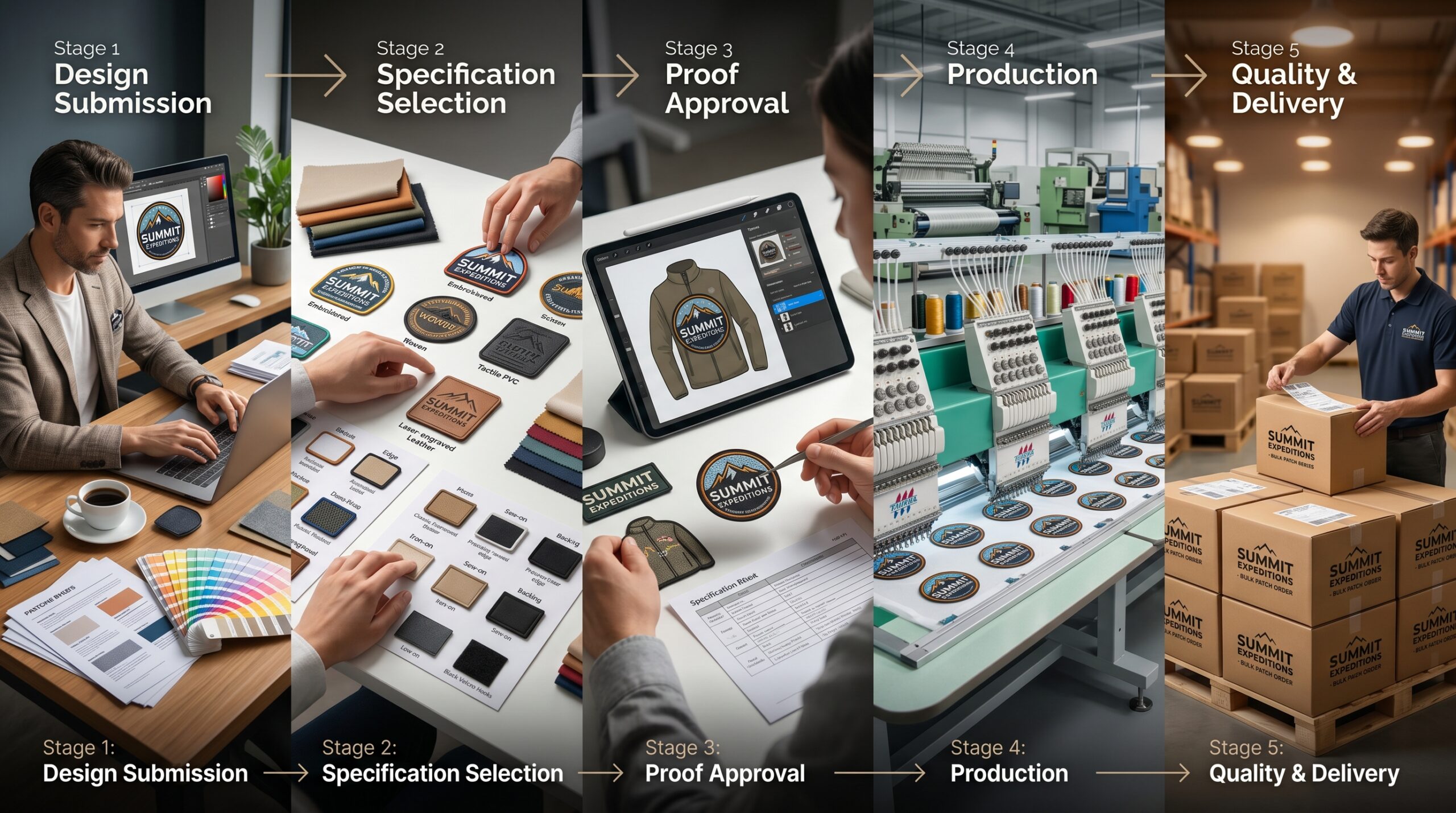
Why Choose CustomPatches4U for Custom Patch Orders
CustomPatches4U handles design, digitization, production, quality control, and delivery as a complete service for B2B buyers ordering custom patches in any format and at any volume. The production team confirms design compatibility with the chosen patch format before production begins, which means buyers avoid discovering at delivery stage that their artwork required simplification or format changes that the proof process should have caught earlier.
Volume pricing, consistent batch quality, saved digitization files for repeat orders, and clear communication on lead times and production specifications make the full ordering process manageable from a 50-unit sample through to a multi-thousand-unit program. Order a sample today to confirm patch quality and color accuracy before placing your bulk order.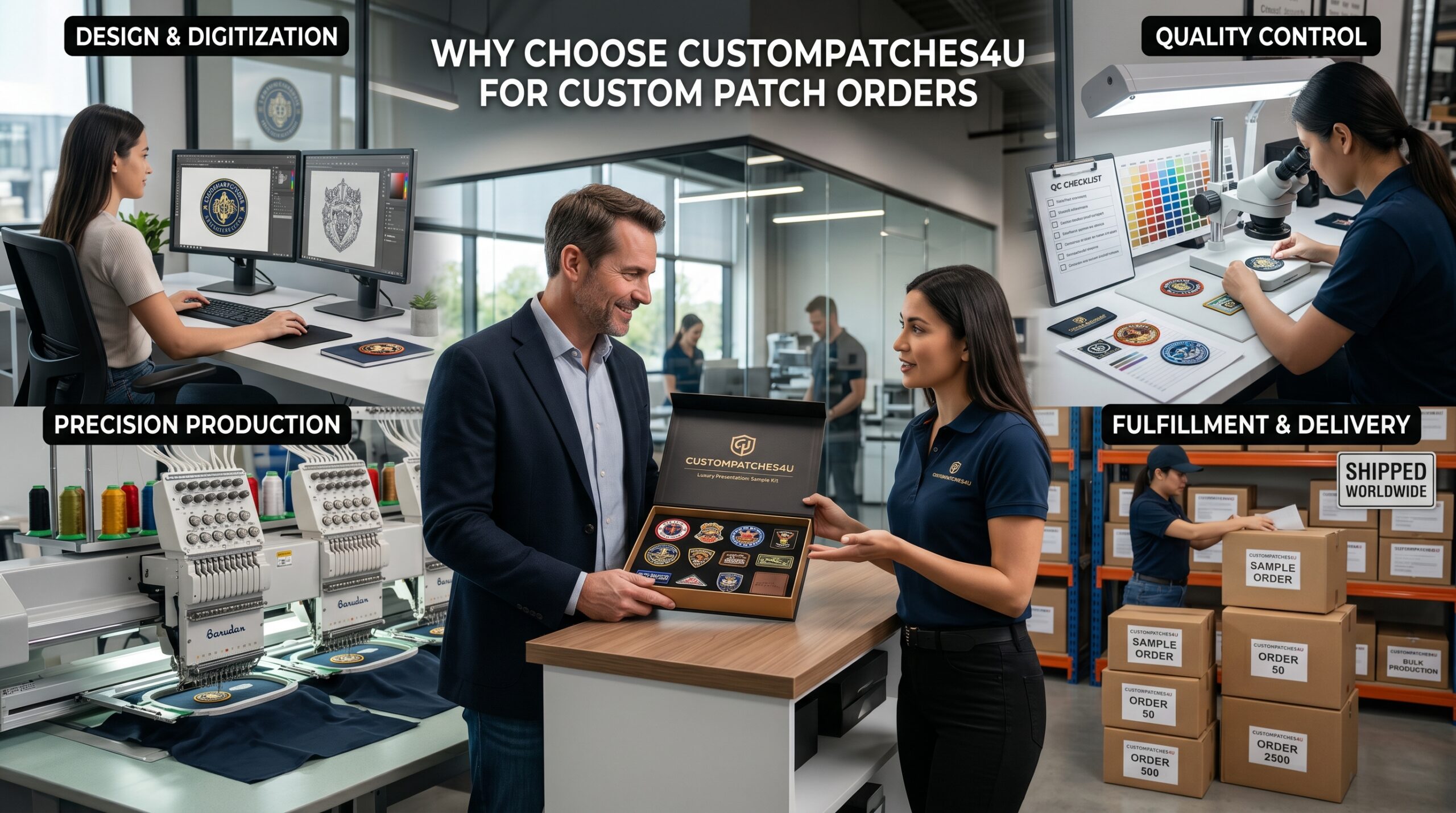
Frequently Asked Questions
What are custom patches?
Custom patches are fabric-based decorative or identification elements that manufacturers produce to a specific design, logo, or brand mark for attachment to clothing, accessories, and gear. Businesses order them in embroidered, woven, PVC, leather, chenille, and sublimated formats depending on the design and application requirements.
What are custom patches used for?
Businesses use custom patches for uniform identification and branding, retail garment decoration, promotional merchandise, sports team and club insignia, military and tactical unit identification, workwear branding, and fashion label applications on jackets, bags, caps, and accessories.
How do manufacturers make custom patches?
Manufacturers produce custom patches by digitizing the buyer’s artwork into a production file, creating a proof for approval, then running the full production batch through commercial embroidery machines, looms, PVC molding equipment, or laser engraving systems depending on the patch type specified.
What types of custom patches are available?
The main types of custom patches are embroidered patches, woven patches, PVC patches, leather patches, chenille patches, and sublimated patches, each suited to different design requirements, visual aesthetics, and end-use conditions.
What is the difference between embroidered and woven patches?
Embroidered patches build up a design using thread stitched over a woven backing, producing a raised, textured surface suited to logos and brand marks at standard sizes. Woven patches weave the design directly into the fabric using fine threads, producing a flatter surface with higher detail resolution for small text and intricate graphics.
Why do businesses use custom patches?
Businesses use custom patches because they deliver branded decoration with a perceived value that exceeds their production cost, hold up through years of regular wear and laundering, and work across virtually every garment and accessory type without requiring specialist equipment at the point of application.
Are custom patches durable?
Yes. Embroidered and woven patches hold their appearance through repeated machine washing without fading or surface degradation. PVC patches resist water, abrasion, and chemical exposure. Leather patches age with wear rather than degrading. The backing type determines attachment durability, with sew-on backing producing the most permanent bond.
How much do custom patches cost?
Custom patch cost depends on patch type, size, stitch count for embroidered formats, order quantity, and backing specification. Per-unit costs decrease significantly at higher quantities. Requesting a quote based on your specific design and quantity gives the most accurate pricing for your program.
What is the best material for custom patches?
The best material depends on the application. Embroidered patches suit most standard branding applications. Woven patches suit designs with fine detail. PVC patches suit outdoor and heavy-use applications. Leather patches suit premium apparel and accessories. Sublimated patches suit complex full-color artwork.
Where can businesses order custom patches in bulk?
Businesses can order custom patches in bulk from specialist patch manufacturers that handle design, digitization, production, and quality control as a complete service. CustomPatches4U accepts bulk orders across all patch formats with volume pricing, sample approval before full production, and saved files for faster repeat orders.
Get custom pricing on your next bulk patch order and request a free sample to confirm quality before committing to full production.