
Custom embroidery has decorated clothing and communicated status for thousands of years. It identified groups long before it became a commercial decoration method. Today, businesses use it for uniforms, branded apparel, and custom patches. Understanding this history explains why the craft has survived every technological shift. It also explains why businesses choose embroidered decoration over cheaper printed alternatives. This guide covers the full history of embroidery from its earliest origins through the industrial revolution, machine production, and the modern digitized embroidery industry.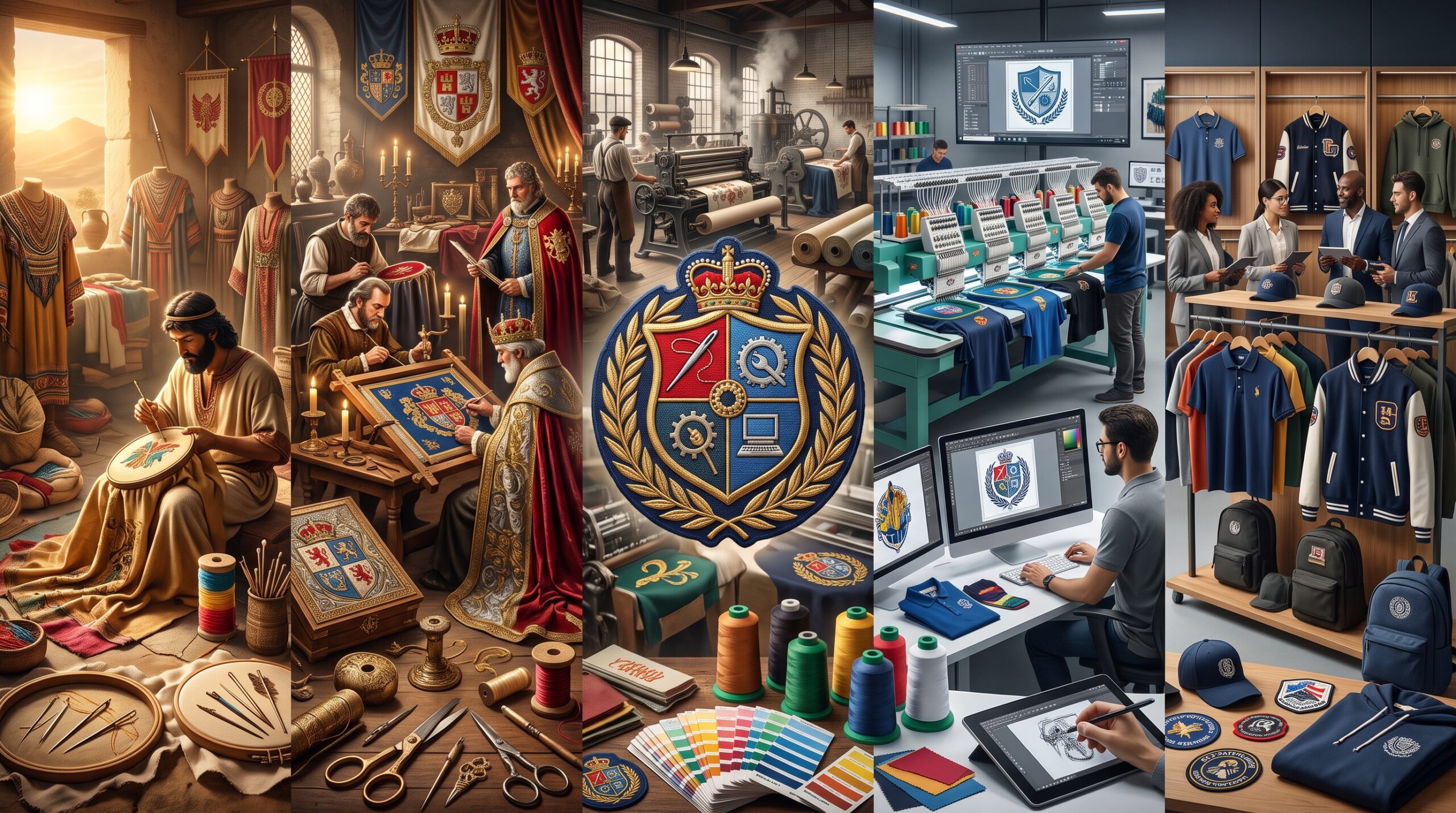
What Is the History of Custom Embroidery?
The history of custom embroidery spans thousands of years. It began with hand-stitched textile decoration in ancient China, Egypt, and the Middle East. From there, it spread across every major civilization. It evolved through guild-based craft production in medieval Europe. The invention of embroidery machines in the 19th century transformed it further. Modern commercial scale came through computerized digitizing technology developed in the 1980s.
Custom embroidery in the commercial sense means embroidery produced to a specific design brief for a paying client. It has roots in ancient craft traditions. Those traditions produced ceremonial robes, military insignia, and ecclesiastical vestments across every culture that worked with thread and fabric. The desire to communicate identity, rank, and affiliation through embroidered textile decoration has driven demand in every era. This explains both its longevity and its continued relevance as a B2B decoration method today.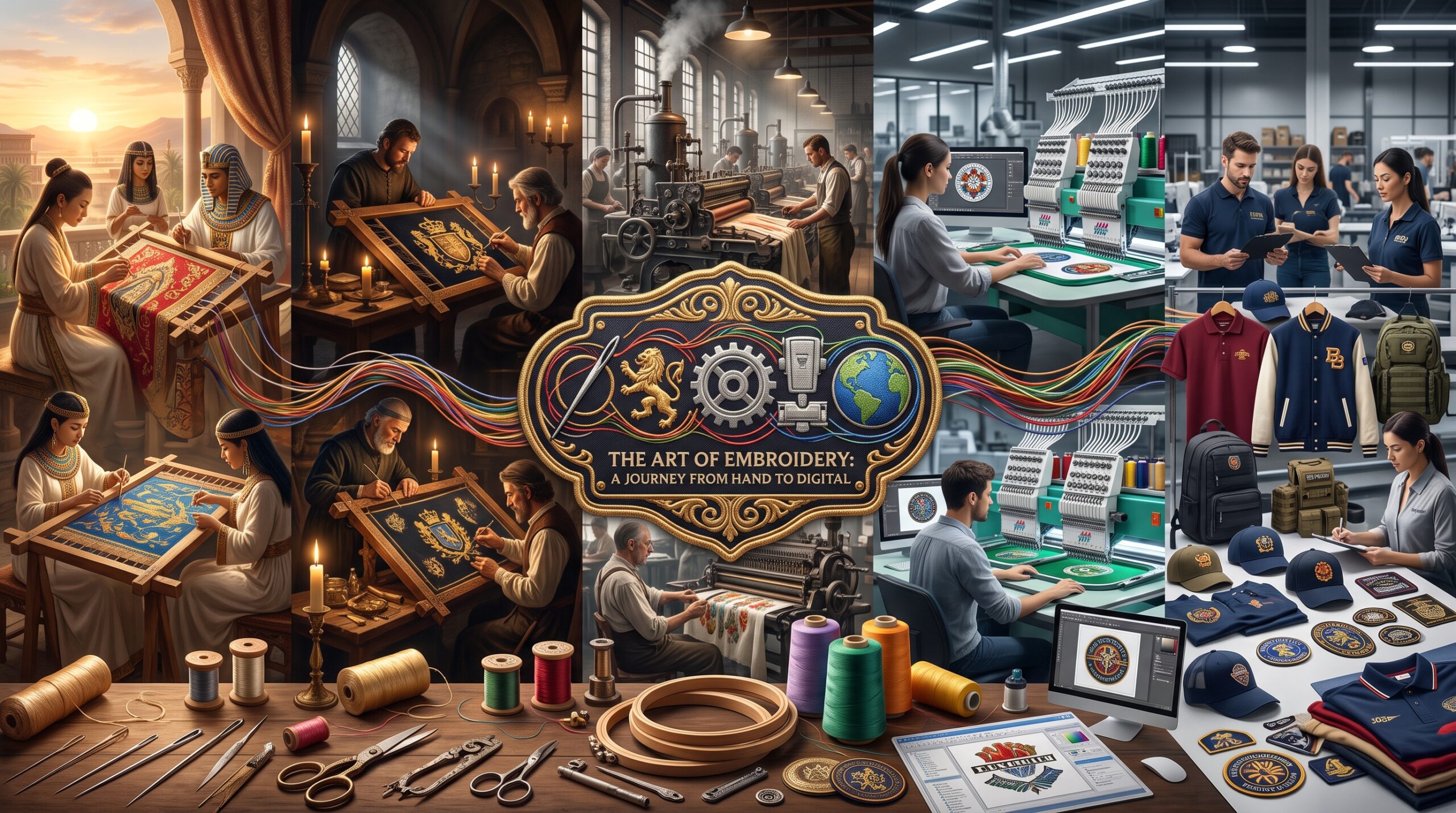
Where Did Embroidery Originate?
Embroidery originated independently in multiple ancient civilizations. The earliest surviving examples of ornamental needlework come from ancient China, dating back over 2,000 years. Evidence of decorative stitching in ancient Egypt and the Middle East goes back several thousand years further. No single culture invented embroidery. Textile decoration with thread appears across human history wherever people worked with fabric.
Chinese silk embroidery represents one of the oldest and most technically sophisticated embroidery traditions in the world. Chinese artisans developed complex techniques including satin stitch, couching, and split stitch on silk fabric. These techniques produced imagery with a fineness of detail that has influenced embroidery craft globally for centuries.
Ancient Egyptian textile fragments show evidence of decorative needlework on linen fabric. Tomb paintings depict embroidered garments worn by royalty and the nobility as markers of status. In the Middle East and Persia, embroidery on ceremonial and religious textiles developed equally sophisticated traditions. These traditions spread westward through trade routes.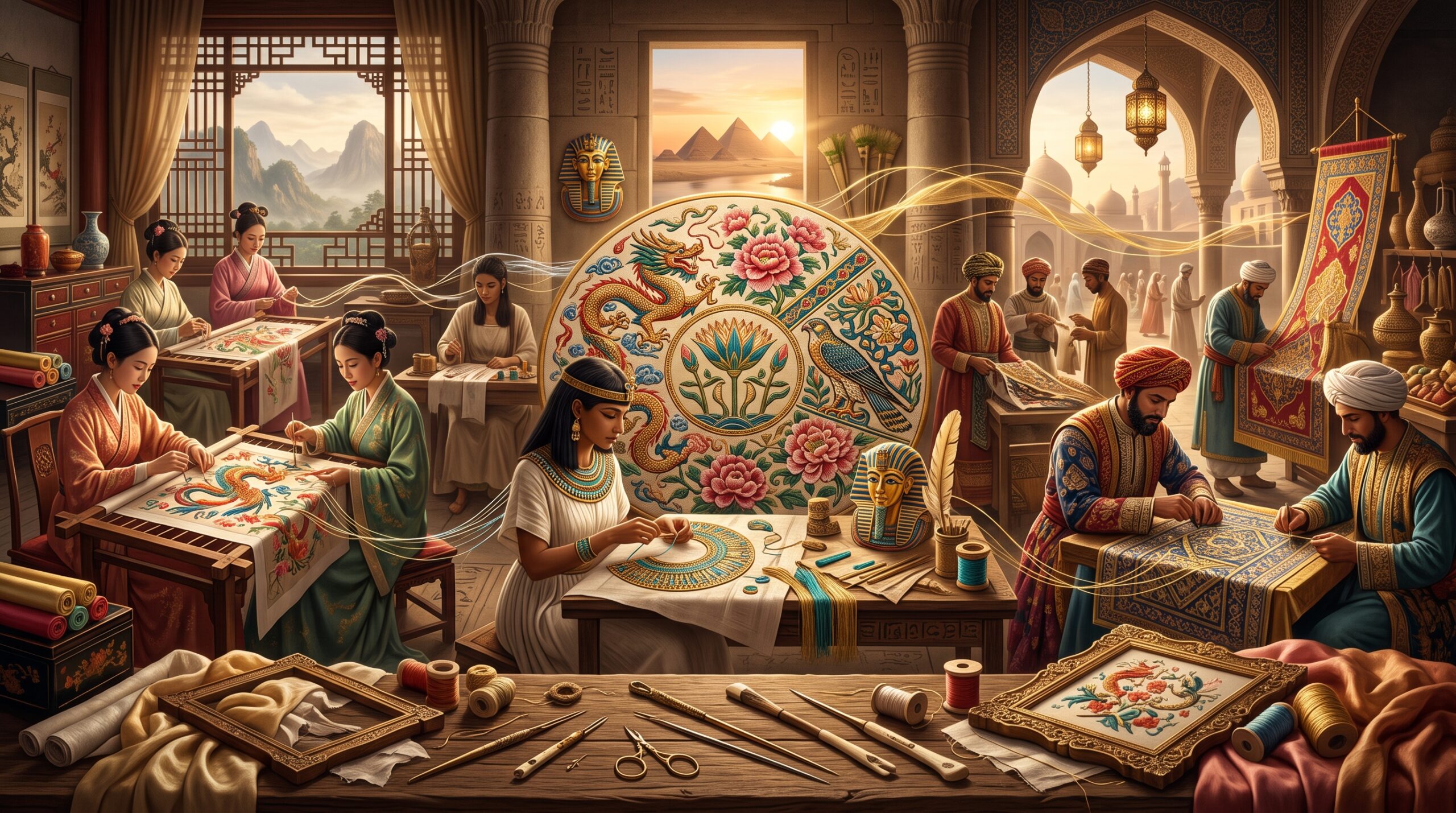
Embroidery in the Medieval and Renaissance Periods
Medieval European embroidery reached a level of technical achievement that remains a reference point in textile history. English medieval embroidery, known as Opus Anglicanum, achieved international reputation in the 13th and 14th centuries. European royalty and the Catholic Church commissioned it as one of the most valuable luxury goods in the medieval economy.
Opus Anglicanum workshops in England produced embroidered vestments, altar cloths, and ceremonial garments. They used gold and silver thread, silk, and pearl embellishment. The scale of production required organized workshop systems rather than individual craft. These workshops represent an early form of commercial embroidery production. Skilled artisans produced embroidered goods to commission for paying clients with specific design requirements.
The Bayeux Tapestry was produced in the 11th century. It depicted the Norman conquest of England. It demonstrates the use of embroidery as a narrative and documentary medium. Historical events and political identity were communicated through stitched imagery.
Across Asia, embroidery traditions developed along equally sophisticated lines. Japanese embroidery developed complex techniques including nuido and sashiko. Japanese artisans produced embroidered garments for samurai and the nobility. These garments communicated rank and family identity through specific motifs and color combinations.
Indian embroidery traditions including Zardozi, Phulkari, and Kantha developed regional techniques. These techniques reflected local materials, cultural practices, and community identity. These traditions continue producing distinctive embroidery styles today.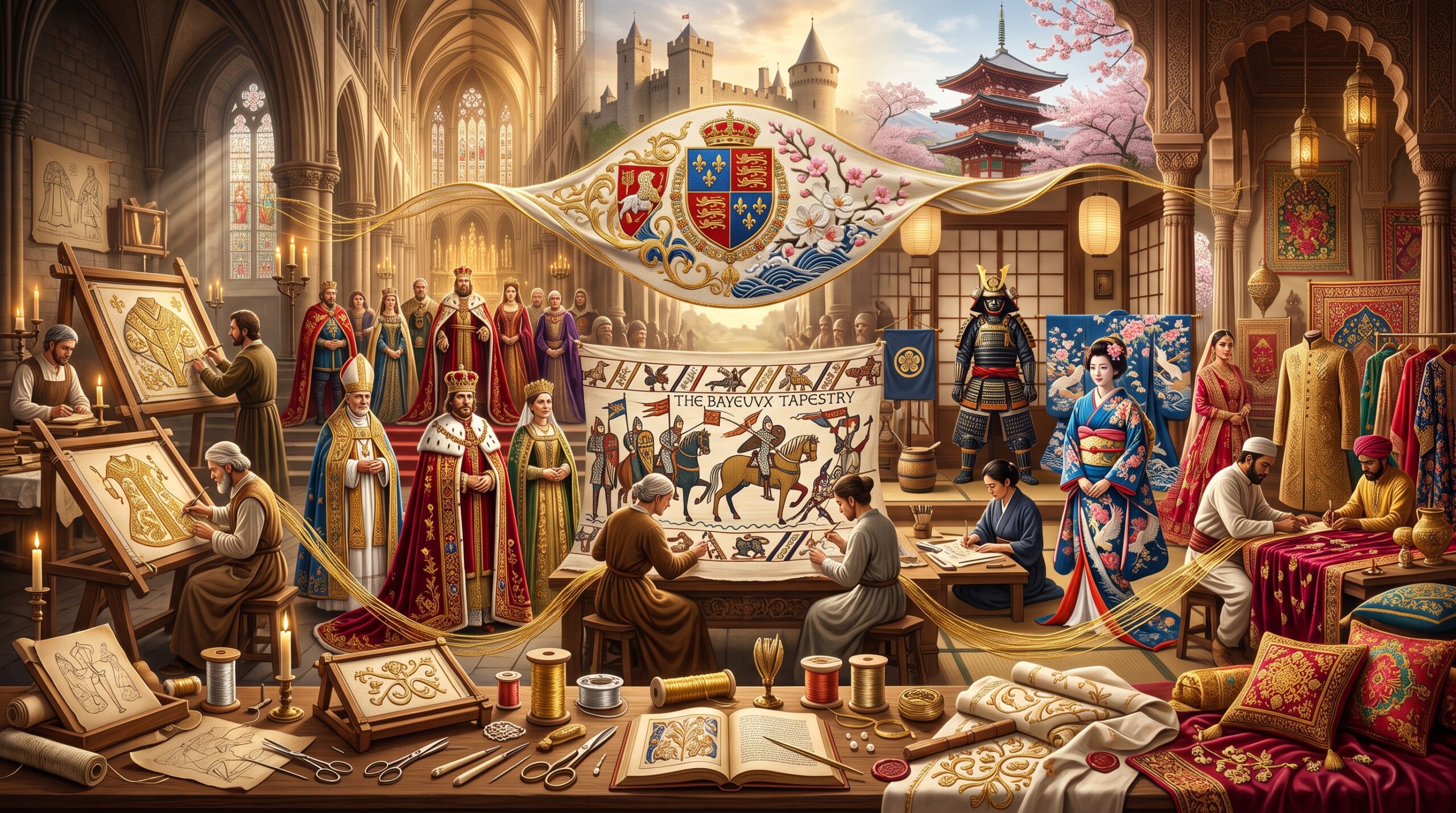
Guild Production and the Pre-Industrial Embroidery Economy
Before the industrial revolution, professional embroidery production in Europe operated through guild systems. These guilds controlled quality standards, training, and trade rights for commercial embroiderers. Guilds certified embroiderers after years of apprenticeship training. This maintained technical standards across the craft. However, it also limited production capacity. Embroidered goods remained expensive enough that only wealthy clients could commission them.
This guild-controlled economy meant that custom embroidery remained a luxury product. Religious institutions, noble households, military organizations, and royal courts were the primary buyers. The expense of skilled labor kept embroidered decoration out of reach for most of the population.
The designs produced during this period directly anticipate modern uses of custom embroidery. Heraldic insignia, military badges, ecclesiastical symbols, and status-communicating motifs served organizational identification. Modern military patches, sports team emblems, and corporate logo patches carry the same basic function as their medieval predecessors.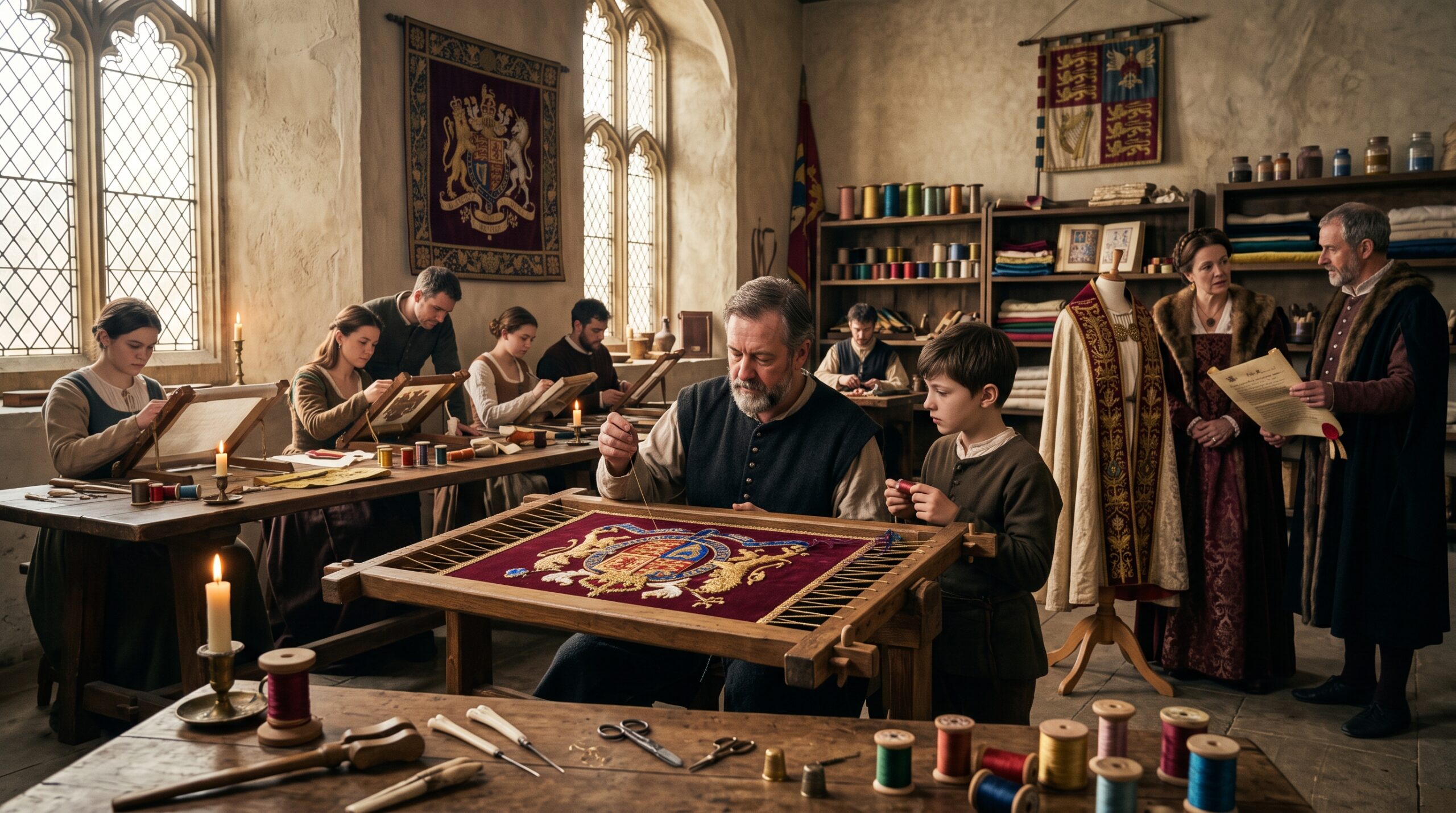
The Industrial Revolution and the Invention of Embroidery Machines
The industrial revolution transformed embroidery from a guild-controlled luxury craft into a mechanized industry. Josue Heilmann invented a hand embroidery machine in 1828 in Mulhouse, France. Isaac Groebli followed with the Schiffli embroidery machine in 1863 in Switzerland. This established the industrial embroidery production model that dominated commercial embroidery for over a century.
Heilmann’s machine replicated the motion of hand embroidery using a mechanical frame. It held multiple needles simultaneously. One operator could now produce embroidery that previously required multiple hand embroiderers.
Groebli’s Schiffli machine went further. It used a shuttle mechanism adapted from the weaving industry. Embroidery was produced on fabric stretched in a large frame. Multiple needle bars worked simultaneously across the full width of the frame. The Schiffli machine dramatically reduced the time and skilled labor required per unit of output. The Swiss and Alsatian embroidery industries adopted it quickly. They became major exporters of machine embroidered lace and decoration to global markets through the late 19th and early 20th centuries.
The mechanization of embroidery production had two direct consequences. First, it made embroidered decoration affordable for a much wider range of buyers. The market expanded from luxury clients to middle-class consumers and industrial buyers. Second, it created industrial infrastructure that modern commercial embroidery businesses still build on. This includes specialized machinery, skilled machine operators, and production management systems.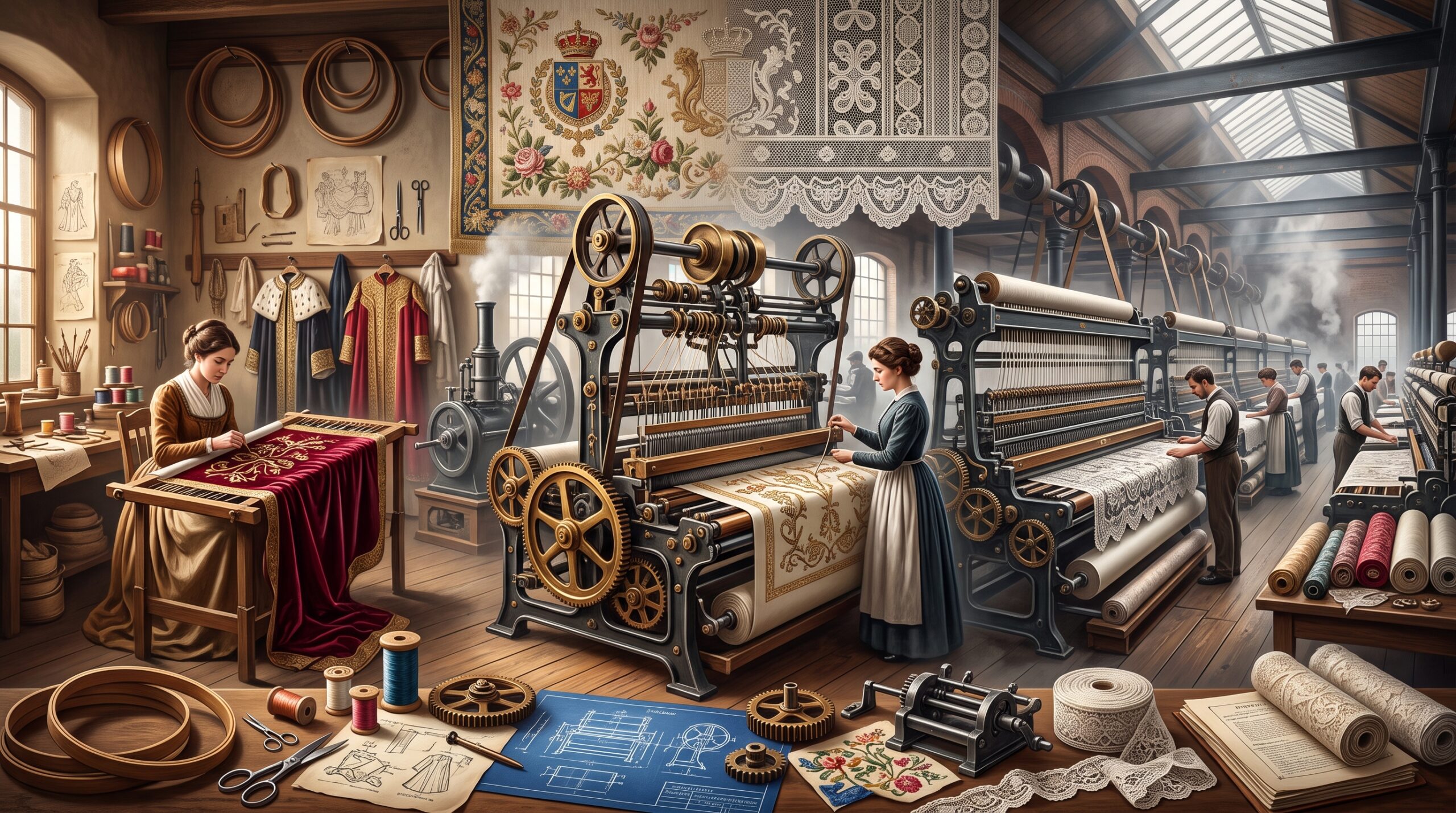
20th Century Commercial Embroidery and the Rise of Branded Apparel
The 20th century established commercial embroidery as a standard decoration method. Uniforms, military insignia, sports team apparel, and corporate branding all relied on it. Demand grew through both World Wars. Military organizations required large quantities of embroidered rank patches, unit insignia, and identification elements. Only industrial production could meet that scale.
World War I and World War II produced enormous demand for embroidered military patches and insignia. Industrial embroidery manufacturers in the United States, United Kingdom, and Europe scaled production to meet these requirements. The infrastructure developed for military patch production directly served the growing corporate and sports market in the postwar decades.
By the mid-20th century, businesses routinely commissioned custom embroidered patches and logos for staff uniforms. Sports teams ordered custom embroidered jerseys and jackets. Branded embroidered merchandise became an established commercial product category.
The growth of postwar consumer culture created new demand from sports leagues, schools, corporate employers, and motorcycle clubs. All of these groups used custom embroidered patches to communicate group identity and affiliation. This demand shaped the modern custom embroidery industry into a supplier serving both individual consumers and B2B buyers at volume.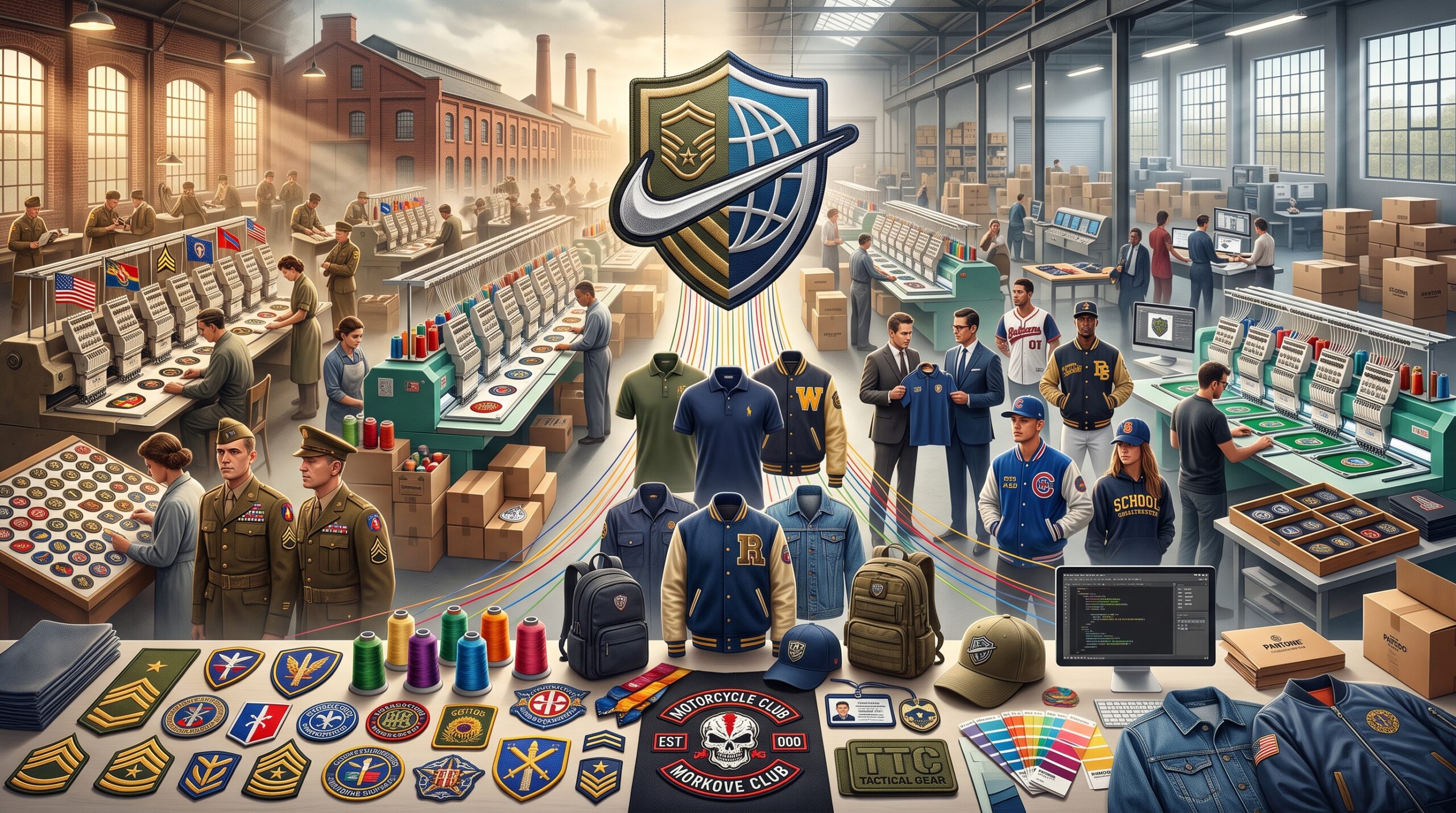
The Invention of Computerized Embroidery and Digitizing Technology
Computerized embroidery machines and digitizing software transformed the custom embroidery industry in the 1980s. They replaced manual punch card programming with digital design files. Operators could now create these files on a computer. Setup time dropped dramatically. Custom embroidery opened to a much wider market of buyers.
Before computerization, setting up a new embroidery design required a specialist punch-card operator. The operator manually translated the design into a punch card. This controlled needle position, stitch direction, and thread color changes. The process took days for complex designs. It required highly skilled operators. Minimum order quantities had to be large enough to justify the setup cost.
Computerized digitizing software replaced this process entirely. A designer traces the artwork on screen. The software generates the machine stitch file automatically. Setup time reduced from days to hours. Small custom orders became commercially viable for the first time.
Modern embroidery digitizing software produces stitch files that control every aspect of the machine’s output. This includes stitch type, density, direction, color changes, and sequence. The precision achieved exceeds what manual methods could deliver consistently across large production runs. Commercial embroidery machines today run at speeds of up to 1,000 stitches per minute. Multiple heads operate simultaneously. Volumes that would have been inconceivable to medieval guild embroiderers are now standard.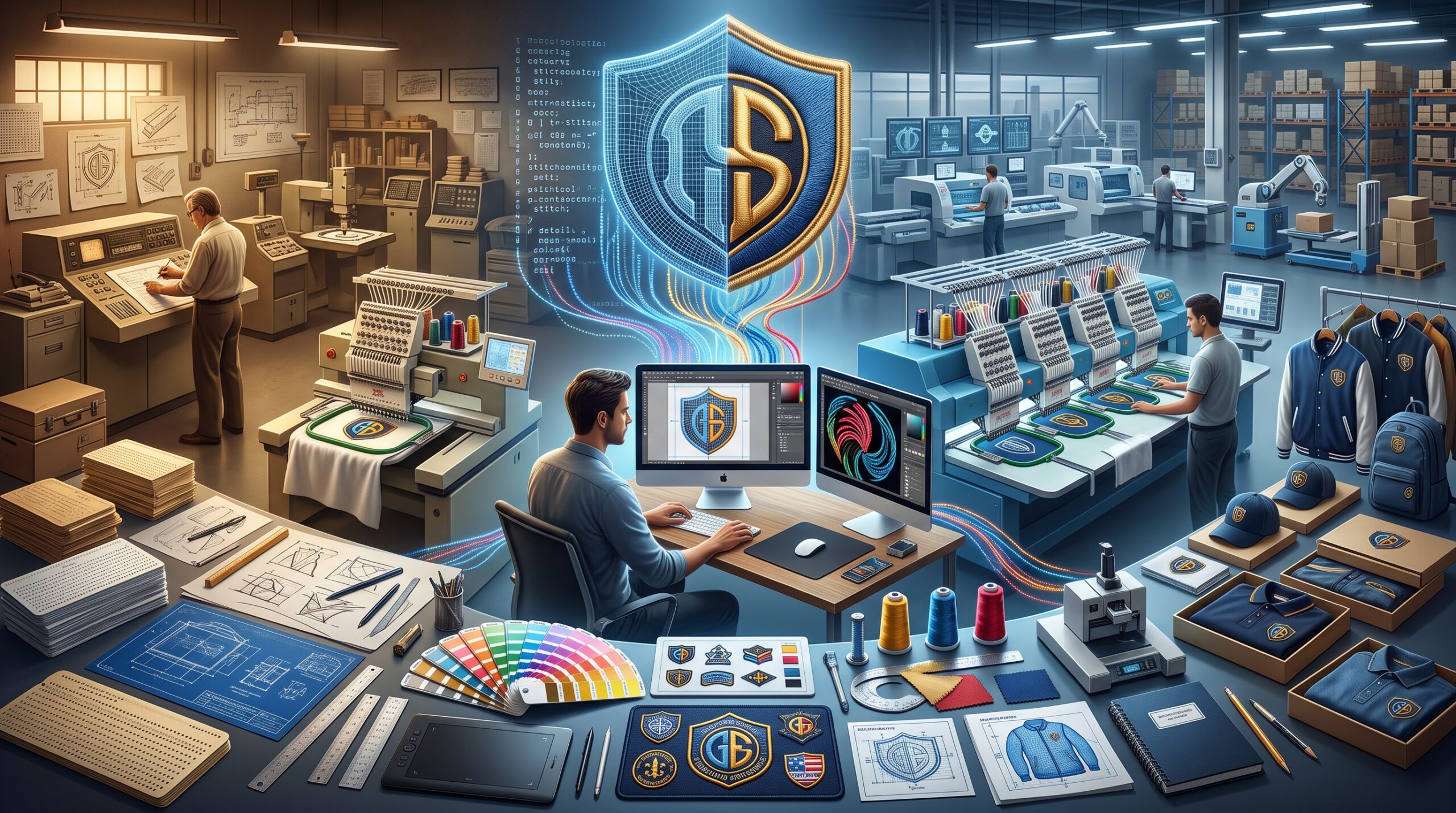
How Modern Custom Embroidery Works Today
Modern custom embroidery production begins with a digital artwork file. A digitizing specialist converts it into a machine stitch file. The file specifies stitch type, direction, density, and color for every element of the design. Commercial multi-head embroidery machines then execute it consistently across the full production run.
The digitizing step is where craft knowledge concentrates in the modern workflow. A skilled digitizer understands how different stitch types reproduce different design elements. Satin stitch, fill stitch, and running stitch each serve different purposes. Thread density affects both the appearance and the durability of the finished embroidery. Stitch direction creates texture and dimension that flat photography cannot reveal.
These decisions determine whether the finished embroidery looks clean and professional or flat and poorly defined. Digitizing quality remains a significant variable between embroidery suppliers. This is true even when the underlying designs are identical.
After digitizing and proof approval, production runs on commercial machines. Settings remain consistent across the full batch. Quality control inspection confirms color accuracy, embroidery density, and edge finish before packing for delivery.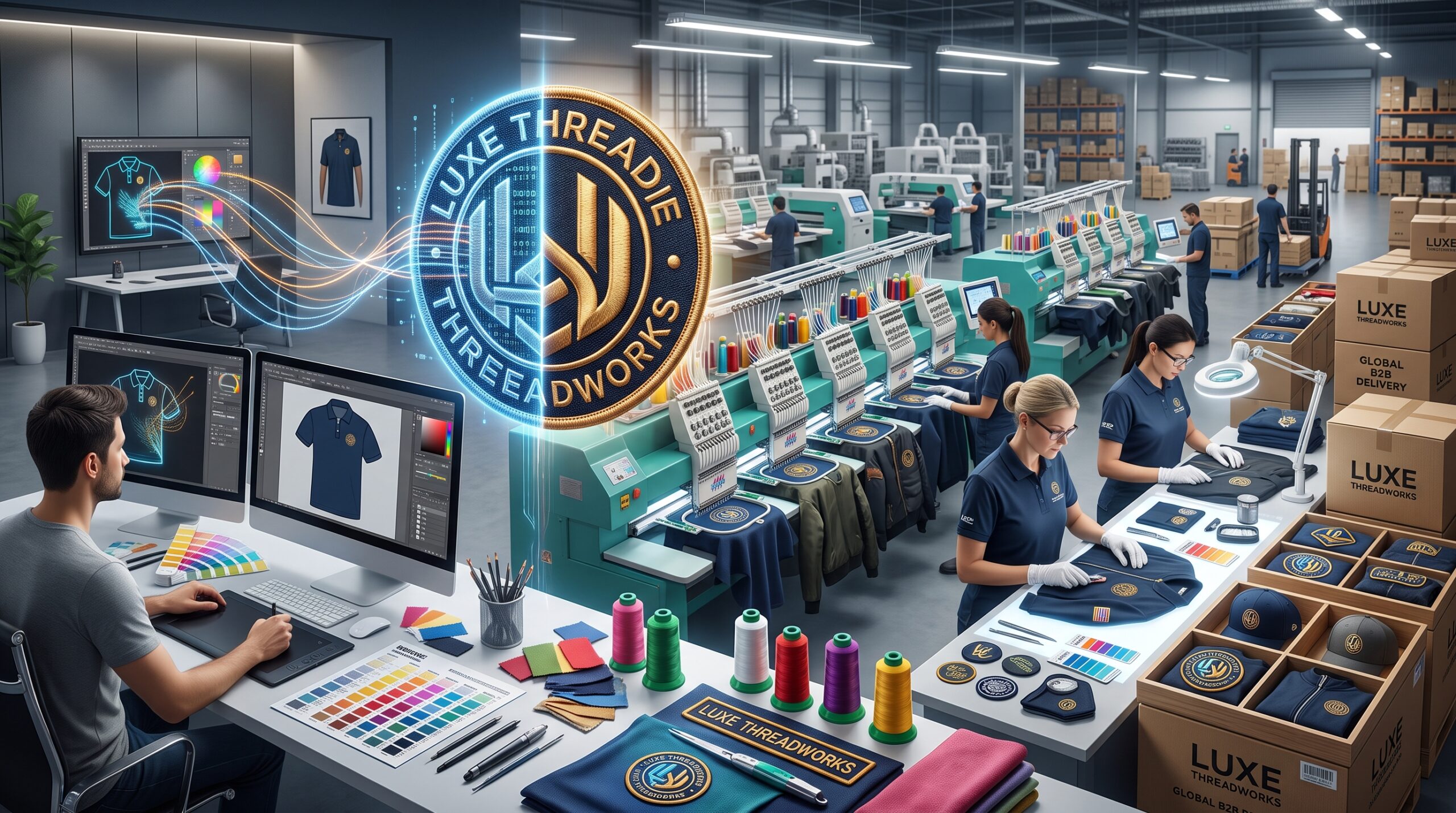
Why the History of Embroidery Matters for Modern B2B Buyers
The history of custom embroidery matters for modern B2B buyers for a clear reason. It explains why embroidered decoration has maintained its perceived value across thousands of years of technological change. It also explains why businesses continue to choose embroidery over cheaper printed alternatives.
Every technology shift in embroidery history has expanded the market for embroidered goods. None of these shifts diminished the perceived quality of the finished product. Embroidery carries a craft heritage that printed decoration does not. Recipients of embroidered branded merchandise consistently rate it as higher quality than comparable printed items.
For businesses building uniform programs, branded merchandise ranges, or custom patch collections, that perceived quality is a commercial asset. It justifies the modest premium embroidery commands over screen printing or heat transfer alternatives.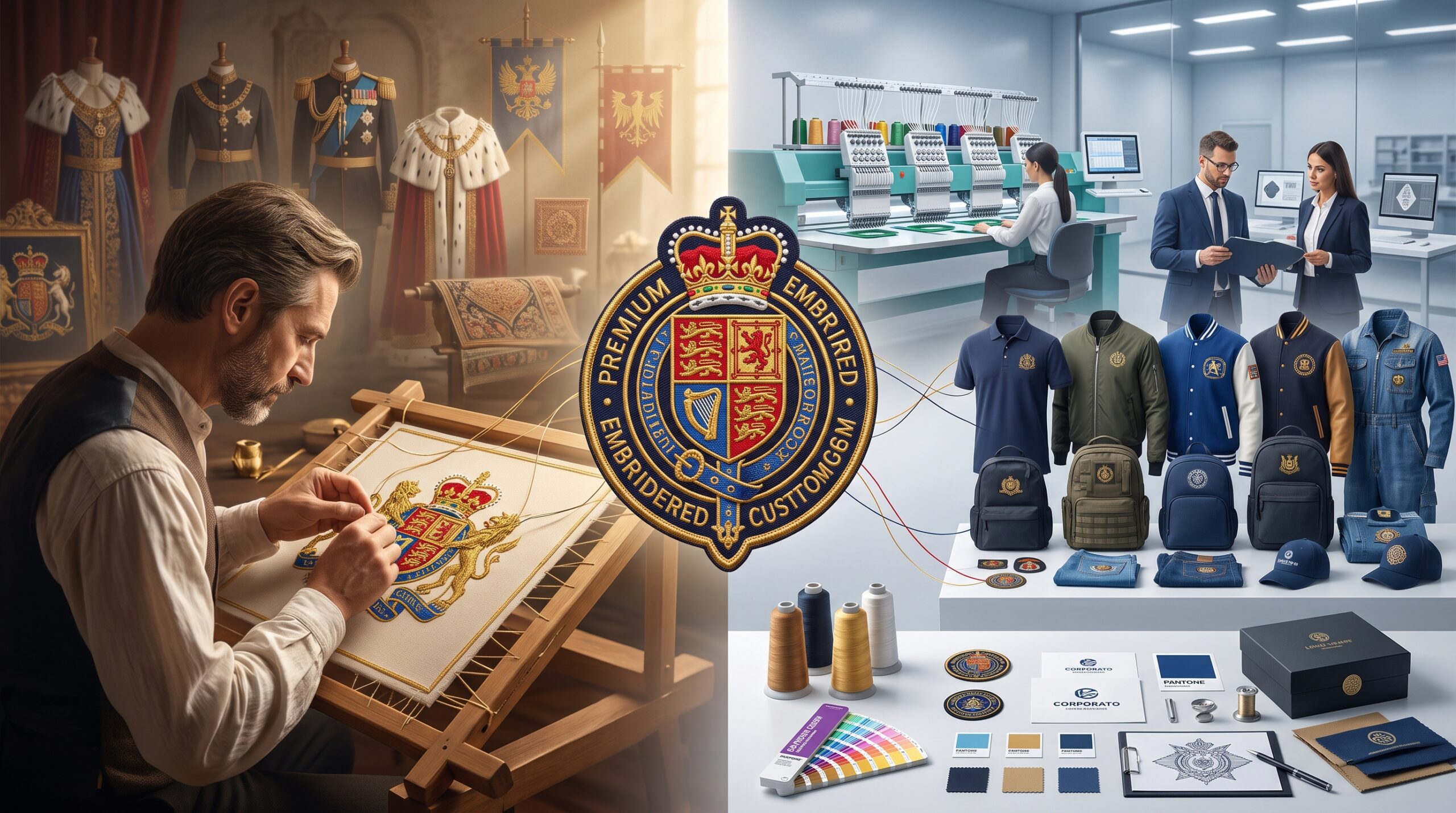
Custom Embroidered Patches Today: Commercial Applications
Modern businesses use custom embroidered patches across many applications. Uniform programs use them for identification and branding. Branded merchandise uses them for retail and promotional distribution. Sports teams and clubs use them on apparel. Military and tactical gear relies on them. Workwear and safety apparel feature them prominently. Fashion labels use them to connect commercial products to embroidery’s craft heritage.
The function embroidered insignia served on medieval military garments remains the same today. It communicates organizational identity, rank, and affiliation through a durable, high-quality decorated element. Custom embroidered patches serve this same purpose on modern uniforms, jackets, and team apparel. The desire to communicate identity through embroidery has remained constant across thousands of years. This is the most direct explanation for why custom embroidered patches remain commercially relevant today.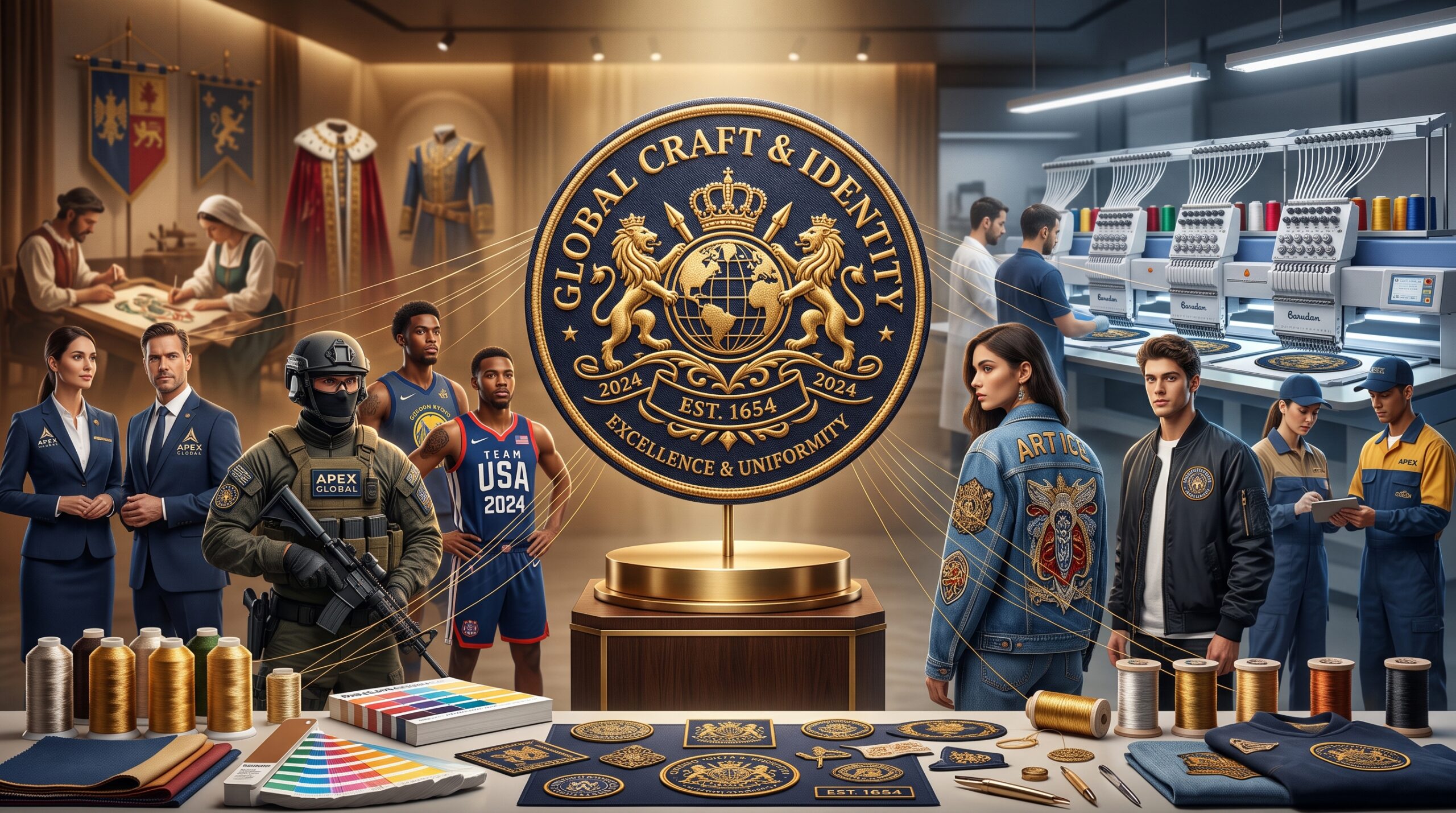
Why Choose CustomPatches4U for Custom Embroidered Patches
CustomPatches4U combines the craft standards that embroidery history has established over centuries with modern digitizing technology. The result is custom embroidered patches that meet the quality expectations of businesses ordering for uniform programs, branded merchandise, or bulk promotional distribution.
Every order goes through a digitizing and proof approval process before production begins. Color accuracy, stitch density, and design reproduction are confirmed before the full batch runs. Consistent quality across bulk orders, competitive lead times, and saved digitization files for repeat orders reflect the production discipline that commercial embroidery businesses have developed since the industrial revolution.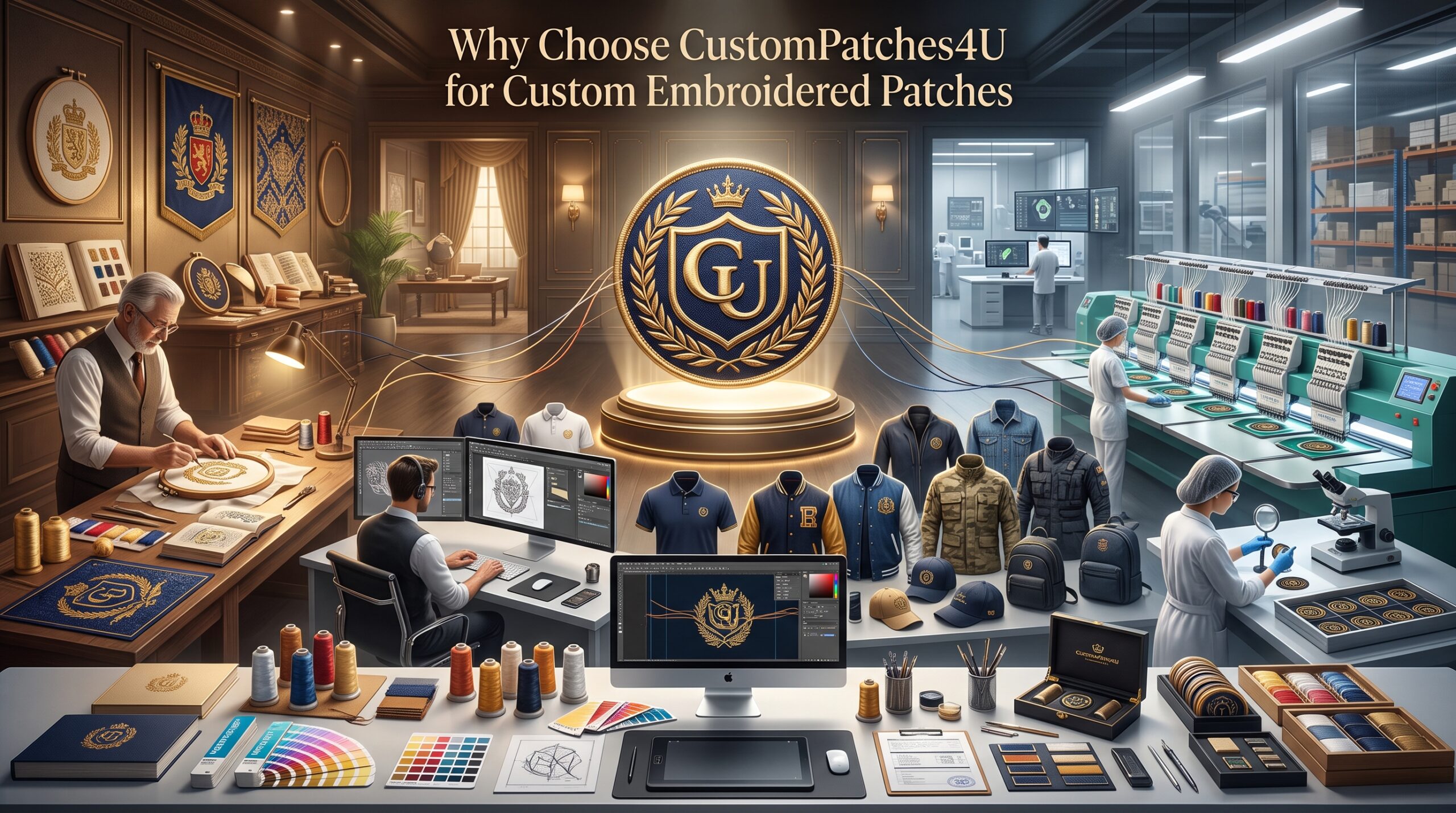
Frequently Asked Questions
What is the history of custom embroidery?
Custom embroidery has a history spanning thousands of years. It began with hand-stitched decoration in ancient China, Egypt, and the Middle East. It developed through medieval guild production. Machine invention in the 19th century transformed it. Modern commercial scale came through computerized digitizing technology developed in the 1980s.
When did custom embroidery begin?
Ornamental embroidery began in ancient civilizations thousands of years ago. Chinese silk embroidery is among the oldest documented traditions. Commercial custom embroidery developed through medieval guild workshops. These workshops produced commissioned ecclesiastical and military embroidery for paying clients.
Who invented embroidery?
No single person invented embroidery. Decorative needlework developed independently in ancient China, Egypt, the Middle East, India, and Japan. Each region produced distinct techniques and traditions. The first embroidery machine was invented by Josue Heilmann in 1828. Isaac Groebli invented the industrial Schiffli embroidery machine in 1863.
How has custom embroidery evolved over time?
Custom embroidery evolved from individual hand production by skilled artisans. It moved through guild-controlled workshop production in medieval Europe. Mechanized industrial production followed in the 19th century. Modern computerized production uses digital digitizing software and multi-head embroidery machines. These deliver consistent results at commercial scale.
When was machine embroidery invented?
Josue Heilmann invented the first hand embroidery machine in 1828 in Mulhouse, France. Isaac Groebli invented the Schiffli embroidery machine in 1863 in Switzerland. This established the industrial production model that dominated commercial embroidery for over a century.
How did computerized embroidery change the industry?
Computerized embroidery and digitizing software were developed in the 1980s. They replaced manual punch-card programming with digital design files. Setup time reduced from days to hours. Small custom orders became commercially viable for the first time. The custom embroidery market opened to a much wider range of buyers.
Why has embroidery remained popular for centuries?
Embroidery has remained commercially relevant because the function it serves has stayed constant. It communicates identity, rank, and affiliation through a durable, high-quality decorated element on clothing and accessories. The technology used to produce it has changed dramatically. The core purpose has not. Recipients consistently rate embroidered decoration as higher quality than printed alternatives.
What is the difference between traditional and modern embroidery?
Traditional hand embroidery uses needle and thread operated by a skilled artisan working stitch by stitch. Modern commercial embroidery uses computerized multi-head machines. These machines are guided by digital stitch files produced by digitizing software. They operate at speeds of up to 1,000 stitches per minute. Results remain consistent across large production batches.
How did embroidery become a commercial business?
Embroidery became a commercial business through medieval guild systems. These systems produced commissioned work for religious institutions, military organizations, and royal courts. It industrialized into large-scale commercial production after the invention of embroidery machines in the 19th century. Demand from military, corporate, and sports markets in the 20th century expanded it further.
Why is embroidery important in fashion and branding?
Embroidery carries a craft heritage that printed decoration does not. Businesses use it in fashion and branding because recipients consistently perceive embroidered goods as higher quality than printed alternatives. The raised texture, color depth, and durability of embroidered logos and patches make them a standard choice for premium uniform programs, branded merchandise, and fashion label applications.