
When a business orders custom patches in bulk for corporate apparel, employee uniforms, or retail merchandise, they often treat the order as a simple print job. However, ordering text-based or detailed visual emblems without understanding the mechanical realities of production frequently results in distorted logos, unreadable text, warped borders, and puckered fabrics. For procurement managers, uniform coordinators, and brand directors, a lack of insight into the patch manufacturing process leads to missed deadlines and wasted capital.
Every type of emblem, whether a traditional embroidered badge, a crisp woven label, a rugged molded PVC emblem, or a vintage leather piece, requires distinct engineering, specific raw materials, and precise physical machinery. This comprehensive technical guide pulls back the curtain on how patches are made from design to delivery. By understanding how custom patches are made, commercial buyers can draft accurate design specifications, select the right materials for their garments, reduce manufacturing defects, and secure the best return on their uniform or promotional budget.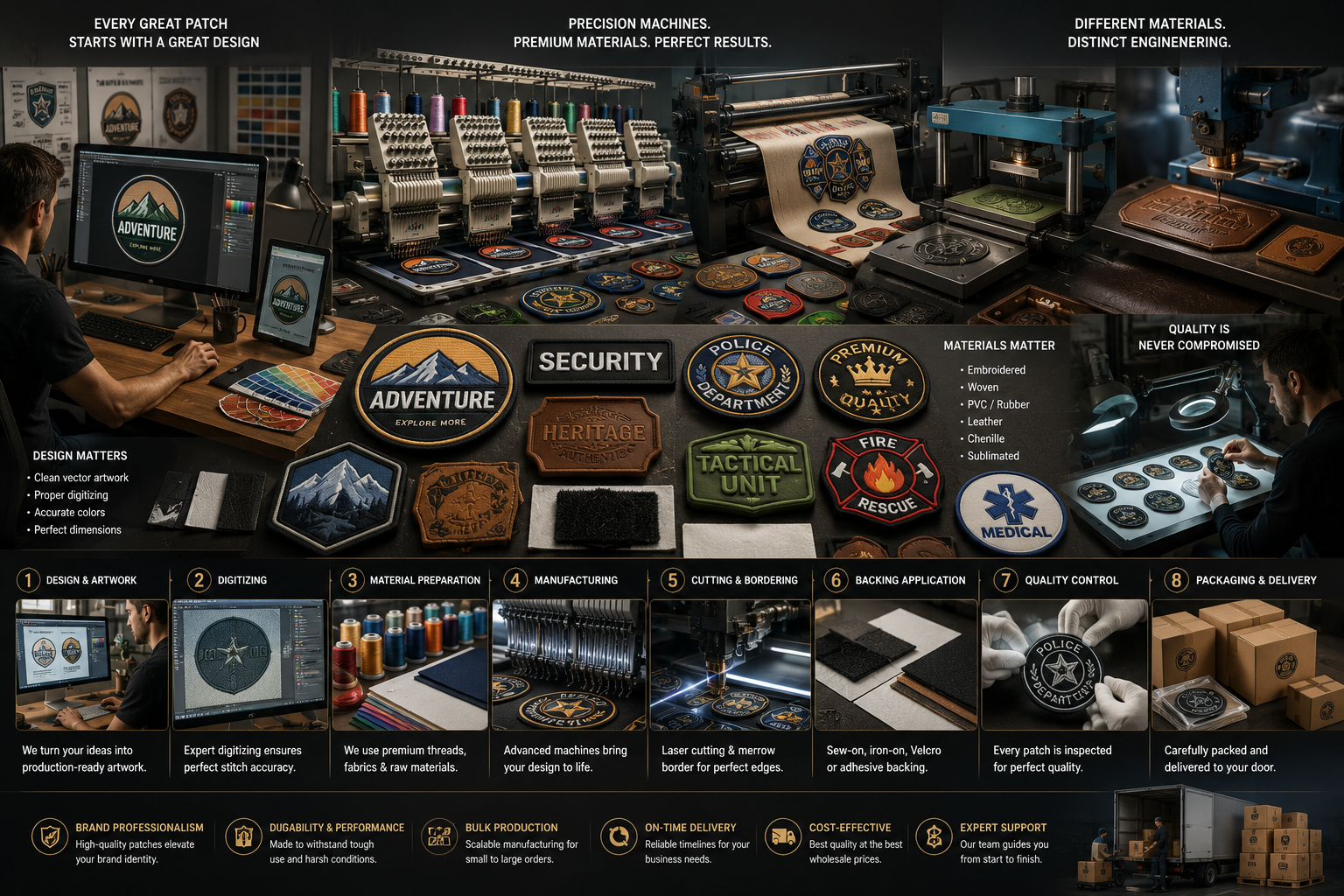
What Is the Patch Manufacturing Process?
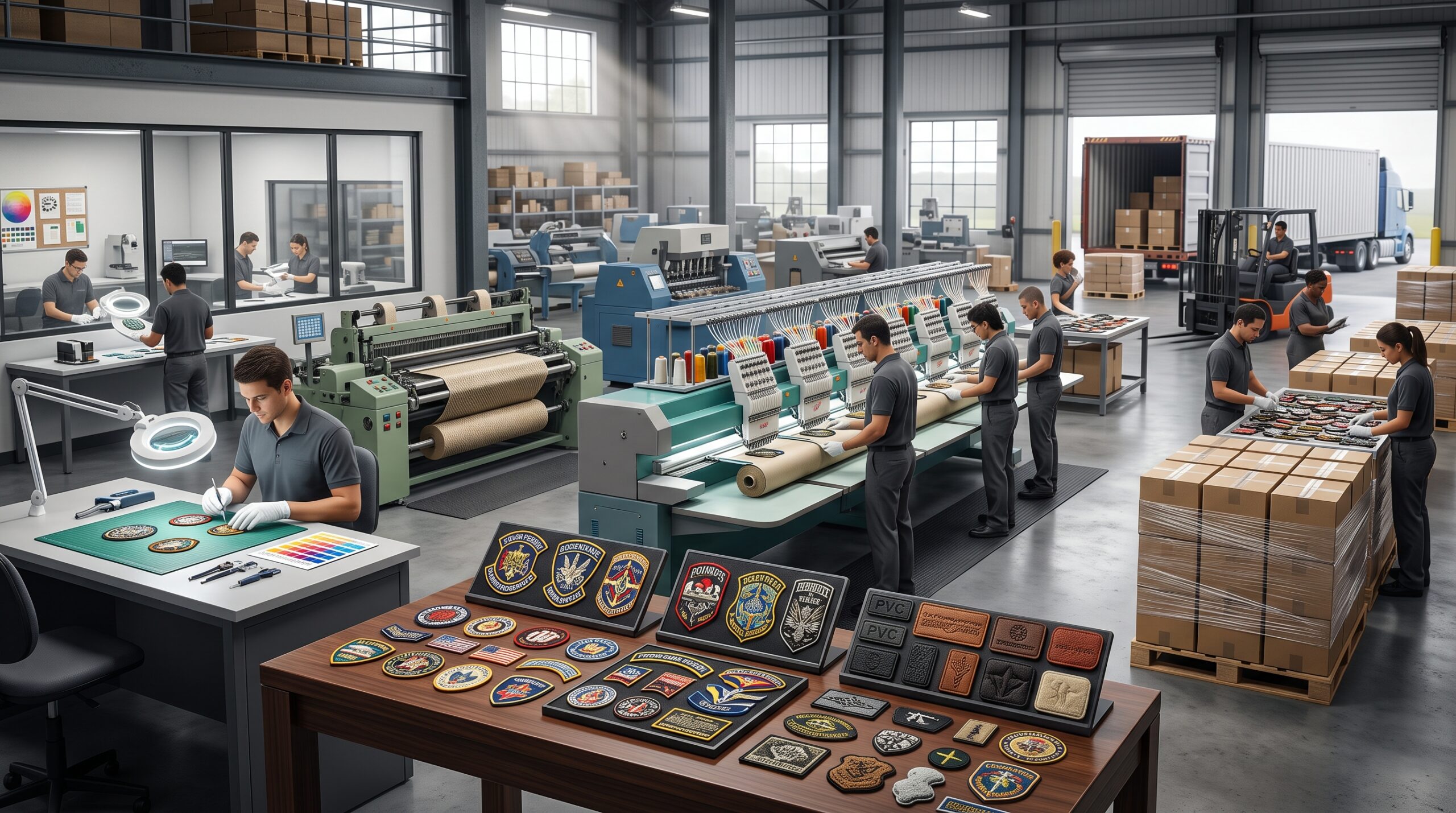
The patch manufacturing process is a specialized textile and material fabrication workflow that transforms a two-dimensional graphic file into a physical, multi-layered fabric or polymer emblem. This industrial process combines advanced computer-aided design (CAD) software, precision high-speed machinery, high-tensile threads or polymers, structural stabilizing backings, and specialized edge-finishing techniques to create durable garment accessories.
Unlike standard direct-to-garment embroidery, the patch creation process builds a completely self-contained emblem. This independent structure allows manufacturers to produce patches in bulk. Buyers can subsequently mount these independent emblems onto various garments, hats, bags, or hard equipment surfaces using diverse attachment mechanisms.
Featured Snippet Optimization
How are custom patches made?
Manufacturers create custom patches through a multi-step industrial workflow. First, a master technician digitizes a graphic file into machine-readable vector paths. Next, automated high-speed machines weave, embroider, or mold base raw materials onto a structural substrate. Finally, production teams laminate backing adhesives, cut borders using mechanical dies or lasers, and manually inspect each finished piece.
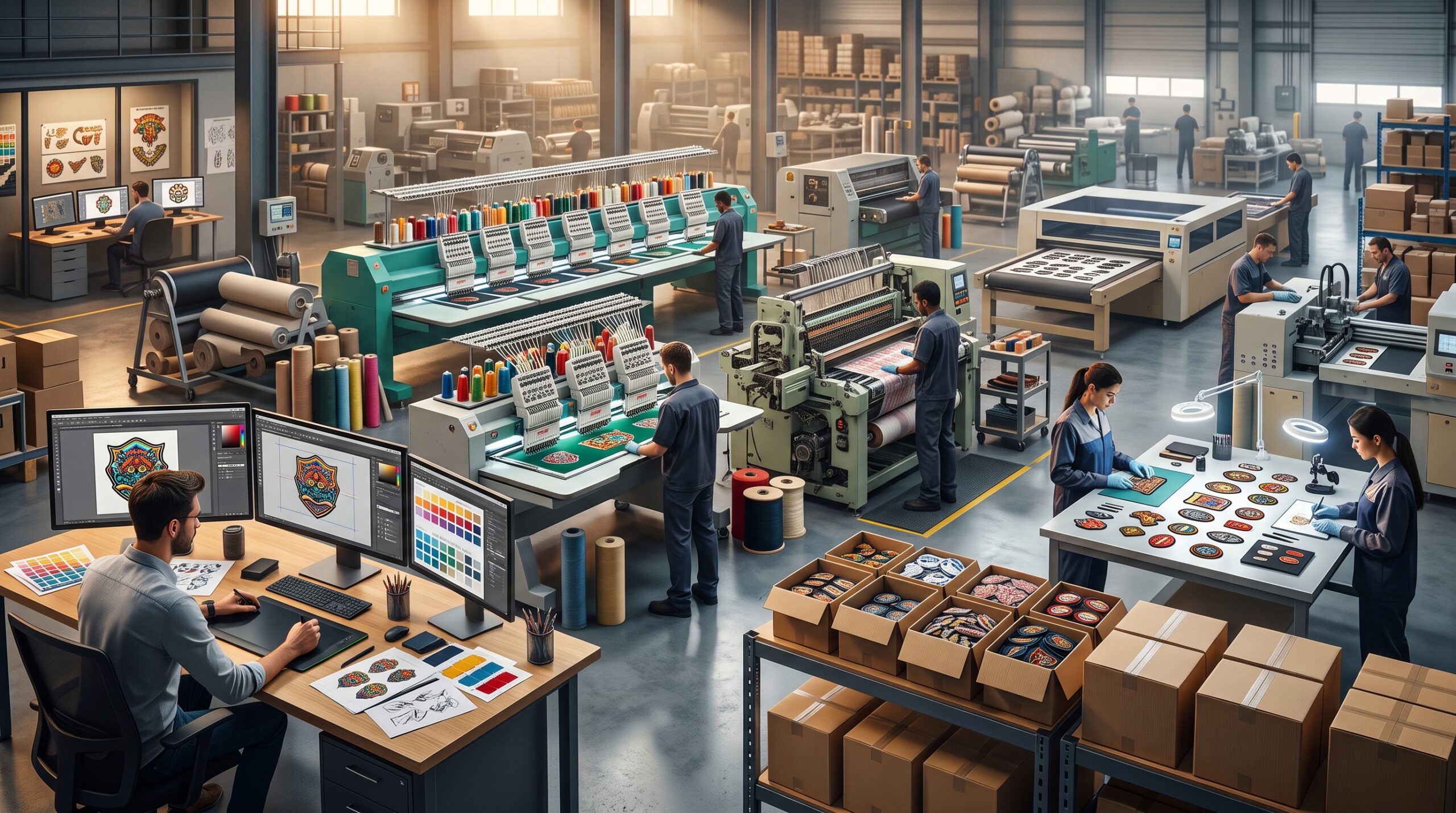
Why Understanding How Patches Are Manufactured Matters for Businesses
For high-volume B2B buyers, understanding how factories manufacture patches is a critical quality control asset. A patch adds a permanent structural layer to a piece of workwear or a retail product, and its construction determines its overall field lifespan.
When assessing the patch manufacturing process, procurement teams gain several advantages:
- Design Optimization: Fine details, gradient colors, and small text render differently depending on whether machines stitch them with thread or mold them in plastic. Knowing production limits prevents illegible branding.
- Fabric Compatibility Management: Heavy embroidered patch manufacturing produces a thick, rigid emblem that can collapse lightweight sports performance jerseys. Knowing how factories build custom embroidered patches allows buyers to pair heavy twills with durable work jackets and select lightweight alternatives for flexible fabrics.
- Total Cost of Ownership (TCO) Efficiency: Understanding how long production teams take to make custom patches helps procurement teams negotiate accurate lead times and competitive bulk pricing tier parameters.
- Supply Chain Resilience: Recognizing the steps in custom embroidered patch production allows managers to spot production bottlenecks, making large-scale uniform rollouts smoother.
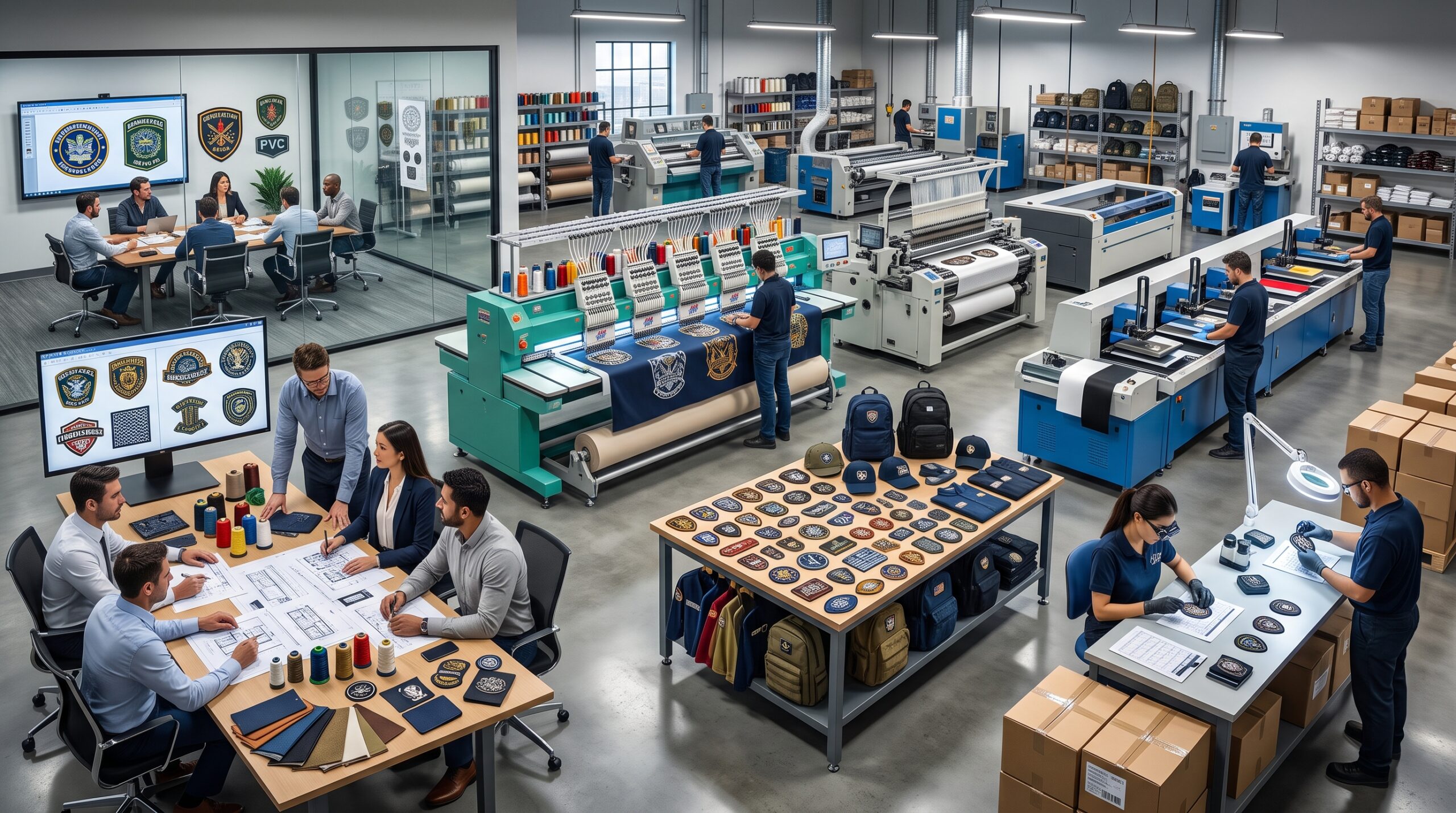
Key Technical Features and Specifications of Custom Patches
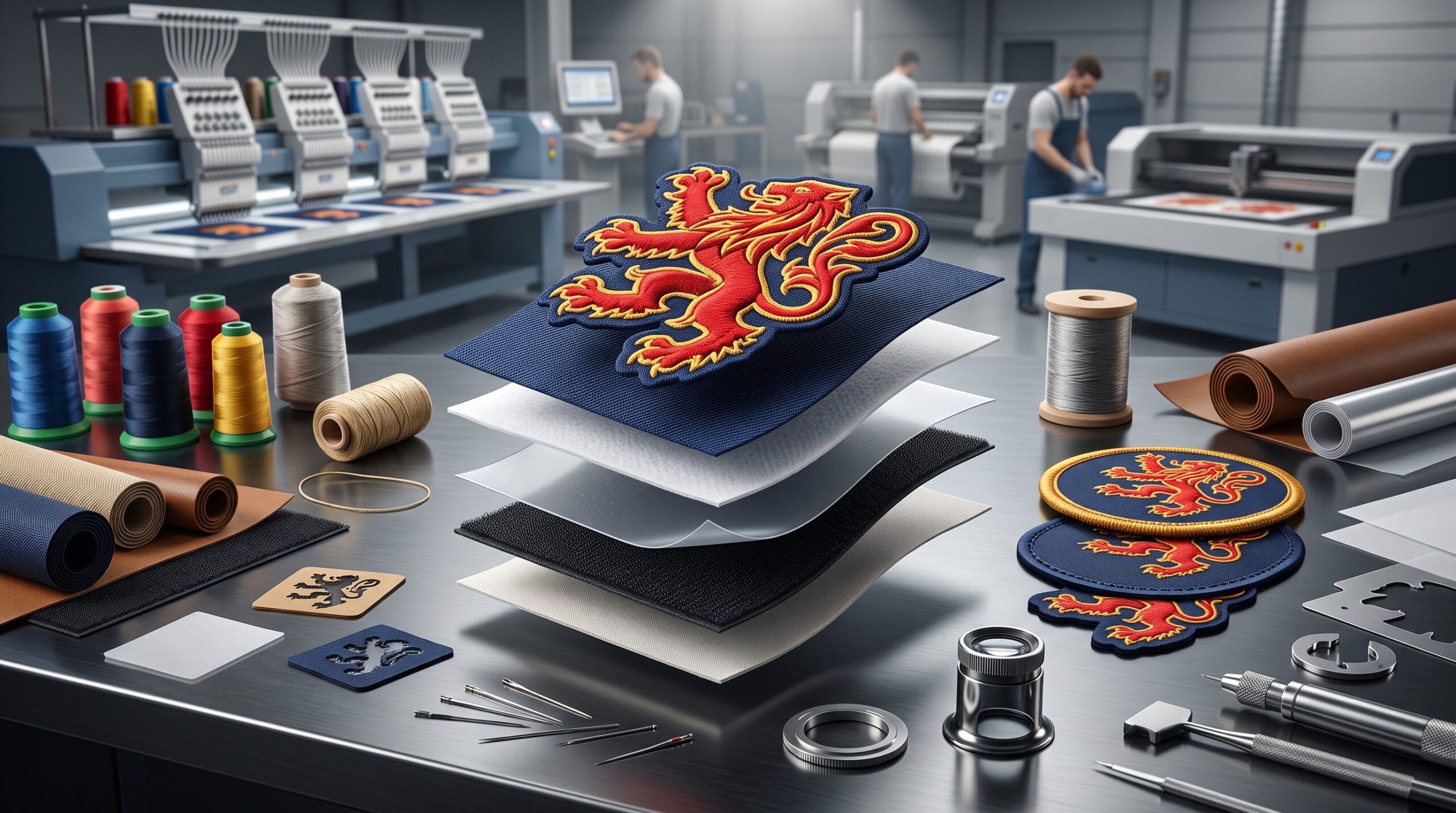
When ordering commercial-grade emblems, specifying the internal structural elements is essential to ensuring proper garment performance. Factories build high-quality custom patches using a rigorous blueprint of industrial components.
- Base Substrate Material: High-grade polyester twill fabric serves as the standard background for embroidered badges, providing dimensional stability and a flat foundation for dense stitching.
- Thread Type and Density: Production lines use industrial-grade, 100% polyester embroidery thread to resist UV fading, bleach, and commercial laundering abrasion. Woven variations use finer denier threads for higher detail resolution.
- Border Type Configurations: Manufacturers finish emblems with either a thick, wrapped merrow border for traditional edge protection or a precise laser cutting line for intricate, custom shapes.
- Stabilizer and Backing Substrates: Factory workers reinforce emblems with internal non-woven non-tear stabilizers to maintain structural shape, followed by secondary layers like heat seal backing, hook and loop backing, or a standard plain sew-on backing layer.
How It Works: The Step-by-Step Patch Production Process Explained
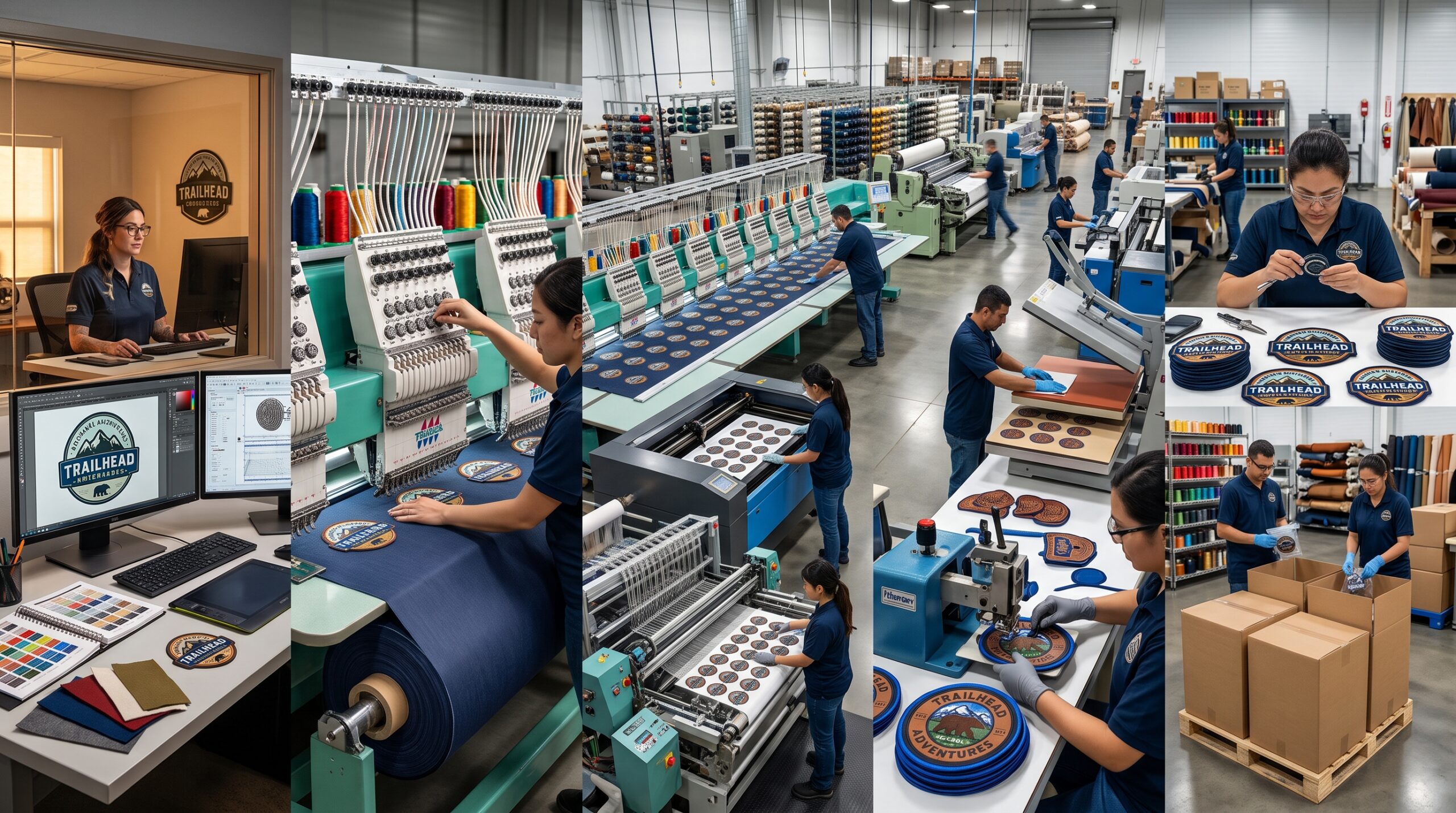
The journey of custom patch manufacturing from a raw digital file to a finished garment accessory involves a series of highly synchronized automated and manual stages. This is the complete process from start to finish.
[ 1. Vector Graphic Input ] -> [ 2. Embroidery Digitizing ] -> [ 3. Machine Setup & Calibration ]
                                                                             |
[ 6. QC & Final Sorting ]   <- [ 5. Bordering & Cutting ]   <- [ 4. Automated Fabrication ]
Step 1: Design Translation and Vector Alignment
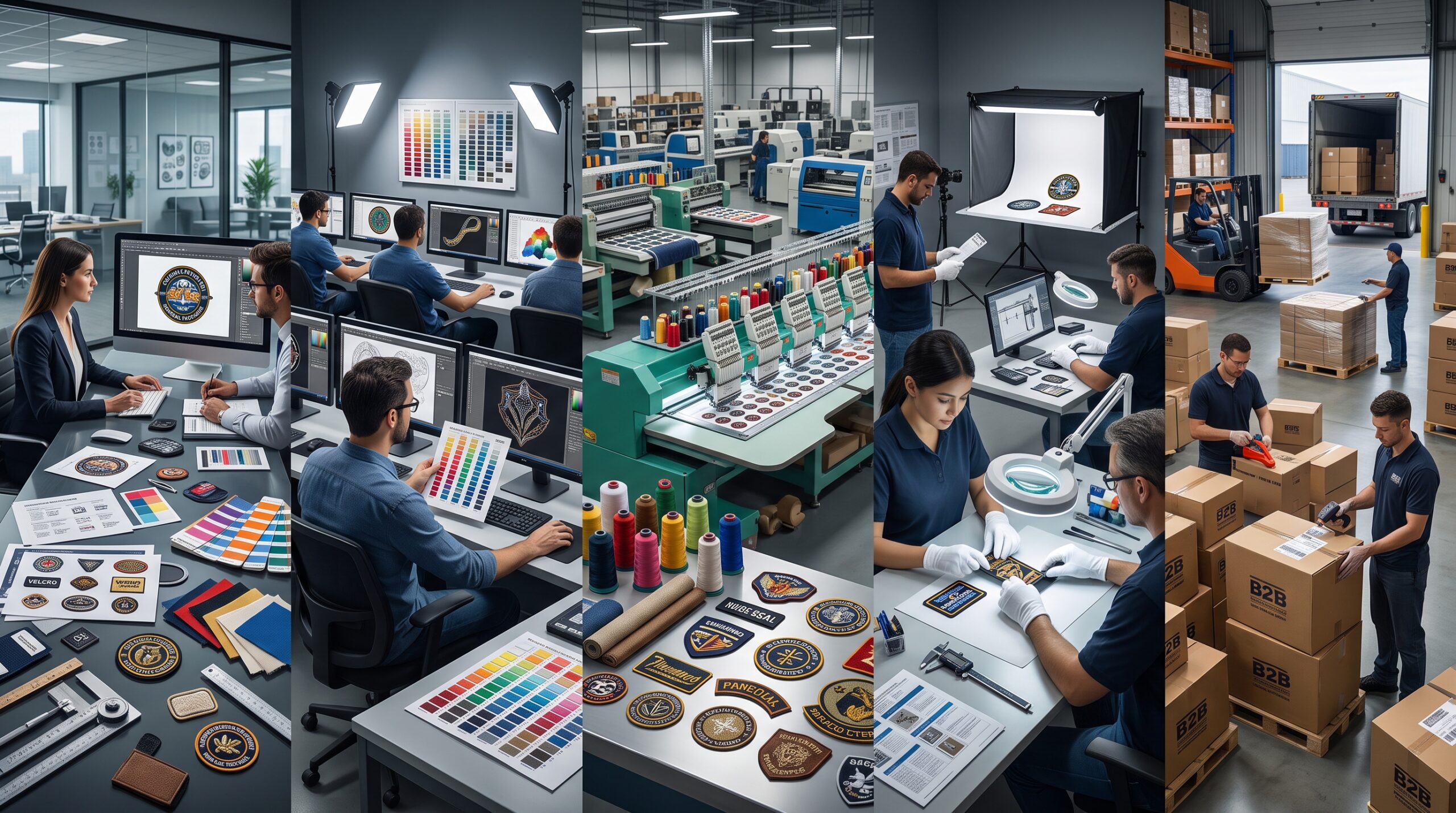
The patch production process begins when the B2B client submits a clean digital image file (such as a PDF, AI, or high-resolution PNG). Production designers inspect the artwork to ensure text elements meet minimum size thresholds. The design team scales the file to its final physical production size, audits line thicknesses, and maps out the thread colors to prepare for tool configuration.
Step 2: Advanced Embroidery Digitizing
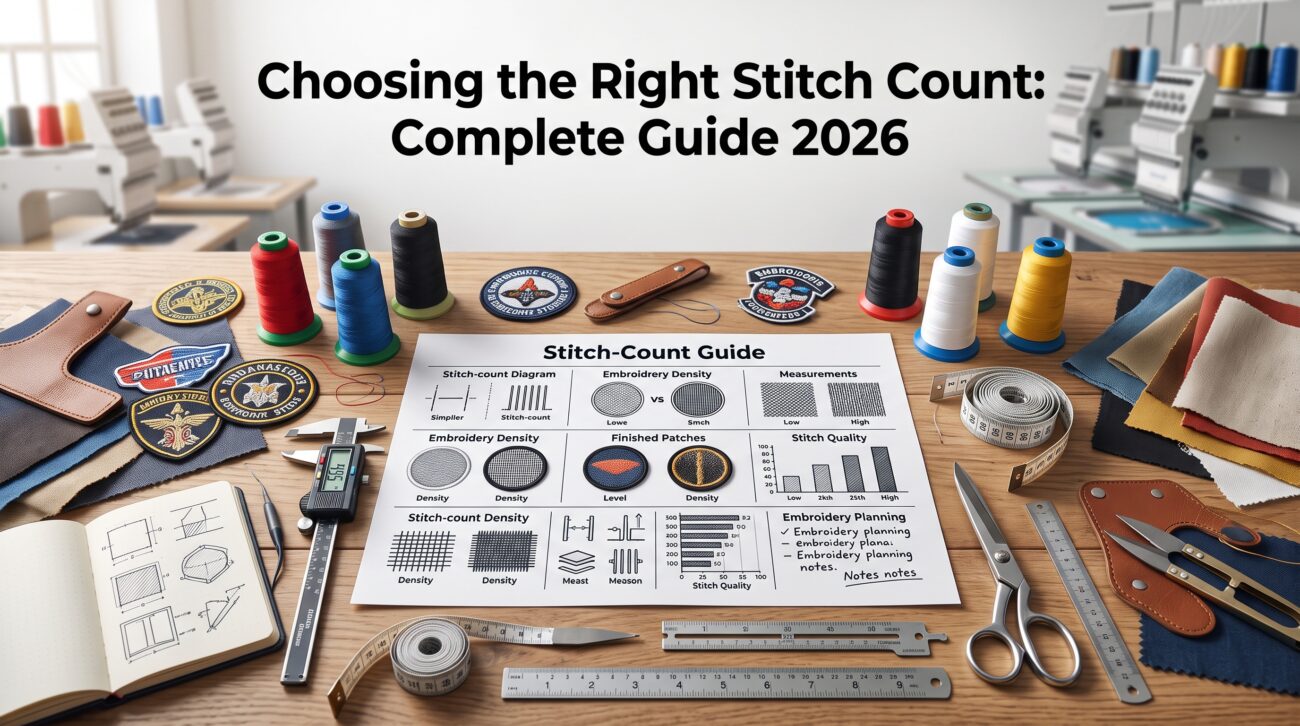
This is the most critical software step in custom embroidered patch production. Standard graphic files cannot run an industrial embroidery machine. A master technician uses specialized software to manually convert the graphic lines into a technical file. This file contains coordinate paths, stitch types (such as satin, fill, or running stitches), stitch directions, density levels, and precise thread color changes.
Proper digitizing ensures the machine does not bunch up threads, skip steps, or warp the background fabric. This shows exactly how manufacturers create professional patches under tight corporate deadlines.
Step 3: Raw Material Setup and Machine Calibration
Once the design team validates the digitized file, technicians configure the physical machinery:
- For Embroidered Patches: Operators lock large rolls of heavy background twill fabric into massive multi-head computerized embroidery machines. Technicians thread up to 15 or more industrial needle heads per station with distinct colors of high-tensile polyester yarn.
- For PVC Patches: Precision CNC milling machines carve a reverse metal mold out of steel or aluminum. Workers mix liquid polyvinyl chloride polymers with liquid color pigments to match exact Pantone corporate guidelines.
Step 4: Automated Fabrication and Stitching Run
The automated manufacturing run initiates. During an embroidered patch making process, the machine heads move simultaneously at speeds exceeding 1,000 stitches per minute. The needle heads layer the background fill, interior details, text characters, and logo imagery. For a woven patch creation process, high-speed automated textile looms interweave background threads and detail threads concurrently, forming a smooth, low-profile fabric surface.
Step 5: Lamination of Structural Patch Backing
Once the core design phase finishes, operators move the massive sheets of completed emblems to the backing lamination department. Depending on the final B2B purchase order specifications:
- An industrial roller press bonds a layer of high-melt heat seal backing film.
- Technicians align and stitch down heavy-duty hook and loop backing panels.
- Workers melt a clear plastic stabilizer layer onto the back of a standard sew-on backing patch to securely lock the underlying bobbin threads in place.
Step 6: Edge Bordering and High-Precision Cutting
Production workers must now isolate individual patches from the large production sheet. They accomplish this using two distinct methods:
- Merrow Bordering: If the patch has a standard shape (such as a circle, rectangle, or shield), a die press cuts it out. A specialized overlock sewing machine then wraps a thick protective yarn edge around the border, creating a classic, raised boundary.
- Laser Cutting / Die Cutting: If the emblem features a complex, custom silhouette with sharp angles or internal cutouts, an industrial laser cutter tracks the digital vector outline. The laser cleanly slices the shape and seals the edge threads to prevent any future fraying.
Step 7: Manual Quality Inspection, Trimming, and Packaging
The final phase requires hands-on human craftsmanship. Quality inspection teams examine every single emblem under high-illumination lighting. Technicians check for correct thread tension, clip any loose jump threads, verify exact color accuracy, and reject any items with uneven borders or fabric puckering. The facility then sorts, counts, vacuum-packs, and ships the validated custom embroidered badges to the fulfillment network.
Ready for bulk production? At custompatches4u, we provide fully digitized pre-production samples to guarantee your corporate logo is executed flawlessly.Request a quote today for your bulk patch order.
Deep Dive: How Different Material Variations Are Produced
While the standard workflow applies broadly across the textile industry, different material selections require completely separate manufacturing technology workflows. Here is a breakdown of how non-embroidered options differ.
How Woven Patches Are Manufactured
Factories build woven patches using automated industrial looms rather than embroidery machines. Instead of stitching down decorative thread onto a pre-existing background canvas, woven patch manufacturing constructs the entire patch background and design together from scratch by interweaving hundreds of ultra-fine threads. Because the threads are significantly thinner than standard embroidery yarn, woven patches achieve incredible clarity, handling intricate text, complex geometric lines, and small-scale details that embroidery machines cannot physically execute.
How PVC Patches Are Manufactured
Production lines build PVC patches through a specialized liquid injection process. Technicians load a custom-milled metal mold into an automated liquid dispensing system. The machine injects different colored liquid PVC polymers into distinct recessed cavities inside the mold, layer by layer. The workers then bake the mold inside a high-temperature curing oven, vulcanizing the liquid plastic into a rugged, flexible, rubberized emblem. PVC patches resist water, scratches, mud, and UV degradation, making them perfect for tactical gear.
How Chenille Patches Are Manufactured
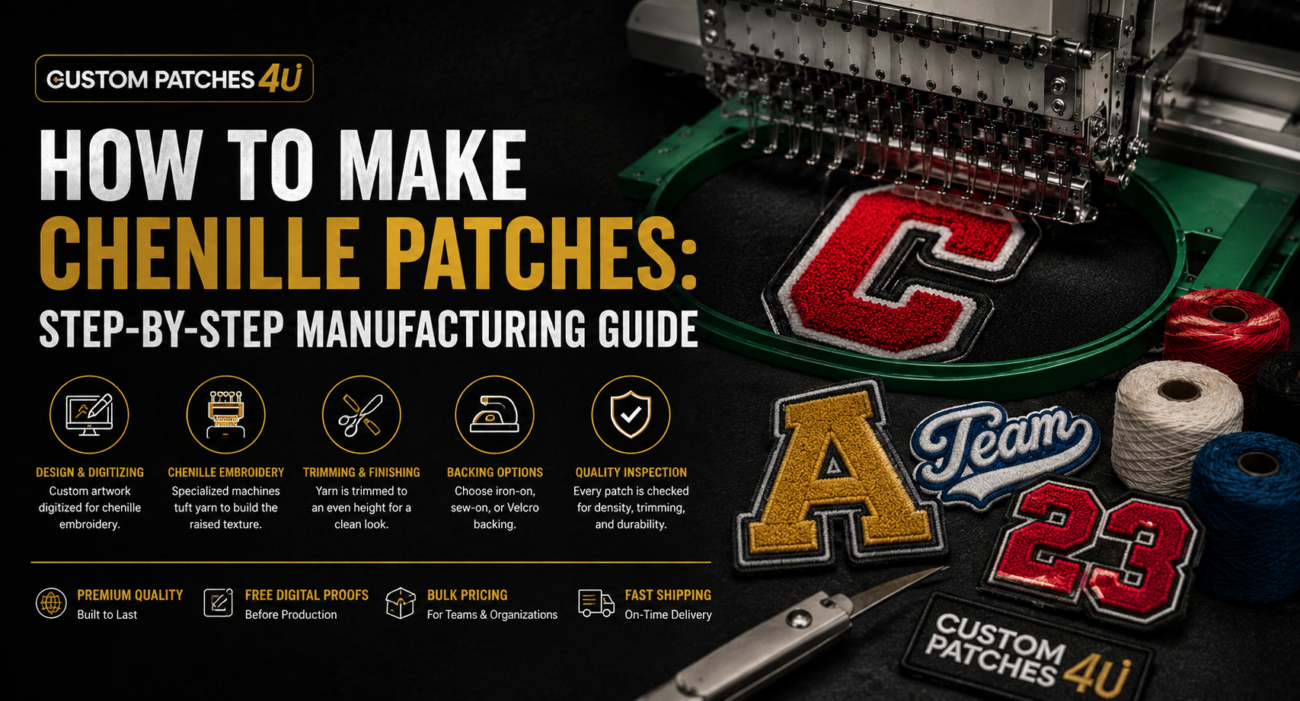
Chenille patches require a unique loop-stitch technique that creates a thick, fuzzy, carpet-like pile texture. Specialized machines use thick wool or acrylic yarn to drop a series of continuous interlocking chain loops onto a heavy felt backing substrate. Fashion brands prefer this patch fabrication process for high school varsity letterman jackets, award sweaters, and retro luxury fashion apparel due to its dimensional thickness and classic aesthetic.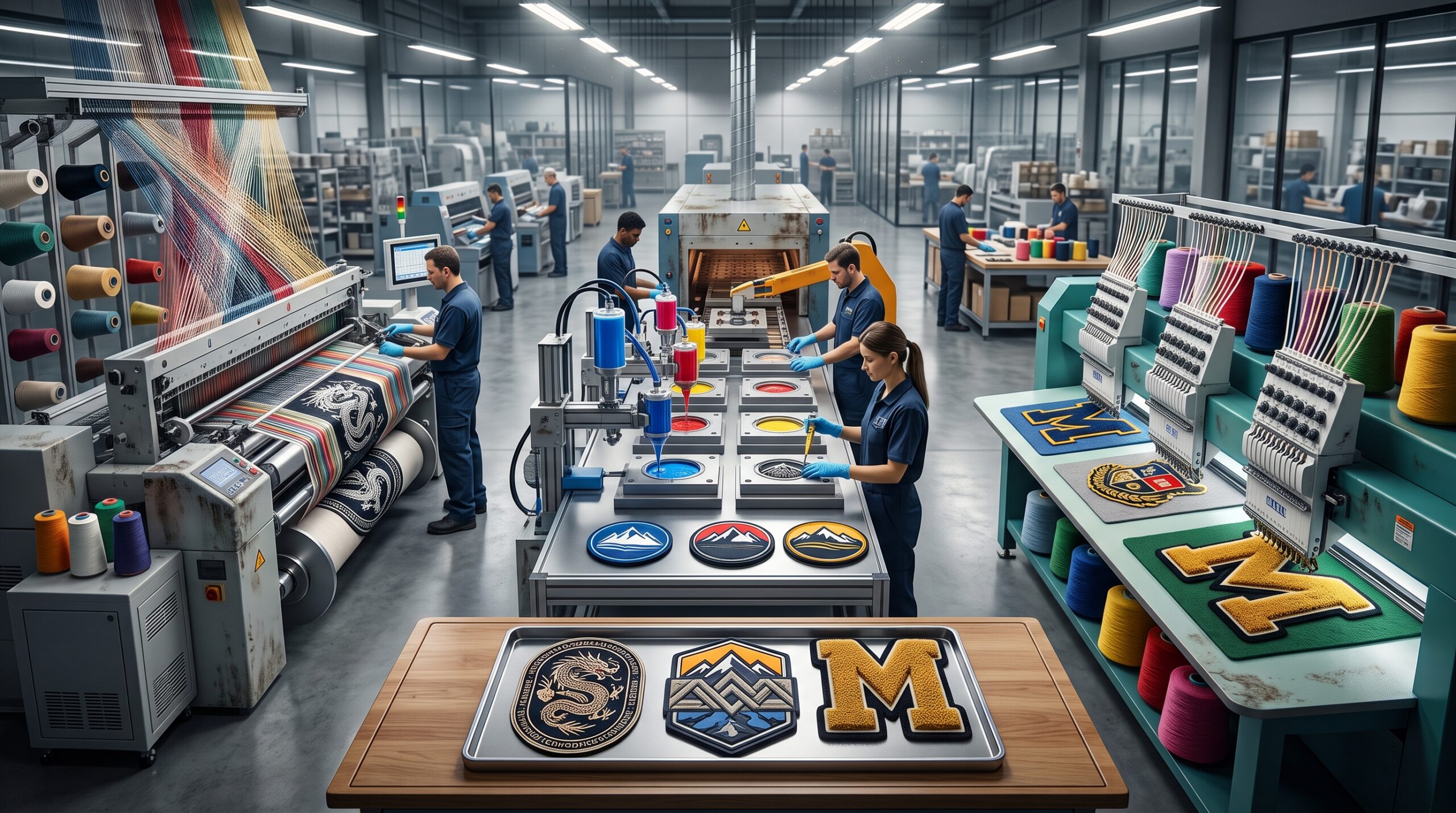
Strategic Benefits of Custom Patch Manufacturing for B2B Buyers
Purchasing custom patches provides multiple distinct operational and financial advantages over direct-to-garment screen printing or direct embroidery programs.
- Zero Inventory Friction: Instead of ordering 500 pre-printed small shirts, 500 medium shirts, and 500 large shirts which locks up substantial working capital businesses can simply buy 1,500 universal patches. The inventory remains compact, and teams can mount patches to garments on an as-needed basis.
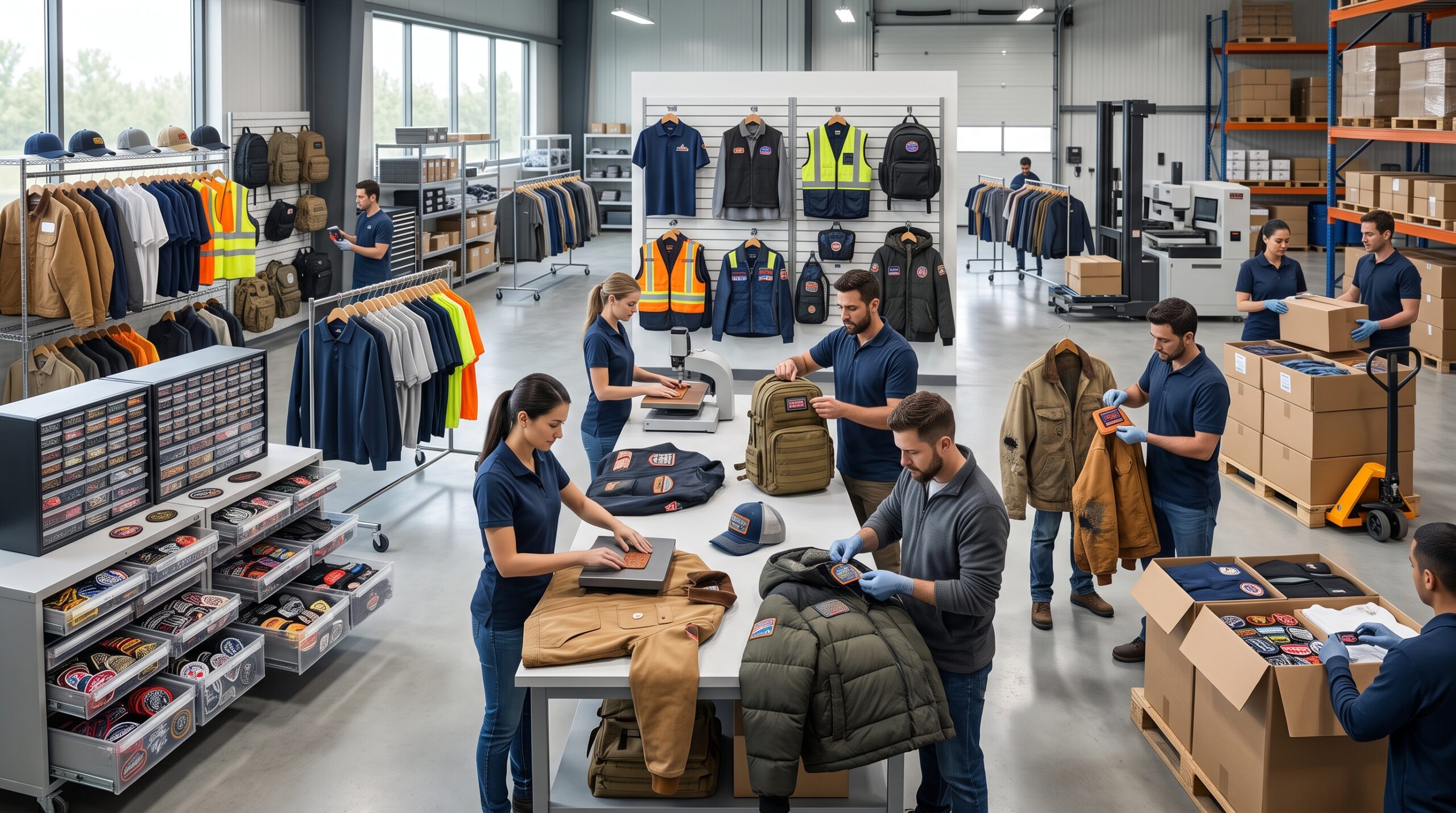
- Unmatched Design Flexibility: Since factories produce patches independently of the final garment, you can apply them to complex surfaces that do not fit on standard direct embroidery machines, such as heavy-duty winter coats, gear bags, backpack straps, mesh caps, and safety vests.
- Substantial Waste Mitigation: If a worker damages an expensive high-visibility industrial winter parka, you do not lose the branding investment. If you utilize a removable patch system like hook and loop, you can simply unpeel the patch and transfer it to a fresh replacement jacket shell instantly.
Core Industry Applications: How Different Sectors Use Patches
Every major corporate and government sector utilizes distinct patch manufacturing specifications depending on their day-to-day physical operating conditions.
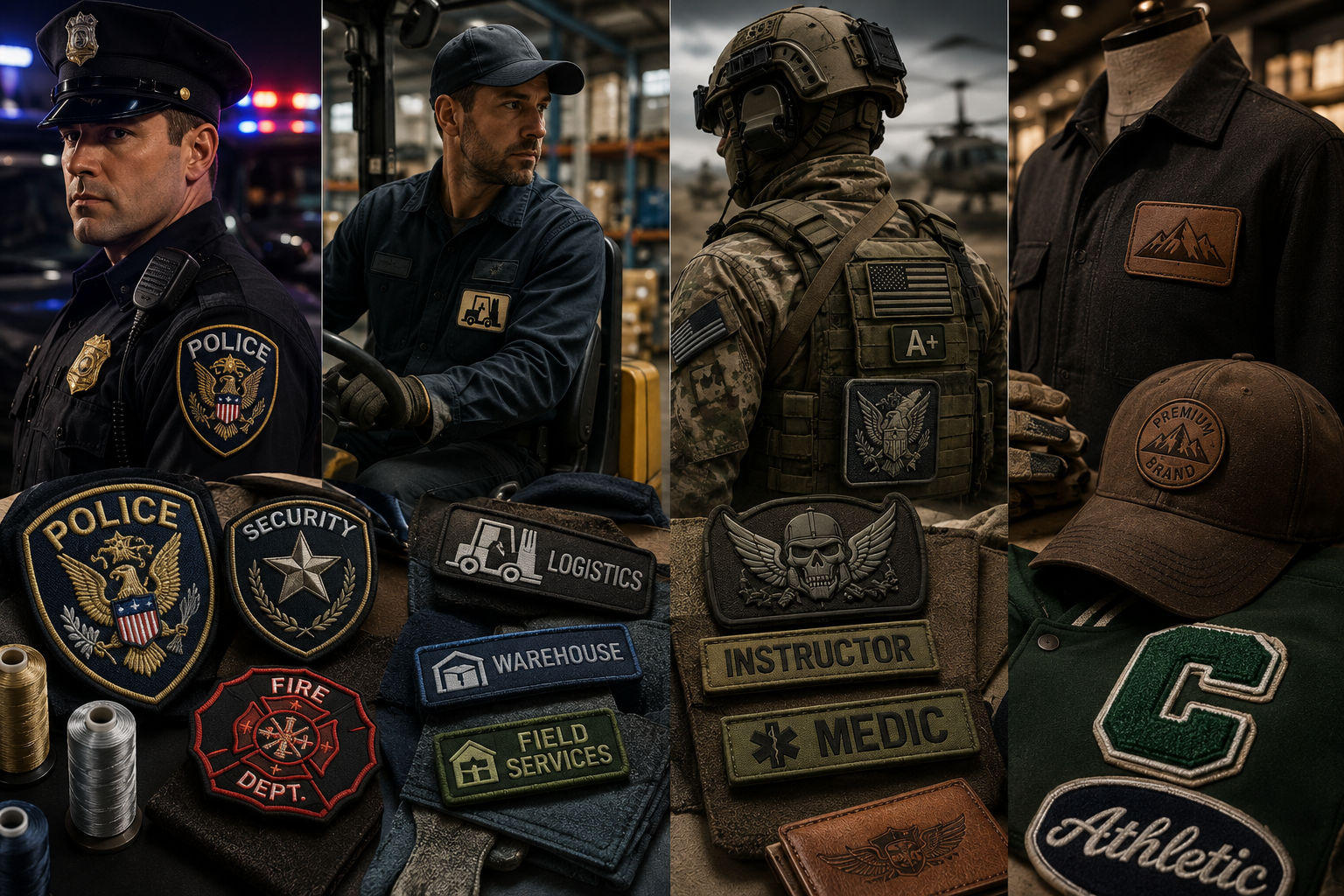
Law Enforcement, Police, and Security Services
- Preferred Emblems: High-density embroidered badges and custom embroidered patches.
- Operational Demands: Emblems require traditional, authoritative aesthetics with metallic gold or silver threads. The components must withstand daily foot patrol exposure, friction from seat belts, and regular washing machine cycles.
Industrial Logistics, Warehousing, and Field Services
- Preferred Emblems: Woven patches or heavy twill sew-on patches.
- Operational Demands: Workwear patches must survive intensive grease, abrasive oil contact, friction from equipment, and aggressive, high-alkaline industrial cleaning chemicals.
Military, Tactical Response, and Emergency Services
- Preferred Emblems: Molded PVC patches and woven name tapes.
- Operational Demands: Tactical patches must operate under extreme environmental stressors. They require non-reflective, matte finishes, fire-retardant properties, zero water absorption, and a rugged hook and loop backing configuration to facilitate rapid role updates on load-bearing body armor.
Corporate Brands and Promotional Retail Merchandise
- Preferred Emblems: Premium debossed leather patches and fuzzy chenille emblems.
- Operational Demands: Marketing teams focus primarily on premium brand positioning, high-end sensory textures, unique fashion design trends, and lifestyle product differentiation.
Technical Comparison of Commercial Patch Types
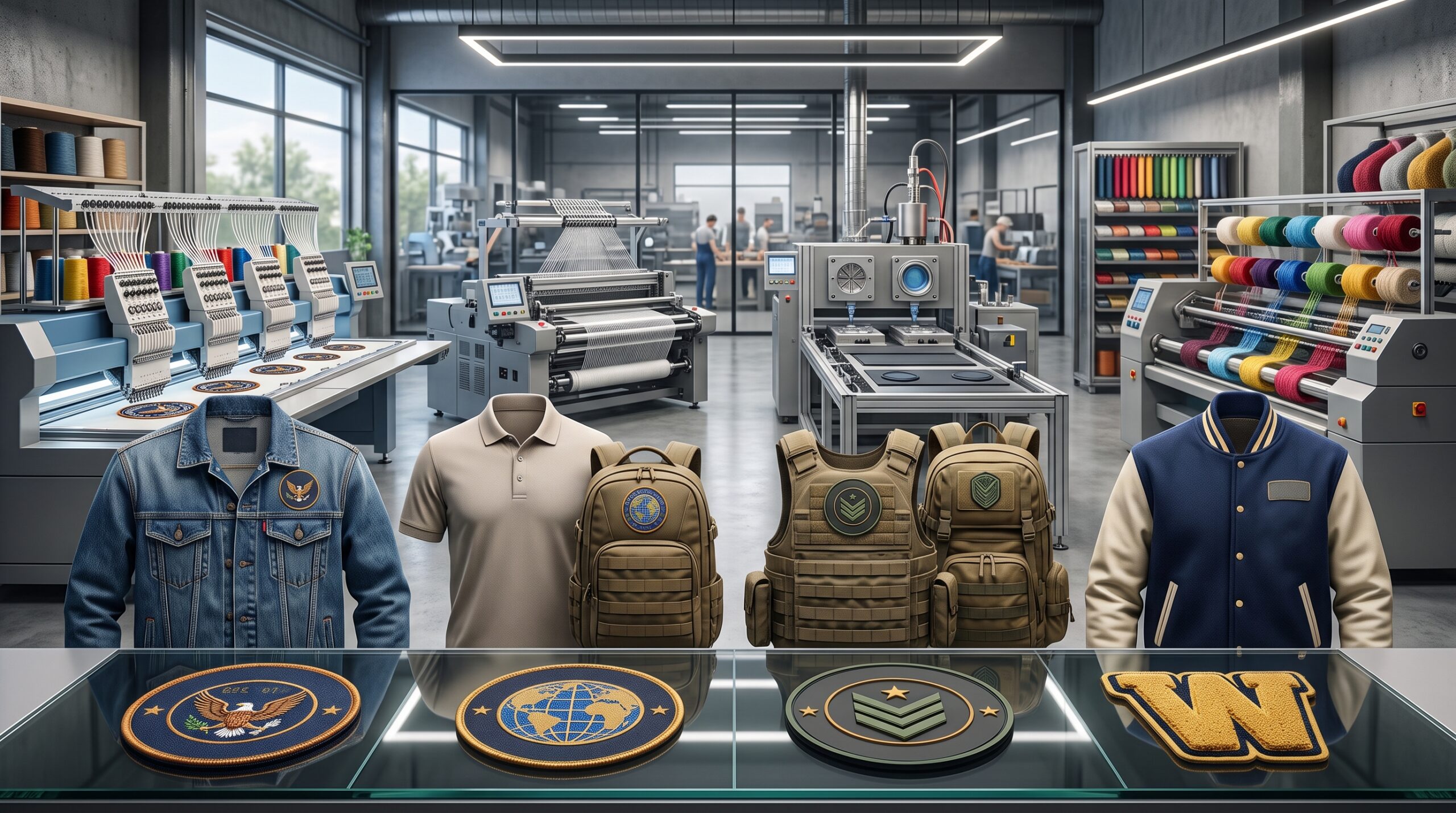
| Patch Type | Core Manufacturing Technology | Maximum Detail Level | Weather & Water Resistance | Primary Fabric Fit |
| Embroidered | Computerized Multi-Needle Stitching | Moderate (Requires larger text) | Good (Fades under continuous UV) | Heavy Twill, Denim, Outerwear Jackets |
| Woven | Industrial High-Speed Loom Weaving | Exceptional (Micro-text legible) | Great (Resists snagging) | Performance Polo Shirts, Headwear, Bags |
| PVC | CNC Liquid Polymer Micro-Injection | High (Crisp sharp borders) | Absolute (100% Waterproof) | Tactical Vests, Rain Gear, Heavy Shells |
| Chenille | Automated Interlocking Loop Stitching | Low (Best for block letters) | Poor (Absorbs moisture) | Felt, Wool Varsity Sweaters, Fleece |
Step-by-Step B2B Custom Patch Ordering Process
At custompatches4u, we have streamlined our procurement process into an efficient framework designed to maximize accuracy and minimize turnaround times for commercial buyers.
Step 1: Submit Vector Graphics and Specifications
Your procurement team uploads your design artwork file to our secure server, specifying the exact physical dimensions, preferred backing option, and required volume.
Step 2: Digital Artwork Proof and Technical Consultation
Our expert digitizing team converts your design and generates a high-fidelity digital proof. We identify any potential production bottlenecks, such as text characters that are too narrow for thread, and recommend alternative sewing paths if necessary.
Step 3: Physical Pre-Production Sample Approval
For high-volume commercial contracts, our factory produces an actual physical sample patch on our automated production lines. We send you a high-resolution photo or physical sample for approval. This step guarantees that thread sheen, color matching, and edge borders meet your standards before you allocate full capital.
Step 4: Full Bulk Manufacturing and Global Shipping
Upon receiving your final sign-off, the order moves to full automated mass production. Every emblem undergoes a rigorous quality inspection before our team sorts, packs, and dispatches the final boxes straight to your central corporate warehouse or decentralized fulfillment centers.
Looking for a dependable patch manufacturing partner? At custompatches4u, we specialize in managing high-volume corporate uniform and promotional patch accounts with absolute production consistency.Get custom pricing for your order today.
Key Quality Benchmarks to Audit in a Patch Supplier
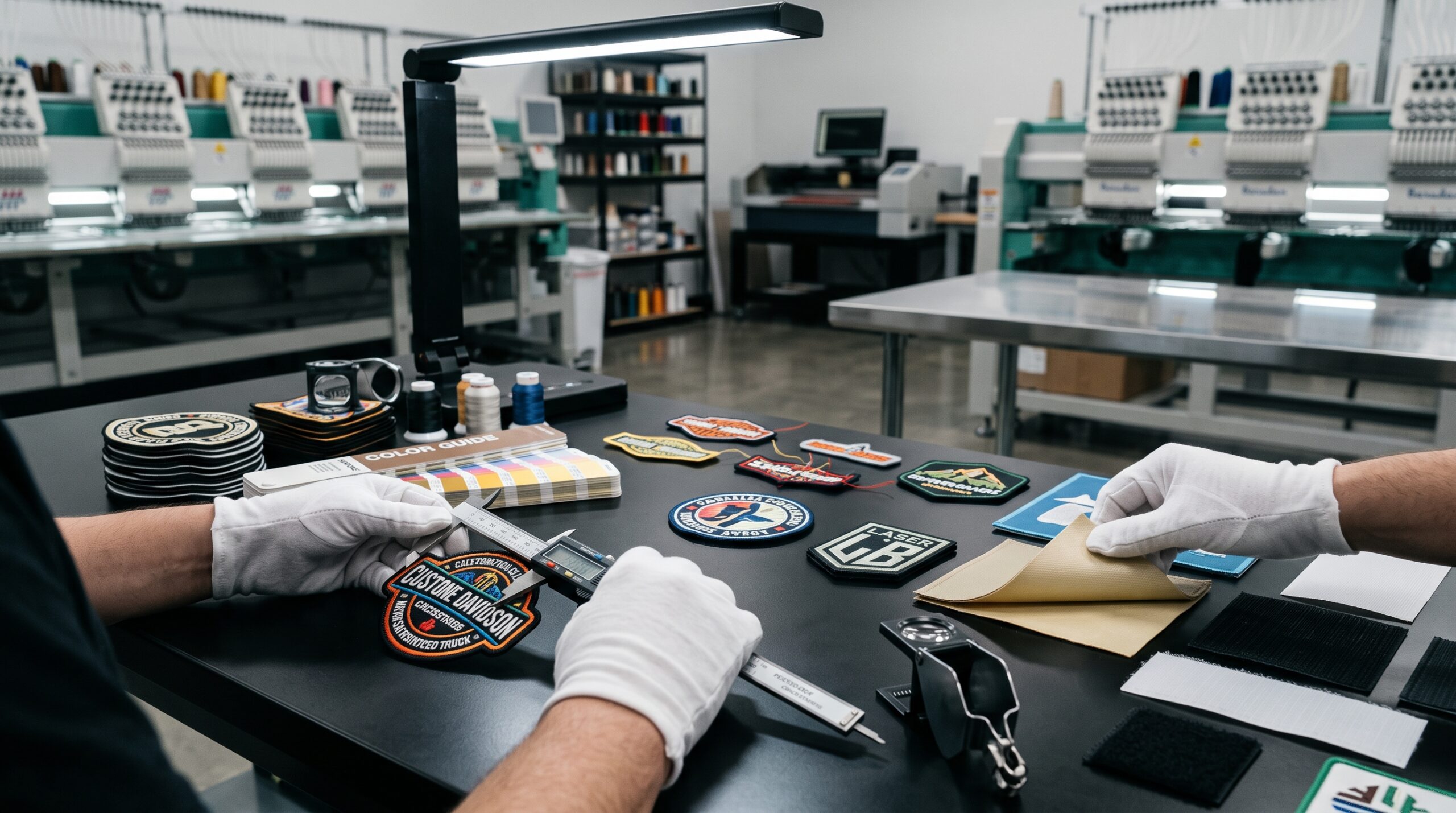
When vetting a contract manufacturer for long-term supply, procurement teams should look past the lowest price and audit these critical construction quality markers:
- Thread Density Consistency: Low-tier manufacturers use wide stitch spacing to save on thread costs, exposing the underlying backing twill. High-quality patches feature dense, tightly packed stitches with no visible gaps.
- Border Structural Balance: A premium merrow border should show completely uniform thickness, remain free of raw thread tails, and firmly lock the outer fabric edges to prevent fraying.
- Adhesive Backing Thickness: For heat seal backings, verify that the glue layer forms a thick, even film. Thin or patchy adhesive application leads to early peeling at the corners after a few wash cycles.
- Thread Registration Precision: Ensure technicians calibrate the automated machines correctly so that colors line up perfectly without overlapping design boundaries or creating misaligned text characters.
FAQ Section (Optimized for Voice & AI Overview Search Systems)
What is the patch manufacturing process?
The patch manufacturing process is a specialized textile fabrication sequence. Technicians digitize a digital graphic file into vector stitch coordinates, run the design on automated multi-needle embroidery or weaving looms onto a twill substrate, laminate the piece with structural backing, and cleanly cut individual pieces using mechanical dies or high-energy lasers.
What materials do factories use to make patches?
The primary materials utilized in patch production include high-tensile polyester threads, heavy woven polyester or cotton twill background canvas fabrics, non-woven backing stabilizers, polyurethane heat seal films, nylon hook and loop fasteners, and flexible liquid polyvinyl chloride (PVC) polymers.
How long does it take to make custom patches?
Standard industrial production timelines typically range between 7 to 14 business days. The complete timeframe depends entirely on design complexity, total patch volume, sample validation protocols, and the specific backing selection ordered.
What fabric do manufacturers use for embroidered patches?
The standard industrial base fabric used for embroidered patches is high-density polyester twill. Production teams select this fabric because it resists wrinkling, shrinkage, and puckering under dense needle puncture counts, providing a flat and stable background for corporate logos.
How do factories create patch borders?
Production lines engineer patch borders using two primary industry methods: a merrow border, which uses a specialized overlock sewing machine to wrap a thick protective layer of thread around a die-cut shape, or a laser-cut border, which uses a laser beam to slice intricate, custom shapes while melting and sealing the edge threads to prevent fraying.
What backing do suppliers add during patch production?
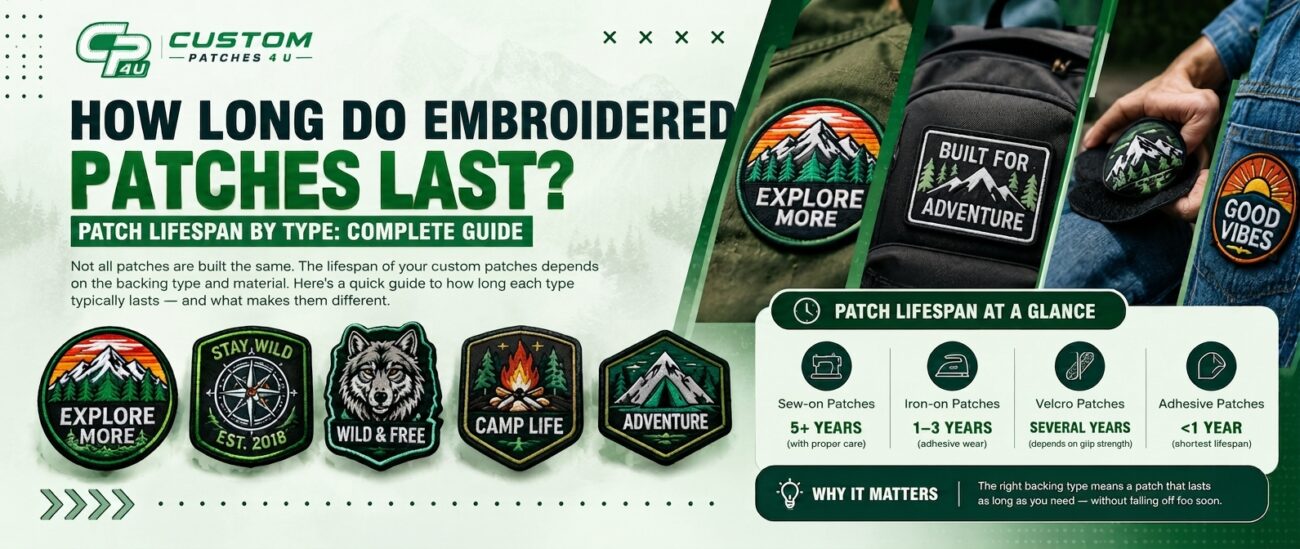
Depending on your final apparel installation strategy, manufacturers apply a variety of functional backings during production. These include non-adhesive sew-on stabilizers, heat-activated iron-on film, modular hook and loop panels, or temporary pressure-sensitive peel-and-stick adhesives.
Secure Your High-Volume Patch Order with custompatches4u
Selecting a reliable manufacturing partner who understands the technical nuances of custom patch manufacturing ensures your brand identity remains consistent across all your organizational apparel. Whether your enterprise requires thousands of high-visibility woven emblems for logistics staff, rugged PVC tactical badges for field personnel, or classic embroidered uniform patches for retail employees, custompatches4u delivers industrial-grade precision and scalable bulk production capacity.
Eliminate production errors, avoid missed deadlines, and optimize your garment branding pipeline with a partner focused on material quality and structural durability.