
Embroidered patch lifespan depends heavily on backing type and material quality. Sew-on patches last the longest, iron-on offers a shorter but convenient option, Velcro suits frequent swaps, and adhesive works best for temporary use only. Matching backing type to your specific need ensures the best value and durability.
Introduction
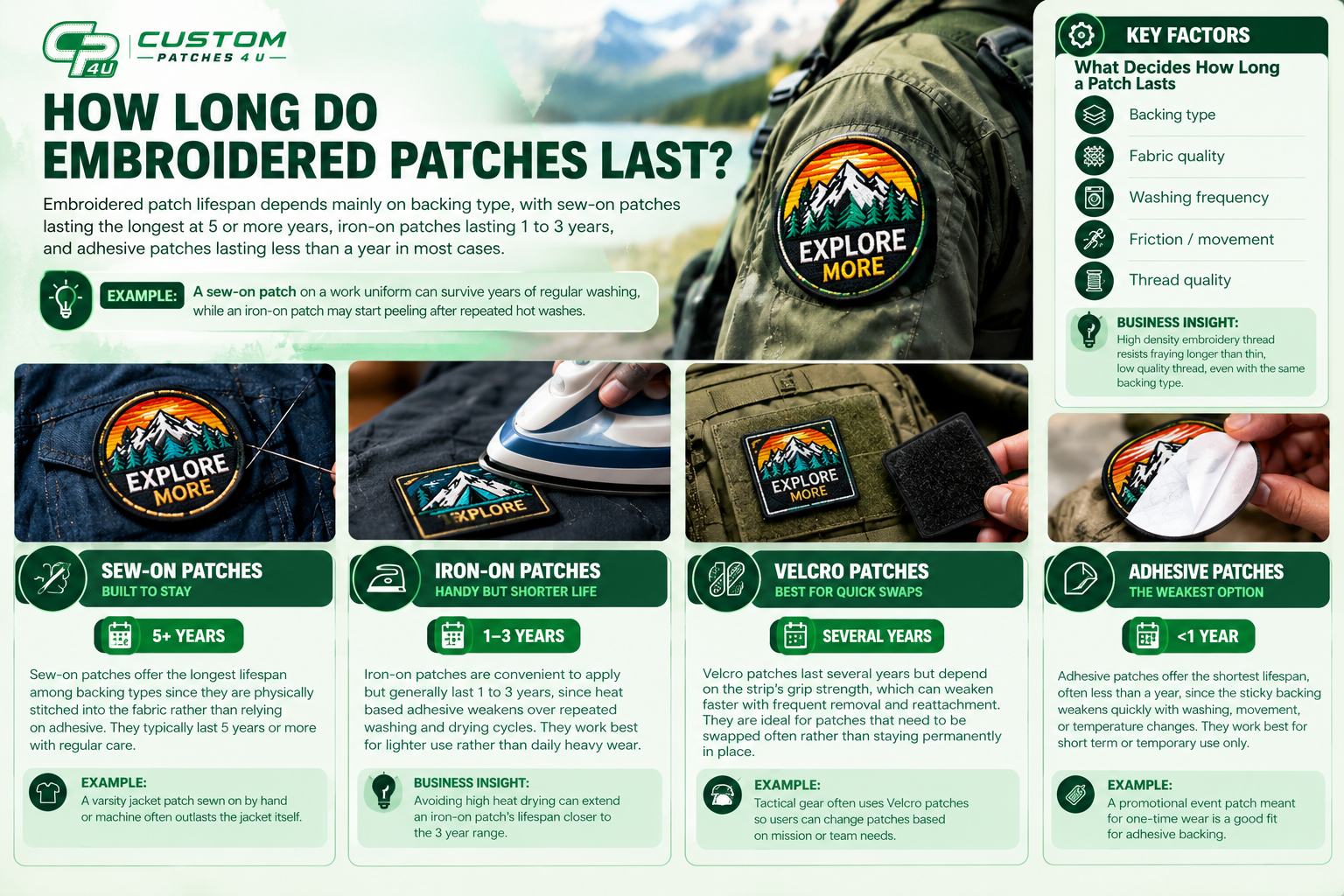
Embroidered patches are a popular way to personalize jackets, uniforms, and bags, but how long they last depends heavily on backing type and material. Many buyers assume all patches perform the same, which is not the case.
This guide breaks down patch lifespan by type in simple terms, so you can choose the right option for your needs.
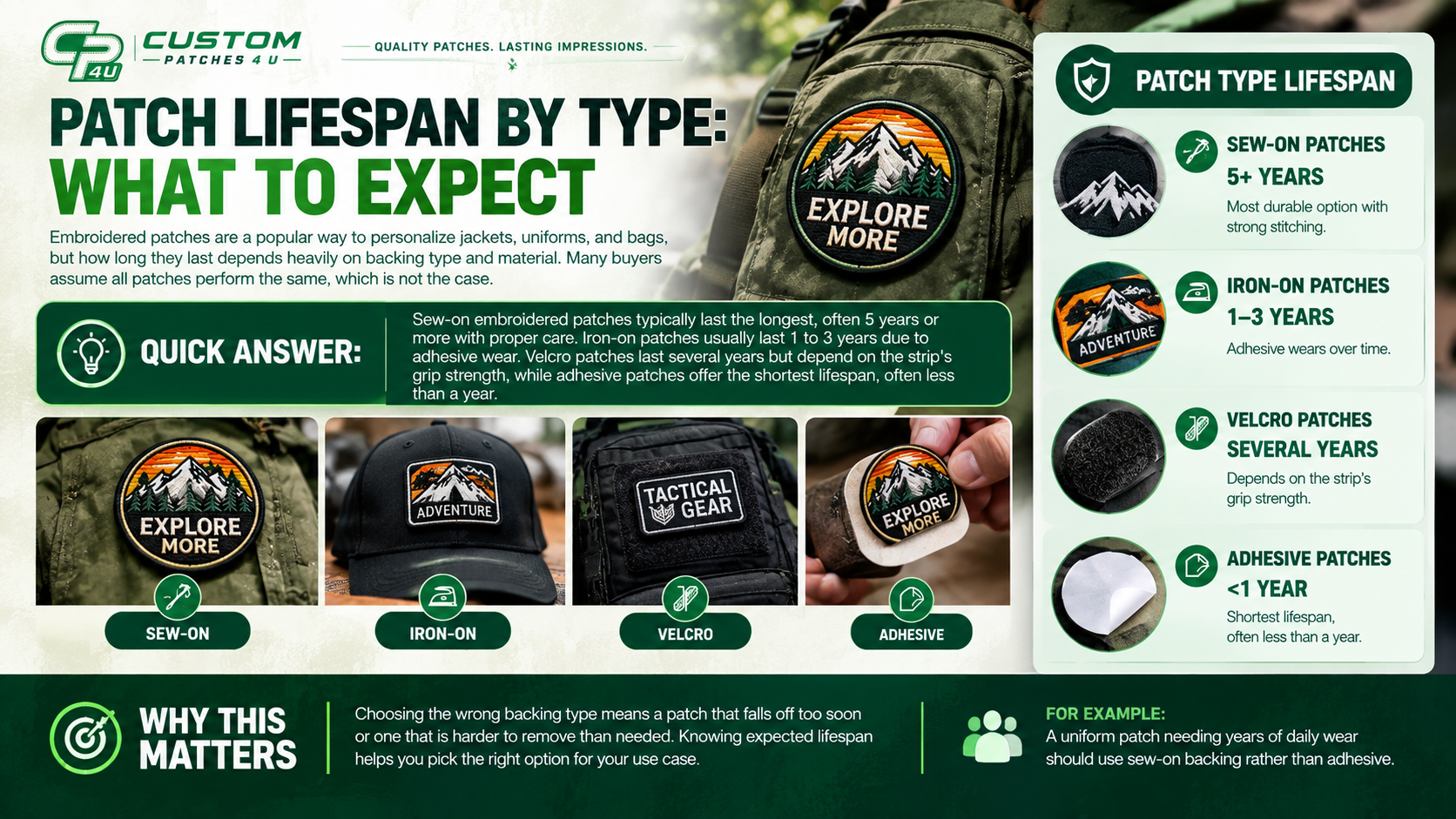
Quick Answer: Sew-on embroidered patches typically last the longest, often 5 years or more with proper care. Iron-on patches usually last 1 to 3 years due to adhesive wear. Velcro patches last several years but depend on the strip’s grip strength, while adhesive patches offer the shortest lifespan, often less than a year.
Why This Matters
Choosing the wrong backing type means a patch that falls off too soon or one that is harder to remove than needed. Knowing expected lifespan helps you pick the right option for your use case.
For example, a uniform patch needing years of daily wear should use sew-on backing rather than adhesive.
How Long Do Embroidered Patches Last?
Embroidered patch lifespan depends mainly on backing type, with sew-on patches lasting the longest at 5 or more years, iron-on patches lasting 1 to 3 years, and adhesive patches lasting less than a year in most cases.
Example: A sew-on patch on a work uniform can survive years of regular washing, while an iron-on patch may start peeling after repeated hot washes.
What Decides How Long a Patch Lasts
Patch lifespan depends on backing type, fabric quality, washing frequency, and how much friction or movement the patch experiences during daily use. Thread quality also affects how well the design holds up over time.
Business Insight: High density embroidery thread resists fraying longer than thin, low quality thread, even with the same backing type.
Sew-On Patches: Built to Stay
Sew-on patches offer the longest lifespan among backing types since they are physically stitched into the fabric rather than relying on adhesive. They typically last 5 years or more with regular care.
Example: A varsity jacket patch sewn on by hand or machine often outlasts the jacket itself.
Iron-On Patches: Handy but Shorter Life
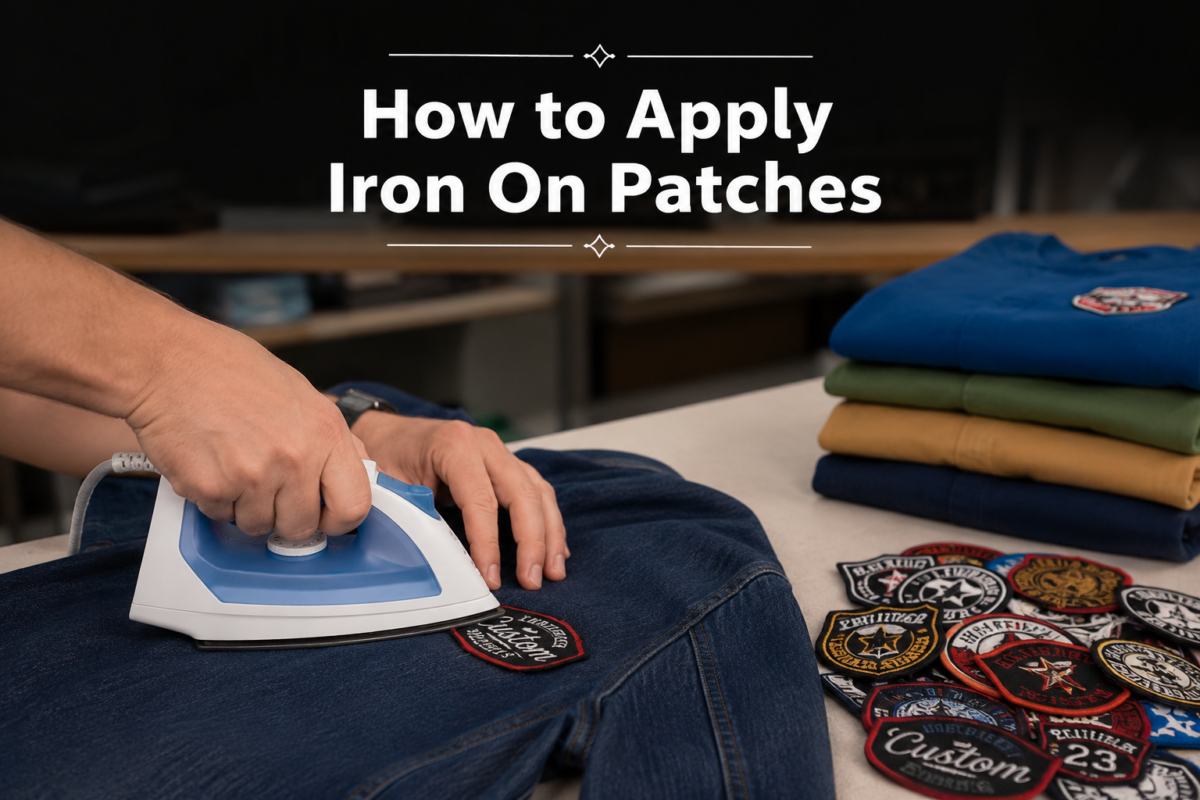
Iron-on patches are convenient to apply but generally last 1 to 3 years, since heat based adhesive weakens over repeated washing and drying cycles. They work best for lighter use rather than daily heavy wear.
Business Insight: Avoiding high heat drying can extend an iron-on patch’s lifespan closer to the 3 year range.
Velcro Patches: Best for Quick Swaps
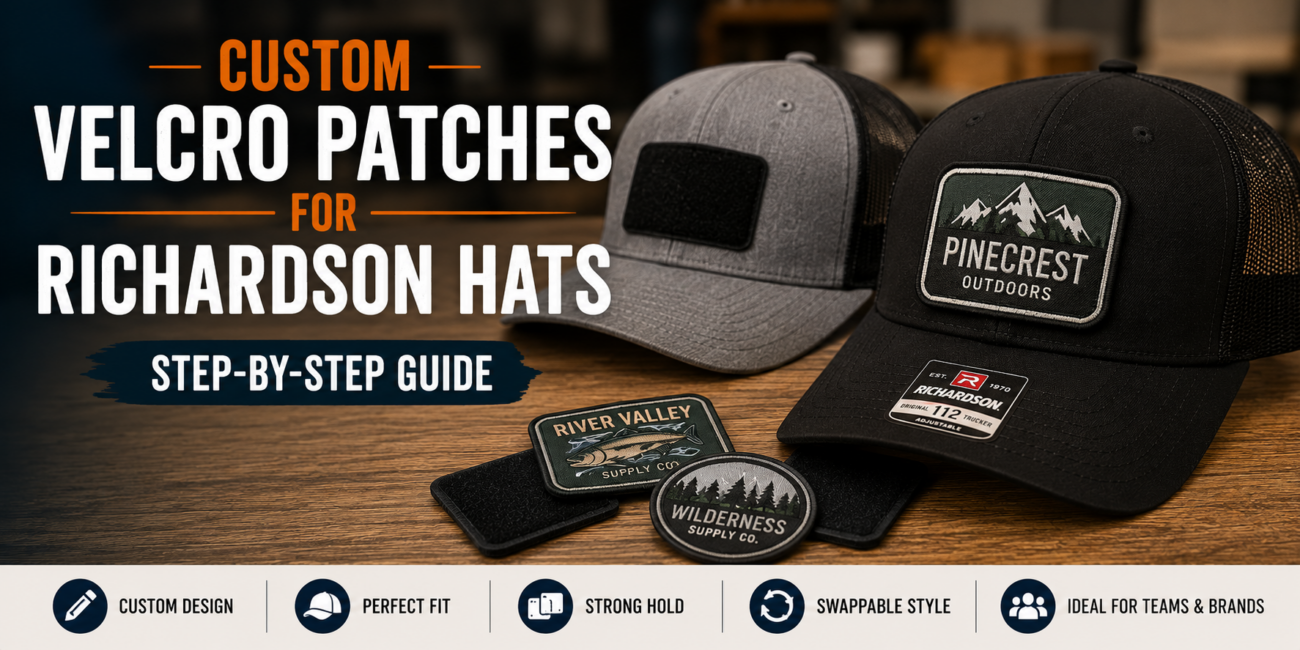
Velcro patches last several years but depend on the strip’s grip strength, which can weaken faster with frequent removal and reattachment. They are ideal for patches that need to be swapped often rather than staying permanently in place.
Example: Tactical gear often uses Velcro patches so users can change patches based on mission or team needs.
Adhesive Patches: The Weakest Option
Adhesive patches offer the shortest lifespan, often less than a year, since the sticky backing weakens quickly with washing, movement, or temperature changes. They work best for short term or temporary use only.
Example: A promotional event patch meant for one-time wear is a good fit for adhesive backing.
Patch Types Compared
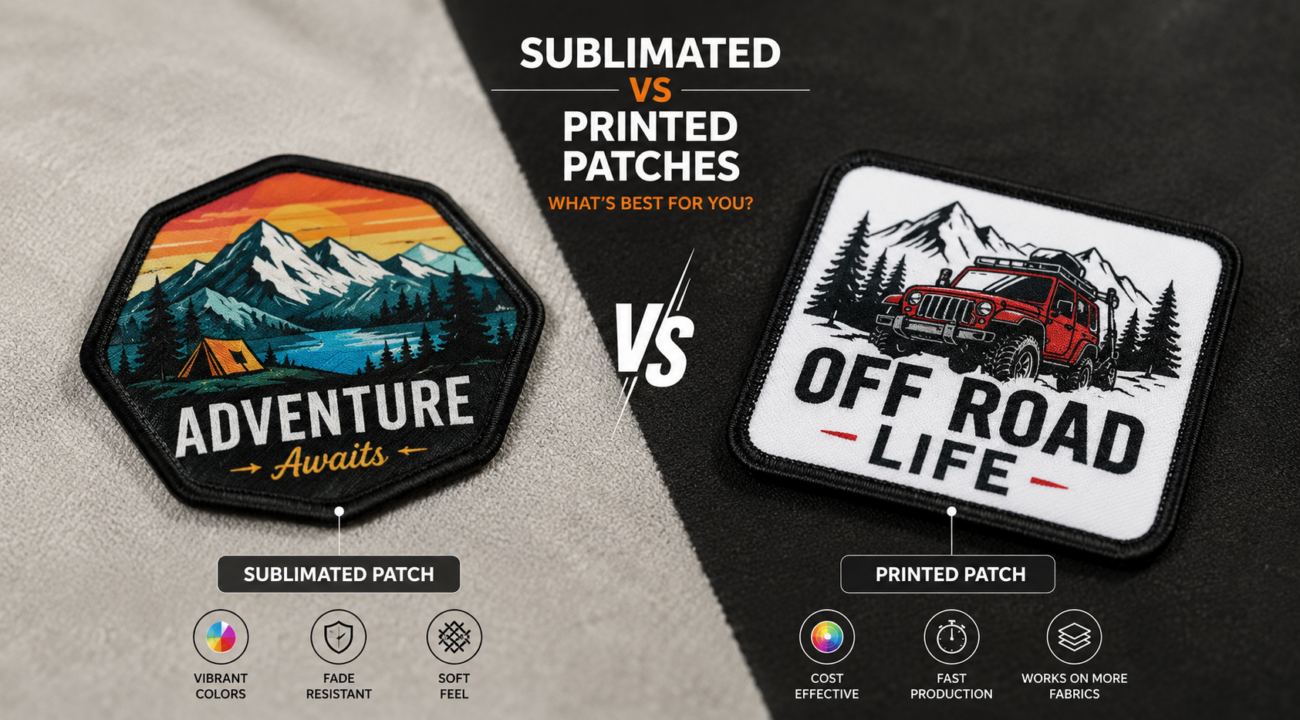
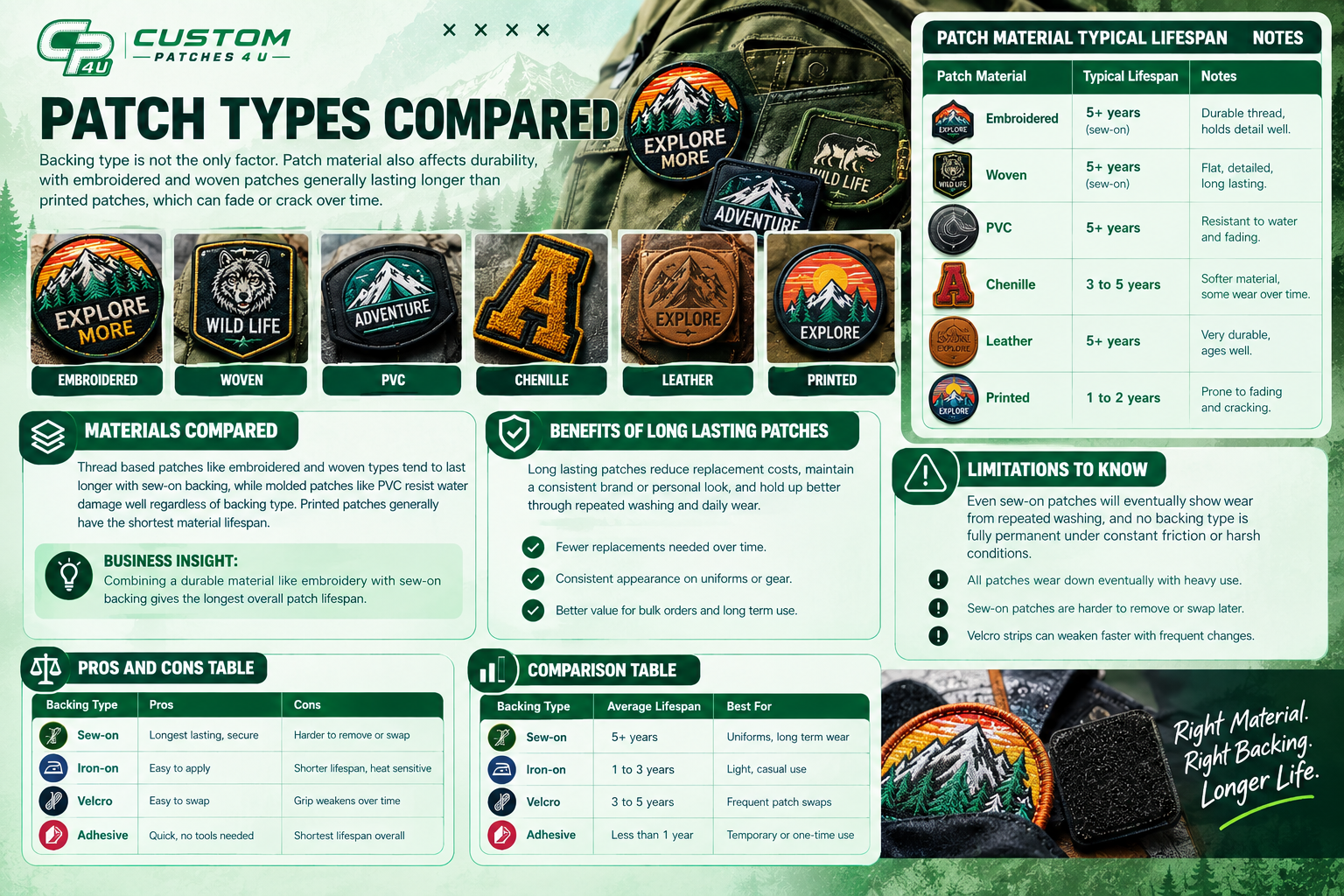
Backing type is not the only factor. Patch material also affects durability, with embroidered and woven patches generally lasting longer than printed patches, which can fade or crack over time.
| Patch Material | Typical Lifespan | Notes |
|---|---|---|
| Embroidered | 5+ years (sew-on) | Durable thread, holds detail well |
| Woven | 5+ years (sew-on) | Flat, detailed, long lasting |
| PVC | 5+ years | Resistant to water and fading |
| Chenille | 3 to 5 years | Softer material, some wear over time |
| Leather | 5+ years | Very durable, ages well |
| Printed | 1 to 2 years | Prone to fading and cracking |
Materials Compared
Thread based patches like embroidered and woven types tend to last longer with sew-on backing, while molded patches like PVC resist water damage well regardless of backing type. Printed patches generally have the shortest material lifespan.
Business Insight: Combining a durable material like embroidery with sew-on backing gives the longest overall patch lifespan.
Benefits of Long Lasting Patches
Long lasting patches reduce replacement costs, maintain a consistent brand or personal look, and hold up better through repeated washing and daily wear.
- Fewer replacements needed over time.
- Consistent appearance on uniforms or gear.
- Better value for bulk orders and long term use.
Limitations to Know
Even sew-on patches will eventually show wear from repeated washing, and no backing type is fully permanent under constant friction or harsh conditions.
- All patches wear down eventually with heavy use.
- Sew-on patches are harder to remove or swap later.
- Velcro strips can weaken faster with frequent changes.
Pros and Cons Table
| Backing Type | Pros | Cons |
|---|---|---|
| Sew-on | Longest lasting, secure | Harder to remove or swap |
| Iron-on | Easy to apply | Shorter lifespan, heat sensitive |
| Velcro | Easy to swap | Grip weakens over time |
| Adhesive | Quick, no tools needed | Shortest lifespan overall |
Comparison Table
| Backing Type | Average Lifespan | Best For |
|---|---|---|
| Sew-on | 5+ years | Uniforms, long term wear |
| Iron-on | 1 to 3 years | Light, casual use |
| Velcro | 3 to 5 years | Frequent patch swaps |
| Adhesive | Less than 1 year | Temporary or one-time use |
Industry Applications
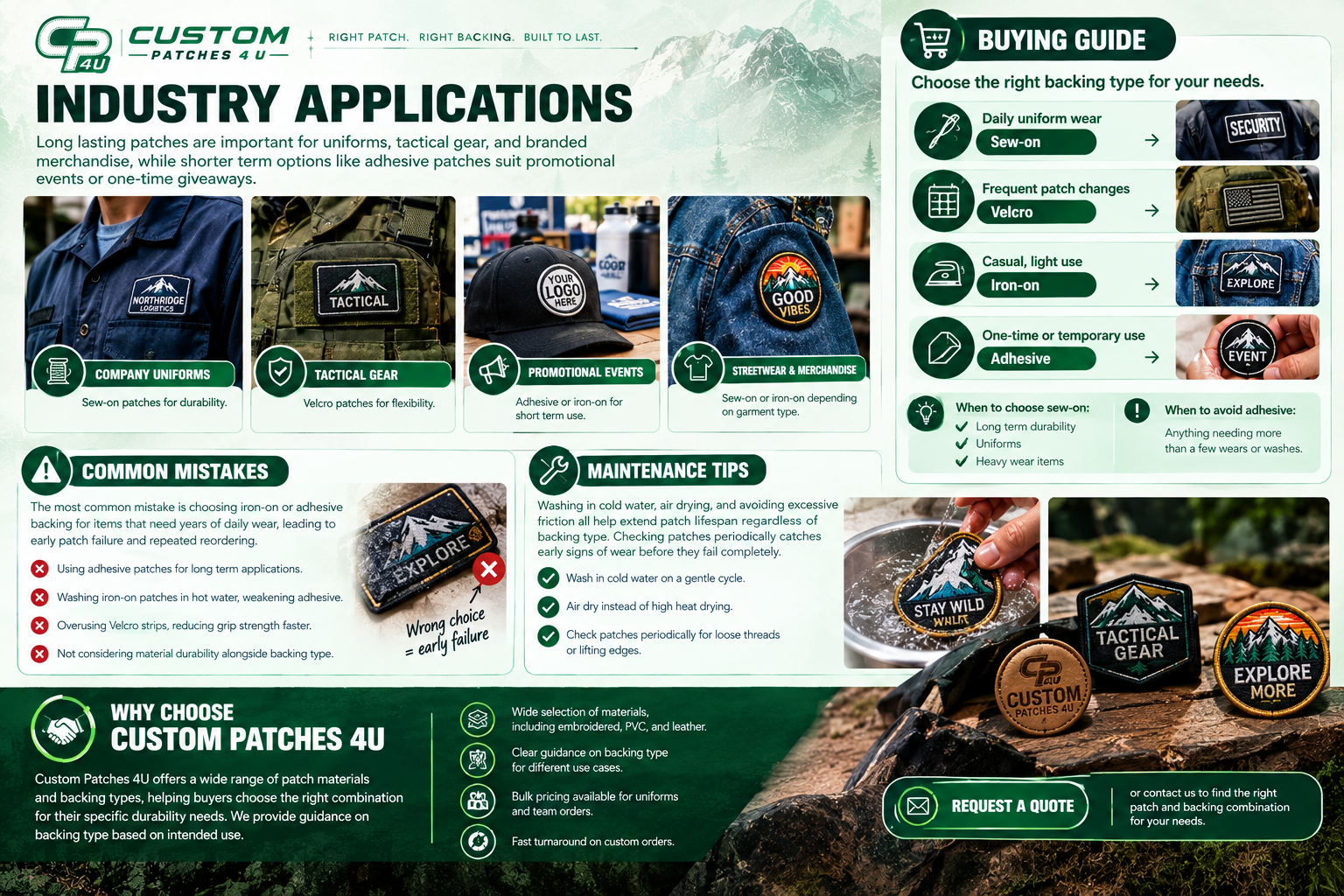
Long lasting patches are important for uniforms, tactical gear, and branded merchandise, while shorter term options like adhesive patches suit promotional events or one-time giveaways.
- Company uniforms: sew-on patches for durability.
- Tactical gear: Velcro patches for flexibility.
- Promotional events: adhesive or iron-on for short term use.
- Streetwear and merchandise: sew-on or iron-on depending on garment type.
Buying Guide
Choose sew-on backing for long term, daily use items, and Velcro if you need to swap patches often. Iron-on suits lighter, casual use, while adhesive should only be used for short term needs.
- Daily uniform wear: sew-on.
- Frequent patch changes: Velcro.
- Casual, light use: iron-on.
- One-time or temporary use: adhesive.
When to choose sew-on: long term durability, uniforms, heavy wear items.
When to avoid adhesive: anything needing more than a few wears or washes.
Common Mistakes
The most common mistake is choosing iron-on or adhesive backing for items that need years of daily wear, leading to early patch failure and repeated reordering.
- Using adhesive patches for long term applications.
- Washing iron-on patches in hot water, weakening adhesive.
- Overusing Velcro strips, reducing grip strength faster.
- Not considering material durability alongside backing type.
Maintenance Tips
Washing in cold water, air drying, and avoiding excessive friction all help extend patch lifespan regardless of backing type. Checking patches periodically catches early signs of wear before they fail completely.
- Wash in cold water on a gentle cycle.
- Air dry instead of high heat drying.
- Check patches periodically for loose threads or lifting edges.
Why Choose Custom Patches 4U
Custom Patches 4U offers a wide range of patch materials and backing types, helping buyers choose the right combination for their specific durability needs. We provide guidance on backing type based on intended use.
- Wide selection of materials, including embroidered, PVC, and leather.
- Clear guidance on backing type for different use cases.
- Bulk pricing available for uniforms and team orders.
- Fast turnaround on custom orders.
Request a quote or contact us to find the right patch and backing combination for your needs.
FAQs
Which patch backing lasts the longest?
Sew-on backing lasts the longest, often 5 years or more, since it is physically stitched into the fabric rather than relying on adhesive.
How long do iron-on patches typically last?
Iron-on patches generally last 1 to 3 years, depending on washing frequency and heat exposure during drying.
Are Velcro patches durable?
Velcro patches are moderately durable, lasting 3 to 5 years, though the grip strength can weaken with frequent removal and reattachment.
Why do adhesive patches not last very long?
Adhesive patches rely on sticky backing that weakens quickly with washing, movement, and temperature changes, making them suitable only for short term use.
Does patch material affect lifespan as much as backing type?
Yes, material matters significantly. Embroidered, woven, and leather patches generally last longer than printed patches, regardless of backing type.
Can I extend the life of an iron-on patch?
Yes, washing in cold water and avoiding high heat drying can help extend an iron-on patch’s lifespan closer to 3 years.
What is the best patch backing for uniforms?
Sew-on backing is best for uniforms since it withstands repeated washing and daily wear better than other backing types.
Are PVC patches more durable than embroidered patches?
PVC patches resist water and fading well, often matching or exceeding embroidered patch durability, especially in wet or outdoor conditions.
Why do tactical patches often use Velcro?
Velcro backing allows tactical patches to be swapped quickly based on team or mission needs, offering flexibility over permanent attachment.
Should I avoid adhesive patches entirely?
Not necessarily. Adhesive patches work well for temporary or one-time use, such as event giveaways, but should be avoided for long term applications.
Find the Right Patch for Your Needs
Not sure which patch and backing combination fits your project? Request a quote or contact Custom Patches 4U for guidance on durability, material, and backing options.