
Introduction
Ordering patches for your team, brand, or product line comes down to one practical decision early on: iron-on or sew-on backing. Choose the wrong one, and you end up with patches that peel off after a few washes or a production timeline that takes longer than it needs to. Choose the right one, and your patches hold up for years without a second thought.
Understanding iron-on vs sew-on patches and which is better for your specific use case is one of the most practical steps a business owner can take before placing a bulk patch order. From uniforms to jackets to promotional merchandise, each backing type performs differently depending on wear, washing frequency, and fabric type.
In this guide, you’ll learn:
- The core difference between iron-on and sew-on patch backing
- How each backing type performs on durability, washing, and long-term wear
- Which backing works best for uniforms, jackets, workwear, and promotional items
- How the application process differs for each type
- What to expect from Custom Patches 4U when ordering either backing type
What Is the Difference Between Iron-On and Sew-On Patches?
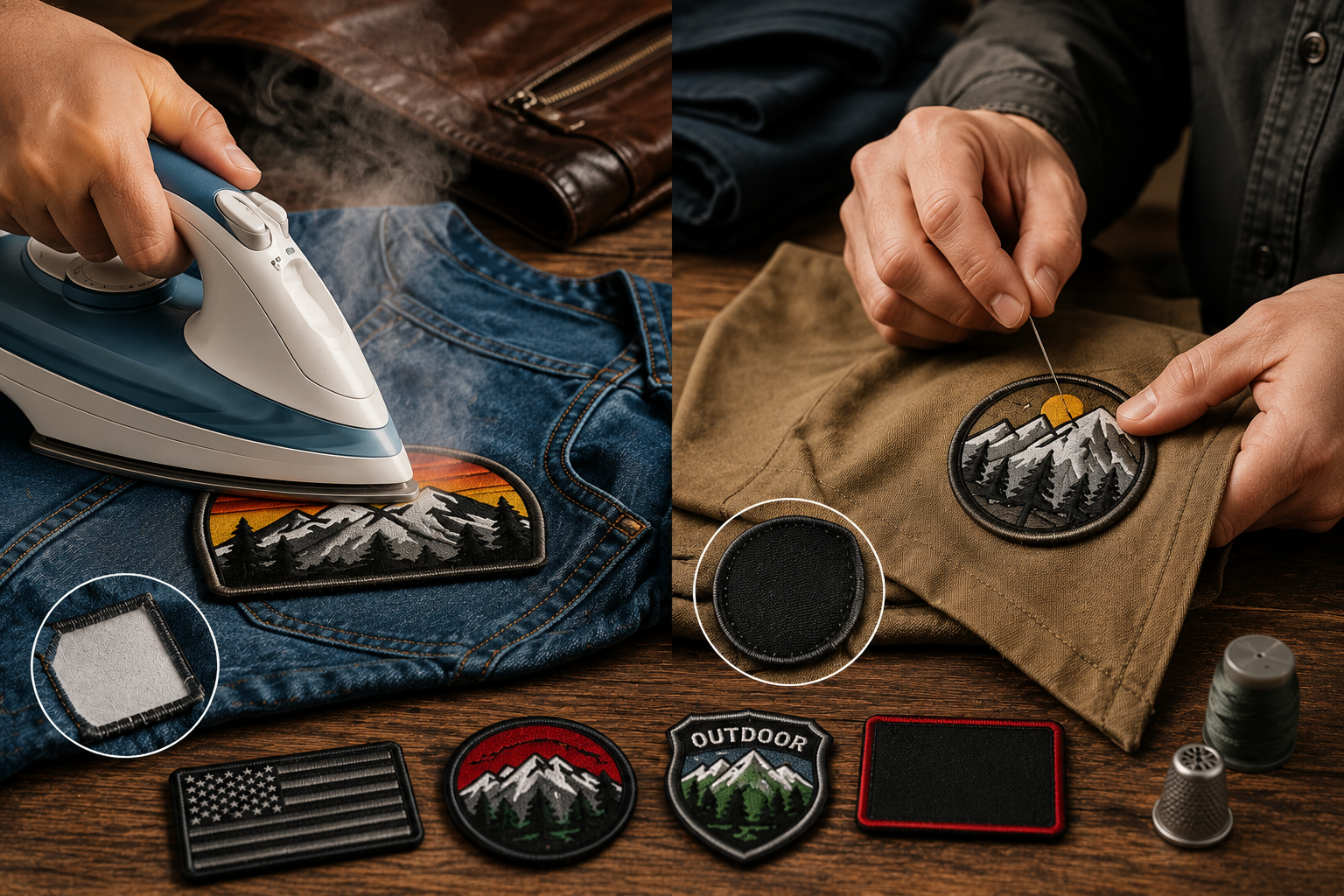
Iron-on patches use a heat-activated adhesive backing that bonds to fabric when pressed with heat, while sew-on patches attach through stitching directly into the fabric with no adhesive involved. The backing type affects how a patch is applied, how long it lasts, and which fabrics it works best on.
Patch backing generally falls into two core categories:
- Iron-on backing: A heat-sensitive adhesive film applied during manufacturing, activated with a household iron or heat press
- Sew-on backing: A plain or twill fabric base with no adhesive, meant to be stitched into place by hand or machine
Both patch types typically use the same embroidery process on the front. The difference sits entirely on the back, and it determines whether a patch needs a needle and thread or just a few minutes of heat and pressure.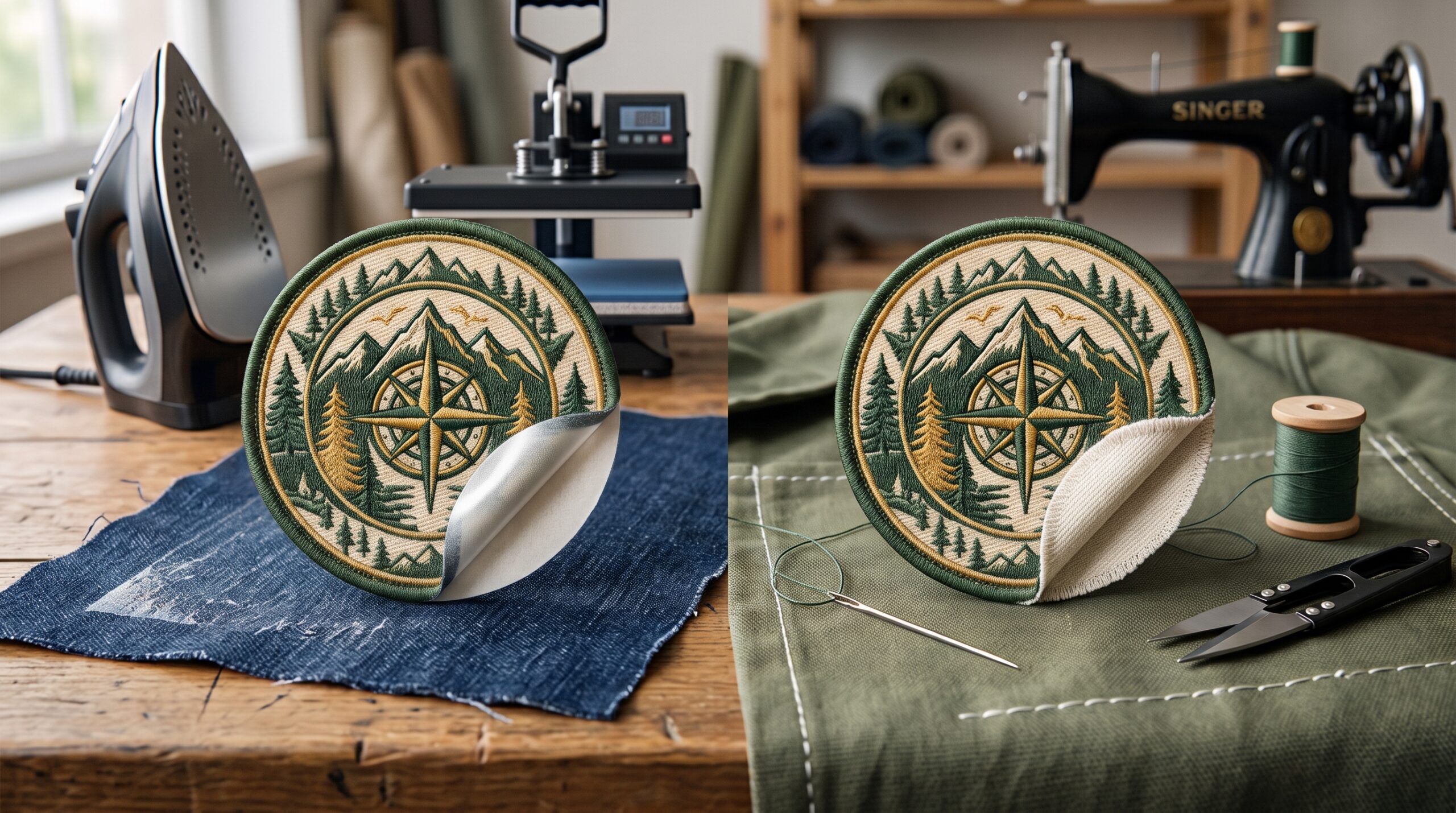
Why This Decision Matters for Businesses
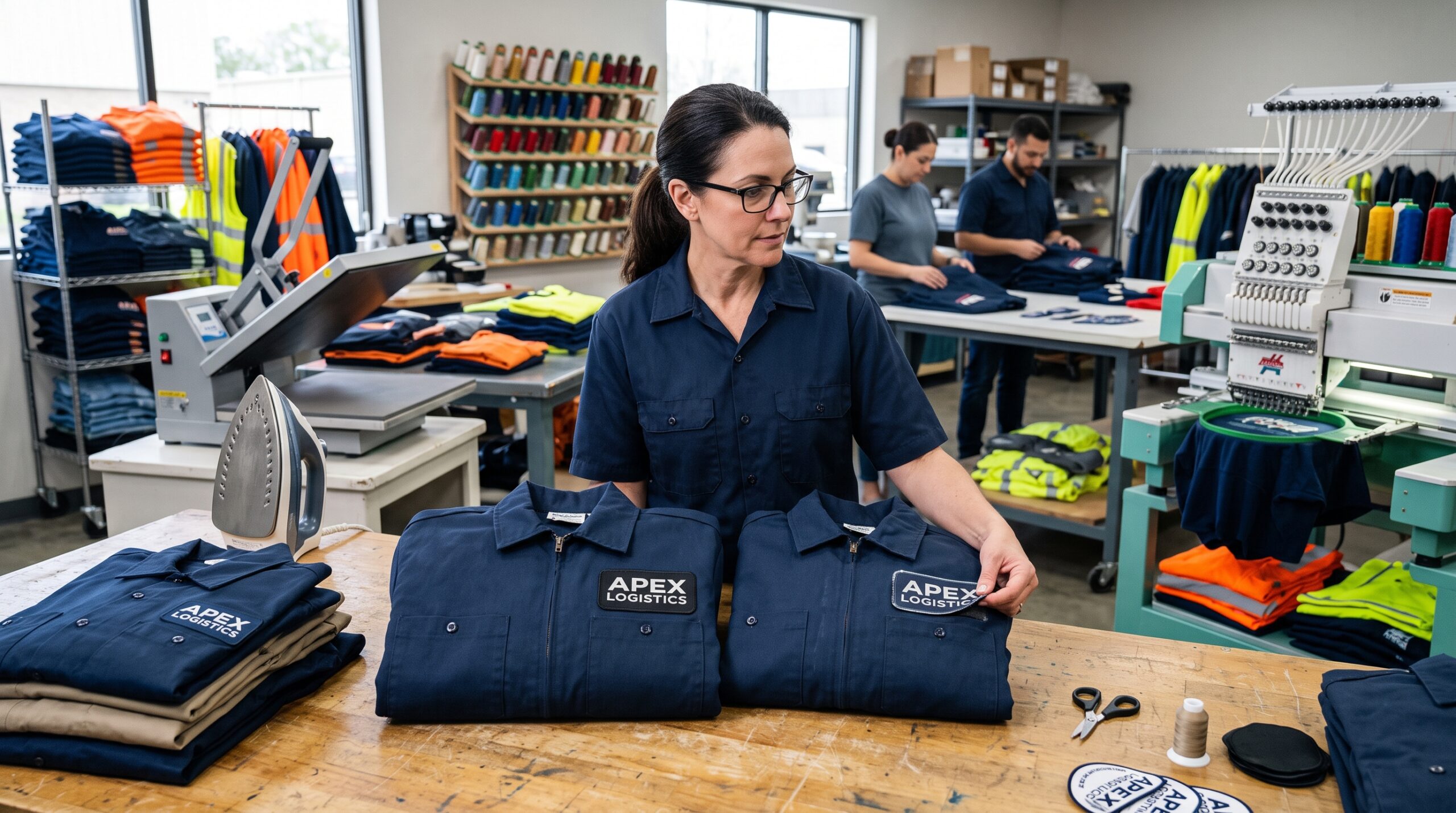
Choosing the right patch backing matters for businesses because it directly affects how long branding stays intact on uniforms, workwear, and merchandise, and how much staff time gets spent on patch application during onboarding or rebranding.
Key reasons this decision matters:
- Reorder costs: A patch that peels off after ten washes means reordering, reapplying, and explaining inconsistent branding to staff or customers
- Application time: Sew-on patches take longer to attach, which matters for large onboarding batches
- Brand consistency: The wrong backing choice can make identical uniforms look mismatched within months
- Use case mismatch: Sew-on patches selected for a use case that needed quick removability, like seasonal name patches, can slow down staff onboarding unnecessarily
Key Features and Specifications of Iron-On and Sew-On Patches
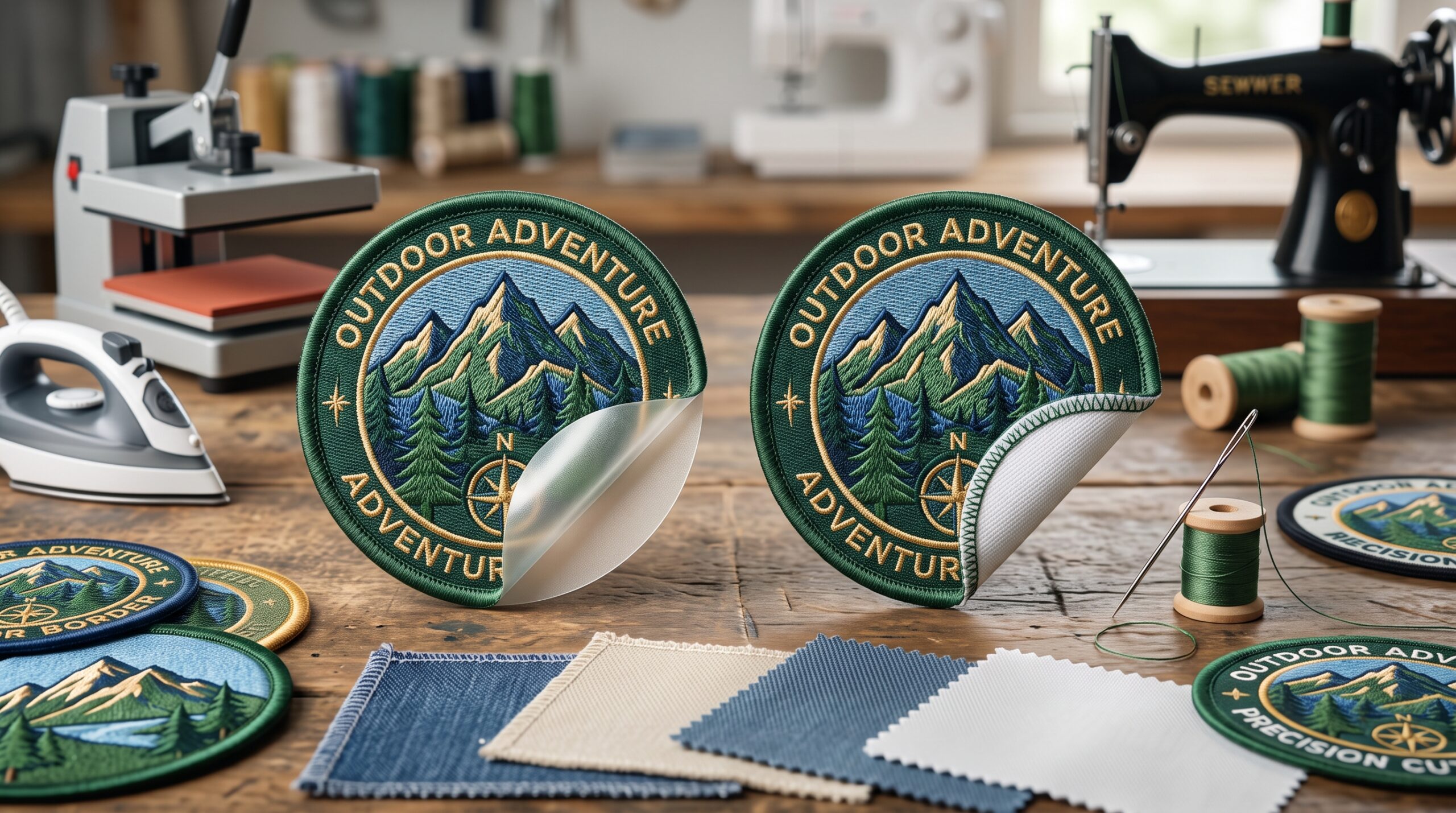
Iron-on and sew-on patches share the same embroidery specifications on the front, including thread type, patch size, and border finish, but differ in backing material, application method, and recommended use case based on fabric type and wash frequency.
Specification factors to consider:
- Iron-on backing: Heat-activated adhesive film, typically applied at 300 to 350 degrees Fahrenheit for 15 to 20 seconds with firm, even pressure; works best on cotton, polyester blends, and other heat-safe fabrics
- Sew-on backing: Twill or felt fabric base with no adhesive, requiring stitching around the patch perimeter; works on nearly any fabric, including leather, nylon, and heat-sensitive materials
- Patch size: Typically two to four inches for both types, though larger patches generally hold better with sew-on backing since adhesive alone struggles to support heavier designs
- Border finish: Merrowed edges and heat-cut borders work the same way regardless of backing type, since the border affects the front design rather than the attachment method
How Iron-On and Sew-On Application Works
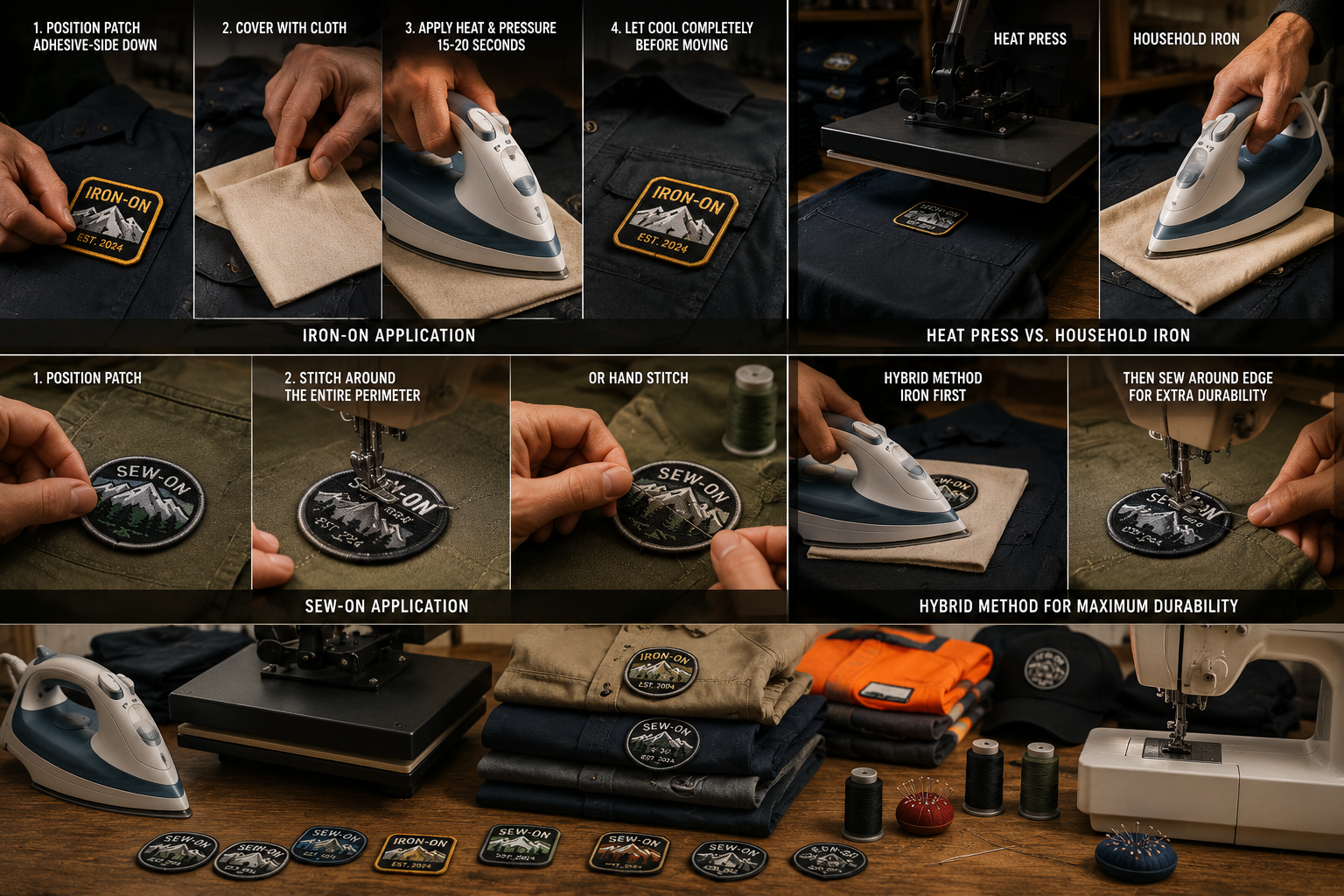
Applying an iron-on patch involves positioning it on the fabric, then pressing it with a household iron or heat press at a set temperature and pressure for a specific duration, while sew-on application involves hand-stitching or machine-stitching around the patch edge to secure it permanently.
Application steps by backing type:
- Iron-on application: Place the patch adhesive-side down on the fabric, cover it with a thin cloth, apply firm heat for 15 to 20 seconds, then let it cool completely before moving the fabric
- Sew-on application: Position the patch where needed, then use a needle and thread or a sewing machine to stitch around the entire perimeter
- Heat press vs. household iron: A heat press gives more consistent results than a household iron, especially for bulk application across many uniforms
- Hybrid method: Some businesses iron the patch on first to hold placement, then sew around the edge for extra durability, especially useful for uniforms with heavy use
Iron-On vs Sew-On Patches: Durability Comparison
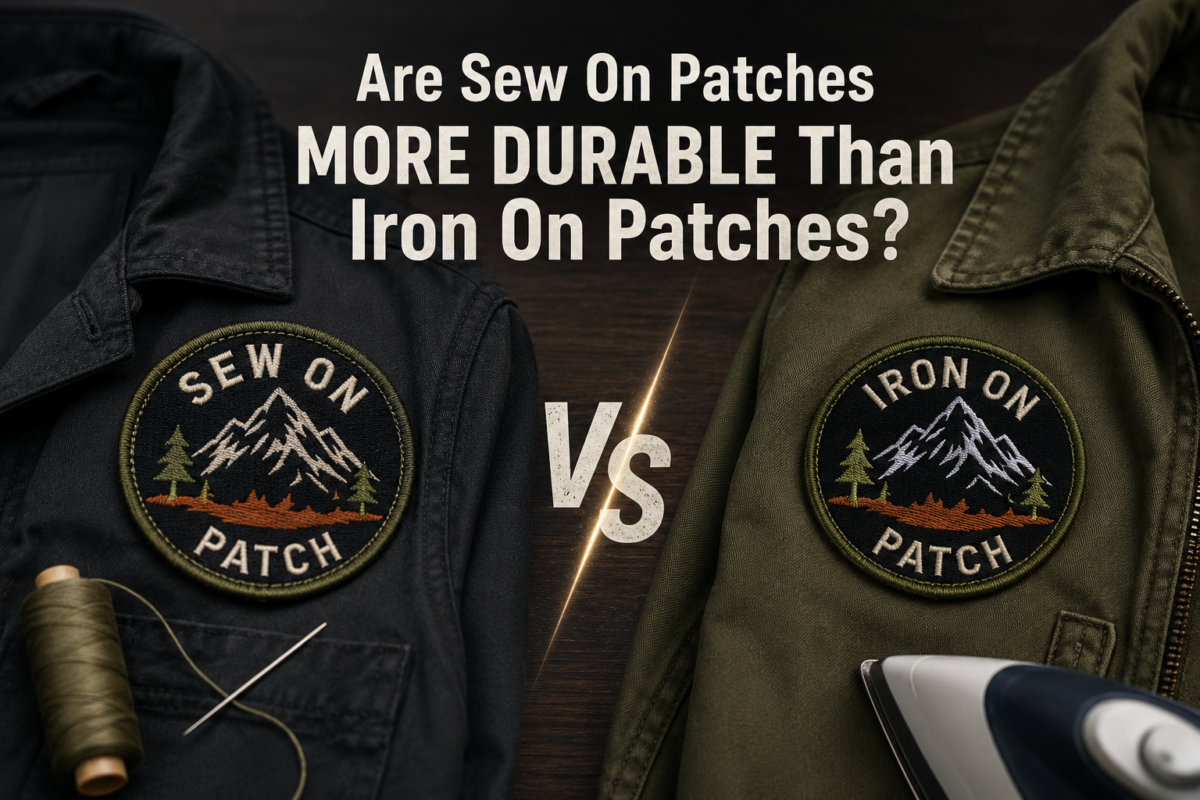
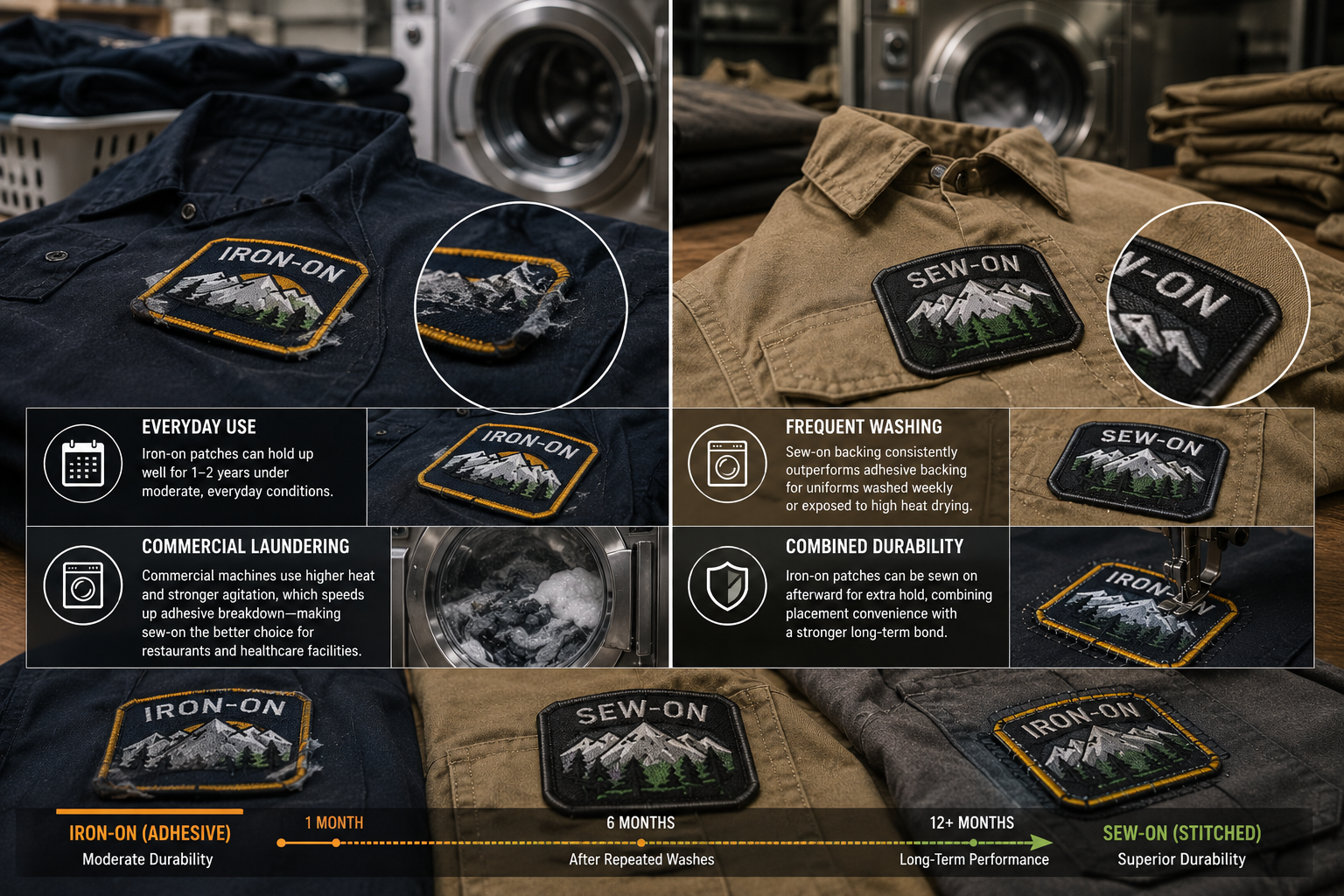
Sew-on patches generally last longer than iron-on patches because stitching does not weaken from heat, repeated washing, or friction the way adhesive backing can over time. Iron-on patches remain a reliable option for lighter use but are more prone to peeling at the edges after frequent washing or dry cleaning.
Durability factors to consider:
- Everyday use: Iron-on patches can hold up well for one to two years under moderate, everyday conditions
- Frequent washing: Sew-on backing consistently outperforms adhesive backing for uniforms washed weekly or exposed to high heat drying
- Commercial laundering: Commercial washing machines use higher heat and stronger agitation than home washers, which speeds up adhesive breakdown, making sew-on backing the better choice for restaurants and healthcare facilities
- Combined durability: Iron-on patches can be sewn on afterward for extra hold, combining placement convenience with a stronger long-term bond
Benefits for B2B Buyers
The main benefit of understanding iron-on vs sew-on patches for B2B buyers is matching backing type to actual use case, which reduces reorder frequency, lowers long-term costs, and keeps branding consistent across large teams or multiple locations.
Core benefits include:
- Lower reorder frequency when backing type matches actual wear conditions
- Reduced long-term costs, since matching backing to use case avoids premature patch replacement
- Consistent branding across large teams, franchises, or multiple business locations
- Simplified reordering, since an approved backing type and stitch file make future orders a straightforward repeat rather than a new decision each time
Industry Use Cases: Best Patches for Different Applications
The best patch backing depends on the application: uniforms and workwear generally perform better with sew-on backing, while jackets, bags, and promotional items often work well with iron-on backing due to lighter wear and easier application.
Here’s how each use case typically breaks down:
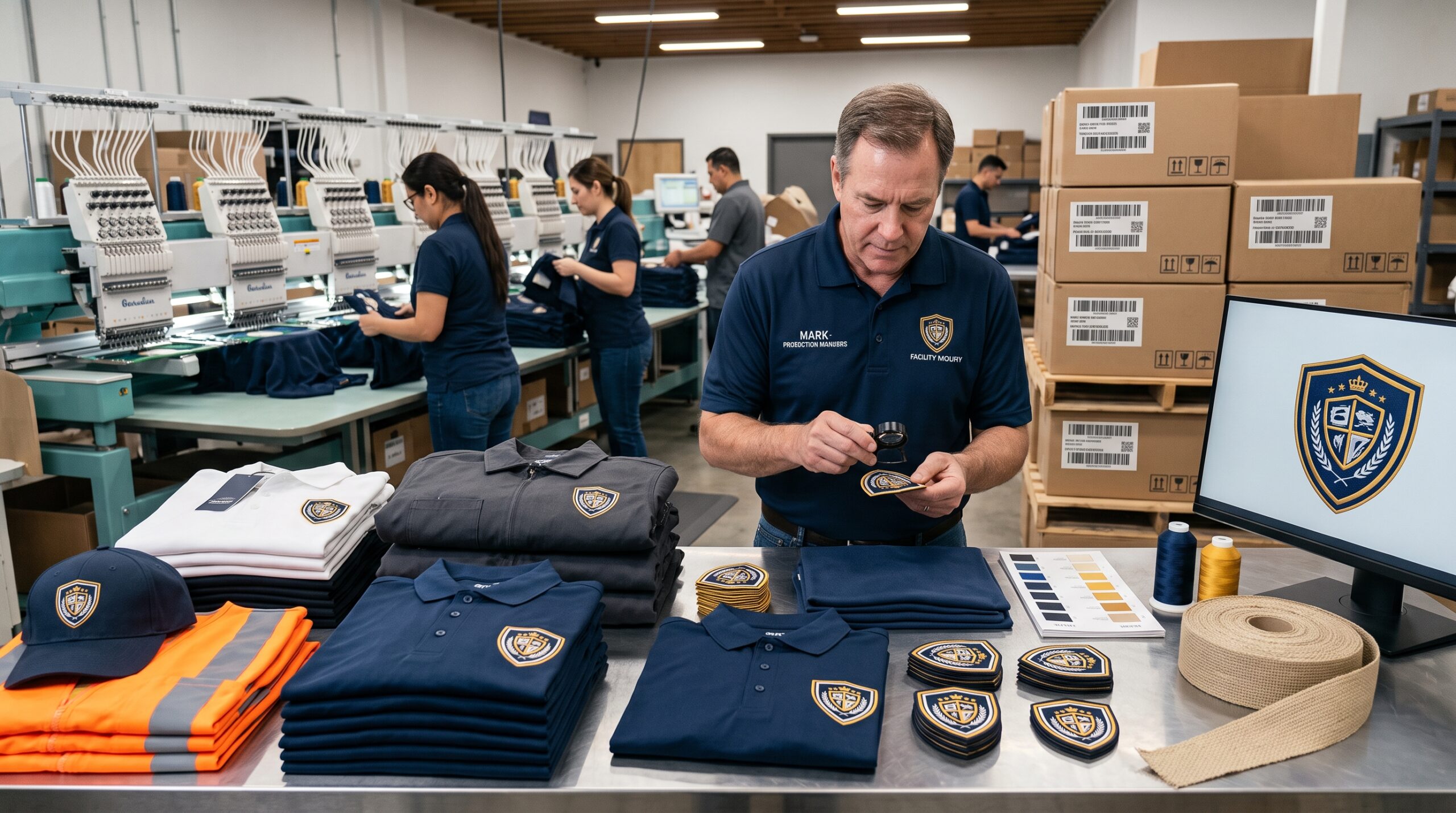
- Best patches for uniforms: Sew-on backing, since uniforms in security, healthcare, hospitality, and skilled trades see frequent washing and daily physical activity
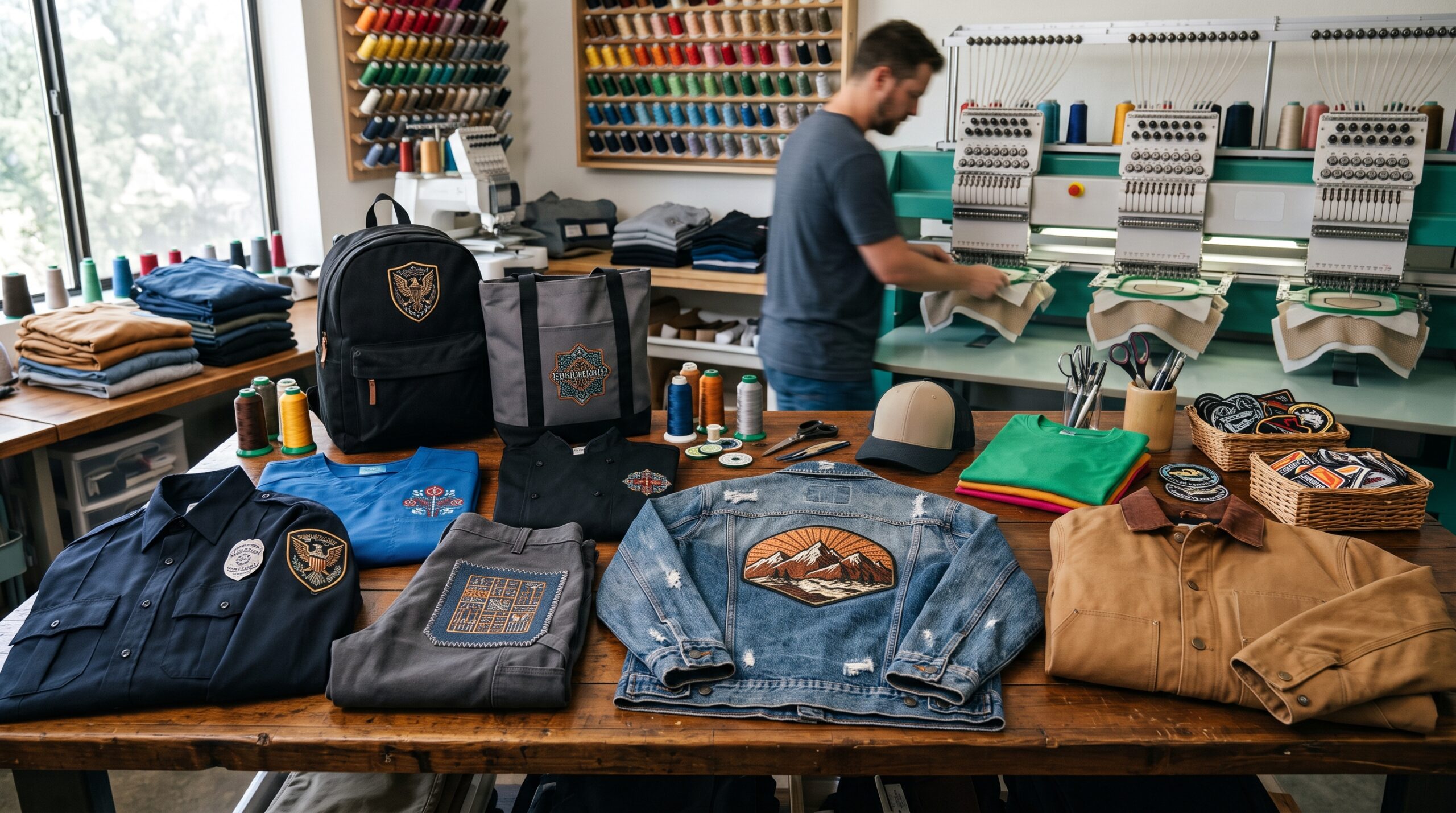
- Best patches for jackets: Either backing, depending on use; a denim or canvas jacket in regular rotation benefits from sew-on, while a seasonal or promotional jacket may only need iron-on
- Backpack and bag patches: Iron-on backing for quick application, since these items see less washing and more general wear and tear
- Promotional and event patches: Iron-on backing, since these items prioritize fast turnaround and simple application over multi-year durability
- Denim patches: Either method works, though sew-on backing holds up better on heavier denim exposed to frequent washing
Customization and Ordering Process
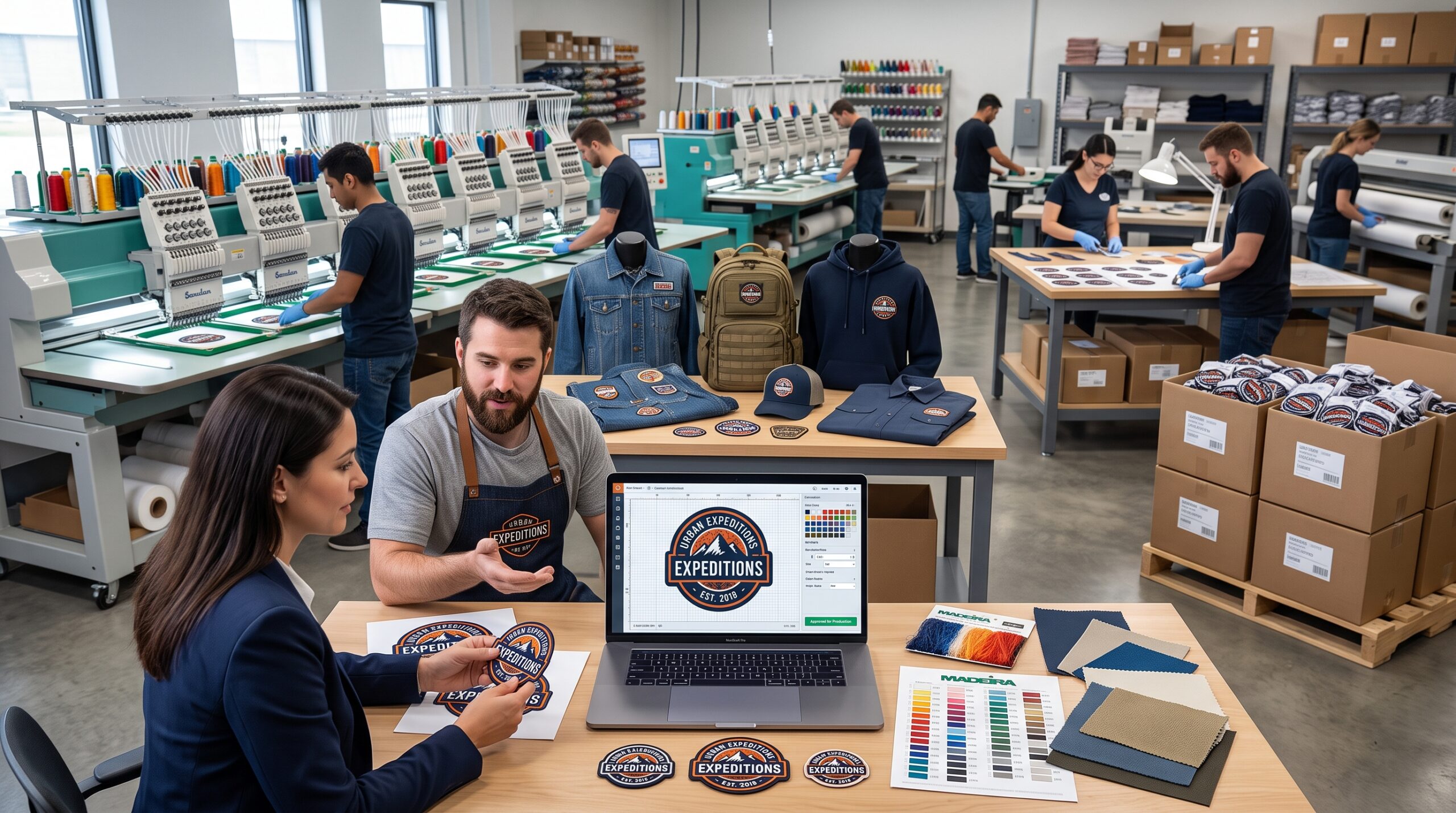
Ordering custom patches with either iron-on or sew-on backing typically involves submitting artwork, selecting patch size and backing type, approving a digital proof, and confirming quantity before production begins, with bulk pricing tiers available for larger orders.
The ordering process generally follows these steps:
- Submit a logo or design file, which gets converted into an embroidery stitch file
- Choose your backing type based on intended use, whether uniforms, jackets, bags, or promotional items
- Review a digital proof confirming sizing, color accuracy, and backing selection
- Move into production once approved, with similar timelines for both backing types
- Benefit from tiered bulk pricing, since per-unit cost decreases as order quantity increases
Why Choose Custom Patches 4U
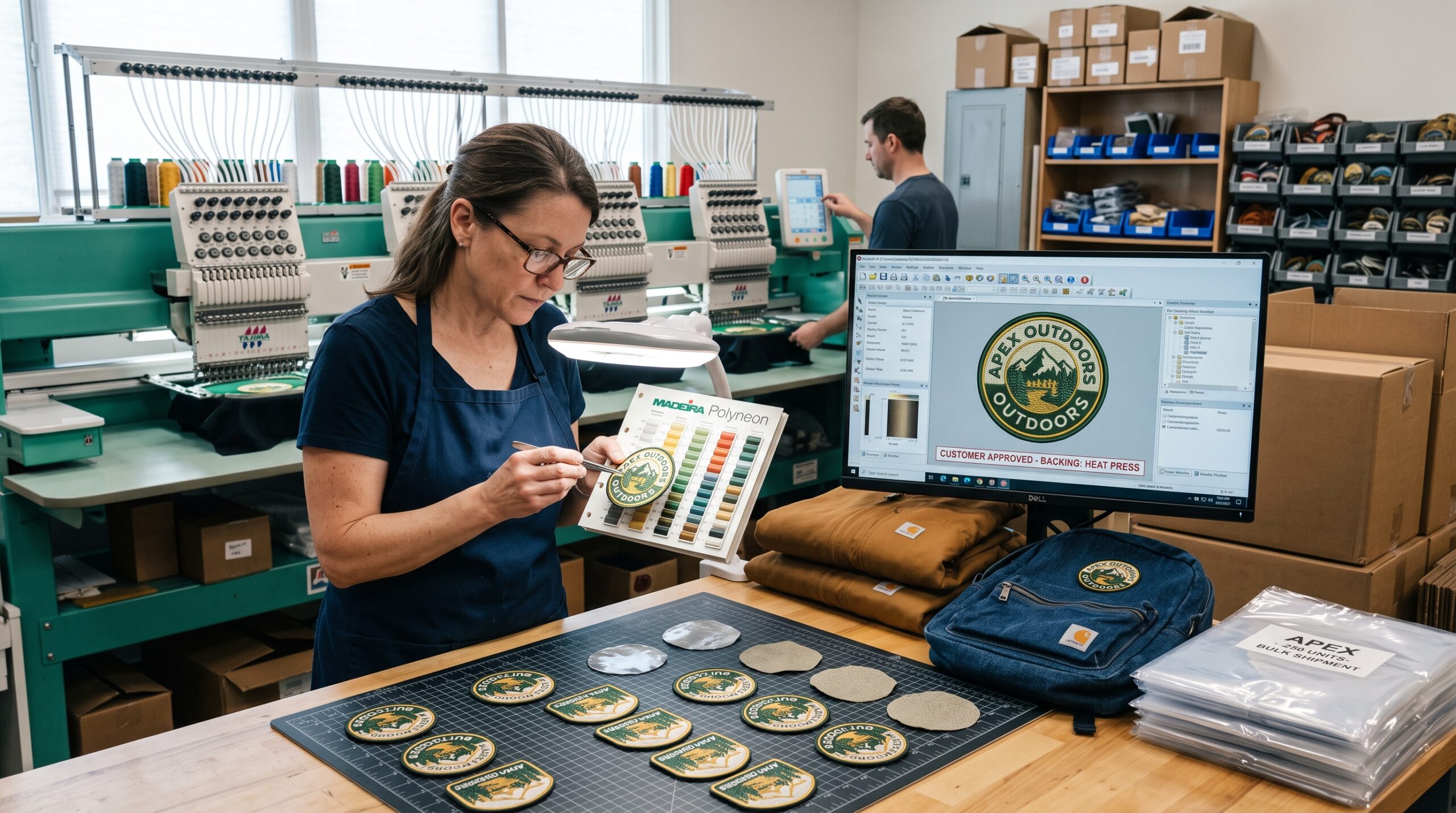
Custom Patches 4U produces both iron-on and sew-on custom patches with consistent embroidery quality, accurate color matching, and backing guidance based on how the patches will actually be used, rather than a one-size-fits-all recommendation.
What sets Custom Patches 4U apart:
- Digital proofing before production, so buyers confirm sizing, thread colors, and backing type in advance
- Support for both small orders and wholesale uniform patches for multi-location businesses
- Approved stitch files kept on record for easy reordering months or years later
- Backing recommendations based on real use case, whether that means durable sew-on patches for daily workwear or fast-turnaround iron-on patches for a promotional campaign
Frequently Asked Questions
Iron-on vs sew-on patches: which is better?
Sew-on patches are generally better for long-term durability, especially on frequently washed uniforms, while iron-on patches are better for quick application on items with lighter use, like bags or promotional apparel.
Are iron-on patches as durable as sew-on patches?
Not typically. Sew-on patches hold up better under frequent washing and physical wear, while iron-on adhesive can weaken over time, especially with high-heat drying or commercial laundering.
How do you apply iron-on patches?
Place the patch adhesive-side down on the fabric, cover it with a thin cloth, and apply firm heat with an iron or heat press for 15 to 20 seconds. Let it cool fully before moving the fabric.
How do you sew on patches by hand?
Position the patch where needed, then stitch around the entire edge using a needle and thread, keeping stitches close together for a secure, long-lasting hold.
Can iron-on patches be sewn on for extra durability?
Yes. Ironing a patch on first for placement, then sewing around the edge, combines convenience with a stronger long-term bond, which many buyers use for higher-wear items.
Do iron-on patches last through regular washing?
Iron-on patches generally hold up through regular home washing for a year or more, though frequent high-heat washing or drying can cause the adhesive to loosen over time.
What is the best patch backing for uniforms?
Sew-on backing is typically the best choice for uniforms, since it withstands frequent washing and daily wear better than adhesive backing over the long term.
Which patch backing is best for jackets and bags?
Iron-on backing works well for jackets and bags that see moderate use, while sew-on backing is a better choice for items exposed to frequent washing or heavy daily use.