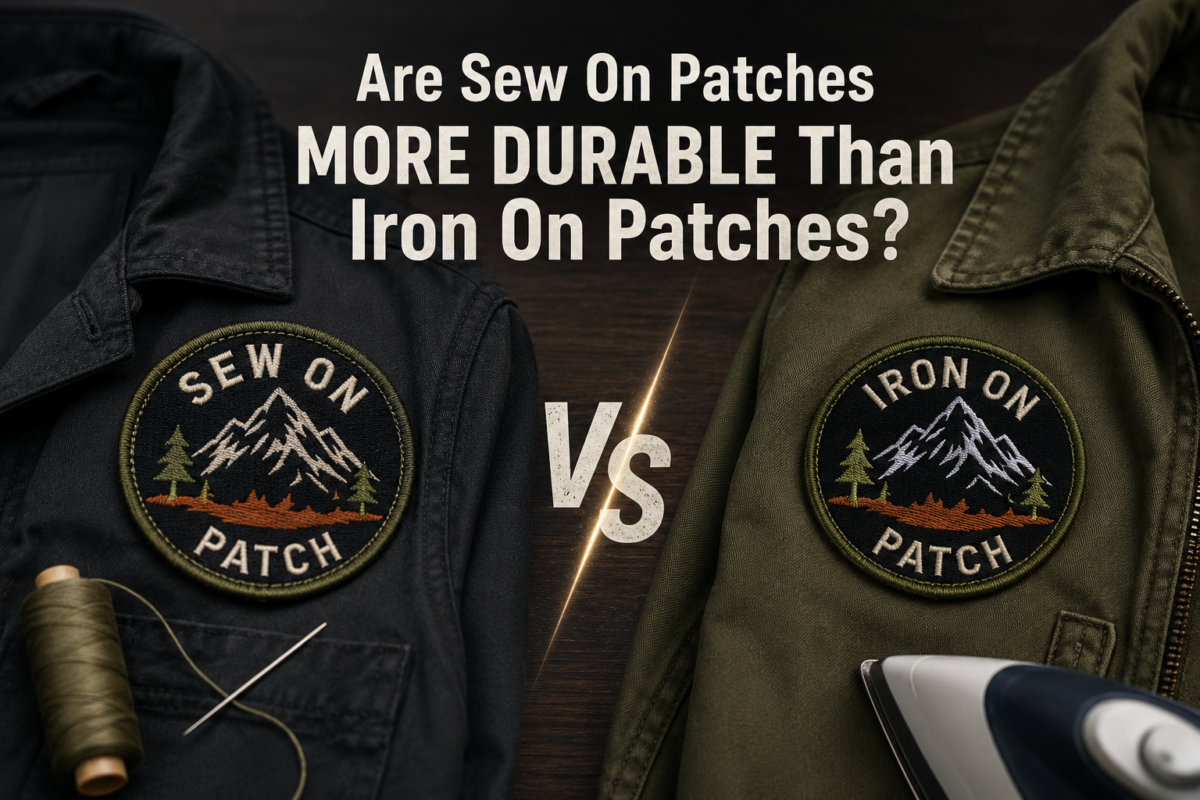

Bulk patch orders often run into the same question once production finishes: how should a business attach hundreds or thousands of patches to garments? Many buyers ask what are the pros and cons of heat press for custom patches before choosing between a heat press, a household iron, or sewing.
This guide breaks down how a heat press works for patch application. It covers where the method performs well, where it falls short, and how it compares to other attachment methods.
At Custom Patches 4U, we supply patches to companies and bulk buyers who need a reliable, repeatable application process. This comparison reflects the questions we hear most often before a business sends an order into production.
What Are the Pros and Cons of Heat Press for Custom Patches?
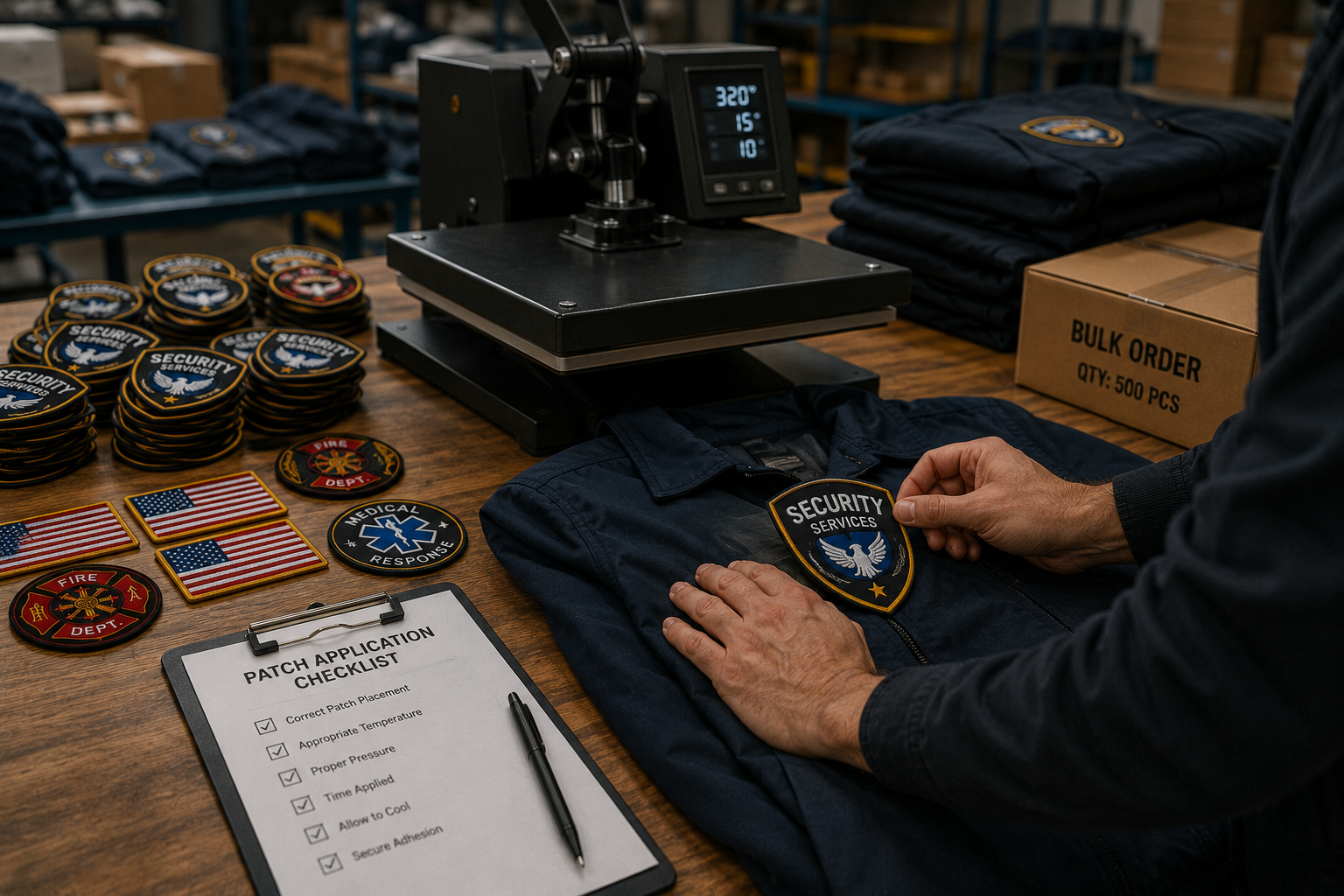
A heat press applies even heat and firm, consistent pressure across an entire patch at once. This produces a stronger and more uniform bond than a household iron in most cases. The main advantages include speed, consistency, and better adhesion across large batches. The main drawbacks include upfront equipment cost, limited fabric compatibility, and the need for careful temperature control to avoid scorching certain materials.
- Pros: faster application, even heat distribution, stronger adhesive bond, consistent results across bulk orders.
- Cons: equipment cost, limited fabric options, precise temperature and pressure requirements, less portable than a household iron.
Why This Comparison Matters for Businesses
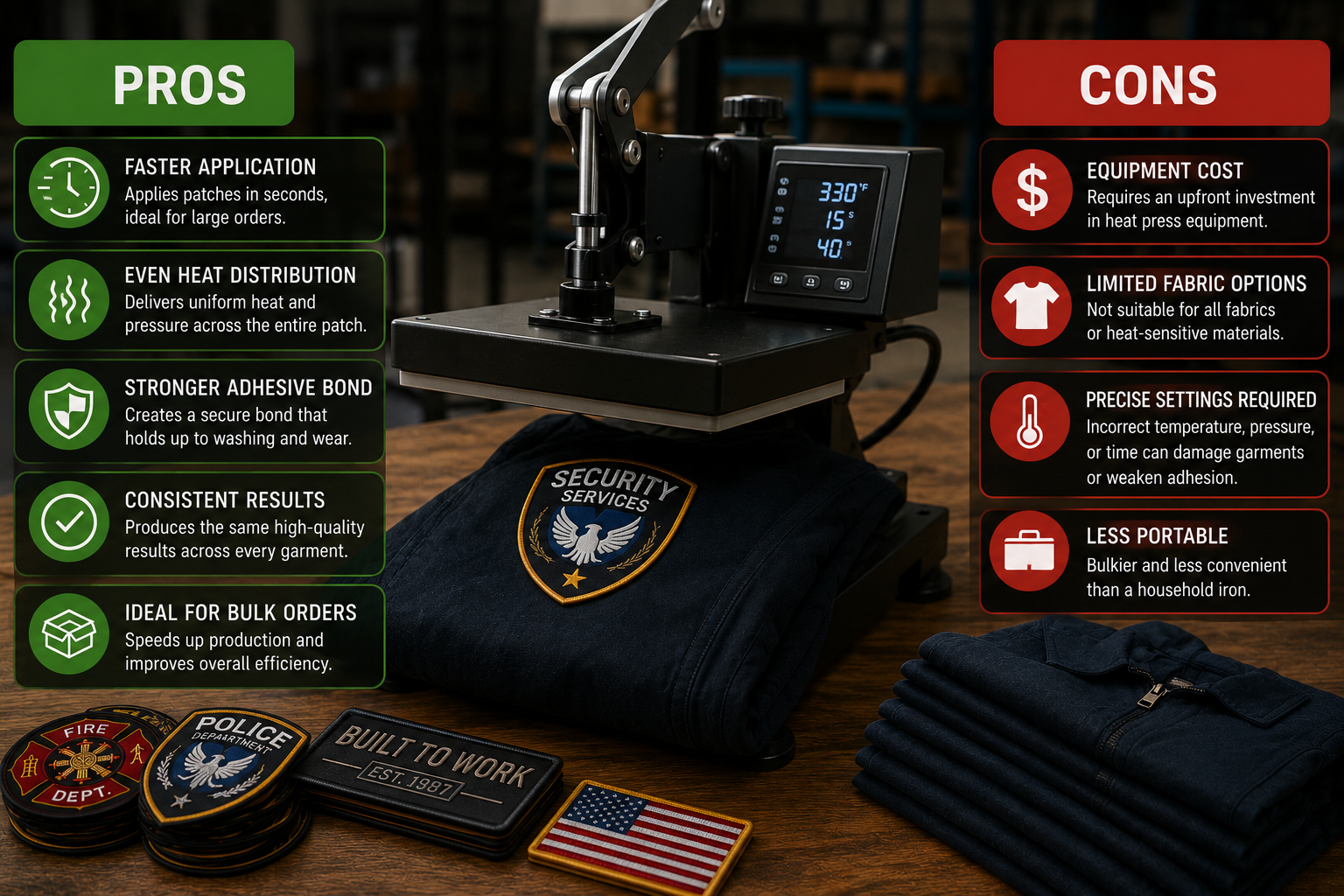
Is a heat press better than an iron for patches? Yes. For bulk production, a heat press generally outperforms a household iron, since it applies even pressure across the whole patch surface at once. This reduces weak spots and cuts application time significantly on large orders.
A business applying patches to a handful of garments can often manage with a household iron. A business applying patches to hundreds or thousands of units needs a method that produces consistent results without wasted patches, scorched fabric, or peeling after the first wash. Choosing the wrong tool for the job creates returns, rework, and a weaker final product.
Key Features and Specifications of Heat Press Patch Application
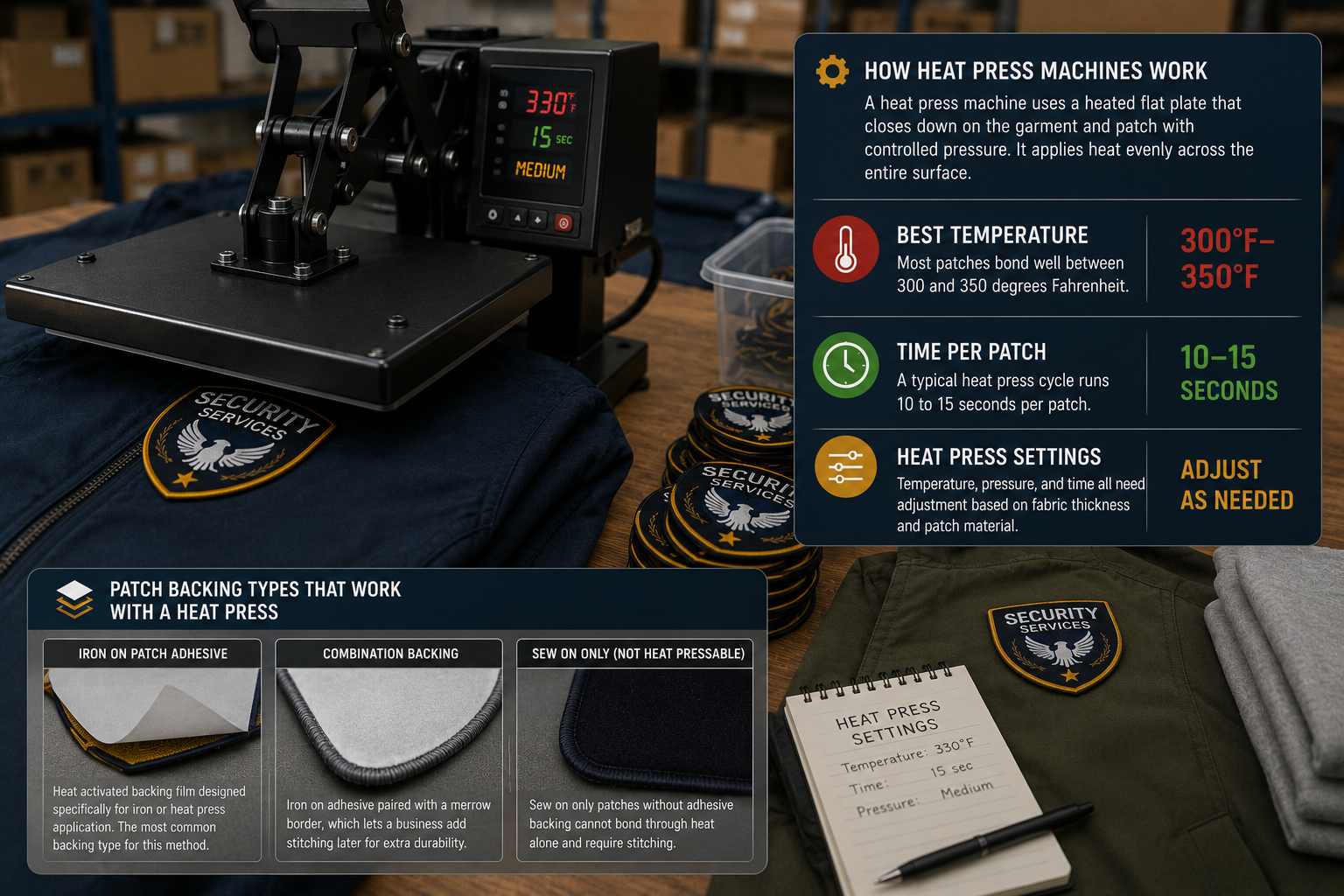
How Heat Press Machines Work
A heat press machine uses a heated flat plate that closes down on the garment and patch with controlled pressure. It applies heat evenly across the entire surface, unlike a household iron, which needs small, overlapping sections.
- Best temperature for heat press patches: most patches bond well between 300 and 350 degrees Fahrenheit, depending on the patch adhesive and fabric type.
- How long to heat press patches: a typical heat press cycle runs 10 to 15 seconds per patch, much shorter than the 20 to 30 seconds per section a household iron usually needs.
- Heat press settings: temperature, pressure, and time all need adjustment based on fabric thickness and patch material. Testing a sample first prevents costly mistakes on a full batch.
Patch Backing Types That Work With a Heat Press
- Iron on patch adhesive: a heat activated backing film designed specifically for iron or heat press application, the most common backing type for this method.
- Combination backing: iron on adhesive paired with a merrow border, which lets a business add stitching later for extra durability.
- Can all patches be heat pressed? No. Sew on only patches without adhesive backing cannot bond through heat alone, so they require stitching regardless of the tool a business uses.
How the Heat Press Patch Application Process Works
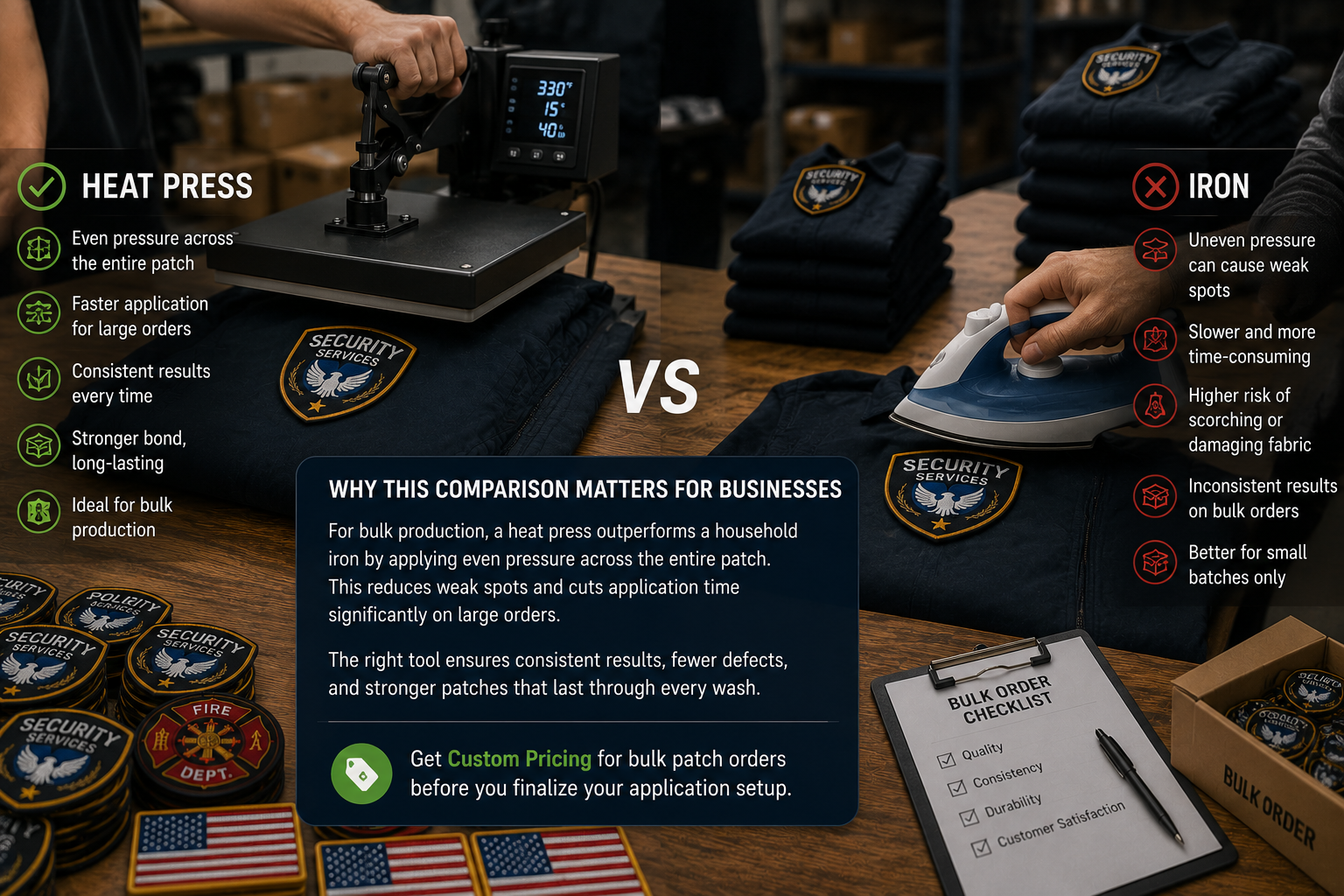
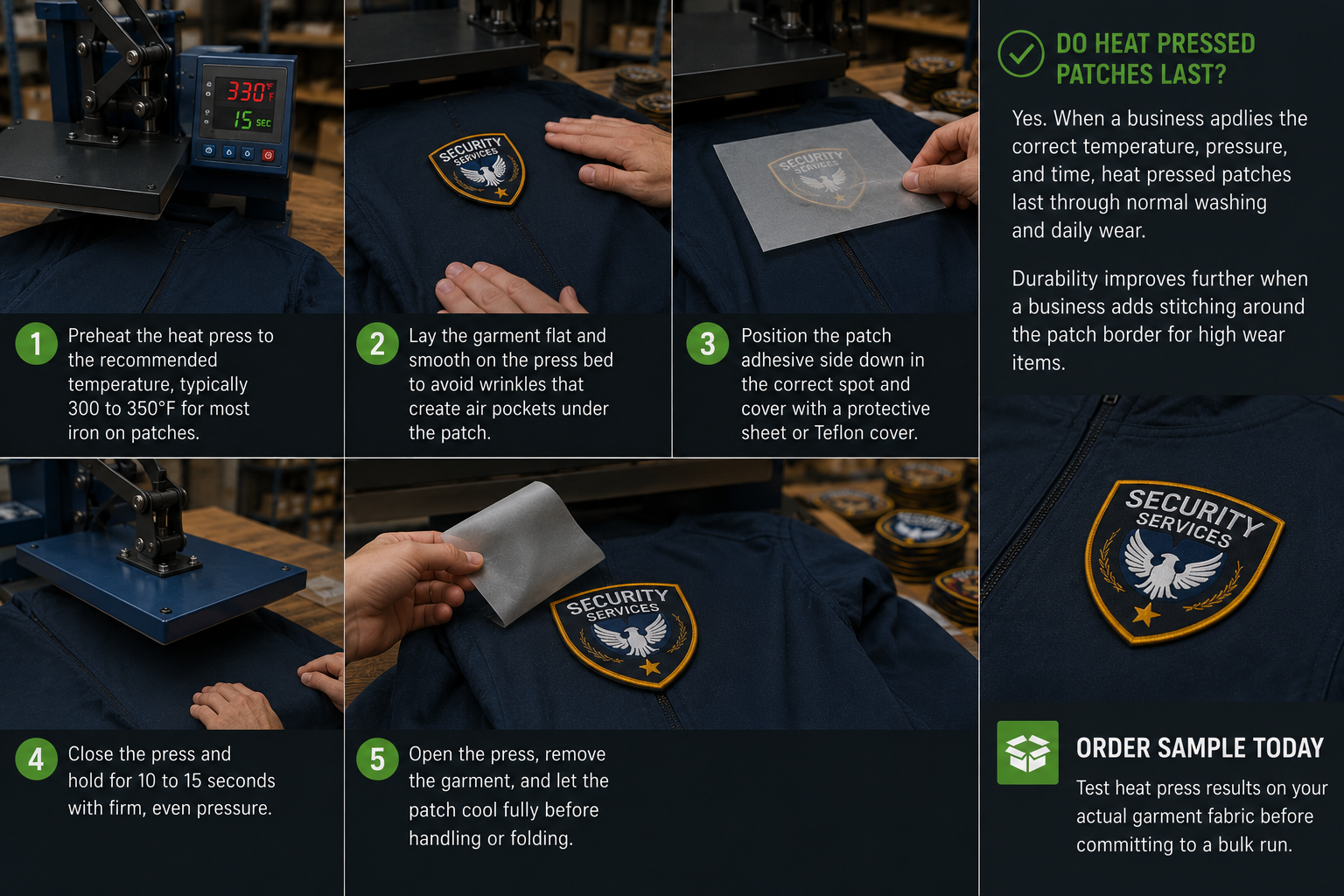
How to apply patches with a heat press? Set the heat press to the correct temperature for the fabric and patch type. Place the garment flat on the press bed, position the patch adhesive side down with a protective sheet on top, then close the press and apply firm pressure for the required time before letting the patch cool.
- Preheat the heat press to the recommended temperature, typically 300 to 350 degrees Fahrenheit for most iron on patches.
- Lay the garment flat and smooth on the press bed to avoid wrinkles that create air pockets under the patch.
- Position the patch adhesive side down in the correct spot and cover with a protective sheet or Teflon cover.
- Close the press and hold for 10 to 15 seconds with firm, even pressure.
- Open the press, remove the garment, and let the patch cool fully before handling or folding.
Do heat pressed patches last? Yes. When a business applies the correct temperature, pressure, and time, heat pressed patches last through normal washing and daily wear. Durability improves further when a business adds stitching around the patch border for high wear items.
Heat Press vs Iron for Patches
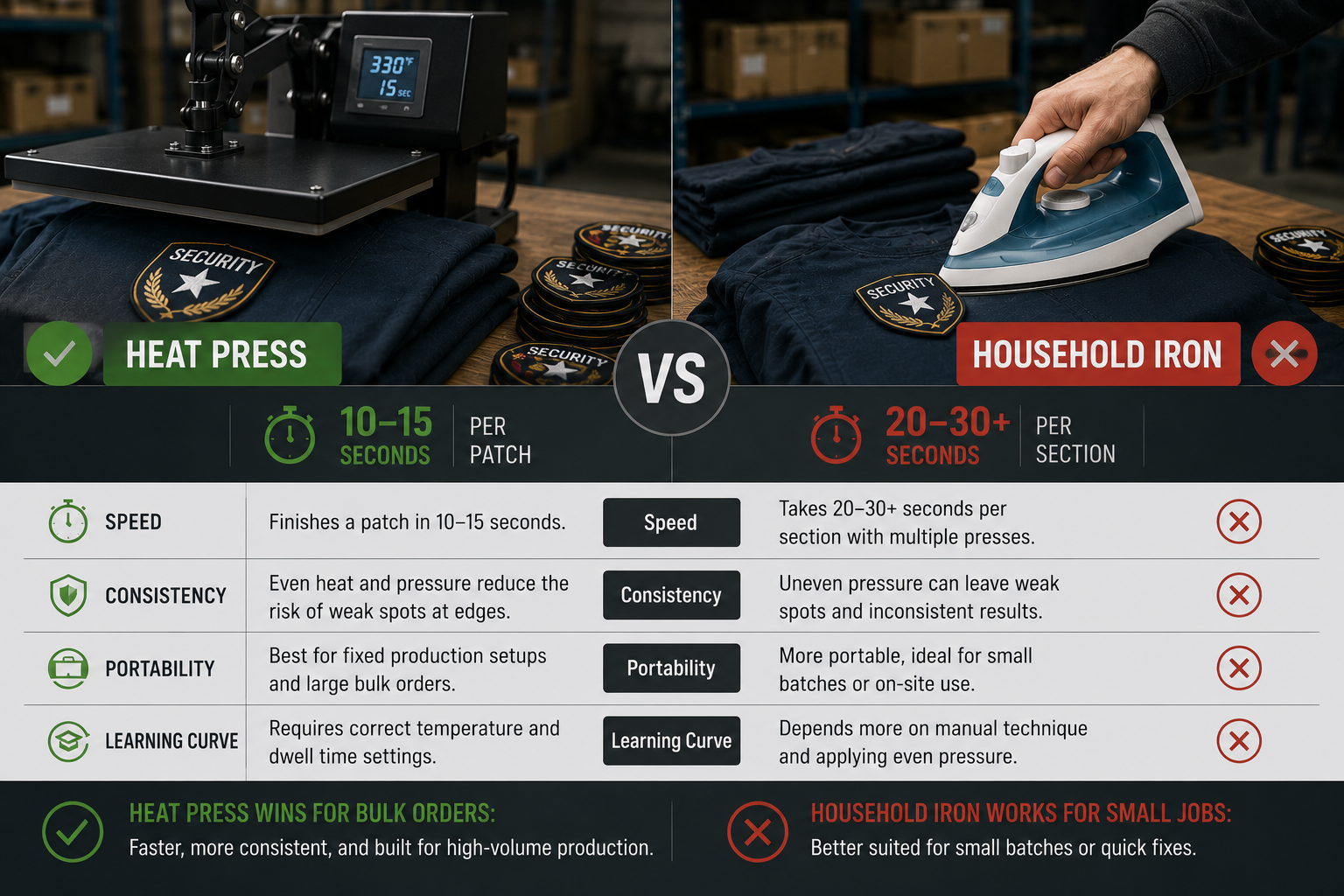
Heat press vs iron for patches, which wins for bulk orders? A heat press wins for bulk orders because it applies consistent heat and pressure across the whole patch in one motion. A household iron requires multiple overlapping presses, which can leave uneven spots and take longer per unit.
- Speed: a heat press typically finishes a patch in 10 to 15 seconds, compared to 20 to 30 seconds or more per section with a household iron.
- Consistency: even pressure from a heat press reduces the risk of weak spots at the edges or corners of a patch.
- Portability: a household iron works well for small batches or on site application, while a heat press suits a fixed production setup.
- Learning curve: a heat press needs correct temperature and dwell time settings, while a household iron depends more on manual technique and pressure.
Benefits of Heat Press Patch Application for B2B Buyers
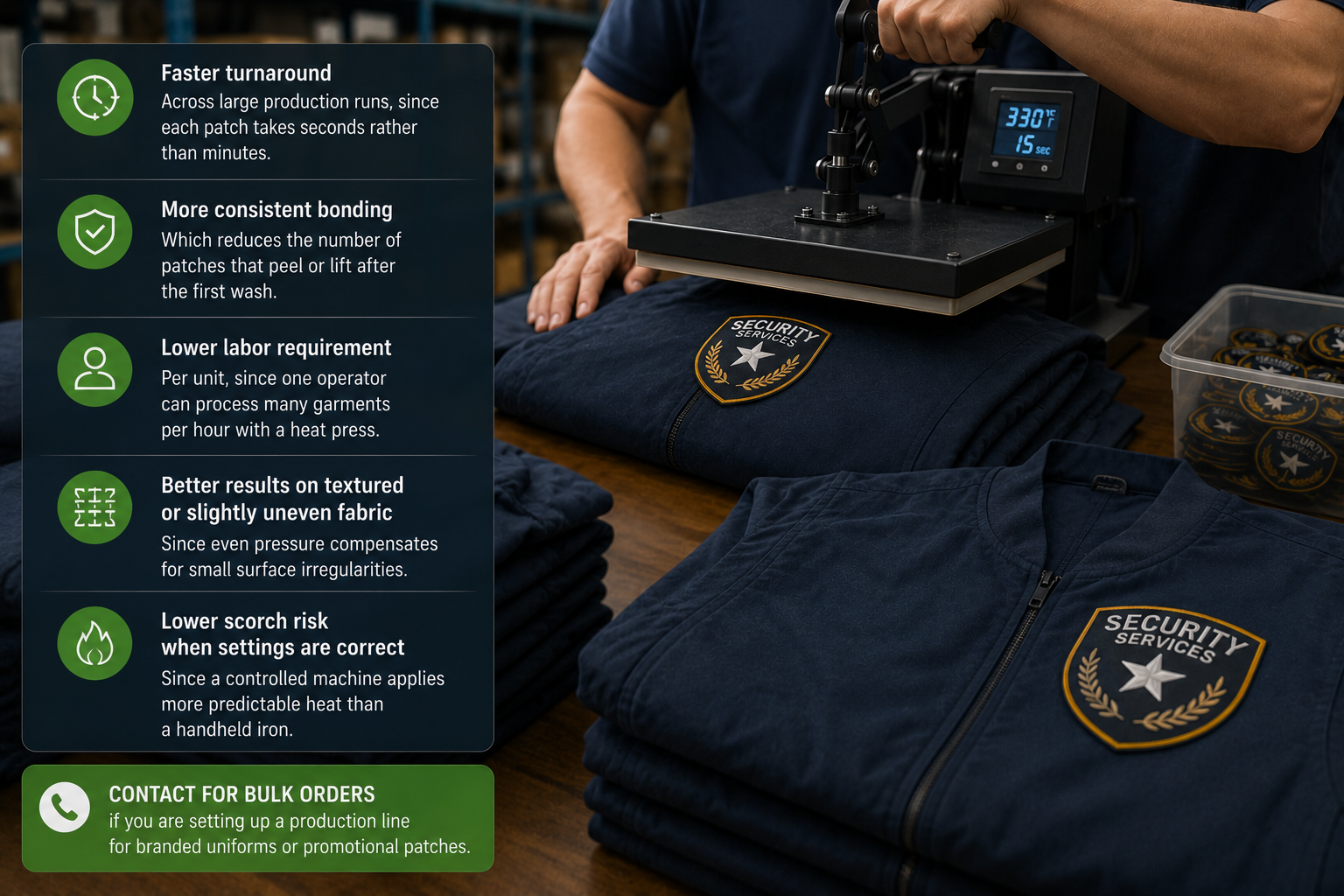
Businesses applying patches at scale gain several practical advantages from heat press application.
- Faster turnaround across large production runs, since each patch takes seconds rather than minutes.
- More consistent bonding, which reduces the number of patches that peel or lift after the first wash.
- Lower labor requirement per unit, since one operator can process many garments per hour with a heat press.
- Better results on textured or slightly uneven fabric, since even pressure compensates for small surface irregularities.
- Lower scorch risk when settings are correct, since a controlled machine applies more predictable heat than a handheld iron.
Industry Use Cases and Applications
Heat press application suits a range of business categories that need consistent, repeatable patch attachment.
- Uniform and workwear patches: heat press application at scale gives companies a fast, consistent way to brand large batches of shirts or jackets.
- Promotional and event patches: businesses producing giveaway merchandise often use a heat press to apply patches quickly across hundreds of units before an event.
- Backpack and bag patches: a heat press provides a strong initial bond, and a business can reinforce it with light stitching for frequently handled items.
- Jacket and denim patches: heat tolerant fabrics like denim and canvas respond well to heat press application, especially for branded outerwear runs.

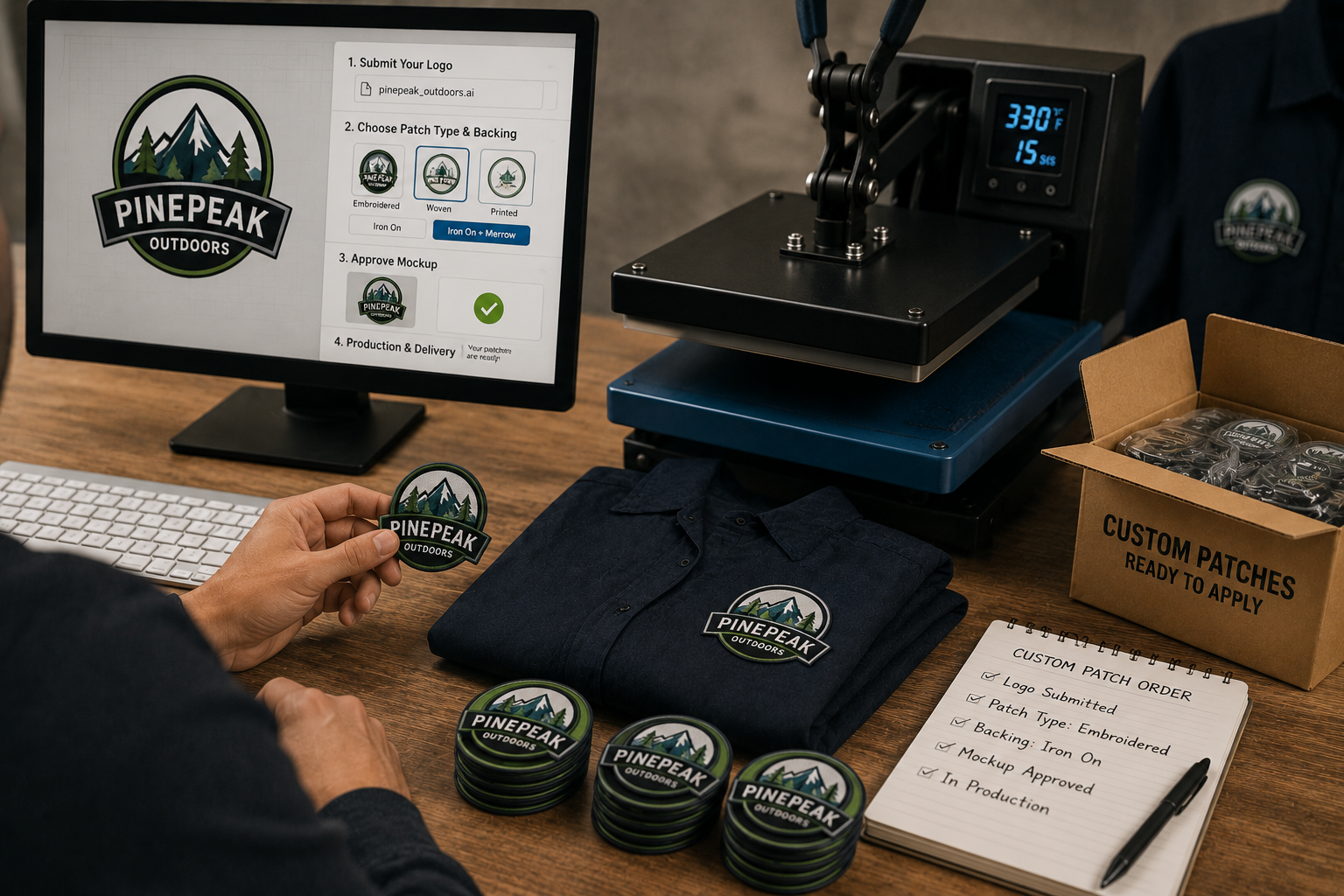
Customization and Ordering Process
Ordering custom heat press patches for a business typically follows a straightforward process.
- Submit your logo or design as vector artwork where possible.
- Choose your patch type, embroidered, woven, or printed, along with iron on or combination backing.
- Approve a digital mockup before the full production run begins.
- Receive your finished patches, ready for heat press or household iron application.
Best heat press machine for custom patches: a flat heat press with adjustable temperature and digital timer settings works best for most patch applications, since it gives precise control over heat and dwell time across different fabric types.
Why Choose Custom Patches 4U
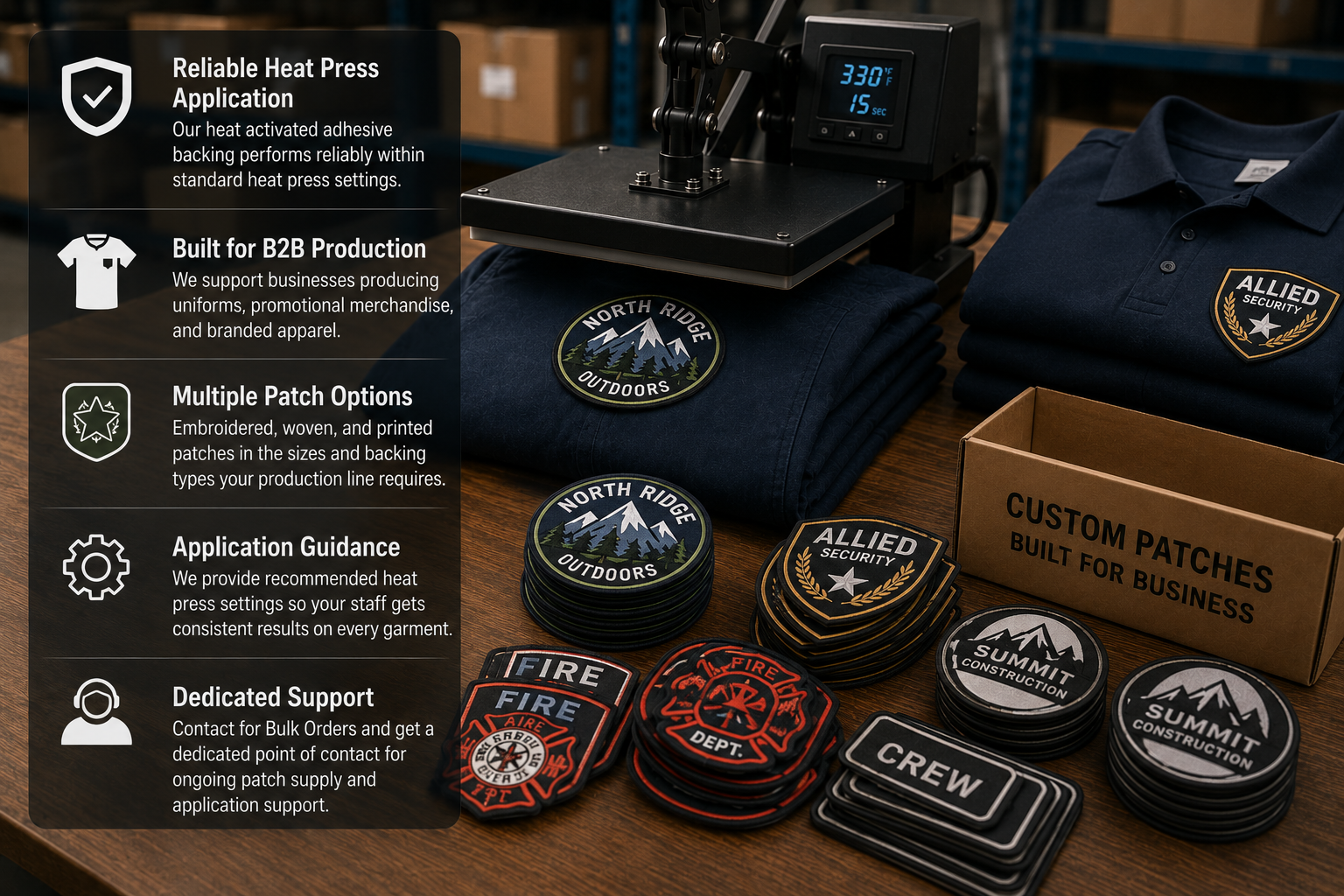
Custom Patches 4U supplies B2B buyers with patches designed for reliable, repeatable heat press or iron on application across bulk orders. Our patches use a consistent, heat activated adhesive backing that performs well within standard heat press temperature and pressure ranges.
We work with businesses producing uniforms, promotional merchandise, and branded apparel. Our team offers embroidered, woven, and printed patches in the sizes and backing types your production line requires, plus guidance on heat press settings so your staff gets consistent results across every garment.
Common Mistakes to Avoid With Heat Press Patch Application
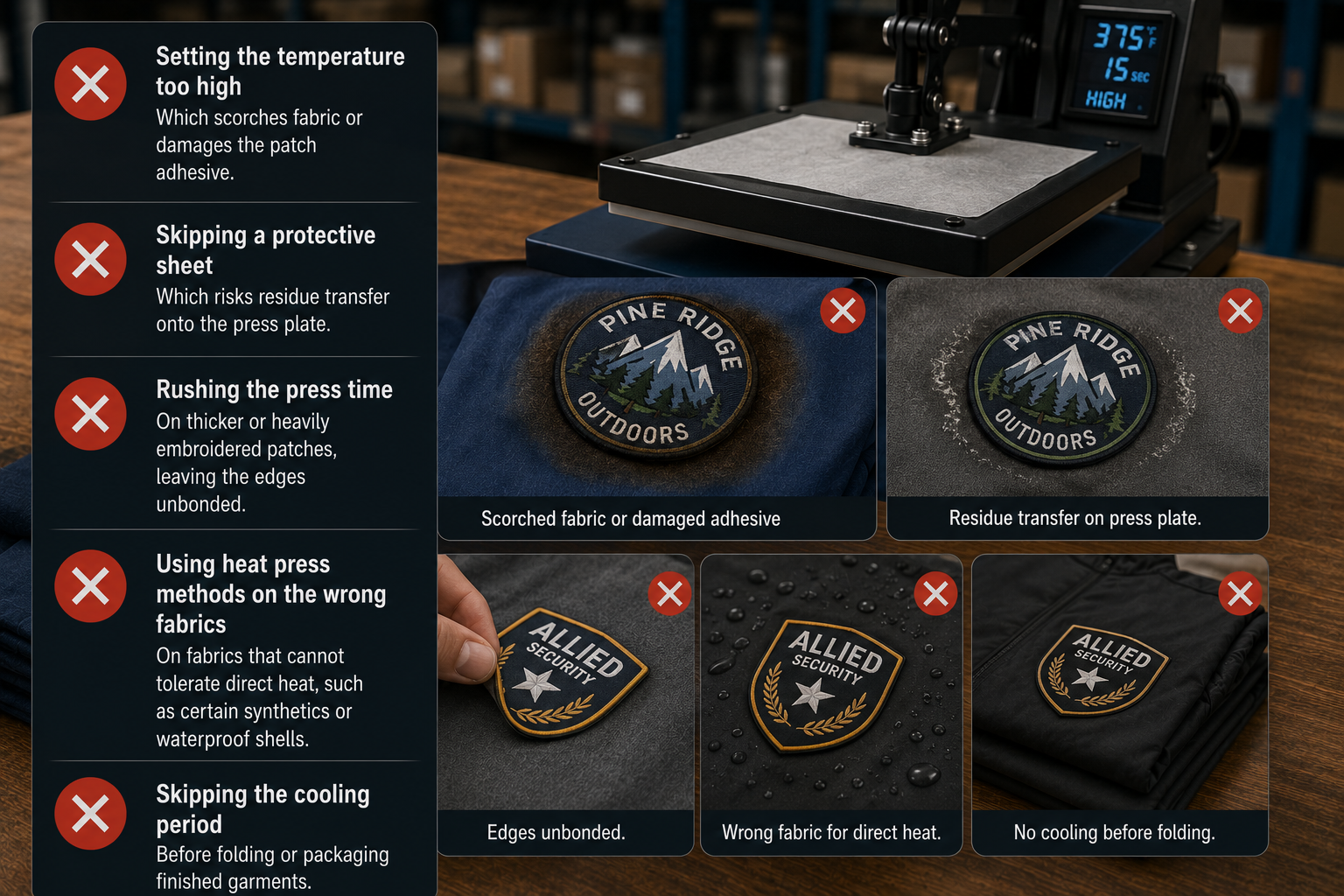
- Setting the temperature too high, which scorches fabric or damages the patch adhesive.
- Skipping a protective sheet, which risks residue transfer onto the press plate.
- Rushing the press time on thicker or heavily embroidered patches, leaving the edges unbonded.
- Using heat press methods on fabrics that cannot tolerate direct heat, such as certain synthetics or waterproof shells.
- Skipping the cooling period before folding or packaging finished garments.
Frequently Asked Questions
What are the pros and cons of heat press for custom patches?
The main pros are speed, consistency, and a stronger bond across bulk orders. The main cons are equipment cost, limited fabric compatibility, and the need for correct temperature control.
Is a heat press better than an iron for patches?
Yes, for bulk production, a heat press generally outperforms a household iron since it applies even pressure across the whole patch at once, reducing weak spots and application time.
How to apply patches with a heat press?
Set the correct temperature, place the garment flat, position the patch adhesive side down with a protective sheet, then close the press and apply firm pressure for 10 to 15 seconds before letting it cool.
What is the best temperature for heat press patches?
Most patches bond well between 300 and 350 degrees Fahrenheit, depending on the specific patch adhesive and fabric type.
How long to heat press patches?
A typical heat press cycle runs 10 to 15 seconds per patch, which is faster than the 20 to 30 seconds per section usually needed with a household iron.
Do heat pressed patches last?
Yes, heat pressed patches last through normal washing and daily wear when a business applies the correct temperature, pressure, and time, especially with added edge stitching on high wear items.
Heat press vs iron for patches, which is better for bulk orders?
A heat press works better for bulk orders because it applies consistent heat and pressure across the full patch surface in one motion, unlike a household iron, which needs multiple overlapping presses.
What is the best heat press machine for custom patches?
A flat heat press with adjustable temperature and a digital timer works best for most patch applications, since it gives precise control over heat and pressing time across different fabrics.
Can all patches be heat pressed?
No, only patches with an iron on or combination adhesive backing can bond through heat. Sew on only patches require stitching regardless of the application tool a business uses.
What fabrics work best with heat press patches?
Cotton, denim, canvas, and heat tolerant polyester blends work best with heat press application. Nylon, leather, and waterproof shells often need lower heat or a different attachment method entirely.